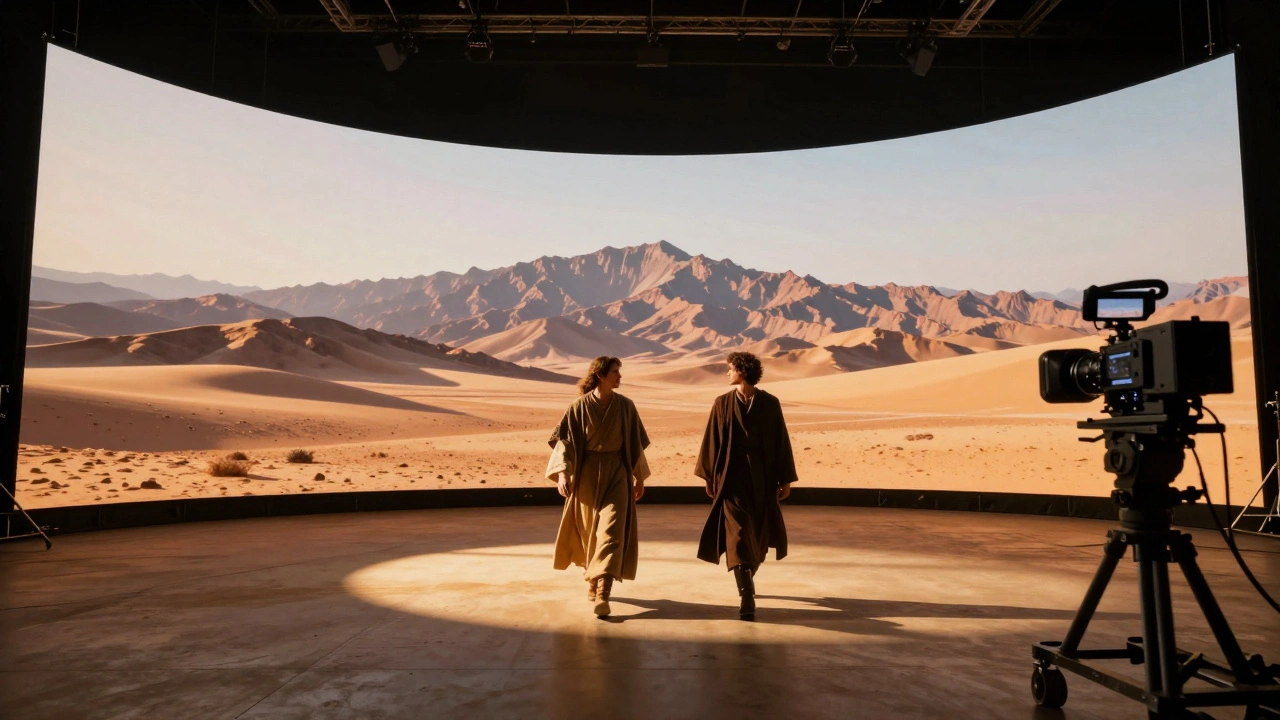
Imagine shooting a scene in a desert landscape one day and a snow-covered mountain the next-all without leaving the studio. That’s virtual production in action. By 2025, this technology has moved from experimental to essential, with major studios cutting costs and speeding up shoots by relying on digital environments built in real time.
Virtual Production is a filmmaking technique that combines physical sets with real-time computer-generated imagery (CGI) displayed on LED walls. Unlike traditional green screen methods, virtual production shows actors and directors the final background during filming. This allows for accurate lighting and reflections, and eliminates the need for extensive post-production work.
How Virtual Production Works: The Core Tech
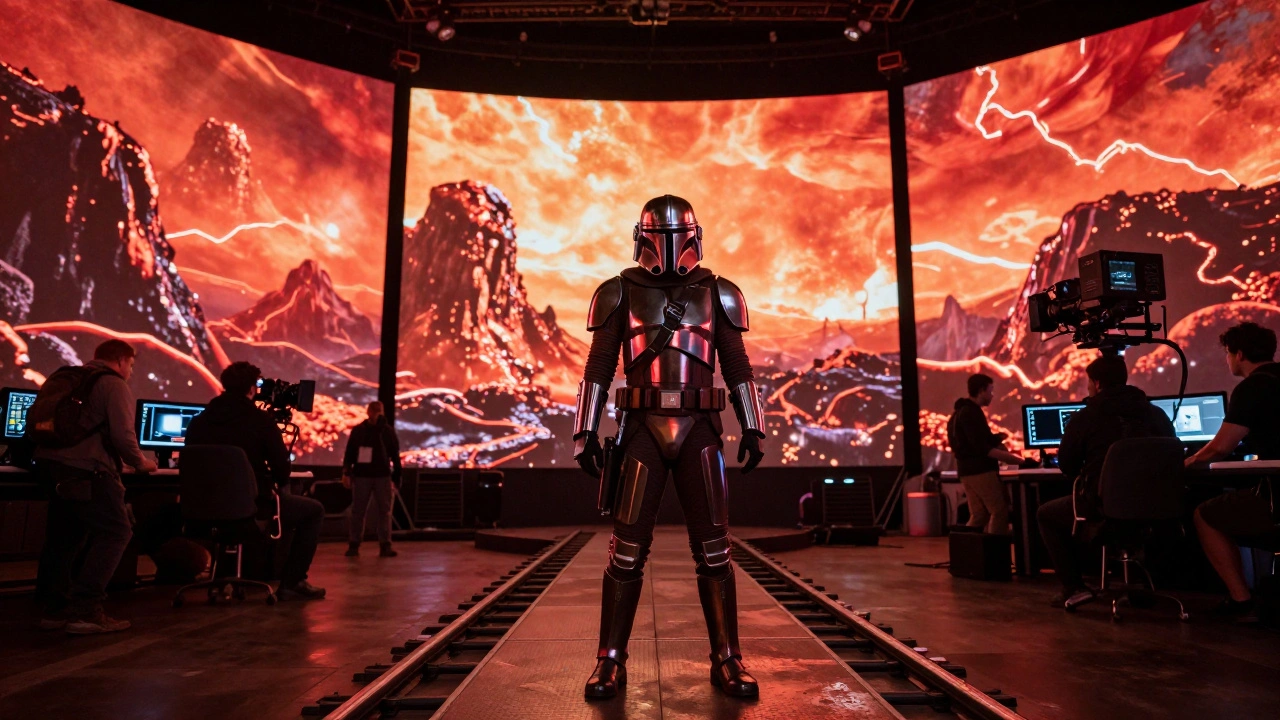
The setup starts with massive LED walls surrounding the set. These screens display digital environments that change in real time as the camera moves. Systems like Mo-Sys or Vicon track the camera’s position and orientation, feeding that data to Unreal Engine. The engine then renders the correct perspective of the virtual scene instantly. This means the director sees exactly what the final shot will look like-no guesswork.
For example, when filming a scene where an actor walks toward a mountain range, the camera movement triggers the LED walls to show the mountain from the correct angle. The lighting from the LEDs also bounces onto the actor’s face, matching the virtual environment. This eliminates the need for green screens and compositing in post-production.
Real-World Success Stories
The Mandalorian pioneered virtual production in 2019. Using a 20-foot-tall LED volume at Stage 7 in Los Angeles, the show’s crew shot 95% of its scenes on set. Director Jon Favreau called it "the future of filmmaking"-and he was right. The show’s second season cut post-production time by 40% compared to traditional methods.
In 2025, Star Trek: Strange New Worlds used virtual production for 70% of its episodes. By replacing green screens with LED walls, the team avoided costly reshoots and location travel. A 2025 report from the Visual Effects Society confirmed that productions using virtual production saved an average of 25% on post-production costs.
Why Filmmakers Are Switching to Virtual Production
Traditional VFX often requires months of work after filming. With virtual production, you see the final shot on set. That means fewer reshoots. Here’s how it benefits filmmakers:
- Immediate visual feedback during filming-no more guessing how CGI will look later
- Reduced post-production time by up to 40%, as seen in The Mandalorian
- Lower travel costs for location shoots-deserts and mountains can be created digitally
- More creative flexibility to change environments on the fly during filming
The Challenges Holding Back Widespread Adoption
Despite its benefits, virtual production isn’t without hurdles. Here’s what’s holding it back:
- High initial costs-setting up an LED volume runs $1 million to $5 million
- Need for specialized staff-teams must know Unreal Engine and real-time rendering
- Lighting mismatches if the LED walls aren’t calibrated perfectly
- Technical limitations in rendering complex environments at 60 frames per second
A 2025 survey by the International Cinematographers Guild found that 60% of smaller studios struggle with the technical demands of virtual production. But as tools become more user-friendly, these barriers are slowly falling.
What’s Next for Virtual Production
The future of virtual production is bright-and getting more accessible. Here’s what’s coming:
- AI-generated environments from text prompts using tools like NVIDIA Omniverse
- Cloud-based virtual production allowing remote access to LED stages
- Smaller, affordable LED panels for indie filmmakers-starting at $50,000
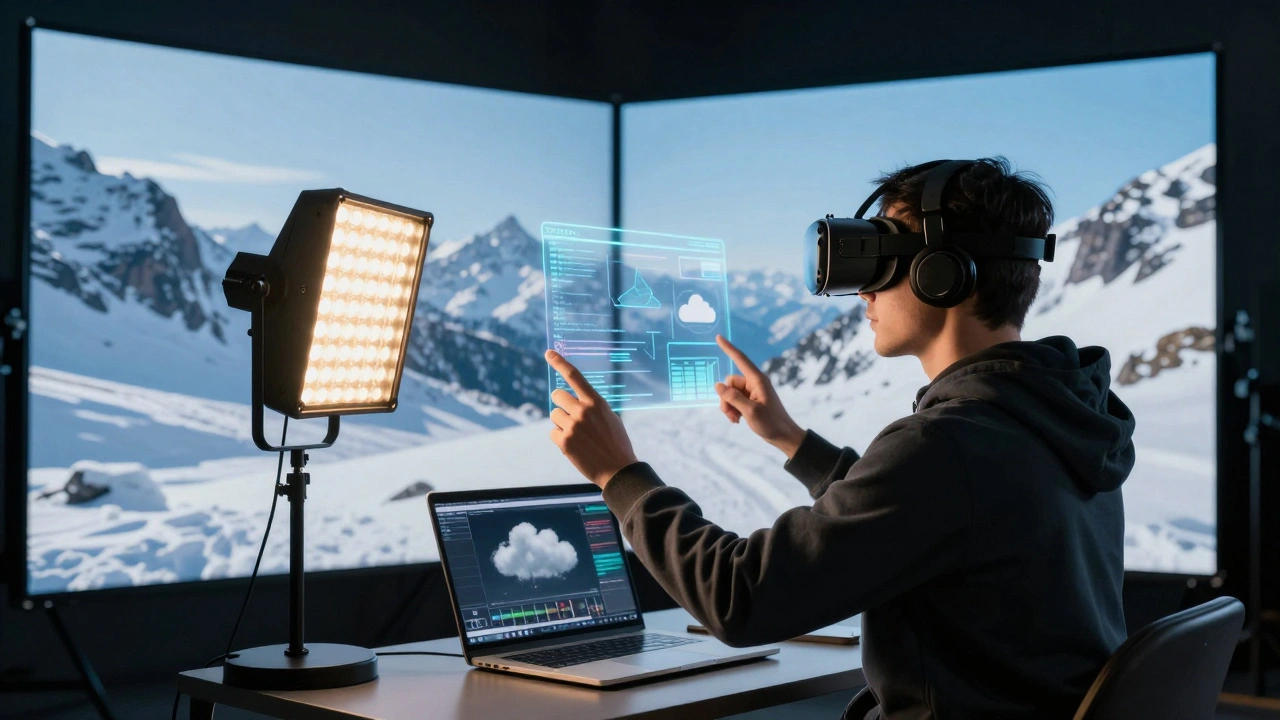
- Integration with VR headsets for directors to preview scenes in real time
By 2026, virtual production tools will be standard for TV and film. Indie filmmakers can expect to use cloud-based platforms for as little as $5,000 per project-making it a game-changer for low-budget projects.
What’s the difference between virtual production and traditional CGI?
Traditional CGI adds visual effects after filming, often requiring green screens and months of post-production. Virtual production shows digital environments on LED walls during filming, so actors see the background in real time. This eliminates guesswork, ensures accurate lighting, and cuts post-production time significantly.
Do I need expensive equipment for virtual production?
Not necessarily. While big studios use full LED volumes costing millions, affordable options exist. Blackmagic Design now offers LED panels starting at $50,000. Cloud-based platforms like StageCraft Lite let indie filmmakers access virtual stages for under $5,000 per project-making it accessible for smaller budgets.
Can virtual production replace location shoots entirely?
Yes, for many scenes. Virtual production can simulate any location-from Martian deserts to ancient castles-without leaving the studio. However, it’s not perfect for every situation. Complex natural elements like wind or rain still require physical sets. But for 80% of location shoots, virtual production is a viable alternative.
How does camera tracking work in virtual production?
Camera tracking systems like Mo-Sys or Vicon use infrared markers or optical sensors to track the camera’s position and rotation. This data is sent to Unreal Engine, which adjusts the virtual environment in real time to match the camera’s perspective. The result? The background moves correctly as the camera pans or zooms-just like filming on location.
What are the biggest challenges in adopting virtual production?
The biggest challenges are high setup costs ($1M-$5M for LED volumes), the need for technical staff skilled in real-time rendering, and potential lighting mismatches between physical sets and digital backgrounds. However, as tools become more user-friendly and affordable, these barriers are shrinking fast.




Comments(10)