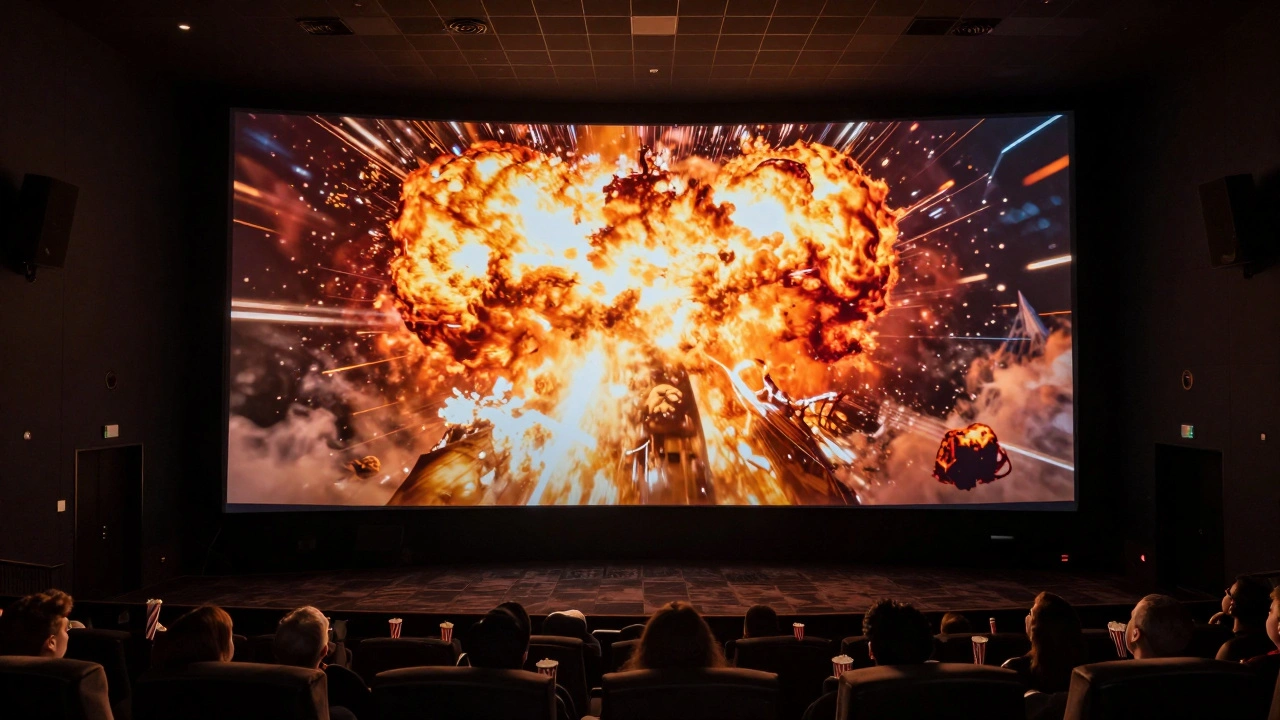
When you walk into a modern theater and see a screen that looks like it’s glowing from within-no projectors, no bulbs, no dust on the lens-that’s an LED cinema screen. These direct-view displays are replacing traditional digital projectors in theaters around the world. But they’re not just a shiny upgrade. They’re changing how films are made, distributed, and experienced. And like any big shift, they come with real trade-offs.
What Exactly Is a Direct-View LED Cinema Screen?
A direct-view LED cinema screen is made up of thousands of tiny LED modules packed tightly together to form one seamless surface. Each pixel emits its own light, unlike projectors that shine light onto a reflective screen. This means blacks are deeper, colors are more vivid, and brightness can hit over 1,000 nits consistently-even in a packed theater with ambient light.
These screens aren’t new in concept. You’ve seen them in stadiums and billboards. But for cinema, the challenge was scaling them to 60 feet wide, making them dimmable enough for dark scenes, and ensuring they could handle the 4K or 6K resolution standards theaters demand. Companies like Samsung, Sony, and Barco have spent over a decade solving these problems. By 2025, over 1,200 LED cinema screens were installed globally, mostly in premium locations like IMAX theaters and luxury multiplexes.
Why Theaters Are Switching to LED
For theater owners, the biggest draw is cost savings over time. A digital projector costs $50,000 to $100,000 and needs bulb replacements every 1,000 to 2,000 hours. Those bulbs cost $3,000 to $5,000 each. LED screens, on the other hand, last 100,000 hours-over 10 years of daily use-with no consumables. Maintenance drops by 70%.
Then there’s image quality. LED screens can hit 1,000 nits of brightness across the entire frame. Projectors struggle past 14 nits in a dark room, and that number drops as the bulb ages. With LED, bright scenes-like explosions or sunlight through windows-don’t look washed out. Dark scenes stay rich and detailed. HDR content, which is becoming standard for new films, looks exactly how filmmakers intended.
There’s also reliability. Projectors can overheat, misalign, or fail mid-show. LED screens don’t have moving parts or fragile lenses. If one LED module fails-which is rare-it’s replaced without shutting down the whole screen. Downtime drops from hours to minutes.
The Downsides You Can’t Ignore
But LED screens aren’t perfect. The biggest issue? Price. A 60-foot LED cinema screen costs between $300,000 and $700,000. That’s six to ten times more than a high-end digital projector. For small theaters or indie chains, that’s a dealbreaker. Even big chains think twice before retrofitting all 20 screens in a location.
Then there’s the viewing angle problem. While modern LED screens have improved, sitting too far to the side can still cause color shifts or brightness drop. Traditional projection screens, especially those with silver coatings, handle off-axis viewing better. Some viewers notice this during wide-angle shots in action films.
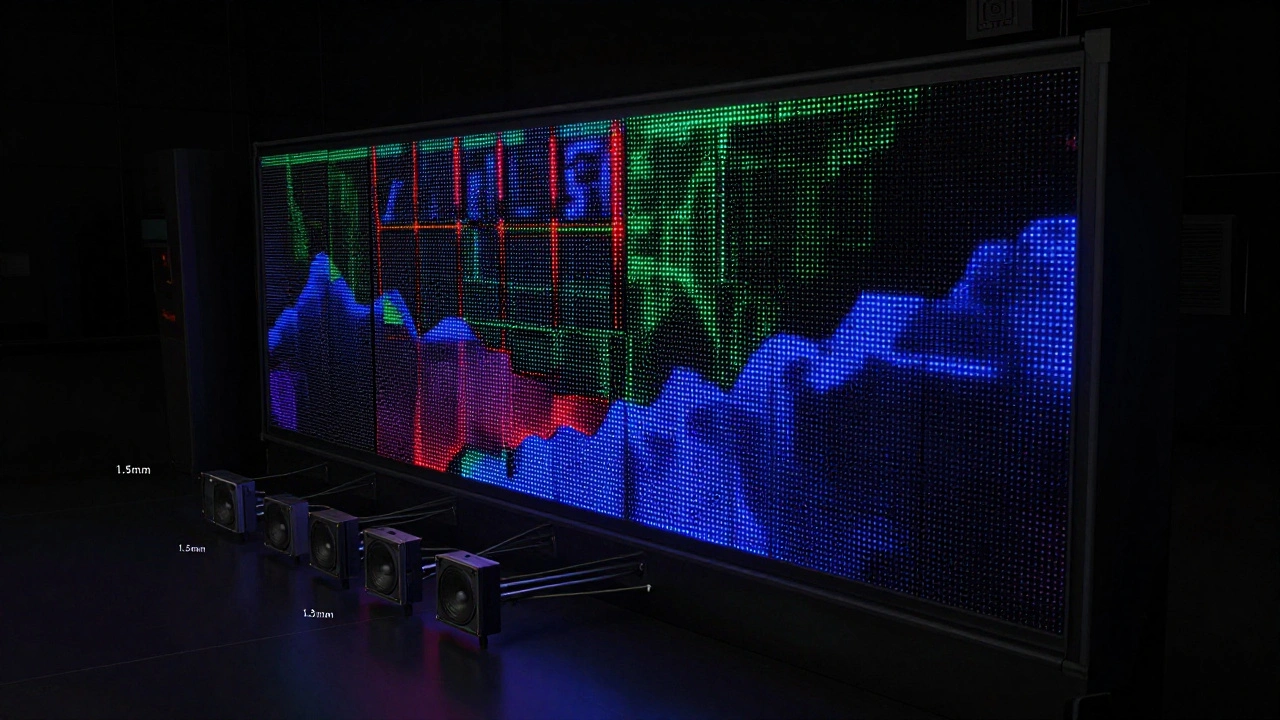
Another concern is the LED cinema screens’ potential for the “screen door effect.” If the pixel pitch (the gap between LEDs) is too wide, you might see tiny lines between pixels-especially in close-up shots. High-end cinema LED screens use pixel pitches of 1.2mm to 1.8mm, which is fine from normal seating. But in small theaters with close rows, this can become visible. That’s why installation distance matters as much as the screen itself.
And then there’s content. Not every film is mastered for LED. Studios still produce DCPs (Digital Cinema Packages) for projectors. While most new films now include LED-optimized versions, older titles or indie releases might not. Theaters have to maintain projector backups for those, adding to complexity.
How It Changes the Moviegoing Experience
For audiences, the difference is immediate. Colors pop. Shadows have texture. You don’t need to squint during dim scenes. Even the sound feels different-because LED screens are solid, they can double as speakers. Some systems embed audio drivers directly into the screen, creating perfectly synchronized sound that moves across the frame with the action. No more mismatched dialogue from speakers behind the screen.
But some purists miss the film-like quality of projection. Projected images have a softness, a grain, a subtle motion blur that mimics 35mm film. LED screens are razor-sharp. Every detail is crisp-even the digital noise in low-light scenes. For some, that feels too clinical. It’s not a flaw-it’s a different aesthetic. And it’s not for everyone.
There’s also the issue of glare. LED screens are brighter, which means reflections from windows or lights in the theater can be more noticeable. Theater design has to adapt-deeper overhangs, darker walls, no windows. New builds are already designed around this. Retrofitting older theaters is expensive.
Who Benefits the Most?
Large chains like AMC, Regal, and Cinemark are leading the charge. They can afford the upfront cost and benefit from lower operating expenses. Luxury theaters use LED screens to justify premium ticket prices. IMAX with Laser and Dolby Cinema are now offering LED versions alongside their traditional systems.
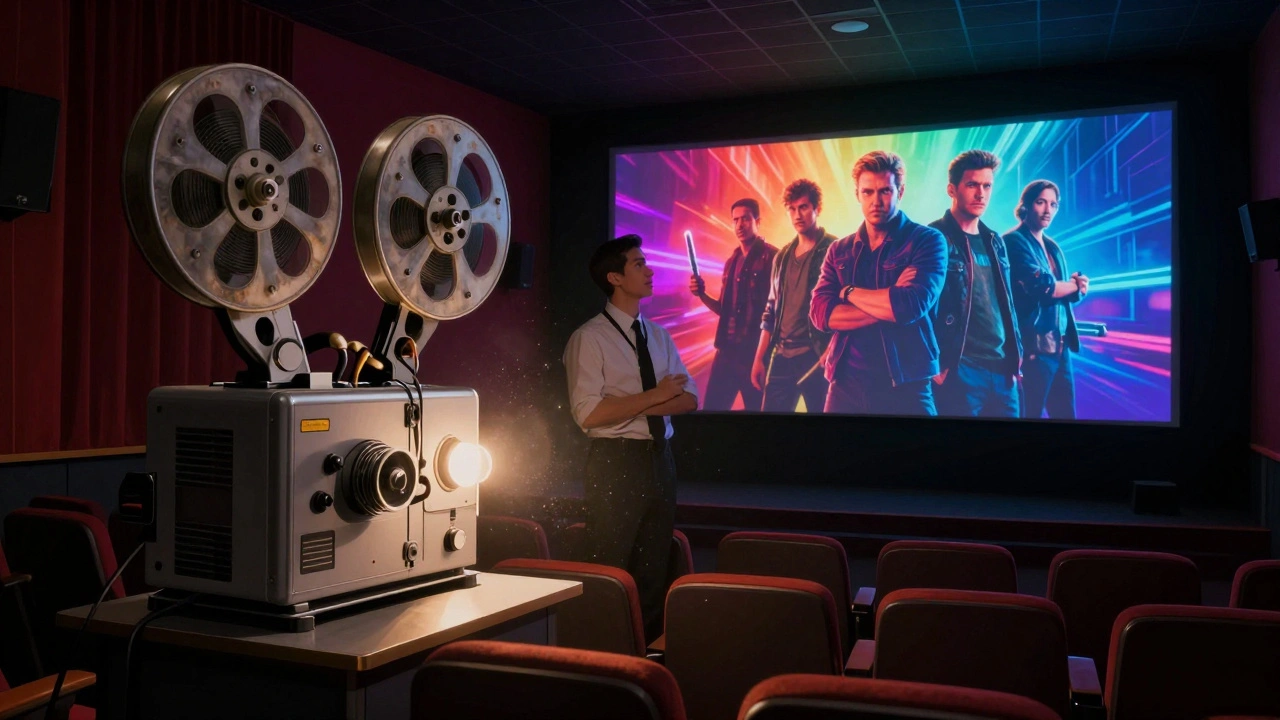
Independent theaters? Not so much. The ROI takes too long. For them, a $60,000 projector that lasts 5 years is still the smarter bet. But some are experimenting with hybrid setups-one LED screen for blockbusters, one projector for classics and indie films.
Content creators are also paying attention. Directors like Christopher Nolan and Denis Villeneuve have praised LED screens for their dynamic range. But they still prefer projection for certain films, citing the emotional texture of analog light. Studios now often deliver dual masters: one for LED, one for projector. That’s extra work, but it’s becoming standard.
What’s Next for LED Cinema?
The next wave is microLED. These screens use even smaller LEDs, with pixel pitches under 0.9mm. That means sharper images, better viewing angles, and the ability to scale to any size without seams. Samsung’s The Wall Cinema and Sony’s CineWall are already testing these in select locations.
Another trend: LED screens that can be curved or shaped to fit unique theater designs. Imagine a dome screen or a wraparound experience without projection distortion. That’s possible now with modular LED panels.
And soon, LED screens will connect to cloud-based content delivery. No more physical hard drives. No more delays. Films stream directly to the screen-like Netflix on your TV, but in 4K, 120fps, and 12-channel audio. Theaters will become more like streaming hubs.
Final Thoughts: Is LED the Future of Cinema?
Yes-but not everywhere. LED cinema screens are the future for big-budget, high-traffic venues. They’re reliable, bright, and future-proof. For theaters that show 10+ films a day, the savings add up fast.
But for smaller theaters, film festivals, or revival houses, projectors still have a place. They’re cheaper, familiar, and offer a look that many audiences still love.
The real question isn’t whether LED is better. It’s whether it’s right for your theater, your audience, and your budget. There’s no one-size-fits-all answer. But if you’re building a new theater today, or upgrading your flagship location, LED is the only choice that makes sense for the next decade.
Are LED cinema screens better than projectors?
LED screens are better in brightness, color accuracy, and long-term reliability. They don’t need bulb replacements and can display HDR content exactly as intended. But projectors are cheaper to install and still offer a softer, more film-like image that some audiences prefer. The choice depends on your budget, screen size, and audience expectations.
Do LED screens cause eye strain?
No more than projectors. LED screens are designed to meet cinema lighting standards, with flicker-free operation and controlled brightness levels. In fact, because they don’t rely on dimmed light in dark scenes, they can reduce eye fatigue compared to projectors that struggle to maintain contrast in low-light moments.
Can any movie be shown on an LED screen?
Most new films are mastered for LED, but older titles may only have projector-compatible DCPs. Theaters with LED screens often keep a backup projector for compatibility. Studios now typically provide both versions when releasing a film.
How much does an LED cinema screen cost?
A full-size LED cinema screen (60 feet wide) costs between $300,000 and $700,000. That’s 6 to 10 times more than a high-end digital projector. But over 10 years, maintenance and bulb replacement costs make LED cheaper overall.
Do LED screens work in small theaters?
They can, but only if the seating distance is correct. LED screens need a minimum viewing distance to avoid seeing individual pixels. In small rooms with rows too close to the screen, the image may look grainy or pixelated. A 1.5mm pitch screen needs at least 12 feet of distance. Smaller theaters should test before installing.




Comments(8)