When you think of movie magic, you probably picture green screens, crane shots, and hours of post-production work. But something quieter, bolder, and far more revolutionary has been happening on sets over the last five years. Virtual production isn’t just a buzzword anymore-it’s the new normal for blockbuster filmmaking. And it’s not just changing how movies look. It’s changing how they’re made.
What Virtual Production Actually Means
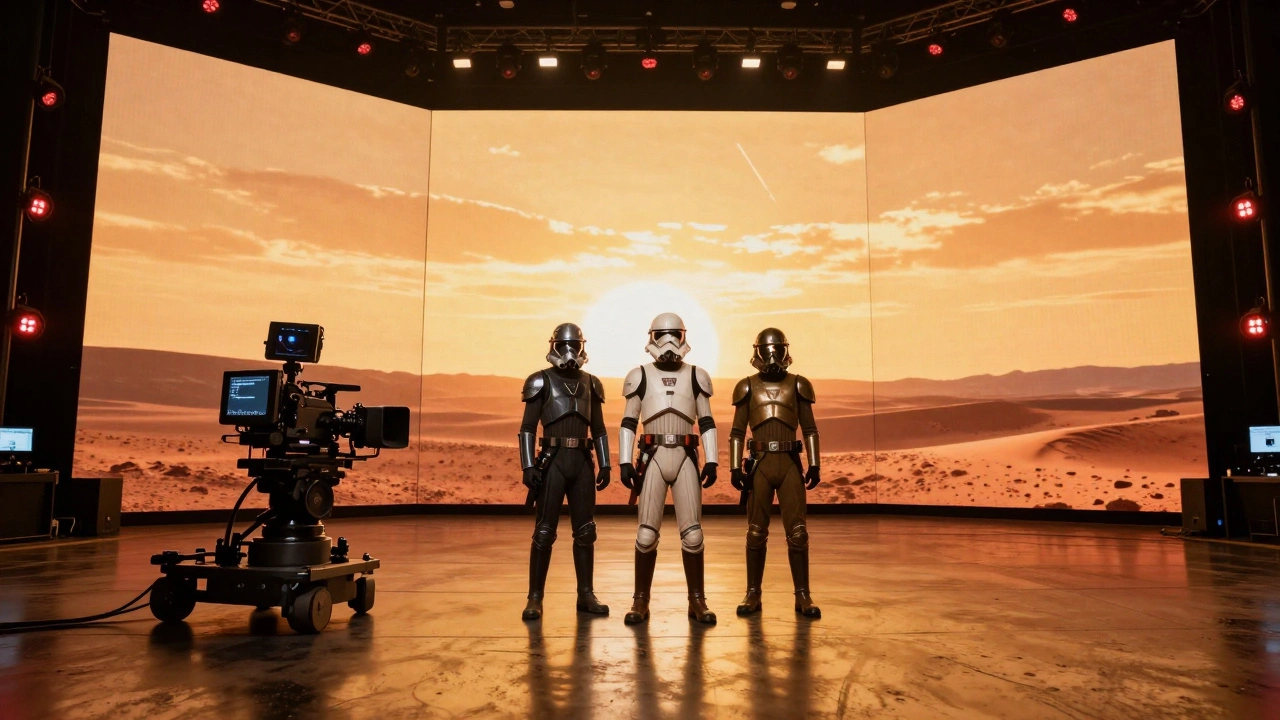
Virtual production blends physical filming with real-time digital environments. Instead of shooting actors in front of a blank green screen and adding the background later, filmmakers now use massive LED walls that display dynamic, photorealistic scenes while the camera rolls. These walls react to lighting, camera movement, and even weather conditions in real time. The result? Actors see the world they’re in. Directors get immediate feedback. And lighting? It’s real-bounced off the LED panels, not faked in a computer.
This isn’t sci-fi. It’s happening right now. And the films that led the way didn’t just use the tech-they redefined what was possible.
The Mandalorian: The Breakthrough That Changed Everything
If you want to understand virtual production, start with The Mandalorian a Star Wars live-action series that premiered in 2019 and became the first major production to rely entirely on StageCraft, an LED volume system developed by Industrial Light & Magic.
Before The Mandalorian, space scenes meant endless hours of compositing. Green screens meant actors had to imagine distant planets. Lighting had to be painstakingly matched in post. The show’s creators, led by Jon Favreau, wanted something better. They built a 270-degree, 20-foot-tall LED volume at Manhattan Beach Studios. Each panel displayed custom-rendered environments using Unreal Engine. The camera’s position triggered real-time perspective shifts-just like in a video game.
The results? The actor playing the Child (Grogu) reacted naturally to a desert sunset because it was actually there. The reflection of a spaceship on a helmet? Real. No CGI added later. The lighting on Pedro Pascal’s suit changed as the sun moved across the virtual sky. That’s not editing-that’s physics.
By season two, the team was rendering entire alien cities in real time. One shot, where the Mandalorian rides through a canyon with a massive creature looming above, was filmed in a single take. No cuts. No green screen. Just a camera, a stunt rider, and a digital world that moved with him.
Avatar: The Way of Water: Scaling the Impossible
James Cameron didn’t wait for virtual production to catch up-he built it from scratch. For Avatar: The Way of Water the 2022 sequel to the highest-grossing film of all time, which pushed the boundaries of performance capture and real-time rendering., Cameron’s team created a new system called the Volume, a 270-degree LED stage with 800 high-resolution panels. But here’s the twist: they didn’t just use it for backgrounds. They used it to simulate underwater light behavior.
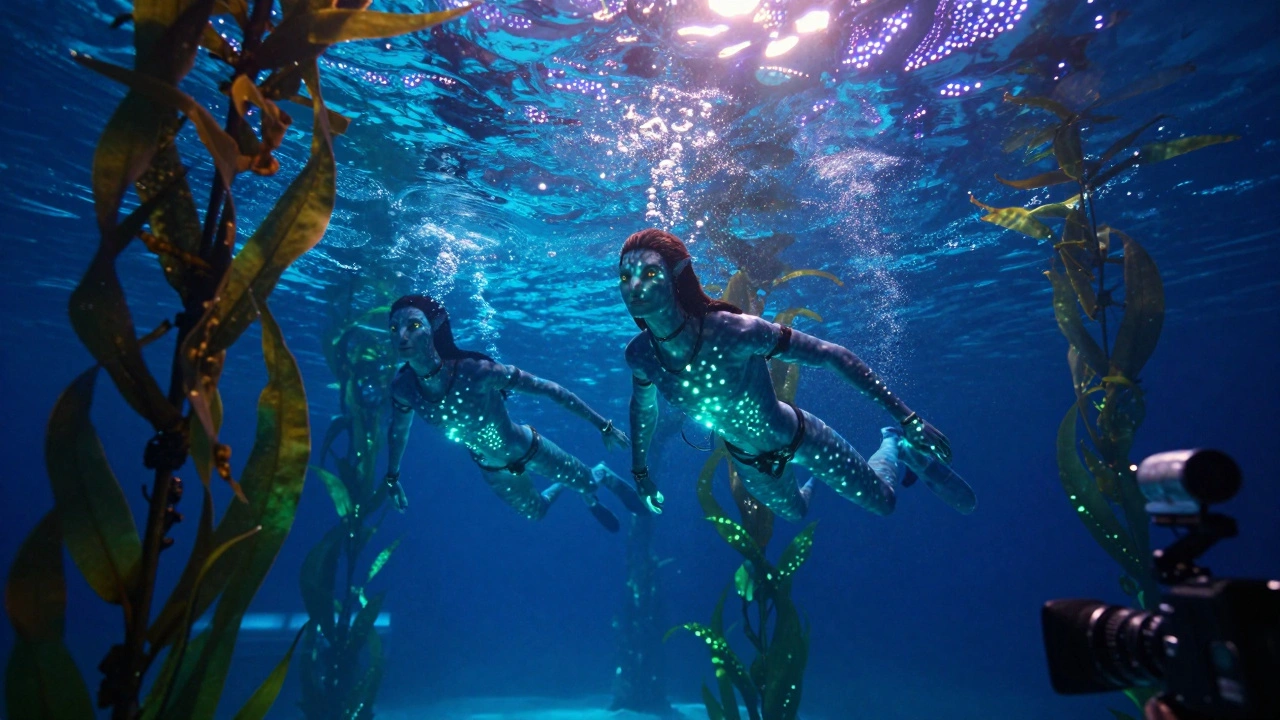
Underwater scenes are notoriously hard to shoot. Light scatters. Colors fade. Bubbles distort. Cameron’s team programmed the LED walls to mimic how sunlight penetrates ocean layers-down to the exact depth and time of day. Cameras captured real lens flares from the virtual sun. Actors in water tanks saw the shifting blue glow of Pandora’s oceans. Their reactions? Authentic.
One sequence, where the Na’vi swim through a glowing kelp forest, was shot in a 1.2 million-gallon tank. The LED walls didn’t just show the forest-they changed color based on the camera’s angle and the movement of the actors. The result? A scene that looked like it was filmed in a real ocean, even though it was in a studio in Los Angeles.
And here’s the kicker: they cut 40% of their post-production time because so much was locked in during filming.
The Batman: Lighting the Dark City
Not every virtual production story involves aliens or spaceships. The Batman the 2022 reboot starring Robert Pattinson, which used virtual production to recreate Gotham City’s rain-soaked streets with unprecedented realism. took a different approach. Instead of building physical sets for Gotham’s alleyways and rooftops, director Matt Reeves used an LED volume to display digitally rendered cityscapes.
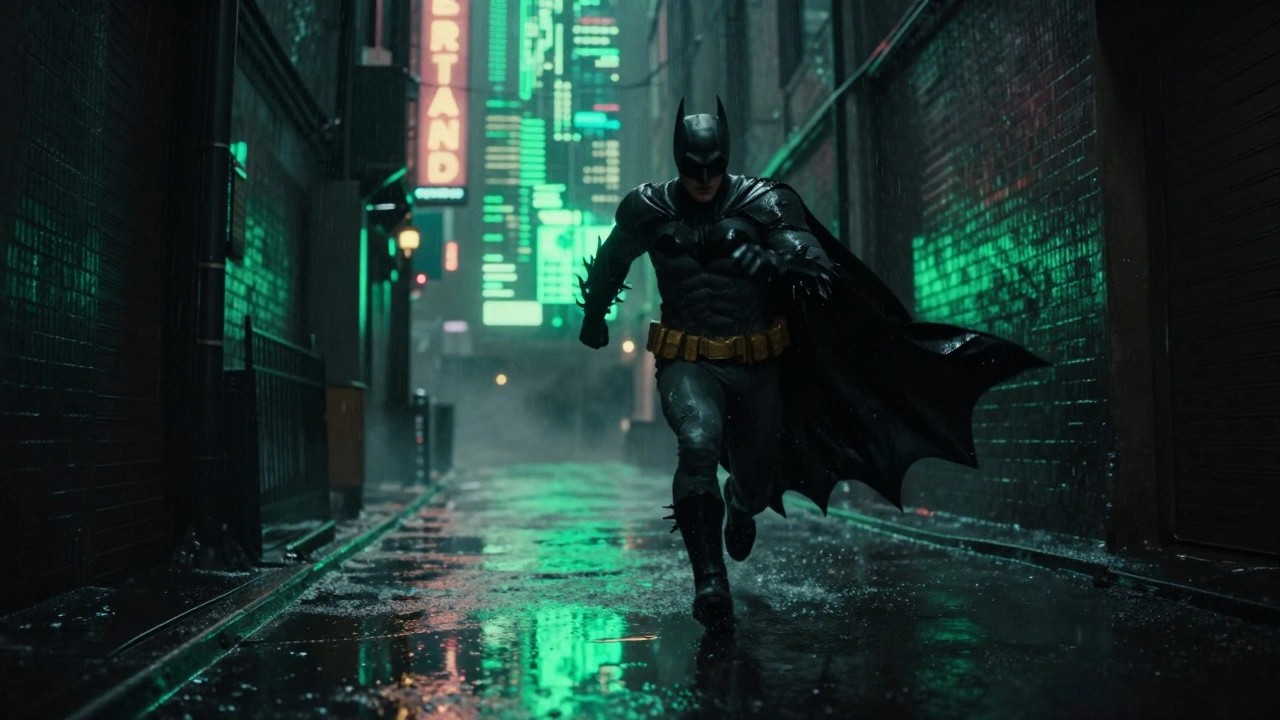
The team scanned real locations in Chicago and London, then rebuilt them in Unreal Engine. They added dynamic weather-rain, fog, flickering streetlights-and synchronized them with the camera’s movement. When Batman runs down a wet alley, the reflections on his cape aren’t added in post. They’re real. The wet pavement? It’s wet because the LED panels lit it that way.
One night shoot in the volume captured a scene where the Riddler’s light signal flashes across Gotham. The team programmed the LEDs to pulse in sync with the film’s score. The actors reacted to the actual strobe light, not a green screen. The final shot? It looked like it was filmed on location in a real city. It wasn’t. It was filmed in a warehouse in London.
How This Changed Filmmaking Forever
Before virtual production, filmmakers had to choose: shoot on location (expensive, uncontrollable) or build sets (costly, static). Virtual production kills that trade-off.
Now, directors can:
- Change the time of day with a click
- Move from a desert to a snowstorm without packing up
- See exactly how lighting interacts with actors before they even cut
- Reduce post-production by up to 60%
- Allow actors to perform in environments they can see and react to
And it’s not just for blockbusters. Independent filmmakers are starting to rent LED volumes. Studios like Pinewood and Sony have built permanent stages. Even commercials and music videos are using the tech.
The Hidden Cost: It’s Not Just About the Tech
Virtual production isn’t plug-and-play. It demands new skills. Cinematographers need to understand lighting for digital environments. Camera operators must learn how movement affects real-time rendering. VFX teams now work on set, not in post.
One crew member on The Mandalorian said it took six months just to train the camera team to work with the system. The director of photography had to learn how to use Unreal Engine controls like a DSLR. That’s not a small shift-it’s a career reset.
But the payoff? Faster shoots. Fewer reshoots. More creative freedom. And a level of realism that green screens could never deliver.
What’s Next? The Future Is Already Here
By 2026, virtual production isn’t a novelty. It’s the standard. Netflix’s Stranger Things Season 5 used LED volumes for its Hawkins townscapes. Amazon’s The Lord of the Rings: The Rings of Power filmed entire fantasy cities in real time. Even smaller films like The Northman used partial volumes for atmospheric exteriors.
And the next leap? AI-driven environments. Imagine typing "medieval castle at dawn with fog and crows" into a prompt-and the LED wall renders it instantly, with accurate lighting and shadows. That’s already being tested.
Virtual production didn’t just make movies look better. It made filmmaking faster, cheaper, and more alive. The green screen is dead. The LED wall is here to stay.
What is virtual production in film?
Virtual production in film combines physical filming with real-time digital environments, typically using large LED walls to display backgrounds that react to camera movement and lighting. This allows actors to perform in realistic settings while directors and cinematographers see the final look during filming, reducing the need for post-production visual effects.
Which film first used virtual production successfully?
The Mandalorian was the first major production to rely entirely on virtual production using Industrial Light & Magic’s StageCraft LED volume system. It premiered in 2019 and set the new standard for real-time rendering in live-action filmmaking.
How does virtual production save money?
Virtual production reduces costs by cutting down on location shoots, set construction, and post-production VFX. Scenes that once took weeks to composite can now be shot in a single day. Lighting and reflections are captured in-camera, eliminating hours of digital correction. Studios report up to 60% reduction in post-production time.
Do actors prefer virtual production over green screens?
Yes, most actors do. With virtual production, they can see the environment they’re in-whether it’s a Martian landscape or a stormy ocean. This helps them react naturally, improving performances. Many actors say it feels more like acting in a real place rather than pretending in front of a blank screen.
Is virtual production only for big-budget films?
No. While early adopters were blockbusters like The Mandalorian and Avatar: The Way of Water, rental companies now offer LED volumes to indie filmmakers. Smaller productions are using partial volumes or mobile setups to achieve realistic lighting and backgrounds without building physical sets.




Comments(7)