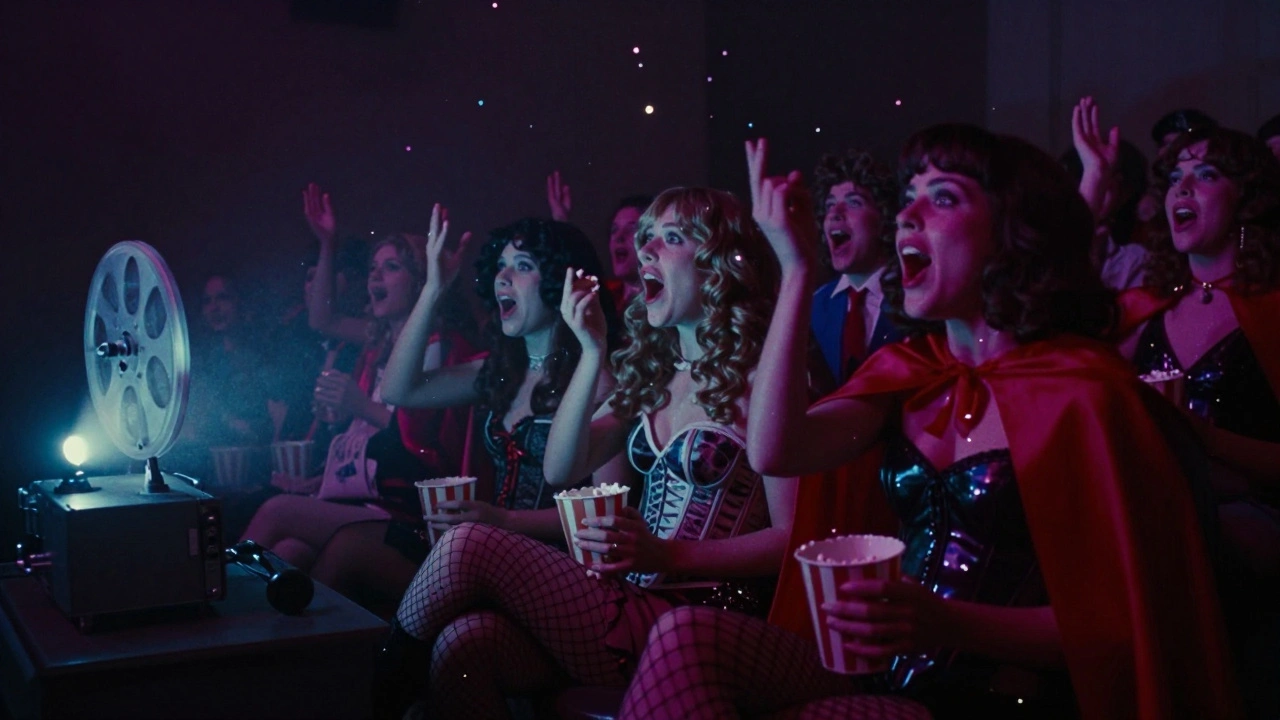
Some movies vanish after their theater run. Others? They come back stronger. Not with box office numbers, but with midnight screenings, costume parties, quote-a-thons, and decades of fans who treat every line like sacred text. Cult films don’t need mainstream approval. They thrive on obsession. But why do a handful of films-often weird, flawed, or outright bizarre-become living rituals while others fade into obscurity?
It Starts With Rejection
Most cult films were ignored, mocked, or flat-out bombed when they first came out. The Rocky Horror Picture Show flopped in 1975. Critics called it campy nonsense. Studios pulled it from theaters within weeks. Yet, by 1977, students in New York started showing it at midnight, dressing up as characters, shouting lines back at the screen. It wasn’t a movie anymore-it was a party. A ritual. And it still runs in theaters today, 50 years later.That pattern repeats. Eraserhead (1977) was too strange for mainstream audiences. Donnie Darko (2001) made $1 million at the box office. Today, both have fan clubs, academic papers, and annual screenings. Rejection isn’t a failure for cult films-it’s the first filter. If a movie doesn’t appeal to everyone, it leaves space for the ones who *get it* to claim it as theirs.
Flaws Become Features
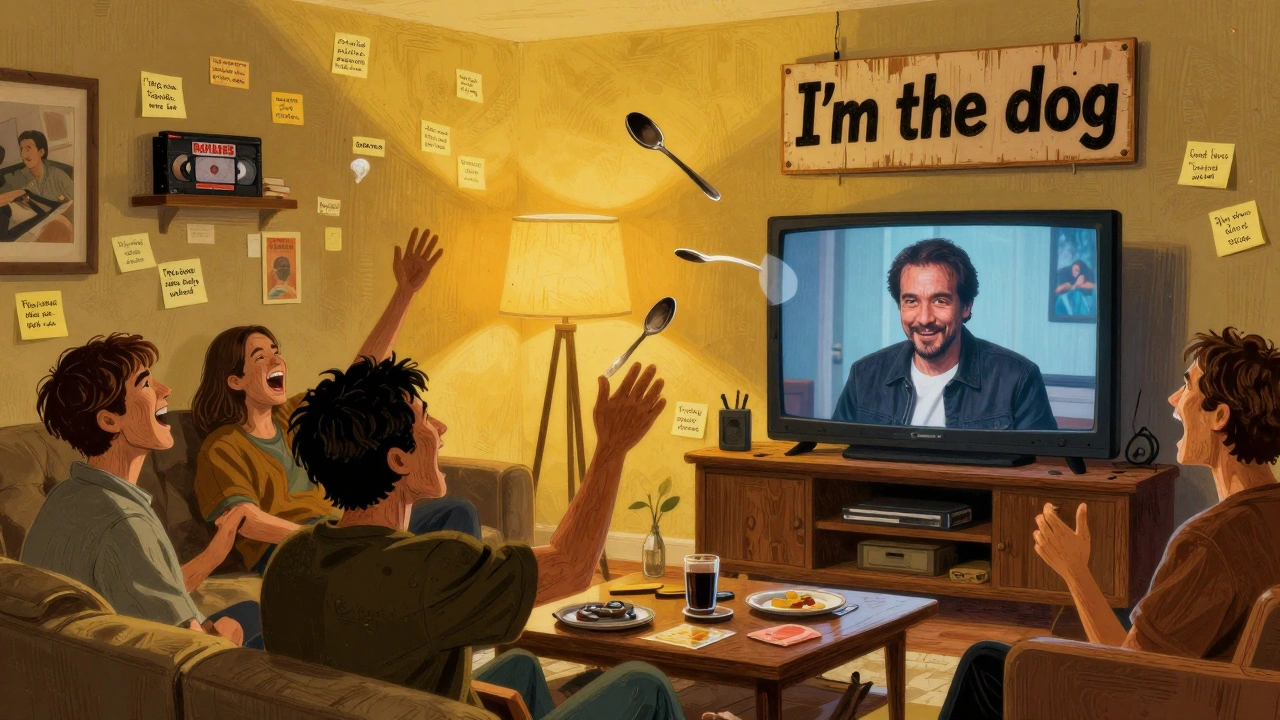
Cult films aren’t polished. They’re messy. Glitchy. Sometimes badly acted, poorly lit, or awkwardly paced. But that’s not a bug-it’s the feature.Take The Room (2003). Directed by Tommy Wiseau, it’s a drama about betrayal, but the acting is wooden, the dialogue is nonsensical, and the plot jumps like a broken record. Critics called it the worst movie ever made. Fans call it a masterpiece. Why? Because the flaws are so extreme, they become funny, memorable, and oddly endearing. You don’t watch The Room to follow a story. You watch it to laugh, to scream, to throw spoons at the screen. The imperfections create shared moments. Everyone’s in on the joke.
Compare that to a sleek, perfectly made blockbuster. It’s designed to be flawless. But flawlessness doesn’t invite participation. It invites passive viewing. Cult films, on the other hand, demand interaction. You don’t just watch Princess Mononoke-you debate its environmental themes. You don’t just see Repo Man-you learn its punk soundtrack by heart.
Community as a Living Extension
Cult films don’t live on DVD boxes or streaming algorithms. They live in basements, dorm rooms, and midnight theaters. The real magic isn’t the movie-it’s what fans build around it.For Monty Python and the Holy Grail, fans created the “Holy Hand Grenade” chant. For Starship Troopers, fans turned its over-the-top militarism into satire, quoting lines like “Bugger the bugs!” like battle cries. For Big Lebowski, fans hold “Lebowski Fests” where they bowl, drink White Russians, and recite the whole script from memory.
This isn’t fandom. It’s co-creation. Fans don’t just consume-they add layers. They write fan fiction, make remixes, design merch, and even film their own sequels. The Dark Crystal (1982) had no sequel, but fans spent years animating one themselves. That’s not obsession-it’s devotion.
These communities form because cult films offer something mainstream media rarely does: a sense of belonging. If you love Ghost Dog, you’re not just a fan-you’re part of a secret club. The movie becomes a password. Say “I’m the dog” and you’ll find your people.
Time, Not Marketing, Builds Legacy
You won’t find a cult film with a $50 million ad campaign. These movies spread slowly. Through word of mouth. Through late-night TV reruns. Through a friend saying, “You have to see this. It’s insane.”Blade Runner (1982) was a flop. It had bad reviews, a confusing ending, and no merch. But over time, its visuals, its mood, its questions about humanity stuck. By the 1990s, it was taught in film schools. By 2000, it had a director’s cut that fans fought for. By 2017, it had a sequel made because the original had become myth.
That’s the pattern. Cult films aren’t made to last. They survive because people keep showing them. Because they’re passed down like family stories. A parent shows their kid Beetlejuice. The kid shows their friend. That friend starts a YouTube channel analyzing its symbolism. The movie grows-not because of studios, but because of people.
The Psychology of Belonging
Why do people go to such lengths? It’s not just about the movie. It’s about identity.Psychologists call this “tribal affiliation.” Humans crave groups that feel exclusive. Cult films offer that. They’re not for everyone. They’re for the ones who stayed up late watching them on VHS, who laughed when others didn’t get it, who bought the DVD even though it was out of print.
Studies from the University of Michigan in 2020 found that fans of cult films reported higher levels of social connection than fans of mainstream hits. Why? Because mainstream films are shared by millions. Cult films are shared by thousands. And in that smaller group, you feel seen.
Think about it: if you wear a Blade Runner jacket to a party, people might not get it. But if you say “I’m a replicant,” and someone replies “I’m not,” you’ve just found your tribe. That moment? That’s the magic.
It’s Not About the Plot
Most cult films have terrible stories. Re-Animator (1985) is about a scientist who reanimates a head. That’s it. No deep themes. No character arcs. Just a guy with a severed head screaming in a lab.Yet, it’s still watched. Why? Because it’s *fun*. It’s weird. It’s loud. It’s got a killer soundtrack and a man in a lab coat fighting a zombie with a chainsaw. It doesn’t need to be profound. It needs to be unforgettable.
Cult films work because they tap into emotion, not logic. They make you feel something strange-joy, awe, dread, hilarity. That feeling sticks. And when you find someone else who felt it too, you bond over it. The movie becomes the glue.
What Makes a Cult Film Today?
The internet changed everything. Back in the 80s, you needed a VHS tape and a friend who had a VCR. Now, a weird indie film can go viral on TikTok. But here’s the twist: virality doesn’t create cult status. Community does.Take Everything Everywhere All At Once (2022). It was a box office hit, yes. But its cult status came from fans who didn’t just watch it-they analyzed its multiverse theory, wrote essays on its emotional core, and turned the “bagel scene” into a meme about existential dread. That’s not trending. That’s transformation.
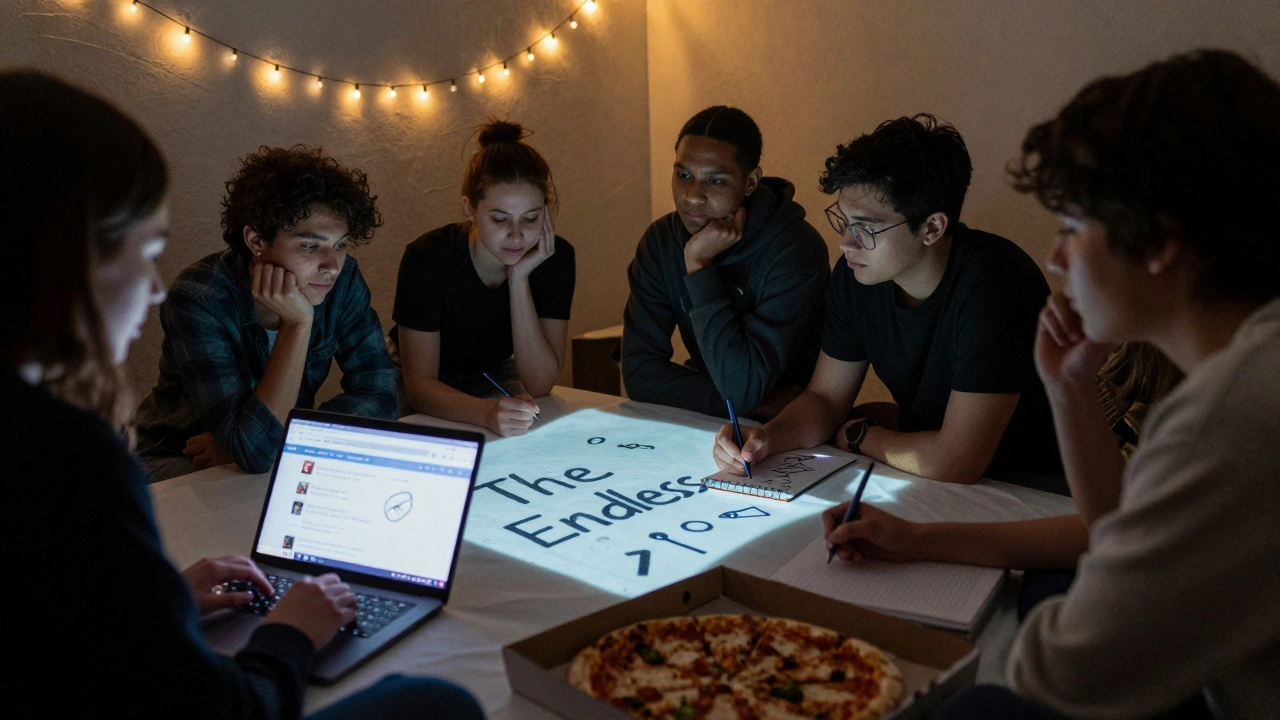
Today’s cult films are often made by small studios or even solo creators. The Endless (2017) was made for $20,000. It has no stars. No studio backing. But it has a subreddit with 50,000 members dissecting its ending. Why? Because it left questions. Because it didn’t explain everything. Because it trusted the audience to figure it out.
The formula hasn’t changed. It’s still:
- Rejection at first
- Flaws that become charm
- Community that turns viewers into co-creators
- Time that lets it grow
- Emotion that sticks longer than plot
If you want to make a cult film? Don’t aim for perfection. Aim for passion. Make something so weird, so personal, so full of heart that it doesn’t need to be understood-it just needs to be felt. Then, get out of the way. Let the fans take over.
Why do cult films often have low budgets?
Low budgets aren’t a requirement, but they often help. When a film isn’t backed by studios, it’s free to be strange. No executives are there to demand reshoots, happy endings, or market-tested characters. That freedom lets filmmakers take risks-like using real locations, non-actors, or surreal visuals-that studios would kill. The result? Films that feel raw, authentic, and unforgettable. Think of El Topo or Eraserhead. Their charm comes from being made outside the system, not despite it.
Can a movie become a cult film after streaming success?
Yes, but only if it sparks real community-not just views. Streaming platforms push content based on algorithms, not passion. A movie can get millions of views and still be forgotten. For cult status, fans need to interact: they need to quote lines, make memes, host watch parties, or even write fan fiction. Stranger Things has huge viewership, but it hasn’t developed cult rituals like The Rocky Horror Picture Show. Why? Because it’s designed to be consumed, not participated in. Cult films need space to breathe outside the algorithm.
Are cult films always dark or weird?
No. While many are bizarre, cult films can also be heartfelt or funny. Amélie (2001) is whimsical, gentle, and full of color. Groundhog Day (1993) is a romantic comedy with a time-loop twist. Both have devoted followings. What they share isn’t darkness-it’s uniqueness. They don’t fit neatly into boxes. They surprise you. They linger. That’s what matters.
Do cult films ever become mainstream?
Sometimes, but when they do, they often lose their cult status. When Star Wars exploded, its fan rituals faded. When Blade Runner got a sequel, some fans felt it betrayed the original’s spirit. Cult films thrive on exclusivity. Once they’re on billboards, merch aisles, and Disney+ homepages, they become part of the system they once rejected. The community doesn’t disappear-but it often fractures, with purists holding onto the original version like a relic.
Can a movie be a cult film without fans knowing its title?
Yes, and it happens more than you think. Some cult films are known by their most famous scene, not their name. People might quote “I’m gonna make him an offer he can’t refuse” without knowing it’s from The Godfather. Or chant “I’m the dog” without knowing the movie’s title. The film becomes a cultural fragment. That’s cult status in its purest form: the story lives, even if the title doesn’t.







Comments(5)