Festival-to-Platform Pipeline: How International Films Find Streamers

Joel Chanca - 16 Aug, 2026

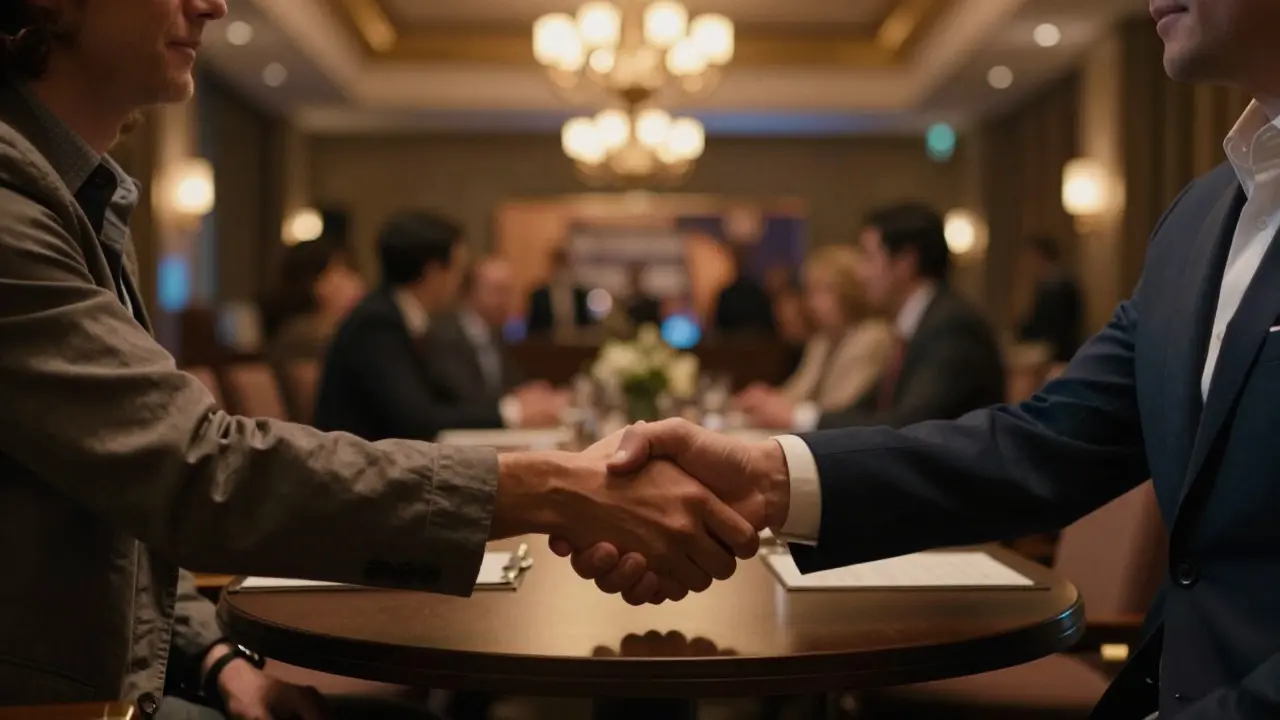
There is a specific moment in the life of an international film that determines its survival. It happens not on the red carpet, but in a quiet hotel room or a cramped office at Cannes Film Festival, where a director shakes hands with a representative from a major streaming service. In the past, this handshake meant a theatrical release in select cities. Today, it often means the film will appear on a digital platform in forty countries within weeks. The pipeline connecting global festivals to home screens has become the primary engine for non-Hollywood cinema.

The Shift from Theaters to Screens

For decades, the path for an independent or foreign-language film was linear and risky. A movie would premiere at a festival, attract limited attention, and then face a grueling gauntlet of regional distributors who might only buy it for a handful of theaters. If the box office didn't hit a specific threshold, the film disappeared into obscurity. That model is collapsing. Audiences have shifted their habits, preferring the convenience of digital streaming platforms over driving to a local arthouse cinema. This behavioral change forced studios and streamers to rethink how they acquire content. Instead of betting on theatrical performance, they now bet on library depth and niche audience retention.

This shift benefits filmmakers in two distinct ways. First, the financial risk is lower because the buyer (the streamer) usually pays a guaranteed fee upfront, rather than relying on ticket sales. Second, the geographic reach is immediate. A film from South Korea or Nigeria can be watched in Brazil, Germany, and Canada on the same day. The barrier to entry for viewers has dropped significantly, creating a demand for diverse stories that traditional Hollywood pipelines often ignored.

Digital art showing a film reel transforming into glowing data streams flowing to devices

The Role of Major Festivals as Marketplaces

Festivals like Venice Film Festival, Toronto International Film Festival, and Berlinale are no longer just about awards; they are massive B2B marketplaces. During these events, industry professionals attend "market

Comments(7)

Dhruv Sodha

Dhruv Sodha

August 17, 2026 at 22:35

It’s a bit ironic, isn’t it? We used to romanticize the idea of a film dying in a small theater after three weeks, but now we celebrate its 'death' on a platform where it competes with cat videos and reality TV re-runs. The handshake in that hotel room is less about art and more about algorithmic placement these days.

But I suppose if the alternative is obscurity, then at least the pixels are accessible. It’s a trade-off we’re all making without realizing it.

John Riherd

John Riherd

August 18, 2026 at 05:54

Omg, this hits different for anyone who actually tries to find new stuff! 🎬✨

I mean, think about it: before, you’d have to live in a major city just to catch a decent foreign film. Now? You can watch a Nigerian drama from your couch in Ohio while eating cereal. That’s huge! It’s like the world finally opened up its doors and said, 'Hey, come in, we saved you a seat.'

And don’t get me started on how much easier it is to discover hidden gems when they aren't buried under a pile of marketing budgets. The barriers are dropping, folks! This is beautiful!

April Rose

April Rose

August 20, 2026 at 01:00

Please. Just please stop pretending this is a good thing. :P

We all know exactly what happens next. Hollywood gets bored of their own formulaic garbage, sees some 'unique' accent or costume design that doesn't require actual acting, and buys the rights. Then they remake it with white leads, change the plot to make sense to suburban moms, and call it 'inspired by.'

The only reason these films survive is because Americans are too lazy to drive to a real cinema. It’s not an evolution of cinema; it’s the slow death of culture replaced by content consumption. Enjoy your streaming service, I guess.

Andrew Maye

Andrew Maye

August 20, 2026 at 03:12

I think there's a lot of truth here, but also... maybe a little doom-and-gloom?!! 😅

Look, sure, the remakes happen. But haven't you noticed that even the big studios are getting nervous about losing their grip? They're buying international IP because they *need* fresh stories to keep subscribers happy. It’s a two-way street!

Plus, let’s not forget the filmmakers themselves. For a director in, say, South Korea or Brazil, knowing that a Netflix rep might be in the next room changes everything. It means they can take risks. It means they don't have to cater to local box office expectations just to survive. So yeah, the pipeline is messy, but it’s also a lifeline for so many voices that were previously ignored. Let’s try to see the silver lining before we burn it down! 🌟

Kai Gronholz

Kai Gronholz

August 21, 2026 at 07:25

Valid point. The financial model has shifted from risk-sharing to upfront licensing fees. This reduces volatility for producers. However, it also caps the upside potential. A hit film no longer generates infinite revenue through long-tail theatrical runs. It becomes a fixed asset in a library. Efficiency over prestige.

Garrett Rightler

Garrett Rightler

August 21, 2026 at 10:26

I’ve been thinking about this a lot lately. It feels like we’re in a transition period where the old guard is still trying to hold onto the awards circuit, but the money has already moved.

It’s interesting how the 'market' sections of festivals have become as important as the screenings themselves. If you don't sell your film during those few days, you're basically starting over from zero. It puts a lot of pressure on directors who just want to show their work, but I guess that's the cost of doing business now. Still hopeful that quality will eventually rise to the top, though.

Peter Sehn

Peter Sehn

August 22, 2026 at 00:05

Drama! Pure drama! 🎭

They tell us the sky is falling because theaters are empty, but really? People just want convenience! Who wants to sit in a dark room for two hours when they can pause the movie to check their phone? It’s not a crisis, it’s progress! And don’t worry, American audiences will always demand the best, which means they’ll stream whatever we give them. The pipeline works because WE make it work. Let’s not overthink it. The show must go on, right? Or rather, the stream must continue!

Write a comment