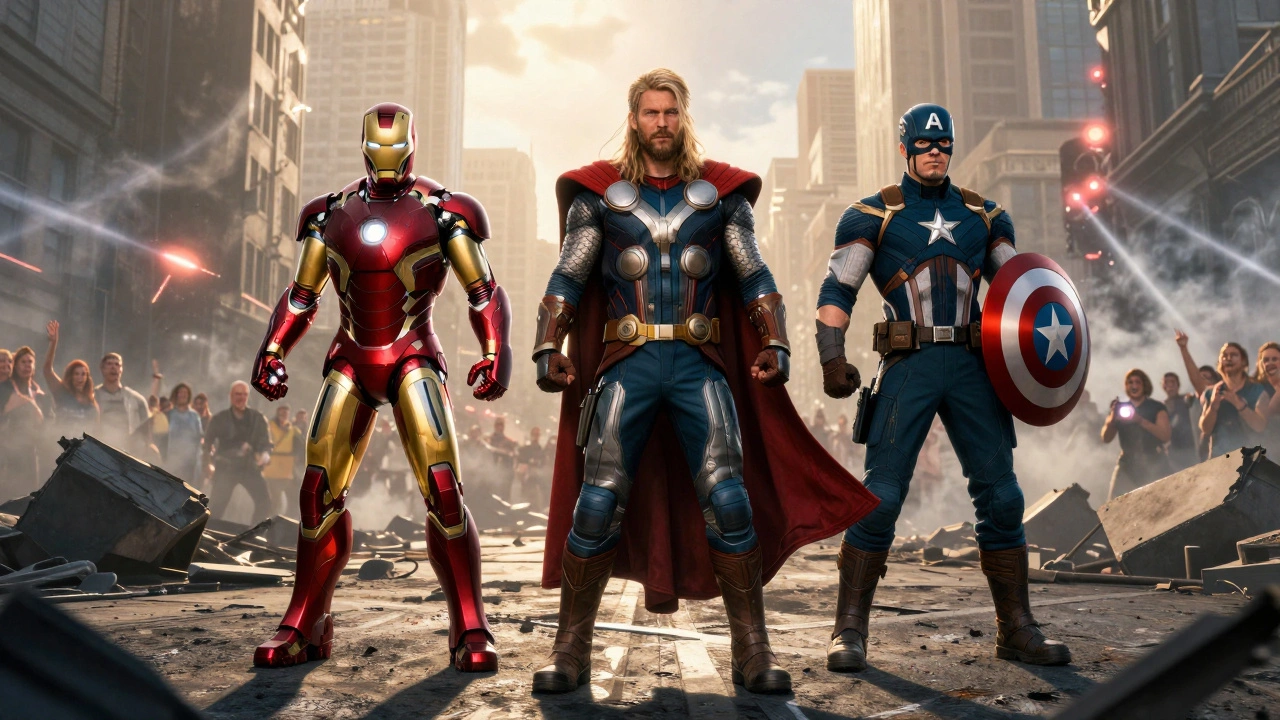
When Iron Man showed up in The Avengers, it wasn’t just a fan service moment. It was a billion-dollar business decision. Franchise crossovers aren’t just about fans cheering when their favorite characters meet-they’re engineered financial machines built on years of planning, data, and risk management. Studios don’t throw characters together because they’re fun. They do it because it works-hard.
How Shared Universes Turn Movies Into Ecosystems
Before 2008, movie franchises were mostly standalone. Star Wars had sequels, James Bond had new actors, but characters didn’t cross over. Then came the Marvel Cinematic Universe. Iron Man, The Hulk, Thor-they were all released as solo films first. Each one cost around $140 million. Each one made roughly $500 million. But the real magic happened when they merged.
By the time The Avengers hit theaters in 2012, audiences had already invested in these characters. They knew Tony Stark’s sarcasm, Bruce Banner’s guilt, Thor’s pride. That emotional investment meant the crossover wasn’t just a movie-it was an event. And events sell tickets, merch, streaming subscriptions, and video games. The Avengers made $1.5 billion globally. That’s not a hit. That’s a system working.
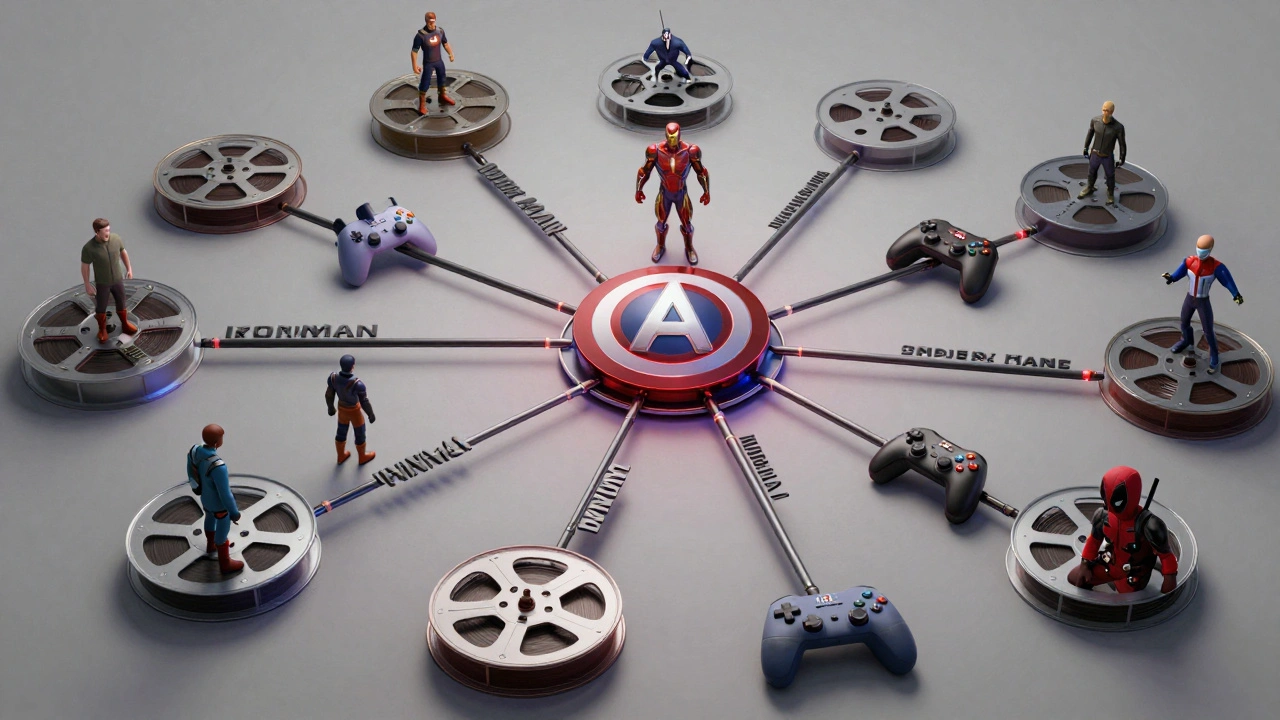
Studios now think in terms of ecosystems, not movies. One film isn’t a product. It’s a landing page for another. A post-credits scene isn’t a bonus. It’s a funnel. Disney didn’t make the MCU to tell superhero stories. They made it to own your attention for a decade.
The Numbers Don’t Lie: Crossovers Outperform Standalones
A 2023 study by the University of Southern California’s Cinematic Arts department analyzed 187 major studio releases from 2010 to 2023. The findings were clear: films that were part of an established shared universe had, on average, 47% higher opening weekend grosses than standalone films with similar budgets. Their sequel potential was 3.2 times higher. And their ancillary revenue-merchandise, streaming rights, licensing-was nearly double.
Compare Ghostbusters (2016), a standalone reboot with a $144 million budget that made $229 million worldwide, to Spider-Man: No Way Home, which pulled in $1.9 billion. Both had similar marketing spend. Both had nostalgia. But only one was part of a universe that had been building for over a decade. The difference wasn’t talent or effects. It was trust. Audiences trusted that the world would hold together. They knew what to expect-and what might come next.
Even DC, which struggled for years with disjointed storytelling, saw a 60% jump in box office performance after The Flash (2023) brought together three different Spider-Man actors and multiple versions of Batman. It wasn’t just about cameos. It was about proving the universe was alive-and expandable.
Why Crossovers Reduce Marketing Costs
Marketing a movie used to mean billboards, TV spots, and trailers. Now, it means leveraging what already exists.
When Deadpool & Wolverine came out in 2024, Fox had been absorbed by Disney. No new ad campaign was needed for Wolverine. His face was already on every Marvel product since 2000. Deadpool’s viral marketing from 2016 still lived on YouTube, TikTok, and Reddit. The studio didn’t spend $100 million on ads. They spent $12 million on a trailer that showed the two characters arguing over who was cooler-and it got 217 million views in 72 hours.
That’s the power of pre-built awareness. Instead of convincing people to care about a new character, studios just remind them: remember this guy? He’s back. And now he’s with that guy. The audience does the work. They rewatch the old movies. They post memes. They argue in comment sections. All for free.
For studios, that’s the ultimate efficiency. You don’t need to build a brand from scratch. You just need to connect the dots.
The Hidden Risk: Franchise Fatigue
But crossovers aren’t magic. They’re fragile. And they’re expensive.
Every crossover requires contracts with actors, rights negotiations, script approvals, and continuity checks. When Spider-Man: No Way Home brought back Tobey Maguire and Andrew Garfield, Sony and Disney spent months hashing out profit splits, screen time, and even which version of Peter Parker could say which line. That’s not creative work. That’s legal work.
And audiences are getting tired. In 2023, 68% of moviegoers over age 25 said they felt overwhelmed by the number of superhero movies. A survey by Nielsen found that 41% of viewers skipped a crossover film because they didn’t know the backstory. That’s a problem. If you need to watch 17 movies to understand the 18th, you’ve lost the audience.
That’s why studios are shifting from “everything at once” to “careful stitching.” Marvel’s Phase 5 focused on fewer crossovers and more character depth. Ms. Marvel didn’t need Iron Man. It needed Kamala Khan’s family. The Marvels worked because it gave each hero space before bringing them together. Less is more-when done right.
What Comes After the Superhero Boom?
Superheroes aren’t the only genre that can use crossovers. The same logic applies to horror, sci-fi, and even animation.
Universal’s “Dark Universe” failed because it tried to force Dracula, Frankenstein, and the Mummy into a single tone. But when Blumhouse made Truth or Dare (2018) and later The Purge: Election Year, they didn’t need the same actors. They just needed the same rules: the rules of the purge. That’s a shared universe without the capes.
Even animated films are catching on. DreamWorks’ How to Train Your Dragon and Trolls have spun off into crossover shorts on Peacock. Why? Because kids who love one character will stick around if they see another one they recognize.
The next big crossover might not be superheroes. It could be a haunted house movie teaming up with a time-travel comedy. Or a detective series crossing into a fantasy realm. The formula is simple: build a world. Fill it with rules. Then let characters from different stories collide under those rules.
Why This Isn’t Just About Movies Anymore
Franchise crossovers now live beyond theaters. They’re in video games, theme parks, and TikTok challenges.
When Avengers: Endgame came out, McDonald’s sold themed Happy Meals. Fortnite hosted a live concert with Marvel characters. LEGO released 23 new sets in one month. Disney+ released behind-the-scenes documentaries that tied every film together like a TV series.
That’s the real goal: not just to make a movie, but to make a universe you can live in. People don’t just watch these films-they collect them. They cosplay them. They write fan fiction. They argue about timelines on Reddit. That’s engagement. And engagement is currency.
Studios know this. That’s why they’re investing more in cross-platform storytelling than in new IPs. A new movie is a gamble. A shared universe is a long-term investment. And in 2025, the biggest studios aren’t betting on single films. They’re betting on ecosystems.
What Works-and What Doesn’t
Here’s the cheat sheet for what makes a crossover succeed:
- Start small. One character cameo. One reference. Build curiosity, not chaos.
- Keep rules consistent. If time travel breaks in one movie, it can’t suddenly work in another unless you explain why.
- Give characters room to breathe. No one wants a movie where everyone talks at once.
- Don’t force it. If the crossover feels like a marketing stunt, audiences will feel it too.
- Use legacy wisely. Nostalgia works-but only if it serves the story, not just the sales pitch.
And here’s what kills crossovers:
- Overloading the plot with cameos
- Ignoring continuity (e.g., a character dies in one film but shows up alive in another without explanation)
- Trying to please everyone instead of telling a clear story
- Releasing too many films too fast
Look at Justice League (2017). It tried to cram six heroes into one movie. The result? Confusion, backlash, and a box office that barely covered production costs. Contrast that with Spider-Man: Into the Spider-Verse (2018). It had five Spider-People-but each had a distinct voice, style, and emotional arc. That’s why it won an Oscar.
Crossovers aren’t about quantity. They’re about quality of connection.
Why do studios keep making crossovers if audiences are getting tired?
Because the financial return still outweighs the risk. Even with fatigue, crossovers make more money than standalone films. Studios aren’t making them for critics-they’re making them for box office numbers, streaming subscriptions, and merch sales. The trick now is slowing down. Marvel’s recent shift to fewer, more focused crossovers proves they’re learning. Less noise. More meaning.
Can non-superhero franchises pull off crossovers?
Absolutely. Horror franchises like Friday the 13th and A Nightmare on Elm Street had crossovers in the ’80s. Blumhouse’s The Purge series uses shared rules, not characters, to build a universe. Even animated films like Shrek and Trolls now cross over in shorts. The key isn’t the genre-it’s consistency. If the world’s rules stay the same, audiences will follow.
Do crossovers hurt original storytelling?
They can-if studios prioritize connections over characters. But when done right, crossovers deepen storytelling. Avengers: Endgame worked because every character’s arc had been building for 11 years. The crossover didn’t distract from their stories-it completed them. The problem isn’t crossovers. It’s lazy writing that treats them like checklists.
What’s the biggest mistake studios make with crossovers?
Trying to include everyone at once. Fans don’t want every character ever created to show up in one movie. They want the right character, at the right time, for the right reason. Spider-Man: No Way Home worked because it focused on Peter Parker’s emotional journey. The cameos served the story-not the other way around.
Are crossovers the future of film?
Not the only future-but a major part of it. As streaming becomes the main way people watch movies, studios need ways to keep viewers hooked across titles. Crossovers create reasons to binge. They turn one movie into a gateway. And in a crowded media landscape, that’s priceless. The future belongs to universes that feel alive, not just profitable.
Franchise crossovers aren’t just a trend. They’re the new standard. The next time you see two heroes meet on screen, don’t just cheer. Ask: what’s the business behind this moment? Because it’s not magic. It’s math. And someone spent years making sure the numbers added up.





Comments(9)