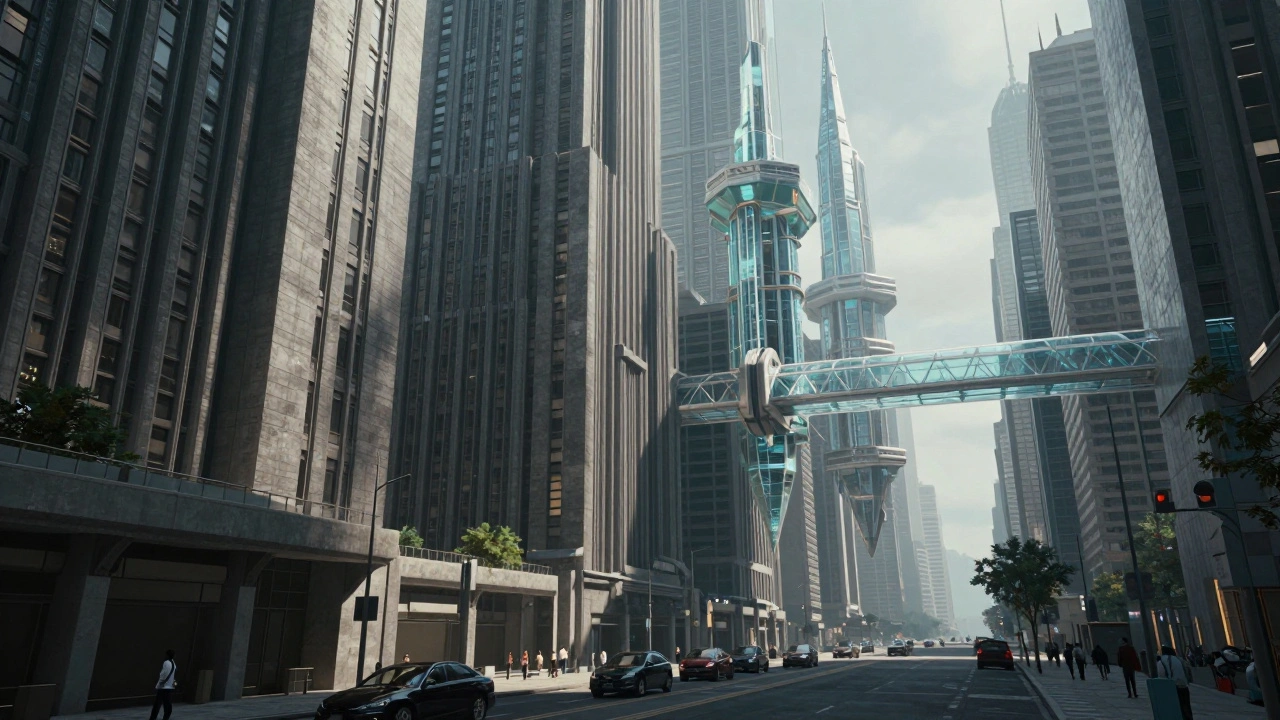
For anyone stepping into world-building bible creation, understand that this isn't just a sketchbook. It is a legal document for the eyes. When a production spans three years and four different directors, the bible ensures that the laws of physics, the color of the uniforms, and the history of a fictional war remain consistent. Without it, you're not directing a story; you're managing a series of expensive mistakes.
The Core Architecture of a Series Bible
At its heart, a Series Bible is a comprehensive reference guide used in Television Production and feature films to maintain internal logic. Think of it as the 'Single Source of Truth.' If a writer asks, "Can characters teleport in this world?" they don't call the director; they check the bible.
A professional design doc usually breaks down into three main pillars: Lore, Aesthetics, and Logistics. Lore covers the 'why'-the history, social hierarchies, and geography. Aesthetics cover the 'how'-the color palettes, materials, and architectural styles. Logistics cover the 'what'-the actual blueprints, prop lists, and costume specifications.
For example, if you're designing a steampunk city, your bible shouldn't just say "lots of brass." It should specify the exact alloy of brass used, why the city is built vertically (perhaps due to a rising tide of toxic fog), and how the class system is reflected in the clothing fabrics. This level of detail prevents the production designer from accidentally putting a 20th-century zipper on a 19th-century garment.
Mapping Visual Continuity and Production Design
Continuity isn't just about making sure a glass of water is half-full in every shot. In the context of Production Design, continuity is about the persistence of a world's logic. This is where the Visual Style Guide becomes the most valuable asset in the bible.
A strong style guide defines the "Visual Language" of the film. This includes a strict color script. If the protagonist's emotional arc is tied to the color blue, the bible dictates that blue only appears in specific contexts. If you start throwing blue curtains into the background of a scene where the character is supposed to feel isolated, you've broken the visual continuity.
| Feature | Standard Mood Board | World-Building Bible |
|---|---|---|
| Purpose | Inspiration and vibe | Strict enforcement of rules |
| Detail Level | General imagery | Technical specs and blueprints |
| Usage | Early pre-production | Pre-production through Post |
| Continuity | Suggested | Mandatory |
When you move from a mood board to a bible, you move from "I like this look" to "This is how the world works." In the 2010s, the rise of massive franchises like the MCU shifted the industry toward this rigid documentation. When you have thousands of assets across multiple movies, a shared design doc is the only way to ensure that a prop from a movie filmed in Atlanta in 2016 looks right in a sequel filmed in London in 2024.
Designing the Lore: The Invisible Framework
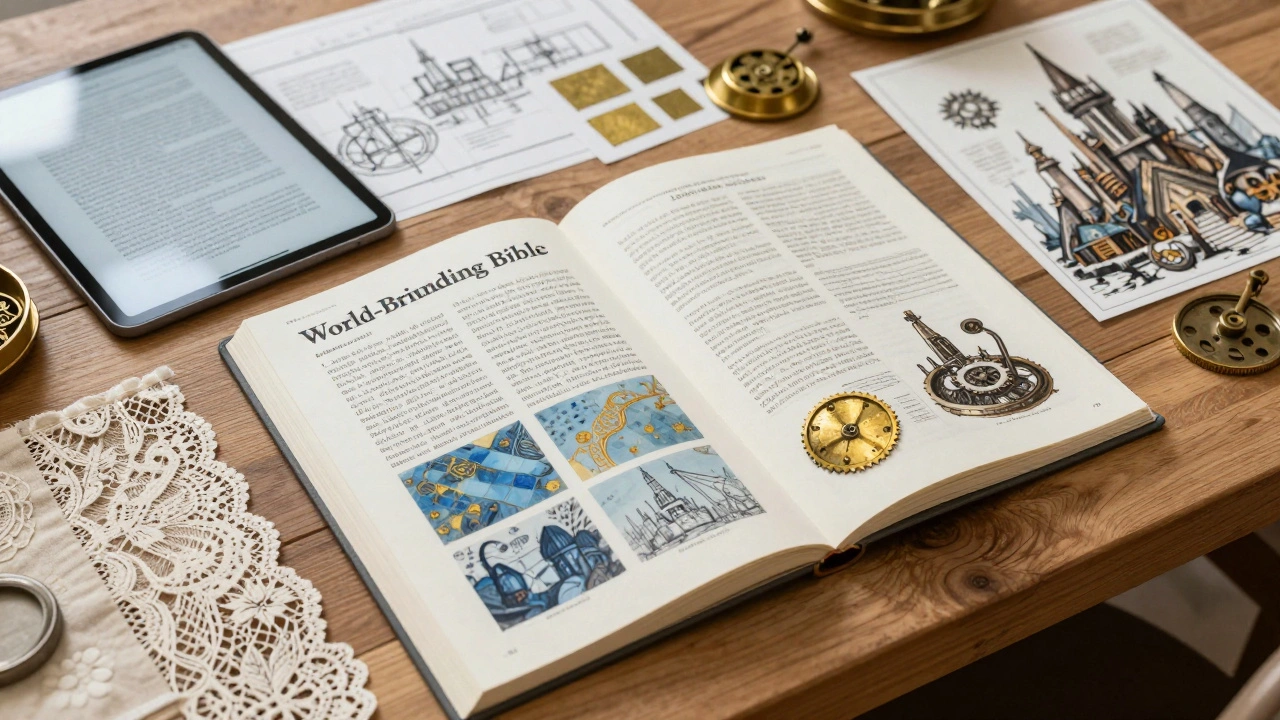
Lore is often dismissed as "fluff" by those who just want to get to the shooting, but it is the foundation of every physical prop. Consider Concept Art. If the lore states that a civilization is obsessed with the sun, the concept artist won't just draw gold buildings; they'll design windows that track the sun's movement. The production designer then knows to build those windows as functional pieces of the set.
To build an effective lore section, use the "Ripple Effect" method. Start with one core truth-for instance, "Magic costs the user their memories." Now, ripple that out. How does this affect the architecture? Maybe there are libraries everywhere to record things people forget. How does it affect fashion? Maybe people wear memory charms or journals as jewelry. Suddenly, your production design isn't just pretty; it's storytelling.
This approach eliminates the "why is that there?" questions from actors and crew. When an actor knows that their character's ring is a record of a lost childhood memory, they interact with the prop differently. The prop becomes a character, not just a piece of jewelry.
Technical Implementation: From PDF to Set
A bible that sits in a PDF on a hard drive is useless. For it to actually impact Film Continuity, it needs to be a living document. Modern productions use collaborative tools like Notion, Miro, or specialized asset management software to keep the bible accessible to everyone from the costume designer to the gaffer.
- The Master Asset List: Every prop, costume, and set piece is tagged with a unique ID. If the bible says "The King's Seal" is a specific wax red, that ID ensures the prop master doesn't buy a different shade of red for the sequel.
- Cross-Departmental Sync: The costume designer must check the lighting bible. If the lighting is primarily neon green, a green dress will make the actor disappear into the background.
- The Revision Log: Worlds evolve. If the director decides halfway through filming that the city is actually underwater, the bible must be updated immediately. If the updated version doesn't reach the set dresser, you'll have dry furniture in a submerged city.
A common pitfall is over-documenting. You don't need to write a 500-page novel. You need clear, actionable rules. Use "The Rule of Three": Give three visual markers for every location. For a futuristic lab, maybe it's white curved plastic, humming blue lights, and zero right angles. Now, any set dresser can maintain continuity without needing a meeting every hour.
Managing the Human Element of Continuity
The biggest threat to a world-building bible isn't bad design; it's human nature. People get tired, budgets get cut, and "creative differences" happen. This is why the Script Supervisor and the Production Designer must be in a constant feedback loop.
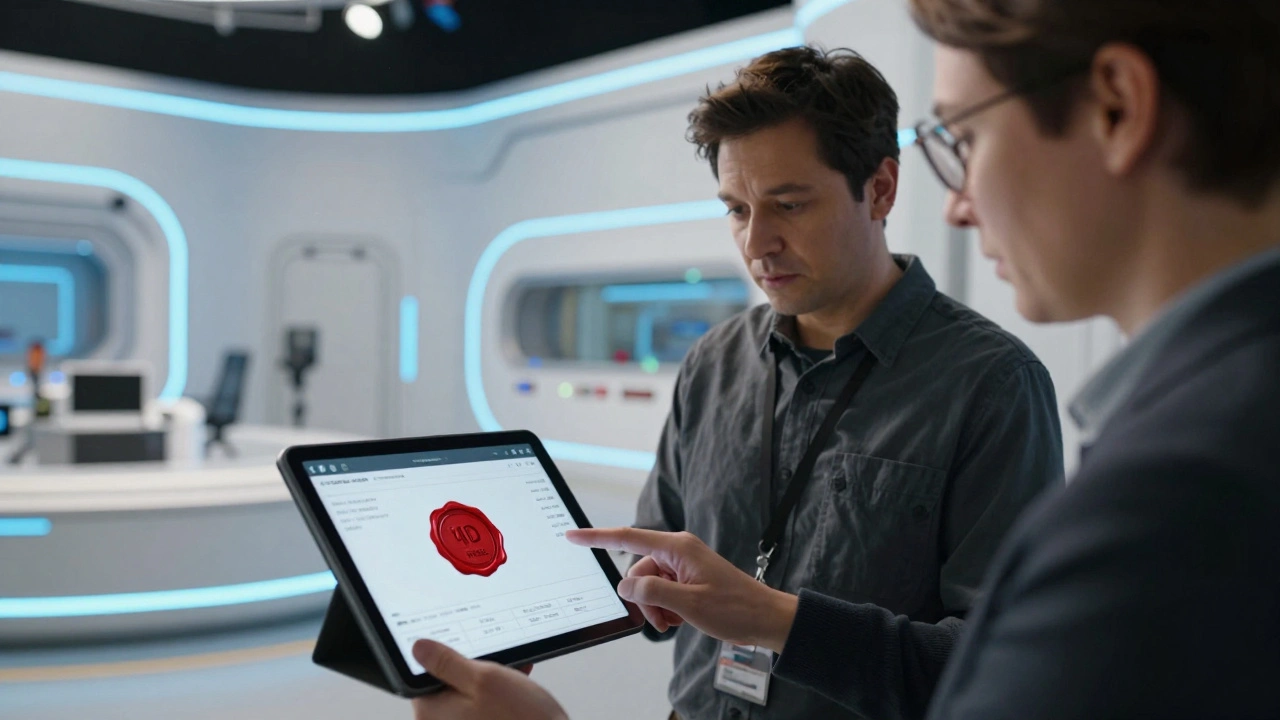
When a director wants to change something on the fly-say, adding a new piece of technology to a scene-the Production Designer should be able to pull up the bible on a tablet and say, "This contradicts the established energy source of this world." It's not about being a stickler for rules; it's about protecting the immersion of the audience.
Think of the audience as detectives. They are subconsciously looking for patterns. If you establish a rule (e.g., "Aliens can't enter water") and then break it without a plot-driven reason, the audience stops trusting the world. Once they stop trusting the world, they stop caring about the characters. The bible is essentially an insurance policy against the loss of audience immersion.
What is the difference between a story bible and a world-building bible?
A story bible focuses on plot arcs, character backstories, and dialogue styles. A world-building bible (or design doc) focuses on the physical and logical reality of the environment-architecture, technology, physics, and visual aesthetics. While a story bible tells you what the character does, the world-building bible tells you what the room they are standing in looks like and why it was built that way.
How long should a world-building bible be?
There is no set length, but the goal is utility over volume. A concise 30-page doc with clear charts, color palettes, and blueprints is far more effective than a 200-page text document that no one reads. It should be as long as necessary to answer the most frequent continuity questions without becoming an obstacle to production.
Can independent filmmakers use design docs?
Absolutely. In fact, it's more important for indie films because they lack the budget to fix continuity errors in post-production. A simple shared Google Doc or a Trello board acting as a mini-bible can save a low-budget production from costly reshoots caused by visual inconsistencies.
What tools are best for creating these documents?
For visual organization, Miro and Mural are excellent for mood-mapping. For structured data and wiki-style linking, Notion and Obsidian are the current industry favorites. For high-end technical blueprints and asset tracking, ShotGrid (by Autodesk) is the gold standard in professional VFX and production pipelines.
Does a bible limit creativity?
On the contrary, it fuels creativity by providing a framework. When you have a set of rules to work within, you're forced to find more innovative ways to solve problems. It's much easier to be creative when you aren't worrying about whether the prop you're using contradicts a scene filmed six months ago.
Next Steps for Production Teams
If you're starting a project today, don't wait until you're on set to think about continuity. Start by creating a "Core Truths" list-five things about your world that can never change. Build your visual assets around those truths. If you're a producer, ensure your Production Designer has the time and budget to develop this documentation during pre-production; it's an investment that pays off by reducing mistakes during the shoot.
For those working on existing franchises, conduct a "Continuity Audit." Go through previous installments and document every recurring visual element. Put them into a searchable database. This prevents the "wait, did he have a scar on the left or right cheek?" panic that often plagues long-running series.



Comments(7)