
You open your screenwriting software, and the cursor blinks. You start typing, and soon you're staring at the page counter in the corner. It reads 105. Your stomach drops. Is that too long? Too short? Does this extra ten pages mean your project is dead before you even pitch it?
Screenplays operate under strict, often unspoken rules regarding length. When I worked on projects in Asheville, local producers would toss scripts back if they exceeded standard thresholds without question. But there's a trap in thinking page count equals quality. A tight 80-page drama might fail just as hard as a bloated 120-page horror script if the pacing feels off.
The Reality of the One-Minute Rule
You've likely heard the classic advice: one page equals one minute of screen time. It's a handy heuristic, but treat it like a rough guide, not a stopwatch. In practice, dialogue-heavy scenes compress more than visual action sequences. A dense page of rapid-fire argument fills less runtime than a page describing a complex car chase with multiple stunts.
If you write 110 pages of heavy action descriptions, you aren't automatically guaranteeing 110 minutes of film. You might end up editing half of it down to shootability. Conversely, a dialogue-driven script might read faster than it plays. Always test this by having someone read it aloud while you time them. That data point beats guessing.
Genre Conventions Dictate Length
Your genre sets the expectation for studio readers. If you submit a 90-page romance to a horror slate, you signal a misunderstanding of market norms. Different stories require different breathing room.
- Action/Thriller: Usually sits between 100 to 120 pages. These films demand set pieces and visual storytelling, which takes more description per second of screen time.
- Comedy: Leans shorter, typically 90 to 105 pages. Comedies rely on rhythm and timing; dragging out jokes kills the momentum.
- Drama: Often runs longer, around 110 to 125 pages. Character studies need space for emotional arcs to breathe without feeling rushed.
- Holiday Films: Tightest constraints, usually 85 to 95 pages. These are produced quickly on TV budgets and must fit broadcast slots.
Hollywood Standard isn't arbitrary; it reflects production budgets. Longer scripts cost more money to shoot because they require more coverage, lighting setups, and actor hours. Executives glance at the last page number before flipping through. If it hits 130+, they assume the budget will balloon unless proven otherwise.
Formatting Influences Read Speed
Technical choices in your document layout alter perceived length significantly. The industry relies on a specific visual baseline known as Courier font, 12-point size. Stray from this, and you lose credibility instantly.
Using 11-point Courier or switching to Arial makes pages physically smaller. You might squeeze more words onto a sheet, tricking yourself into thinking the page count is lower, but when someone loads that file into Final Draft, it expands back to standard proportions. Do not try to game the system with margins. Adjusting white space to force a page limit is visible during a professional review.
Script margins determine standard page density. A proper slugline requires three lines of vertical space below it. Dialogue sits above the character name, centered slightly left. If you crowd these elements, you change the reading experience. A cluttered page signals an amateur who prioritizes length over clarity.
Visual Density and White Space
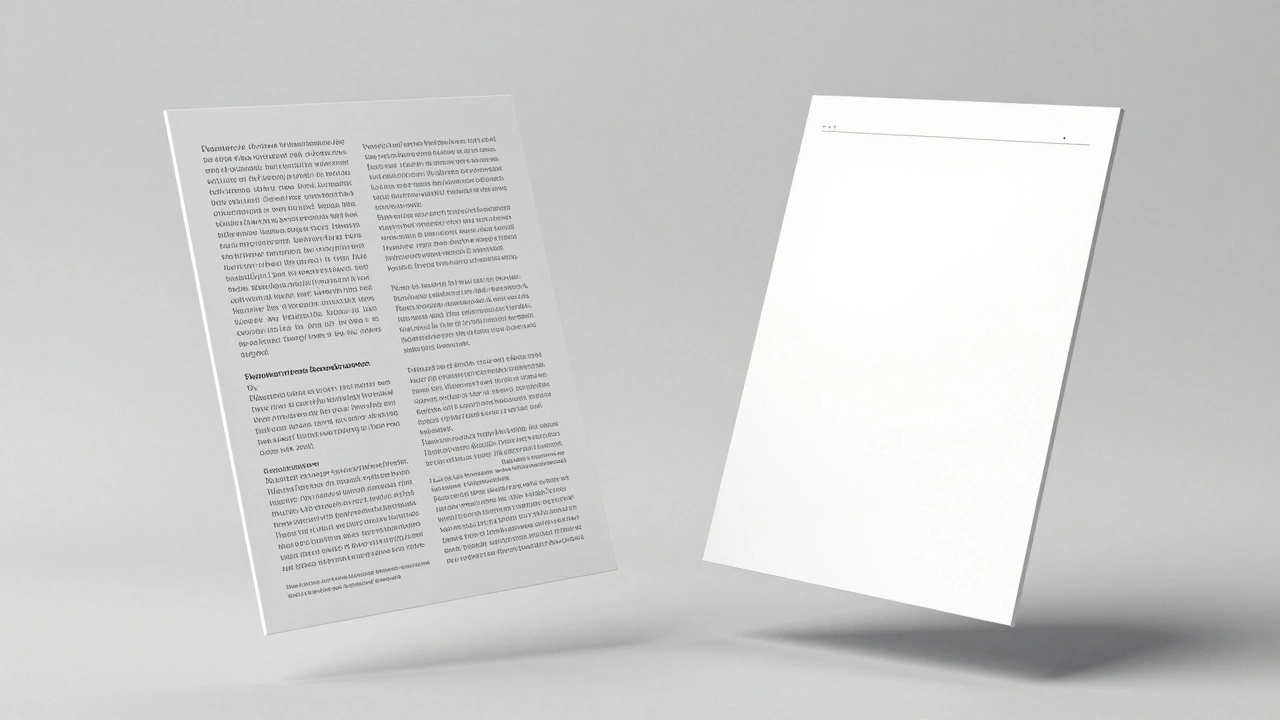
A good spec script should have plenty of white space. This looks clean and promises a fast read. Action blocks shouldn't exceed four or five lines. If you write a paragraph, the eye skims it. If you break it into single sentences, the energy spikes.
Compare these two approaches:
He walks into the room. Looks around. Sees the gun.
Versus:
He enters. Scans the room. Spots the gun on the desk.
The second version reads faster. It consumes less mental energy. This technique helps control page count without sacrificing detail. It forces the writer to trim adjectives and redundant verbs. This discipline keeps your draft within the 110-page sweet spot.
Industry Standards and Union Rules
When you aim for representation or employment, adherence to Writers Guild of America guidelines becomes relevant. While the WGA focuses on compensation and credits, their formatting standards set the baseline for legitimacy.
Producers reviewing your work check for these markers. A non-standard header or incorrect scene heading format (slugline) flags the file as needing reformatting before it moves forward. Save yourself the time of fixing basic errors later.
| Genre | Ideal Page Count | Maximum Acceptable |
|---|---|---|
| Horror | 95-110 | 115 |
| Romantic Comedy | 95-105 | 110 |
| Blockbuster Action | 100-120 | 130 |
| Dramatic Thriller | 110-125 | 135 |
Note that "Maximum Acceptable" is still risky. Even at 120 pages, the clock is ticking. Streaming platforms prefer tighter runtimes now due to binge-viewing habits. They often request cuts to episodes or feature films to fit specific viewing windows. Being adaptable to shorter forms shows you understand the modern market.
Pitfalls That Bloat Your Script
Why does the first draft always blow past 120 pages? Usually, it comes from over-describing camera angles or internal thoughts. Never write "CLOSE UP ON HIS EYES." Camera placement belongs in the edit bay, not your draft. Leave direction to the director and cinematographer.
Transitions like CUT TO: or SMASH CUT: add noise. Modern scripts mostly omit these unless crucial to the plot logic. Removing them saves lines. Also, avoid parenthetical instructions in dialogue. You cannot tell an actor how to say a line with a written command. Trust the casting process to fill that nuance.
Another common issue is the "Opening Scene Syndrome." Writers spend three pages setting up the world. Start later. Begin with conflict already present. Trim the exposition. If it's not essential to the immediate plot movement, cut it. Every deleted page is a win for your pacing.
Checking Your Work Before Submission
Before sending that PDF to an agent, run a sanity check. Does the page count align with the intended runtime? If it says 140 pages for a standard feature, cut scenes. Identify the slow middle act (Act Two) and find the weakest sequence there. Delete it or merge it with another plot point.
Use your screenwriting software's analysis tool. It tracks dialogue percentages versus action. A healthy balance is roughly 70% action/scenes, 30% dialogue. If dialogue exceeds 50%, you likely have a novel disguised as a script. Readers hate reading walls of speech they expect to see performed, not written.
Is it bad if my script is exactly 120 pages?
Not necessarily. 120 is the traditional upper limit for feature films. However, for a new writer, staying closer to 105-110 shows better discipline and awareness of modern production efficiency.
How many pages should a pilot episode be?
A one-hour drama pilot script usually falls between 60 to 70 pages. This accounts for commercial breaks or extended intros depending on the network's requirements for a streaming service release.
Can I change font size to reduce page count?
No. Deviating from standard 12-point Courier font is considered unprofessional. It distorts the page count metric used by industry professionals to estimate production costs and scheduling.
What if my script is too short?
If you are under 90 pages, you risk appearing incomplete. Expand on character motivation or add necessary subplots rather than padding with fluff. Thin plots suggest you haven't fully explored the concept.
Does AI affect standard screenplay formatting?
Currently, no. Standardizing remains the same despite new tools. Human oversight is required to ensure the pacing reads correctly, as AI can sometimes prioritize word count over narrative rhythm.
Troubleshooting High Page Counts
If you find yourself stuck at 130 pages, apply the surgical method. Look at every scene. Ask: Does this scene advance the plot or reveal character? If the answer is no, delete the whole thing. Sometimes killing a scene reveals holes, forcing you to bridge gaps elsewhere.
Merging characters can also save space. If two secondary roles do similar jobs, combine them into one. This trims scenes where those two interact separately. It streamlines the narrative focus. Remember, the goal isn't just to meet a number; it's to sharpen the vision until the core story shines.




Comments(10)