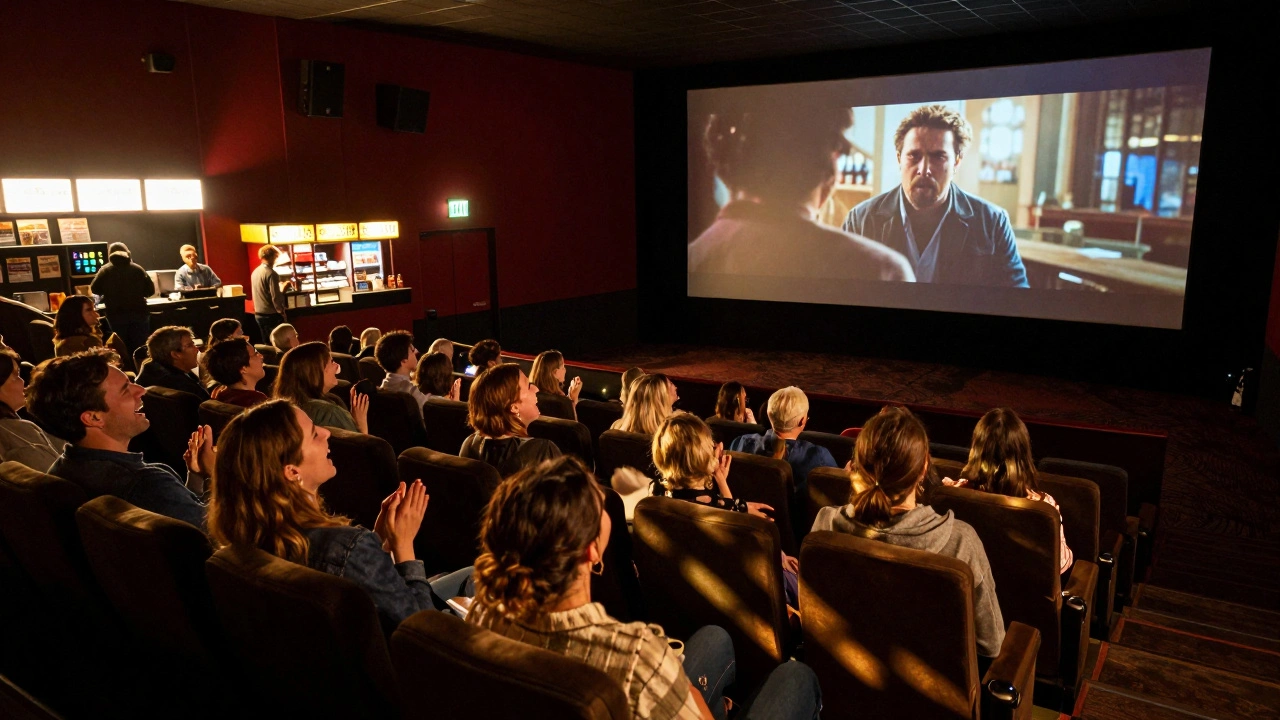
When a movie hits theaters, the clock starts ticking. Not just on the runtime of the film, but on how long it stays in theaters before moving to streaming or home video. In 2026, two window lengths dominate the conversation: 17 days and 45 days. And the difference between them isn’t just about scheduling-it’s about money, audience behavior, and who wins when a film plays longer or shorter in theaters.
Why the Theatrical Window Even Matters
For decades, studios followed a simple rule: give a movie 90 days in theaters before it went digital. That changed after pandemic-era shifts and streaming wars. Now, the window is shrinking. Some studios cut it to 30 days. Others, like A24 and Neon, have gone as low as 17. Meanwhile, major studios like Universal and Warner Bros. still push for 45. Why? Because each length sends a different signal-to theaters, to audiences, and to investors.
Think of the theatrical window like a test drive. If a movie’s first week is strong, it’s got legs. If it drops fast, maybe it didn’t connect. But if you pull it off screens too soon, you risk leaving money on the table. And if you leave it too long, you risk losing momentum to streaming competition.
17-Day Window: The High-Stakes Gamble
The 17-day window became famous after A24’s Everything Everywhere All at Once in 2022. It played in theaters for just over two weeks before hitting digital. The result? It made $139 million worldwide on a $25 million budget. Critics called it a masterclass in audience building. But here’s the catch: it only worked because the film had massive word-of-mouth, awards buzz, and a cult-ready vibe.
Today, studios using 17-day windows are betting on three things:
- The movie is a niche hit-targeted enough to ignite online chatter fast
- It’s not meant for mass appeal, so it doesn’t need weeks to build
- They’re using streaming as a booster, not a replacement
But here’s what rarely gets said: 17-day windows only work for about 1 in 5 films. Most movies that go this fast tank. Take The Blackening (2023). It opened strong, hit streaming in 17 days, and vanished. No sequel. No cultural footprint. Just a $12 million gross on a $5 million budget. The window didn’t fail-it was the wrong tool for the movie.
45-Day Window: The Safe Bet That Still Pays
Universal’s 2025 release of Wicked stuck with a 45-day window. It made $1.2 billion globally. Why? Because it had mass appeal. Families. Musical fans. Teenagers. People who don’t rush to stream. It needed time to spread. Theatrical runs aren’t just about opening weekend-they’re about repeat viewings, group outings, and holiday spikes.
Studies from the Motion Picture Association show that films with 45-day windows earn, on average, 23% more in domestic box office than those with 30-day windows. That’s not a small bump. That’s $50 million extra on a $200 million film. And it’s not just about ticket sales. Concessions, parking, merchandise-those add up too. A theater doesn’t make money from the film alone. It makes money from the crowd.
Even streaming platforms are noticing. Apple TV+ and Amazon Prime Video now delay their big releases by 30-45 days to let theaters take the first cut. Why? Because they know: if a film doesn’t earn in theaters, it won’t earn on streaming either. People don’t watch Barbie or Dune on a phone-they watch them on a screen, in a room, with friends.
What Happens Between 17 and 45 Days?
There’s a sweet spot between 30 and 40 days. That’s where most mid-budget films thrive. Take Oppenheimer-it ran for 70 days, but its real surge came between days 25 and 40. That’s when people who missed opening weekend, or wanted to see it in IMAX, finally showed up. Studios that release films on day 35 capture 80% of their total box office revenue. Day 17? You capture 60%. Day 45? You capture 90%.
Here’s a simple rule: if your film has a strong opening weekend (over $20 million), give it 45 days. If it opens under $8 million, consider 30. Anything under $5 million? You’re probably better off going straight to streaming. But if you go too early, you’ll never know if it could’ve grown.
Theater Chains Are Fighting Back
AMC and Regal aren’t just passive venues anymore. They’ve started demanding minimum windows in contracts. AMC’s 2025 deal with Universal requires a 45-day exclusive run for all major studio films. If a studio violates it, AMC can cut off future releases. That’s not a threat-it’s a business move.
Smaller theaters are even more vulnerable. A single indie film that plays for 17 days might be their only revenue for the month. If every studio cuts to 17, rural theaters die. That’s why regional chains in places like Asheville, NC, or Boise, ID, now lobby for longer windows. They’re not against streaming. They just want to survive.
How Audience Behavior Is Changing
People aren’t just watching movies differently-they’re watching them in groups. Data from Fandango shows that 68% of moviegoers in 2025 went with friends or family. That’s up from 51% in 2019. Those people don’t wait for streaming. They plan outings. They buy tickets weeks in advance. They want the full experience.
Meanwhile, solo viewers-mostly under 25-are more likely to stream. But they’re also the least likely to pay for a premium format. A 22-year-old watching Spider-Man: Beyond on their laptop isn’t spending $18 on IMAX or $12 on popcorn. That’s revenue you lose.
Longer windows don’t just help theaters-they help studios build cultural moments. Twisters (2024) made $420 million because people didn’t just watch it once. They watched it twice. Once with friends. Once with parents. That only happens when a movie sticks around.
What Works Now? A Real-World Formula
There’s no one-size-fits-all, but here’s what’s working in 2026:
- Blockbusters ($100M+ budget): 45-day minimum. No exceptions.
- Mid-budget dramas or comedies ($20M-$60M): 30-40 days. Test the audience response after week two.
- Indie films with awards potential: 25-30 days. Use festival buzz to fuel early demand.
- Genre films (horror, sci-fi, action): 17-25 days. If it’s viral, it doesn’t need time.
And here’s a tip most studios ignore: track daily ticket sales after day 14. If daily sales are still above 30% of opening day, keep it in theaters. If they drop below 15%, move it. That’s the real signal-not a fixed number of days.
The Bigger Picture: Revenue Isn’t Just Box Office
It’s easy to think revenue = tickets sold. But it’s not. It’s also merch, licensing, sequel rights, international sales, and streaming licensing deals. A film that plays longer in theaters gets more press. More press means more global buyers. More global buyers means higher licensing fees.
Take The Marvels (2023). Its 45-day run boosted international sales by 19%. Why? Because overseas markets, especially in Asia and Latin America, rely on theatrical buzz to drive digital sales. A film that disappears after 17 days looks like a flop abroad.
Studios that treat the theatrical window as a marketing tool-not just a distribution channel-win. The movie isn’t done when it leaves theaters. It’s just getting started.
Is a 17-day theatrical window better for indie films?
It can be-but only if the film has strong buzz, awards traction, or viral appeal. Most indie films that go 17 days don’t break even. A 25-30 day window gives them time to build momentum through word-of-mouth and critic reviews. If you’re an indie filmmaker, don’t rush. Let audiences find you.
Do streaming services hurt theatrical revenue?
Not if they wait. When streaming releases happen too soon, they cannibalize box office. But when they follow a 45-day window, they actually boost it. Viewers who see a film in theaters are 40% more likely to stream it later. The key is timing. Don’t rush. Let the theater experience build value first.
Why do some studios still use 90-day windows?
They don’t-mostly. The 90-day window is mostly gone. A few legacy deals in international markets still use it, but even then, it’s shrinking. The real debate is between 30 and 45 days. Anything longer is seen as outdated, unless it’s a prestige film with awards momentum.
Can a film succeed with a 17-day window and still make a sequel?
Yes-but only if it’s a cultural phenomenon. Everything Everywhere All at Once got a sequel because of its impact, not its box office. Most films that go 17 days don’t make enough to justify a sequel. Studios look at total engagement: social buzz, streaming numbers, merchandise sales-not just ticket sales.
What’s the future of theatrical windows?
It’s not about length anymore-it’s about flexibility. The future is dynamic windows: a film might play 45 days in major cities, but 25 in rural markets. Or it might extend based on daily sales. Studios are testing AI tools that auto-adjust release windows based on real-time data. The rigid 17- or 45-day rules are fading. The smartest studios are letting the audience decide.
At the end of the day, the theatrical window isn’t about how long a movie stays on screen. It’s about how deeply it connects. A short window can spark a movement. A long window can build a legacy. The difference? It’s not in the calendar. It’s in the crowd.






Comments(9)