Most people think documentaries are made for TV or streaming. But hundreds of nonfiction films each year hit theaters-sometimes for just a week, sometimes for months. How? It’s not luck. It’s the festival circuit. And if you’re a documentary filmmaker, understanding this path isn’t optional-it’s the only way to reach audiences beyond your screen.
The Festival Path Isn’t Optional, It’s the Pipeline
There’s no direct route from editing suite to AMC. Studios don’t scout YouTube for the next My Octopus Teacher. They wait for festivals to do the filtering. Sundance, Tribeca, Sheffield DocFest, IDFA-these aren’t just award shows. They’re marketplaces. Buyers from Netflix, HBO, Neon, and indie distributors sit in the back of theaters, taking notes. If your film gets a standing ovation at Sundance, you’re not just winning a prize-you’re getting a distribution deal before you even leave the venue.
Between 2020 and 2025, over 68% of documentaries that opened in U.S. theaters had their world premiere at a major festival. That’s not a coincidence. It’s the system. Festivals act as quality filters. A film that screens at SXSW and gets picked up by Sony Pictures Classics didn’t get there by accident. It had strong storytelling, clear emotional stakes, and a visual style that stood out in a crowded field.
What Festivals Actually Look For
Not every festival is the same. Some are for filmmakers. Some are for buyers. Some are for critics. You need to know which is which.
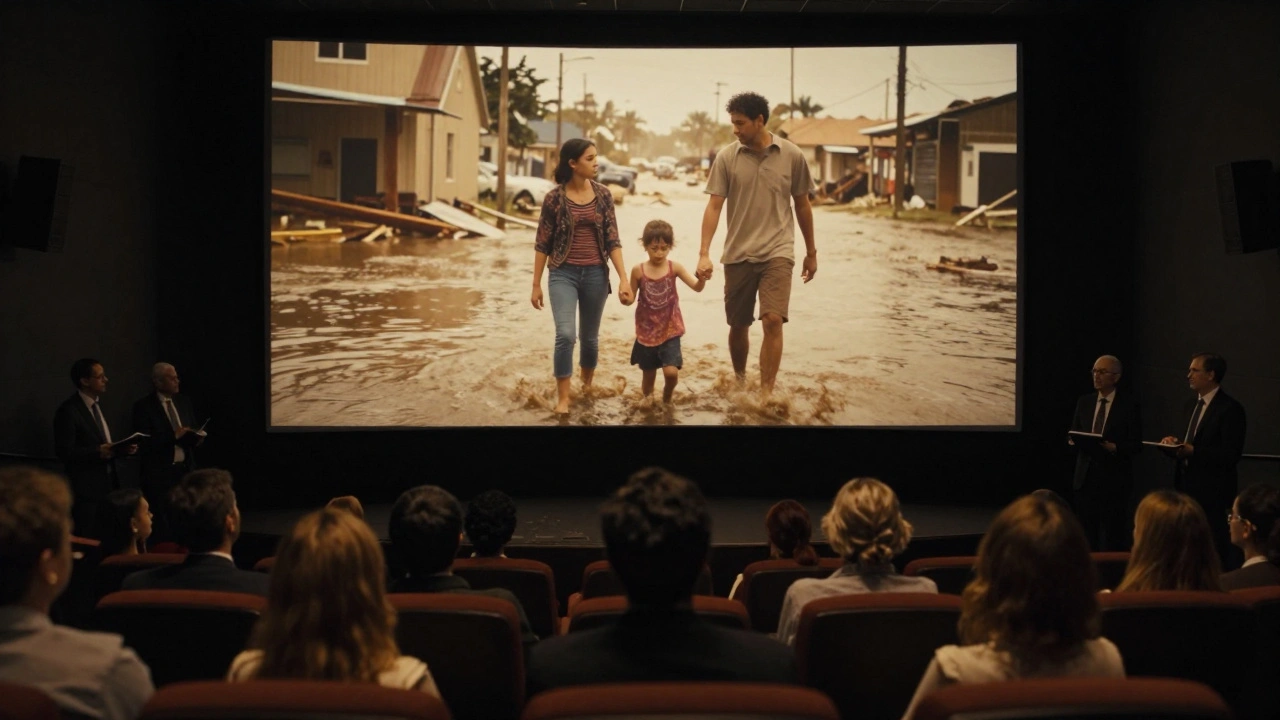
Sundance and Tribeca are the big leagues. They get the most attention, but they’re also the hardest to get into. They look for films that feel cinematic, not just informative. A documentary about climate change that’s just talking heads won’t make it. But one that follows a family in Louisiana as they rebuild after a hurricane-using handheld cameras, intimate interviews, and a slow-building score-that’s the kind that gets noticed.
Smaller festivals like Hot Docs (Toronto) or Full Frame (Durham) are where distributors test the waters. If your film gets a strong response at Full Frame, it might get picked up by a smaller distributor like Oscilloscope or Kino Lorber. These companies specialize in nonfiction and know how to book theaters in 15 to 20 cities, often starting with art-house screens in New York, Los Angeles, and Chicago.
International festivals matter too. If your film wins Best Documentary at IDFA in Amsterdam, you’re not just getting a trophy. You’re opening doors in Europe, Asia, and Latin America. Distribution rights can sell for tens of thousands of dollars just from a single win.
The Role of Awards and Audience Response
Awards don’t just look good on a poster. They change how theaters book your film.
Take The Territory-it won the Grand Jury Prize at Sundance in 2022. That win gave it immediate credibility. Within two weeks, it was booked in 47 theaters across the U.S. Without that award, it might have only made it into 12. Theaters don’t take risks on unknown titles. But when a film wins at a top festival, they know people will show up.
Audience scores matter just as much. At festivals like DOC NYC, films are rated by attendees on a scale from 1 to 10. A film that averages 9.2? That’s a red flag for distributors. It means real people connected with it. That’s the kind of data that convinces a theater chain to give you a week-long run in a major city.
Even if you don’t win, a strong audience reaction can be enough. In 2023, 20 Days in Mariupol didn’t win the top prize at Sundance-but it got the Audience Award. That’s what got it a theatrical release in over 200 theaters. Theaters don’t care about judges. They care about ticket sales.

How Distribution Deals Actually Work
Let’s say your film plays at Tribeca and gets a deal. What happens next?
You don’t just get a check. You get a plan. Most deals are structured as a theatrical window followed by streaming. That means your film opens in theaters first-usually 2 to 4 weeks-before it lands on Apple TV+ or Hulu.
Distributors handle everything: printing physical reels (yes, some theaters still use film), creating marketing materials, booking screenings, negotiating with theater chains, and even organizing Q&As with your subjects. A good distributor will get your film into 50 to 100 theaters. A great one? They’ll get you into 200+.
Payment? It’s rarely a big upfront cash payout. More often, it’s a minimum guarantee-say, $50,000 to $150,000-plus a percentage of box office revenue after the distributor recoups their costs. If your film makes $1 million, you might earn $100,000 to $300,000. That’s life-changing for most indie filmmakers.
Some filmmakers skip distributors entirely and self-release. That’s risky. It costs $20,000 to $50,000 just to print DCPs, book theaters, and run ads. But if you have a built-in audience-say, your film is about a local issue that made headlines-you might make more money on your own.
Why Some Docs Never Make It to Theaters
Not every great documentary gets a theatrical run. Here’s why:
- Too niche. A film about tax policy in rural Nebraska? Even if it’s well-made, theaters won’t book it unless it’s tied to a national conversation.
- No clear emotional hook. If viewers can’t say, ‘I care about this person,’ they won’t pay to see it.
- Wrong timing. A film about a political scandal released six months after the election? Too late. Festivals look for relevance.
- Weak visuals. If your film looks like a Zoom call with voiceovers, it won’t compete with films shot on 35mm or drone footage.
There’s also the problem of oversaturation. In 2024, over 1,200 documentaries premiered at festivals worldwide. Only about 180 got theatrical releases. That’s less than 15%. The competition is brutal. You need more than a good story-you need a story that feels urgent, cinematic, and human.
Real Examples That Worked
Navalny (2022)-Filmed secretly inside Russia, this documentary followed Alexei Navalny’s poisoning and imprisonment. It premiered at Sundance, won the Audience Award, and was picked up by HBO. It opened in 312 theaters in the U.S. and Canada. Box office: $1.2 million. That’s rare for a documentary.
Fire of Love (2022)-A love story wrapped in volcanic footage. It didn’t have a political angle. No interviews. Just stunning imagery of a married couple chasing lava. It won the Cinematography Award at Sundance, got a deal from National Geographic, and opened in 200 theaters. It made $2.1 million. Why? Because it felt like a movie, not a lecture.
20 Days in Mariupol (2023)-Shot during the Russian invasion, this film was smuggled out of Ukraine. It premiered at Sundance, won the Audience Award, and opened in 225 theaters. It was nominated for an Oscar. Theaters didn’t book it because it was important. They booked it because people wanted to see it.
What Filmmakers Should Do Now
If you’re making a documentary and want it in theaters, here’s your checklist:
- Finish early. Festivals submit deadlines are 6 to 12 months before they happen. Miss one, and you wait a year.
- Target the right festivals. Don’t submit to 20. Pick 5 that match your film’s tone and audience. Sundance for bold, cinematic docs. Full Frame for intimate, character-driven stories.
- Make it visual. Use B-roll. Use music. Use movement. Static interviews won’t cut it.
- Build an audience before you premiere. Start a newsletter. Post behind-the-scenes clips. Get people excited. Festivals notice when a film already has traction.
- Have a plan for after the festival. Who will handle distribution? Do you have a PR person? A trailer? A website? The moment you get picked up, you need to be ready to move fast.
Documentaries aren’t made to sit on hard drives. They’re made to be seen. And if you want people to see yours on a big screen, you need to play the festival game the right way.
Do documentaries need to win awards to get a theatrical release?
No, but awards help. Audience scores often matter more. A film like 20 Days in Mariupol didn’t win the top prize at Sundance, but it won the Audience Award-and that’s what got it into 225 theaters. Distributors care more about whether people will pay to see it than whether judges liked it.
Can I self-distribute my documentary without a festival?
Yes, but it’s expensive and hard. You’ll need $20,000 to $50,000 to print DCPs, book theaters, run ads, and hire a publicist. It works best if you already have a built-in audience-like a film about a local issue that made headlines. Most filmmakers rely on festivals to handle the logistics and reach.
Which festivals are best for first-time documentary filmmakers?
Start with festivals that are filmmaker-friendly and have strong distribution networks. Full Frame, IDFA, Hot Docs, and South by Southwest are all great options. They’re less competitive than Sundance but still respected by buyers. Avoid festivals that charge high submission fees without clear track records of distribution.
How long does a theatrical run usually last for a documentary?
Most run for 1 to 4 weeks. A few, like My Octopus Teacher or Free Solo, stay in theaters for months. But those are exceptions. Most docs open in a few cities, get strong word-of-mouth, then expand to more theaters over time. The goal isn’t always a long run-it’s enough buzz to land on streaming.
Do streaming platforms only want documentaries that played at festivals?
Almost always. Netflix, Hulu, and Apple TV+ don’t buy raw footage. They want proof that a film connects with audiences. Festivals provide that proof-through awards, audience scores, and press coverage. A film that played at Sundance and got a 9.1 audience rating is far more attractive than one that just sat on a hard drive.





Comments(6)