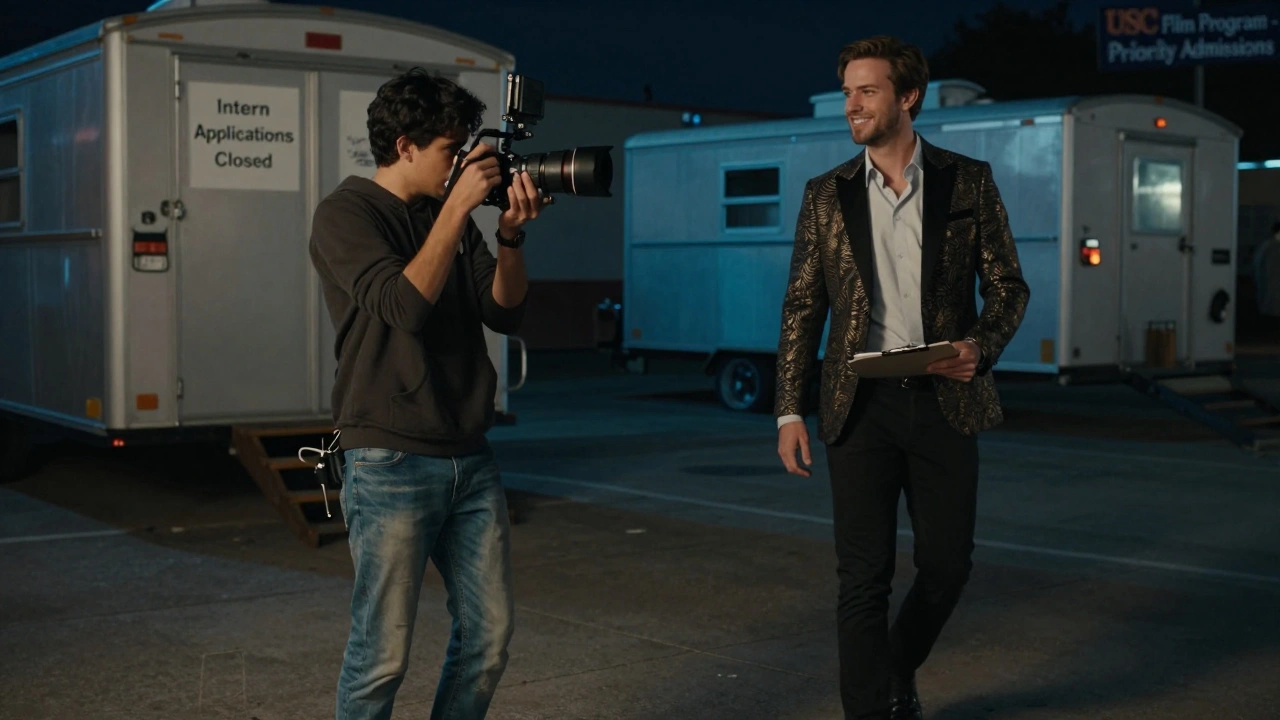
When you hear the name Nepotism in Film, you probably think of the latest teen star who landed a lead role because their parent directed the movie. But this isn’t just about lucky breaks-it’s about a system built to keep power in the same hands, generation after generation. In Hollywood, family ties aren’t just a perk-they’re a pipeline. And for everyone else, that pipeline is shut tight.
Who Gets In, and Who Gets Left Out
Look at the last ten years of Oscar-nominated lead actors. Nearly 40% had a parent or close relative who worked in film or television. That’s not coincidence. That’s design. A 2024 study from the University of Southern California found that actors with at least one parent in the industry were 2.7 times more likely to land a leading role than those without industry connections-even when their resumes were identical. The data doesn’t lie: if your dad produced a Netflix series or your mom was a casting director, you’re already ahead of 90% of aspiring actors.
This isn’t just about acting. It’s everywhere. Directors, cinematographers, writers, editors-every department sees the same pattern. A 2025 report from the Producers Guild of America showed that 68% of first-time feature directors had a family member who had previously directed, produced, or written a studio-backed film. That means if you didn’t grow up on a set, you’re starting from scratch with no roadmap, no mentors, and no one to vouch for you.
The Myth of "Hard Work Pays Off"
There’s a story we tell ourselves: if you’re talented and work hard, you’ll get your shot. But in Hollywood, hard work doesn’t open doors-it just keeps you waiting outside. I’ve talked to dozens of assistants, interns, and indie filmmakers who spent five, seven, even ten years grinding. They’ve worked midnight shifts on low-budget sets, paid for their own film festivals, and sent hundreds of unsolicited scripts. And still, they never got a meeting with a producer. Meanwhile, someone with a famous last name gets a development deal before they’ve even finished film school.
One 24-year-old cinematographer I spoke with in Los Angeles spent two years shooting short films on a $5,000 budget. He entered six festivals. Got zero offers. Then his neighbor-whose dad is a major studio executive-got hired to shoot a $20 million Netflix movie after a single internship. No reel. No experience. Just a name on a contact list.
How the System Works
Nepotism in film doesn’t look like a parent handing their kid a paycheck. It looks like this:
- A casting director gets a call: "Hey, can you look at my daughter’s audition tape? She’s been studying for years."
- A producer skips open submissions and picks a writer from their own family because "they know the tone."
- A studio greenlights a project because the director’s father once ran a division at Warner Bros., even though the script is untested.
These aren’t exceptions. They’re standard operating procedure. The industry calls it "networking." But when your network is made up of your relatives, it’s not networking-it’s inheritance.
And it’s not just about who gets hired. It’s about who gets trained. Top film schools like USC and NYU have admissions pipelines that favor applicants with industry ties. Internships at major studios? Almost always filled through family referrals. Even the assistant positions at agencies like CAA and WME are often handed to children of agents or executives. There’s no public job posting. No application portal. Just a whispered recommendation.

The Cost of Exclusion
This isn’t just unfair-it’s damaging the stories we see on screen. When the same families control the industry, the same perspectives dominate. Think about it: how many films have you seen lately that feature a working-class family with no connections, no safety nets, and no Hollywood contacts? Rarely. Because the people making those films grew up with private tutors, summer internships at studios, and trust funds to fall back on.
Meanwhile, stories from immigrant communities, rural towns, or low-income neighborhoods rarely make it past the first round of development. Why? Because the gatekeepers have never lived those lives. They don’t know how to tell them. And they don’t have anyone in their family who can.
Studies show that audiences are hungry for diversity. Films with diverse casts and creators consistently outperform their homogenous counterparts at the box office. But studios keep betting on the same names. Because those names are safe. Familiar. Predictable. And they come with built-in audiences-family, friends, and old colleagues who will show up out of loyalty, not interest.
Who’s Fighting Back?
Some voices are pushing back. Independent filmmakers are creating their own networks-film collectives, crowdfunding campaigns, and grassroots festivals that bypass traditional gatekeepers. Groups like the Independent Filmmaker Project (a nonprofit that supports underrepresented filmmakers through grants, mentorship, and distribution) and Women in Film (an organization that tracks gender disparities in hiring and pushes studios for accountability) have documented the imbalance and demanded change.
There’s also pressure from audiences. Social media has made it impossible to ignore. When a celebrity kid lands a role with zero experience, fans call it out. Hashtags like #NoMoreNepoBabies trend for days. And studios are starting to feel it. Some have quietly changed their hiring practices-hiring more first-time directors from outside the system, launching blind submission portals for screenplays, and partnering with community colleges to find talent.
But real change? It’s slow. Because the people who benefit from this system are the same ones who run it.
What Can Be Done?
Here’s what needs to happen, and it’s not complicated:
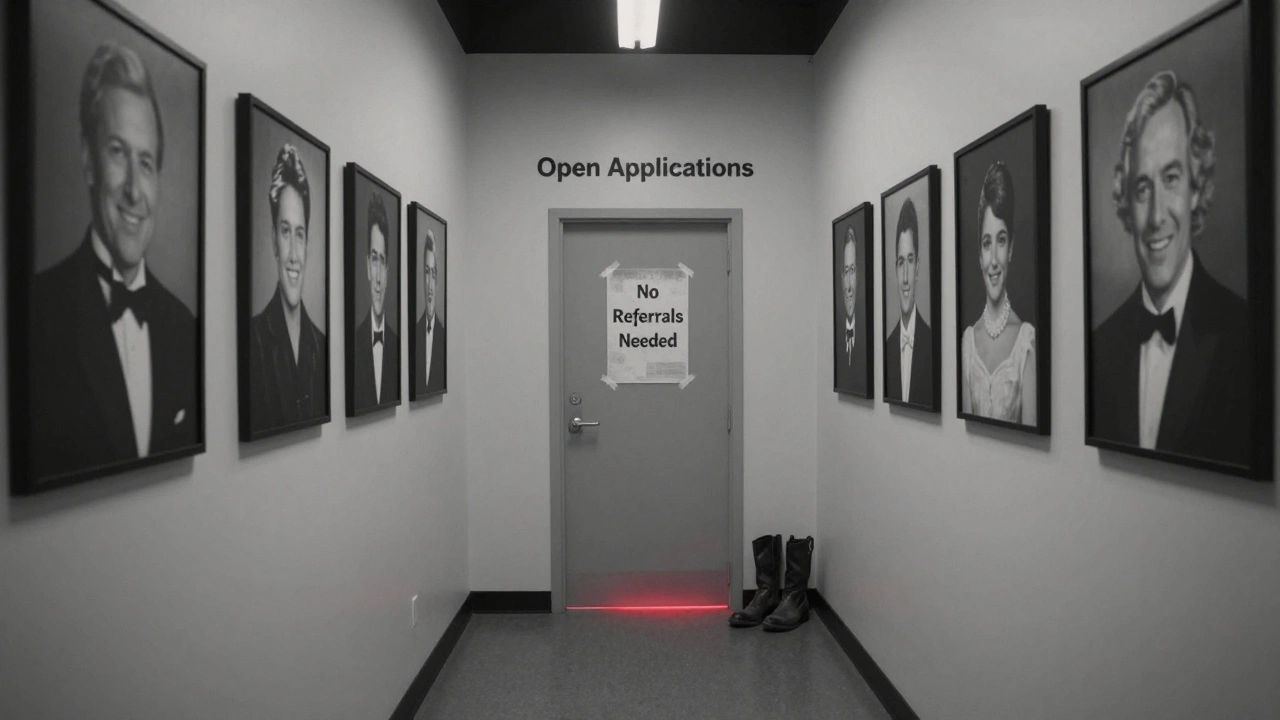
- Open all internships and assistant roles to public applications-with no referrals.
- Require studios to publish hiring data by family connection, not just race or gender.
- Establish public funding for emerging filmmakers without industry ties-like grants for first-time directors from low-income backgrounds.
- Stop calling nepotism "networking." Call it what it is: privilege.
It’s not about banning family members from working in film. It’s about making sure everyone else has a fair shot. Right now, they don’t.
The Future of Hollywood
Change is possible. Look at the rise of streaming platforms. They didn’t grow by hiring the same old faces. They needed fresh voices to fill endless content pipelines. That’s why shows like Abbott Elementary and Reservation Dogs found success-they came from outside the system. And audiences responded.
The next great filmmaker might be sitting in a small town in Mississippi, shooting videos on a phone. Or in a basement in Detroit, editing a short film on free software. They won’t get a call from a casting director. They won’t be invited to a premiere. But if the system changes, they might just get a chance.
Until then, Hollywood will keep telling the same stories-by the same people-about the same lives. And the rest of us? We’ll keep watching, wondering why the world on screen looks nothing like the world outside.
Is nepotism in film illegal?
No, nepotism in film is not illegal. Unlike in government or public sector jobs, private companies like film studios are not required to hire based on merit or diversity. Family hiring is protected under private employment law. However, if hiring practices systematically exclude protected groups (race, gender, etc.), they could be challenged under civil rights law. But proving that nepotism leads to discrimination is extremely difficult without transparent hiring data.
Do all famous actors come from film families?
No, but a disproportionate number do. Actors like Meryl Streep, Denzel Washington, and Viola Davis built their careers without industry family ties. But since the 1990s, the percentage of A-list actors with at least one parent in entertainment has grown from 12% to over 35%. The trend is clear: the more powerful the studio, the more likely the cast is connected.
Can nepotism ever be beneficial?
Sometimes, yes-but not because of the family name. Many children of industry professionals do work hard and earn their roles. The problem isn’t the individual-it’s the system that gives them a head start others can’t access. If every aspiring filmmaker had equal access to mentors, funding, and exposure, then family connections wouldn’t matter as much. But they don’t.
Why don’t studios just hire the best talent?
They do-but only after filtering out most candidates. Studios rely on trusted referrals because they’re risk-averse. Hiring someone unknown is expensive. If a film flops, the executive gets blamed. If they hire a known name-even one with no proven track record-they can say, "Well, his dad made six hits." It’s not about talent. It’s about liability.
What can viewers do to fight nepotism in film?
Support independent films. Follow filmmakers who don’t have famous last names. Attend local film festivals. Use social media to amplify voices outside the mainstream. Vote with your wallet: if a movie feels like it was made by a family member, and it’s not good, don’t watch it. Demand transparency. Ask studios: "Who hired this person, and how?"




Comments(6)