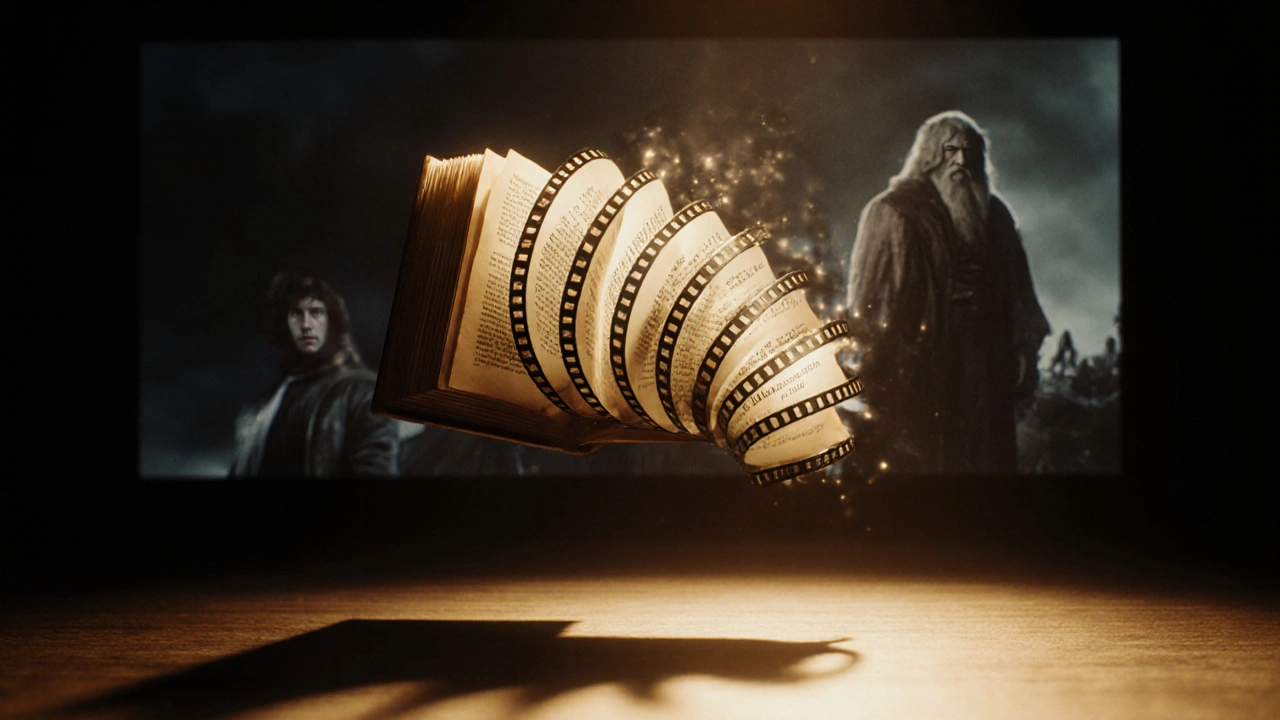
Books don’t just get turned into movies-they’re rebuilt from the ground up.
You’ve read a novel that felt like a movie already. Maybe it was Book to movie adaptation like The Hunger Games or Shutter Island. You imagined the scenes, the lighting, the music. So when the film came out, you expected it to feel the same. But it didn’t. Some parts were cut. Others changed. A character you loved was gone. Why?
Because a book and a film aren’t the same thing. One lives in your mind. The other lives on a screen. Turning a 400-page novel into a two-hour movie isn’t about copying. It’s about translation.
What gets kept-and what gets thrown out
Most novels use internal monologue. Characters think. They reflect. They remember. Film can’t do that easily. You can’t show someone’s thoughts unless you add voiceover-and even then, it feels clunky if overused.
Take To Kill a Mockingbird. Harper Lee’s book spends pages on Scout’s observations, her childhood confusion, her slow understanding of racism. The 1962 film kept the core story but cut most of the internal narration. Instead, it used the setting-the porch, the courtroom, the trees-to show what Scout felt. The movie didn’t explain. It showed. And that’s the rule: show, don’t tell.
Subplots? Usually gone. Characters? Often merged. In The Lord of the Rings, the book has dozens of minor characters with backstories. The films cut many, combined others. Aragorn’s journey was tightened. Faramir’s role was changed to raise tension. Why? Time. A movie has 120 minutes. A novel has 80,000 words. You can’t fit both.
Who decides what changes?
It’s not the author. Not always. Sometimes the author is involved-Stephen King wrote the screenplay for It (1990). But most of the time, the studio hires a screenwriter. That person reads the book, then starts cutting. They answer one question: What’s the movie’s core?
For Harry Potter and the Goblet of Fire, the screenwriter had to cut nearly 700 pages. They kept the Triwizard Tournament, the Death Eater attack, and Harry’s emotional isolation. They dropped the Quidditch World Cup, the house-elf subplot, and most of the Ministry of Magic bureaucracy. The movie wasn’t about politics. It was about growing up under pressure.
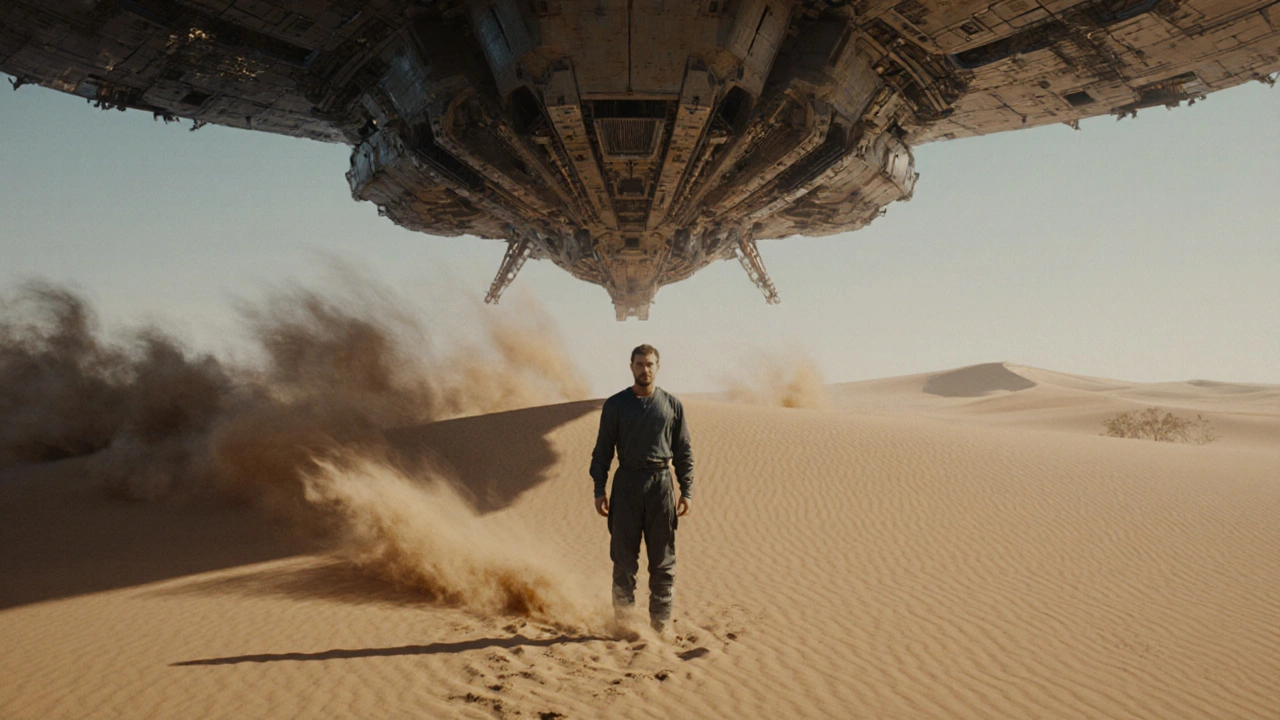
Directors have their own vision. Denis Villeneuve’s Dune (2021) didn’t try to adapt the whole book. It adapted the first half-just enough to set up a sequel. The book’s dense worldbuilding? Reduced to visuals: the sand, the sound design, the scale of the ships. No exposition. Just atmosphere.
Why do some adaptations fail?
Not all book-to-film changes work. Sometimes, the changes make the story worse.
The Great Gatsby (2013) had flashy visuals, but lost the book’s quiet sadness. The novel’s power comes from Nick Carraway’s restrained narration. The film turned it into a party movie. The book is about loneliness disguised as wealth. The movie looked like a music video.
Or take Twilight. The book’s tension comes from Bella’s internal struggle-her fear, her desire, her self-doubt. The film replaced that with close-ups of Robert Pattinson’s eyes. The emotion wasn’t shown. It was assumed.
Bad adaptations don’t just cut too much. They misunderstand the heart of the story. A book about identity becomes a romance. A political thriller becomes an action movie. The soul gets lost in the translation.
When adaptations actually improve the story
But sometimes, the movie becomes better than the book.
The Shawshank Redemption is based on a Stephen King novella. The original story is good-but the film added the scene where Andy plays Mozart over the prison loudspeakers. That moment doesn’t exist in the book. It was invented by the screenwriter. And now, it’s the most iconic scene in the movie.
Princess Mononoke is based on Hayao Miyazaki’s original story, but the film version added layers of environmental symbolism that the early drafts didn’t have. The movie deepened the themes. It didn’t copy-it expanded.
Even Lord of the Flies (1963) improved on the book. The novel’s ending is bleak. The film added a final shot of the boys being rescued by a British naval officer-then cut to his face, stunned, silent. That one shot turned the story from a parable into a warning.
What makes a great adaptation?
It doesn’t need to be faithful. It needs to be true.
True to the emotion. True to the theme. True to the character’s journey.
Look at Manchester by the Sea. It’s not based on a novel, but it feels like one. The film’s quiet pacing, the unspoken grief, the way characters avoid talking about pain-that’s literary. It uses silence like a novelist uses paragraphs.
Great adaptations don’t try to be books. They become films. They use camera movement instead of description. They use music instead of internal monologue. They use actors’ faces instead of exposition.
The best adaptations feel like the book’s spirit moved into a new body. The bones are the same. The flesh is different.
What’s changing now?
Streaming changed everything. Now, instead of one 2-hour movie, you get a 6- or 10-episode series. That means more room.
His Dark Materials (2019-2022) kept nearly all the book’s subplots. Outlander (2014-present) expanded minor characters into full arcs. The Last of Us (2023) added new scenes that made the game’s story feel more human.
TV doesn’t have to rush. It can breathe. It can linger on a character’s silence. It can let a relationship develop over episodes. That’s closer to how novels work.
But even with more time, the same rules apply: don’t copy. Translate.
Netflix’s One Piece (2023) didn’t try to recreate the manga panel by panel. It focused on the bond between Luffy and Zoro. The action was simplified. The humor was adjusted. The world felt real-not because it looked like the manga, but because the characters felt alive.
Why do we keep adapting books?
Because stories matter. And sometimes, a book reaches only a few. A film reaches millions.
When Little Women (2019) came out, sales of Louisa May Alcott’s novel jumped 300%. People read the book because they loved the movie. That’s the magic. The film doesn’t replace the book. It points to it.
Adaptations are bridges. They connect readers to viewers. They turn quiet, private experiences into shared moments. A book sits on a shelf. A film plays in a theater, on a phone, in a living room. It becomes part of culture.
So when a book becomes a film, it’s not a betrayal. It’s a rebirth.


Comments(9)