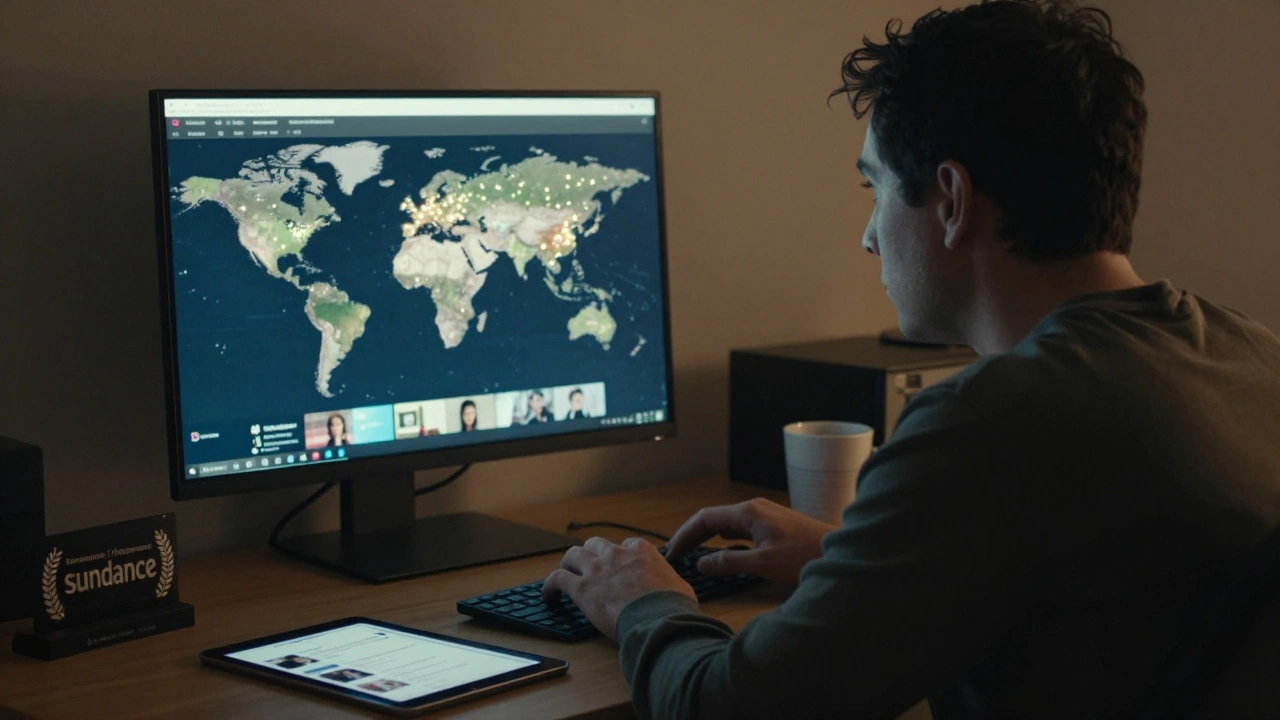
For decades, filmmakers had one path to reach audiences: theaters. You made a movie, pitched it to distributors, hoped for a limited release, and waited for reviews. If you were lucky, it played in a few cities. If you were really lucky, it got a wide release and maybe even awards buzz. But that model is crumbling. Today, more filmmakers-especially independents-are skipping theaters entirely and going straight to streaming. Why? It’s not just about convenience. It’s about control, money, and real audience reach.
Traditional Distribution Is Broken for Most Filmmakers
Let’s be honest: the old system only worked for a tiny fraction of films. In 2024, fewer than 12% of American indie films got a theatrical release wider than 500 screens. Most got 10 to 20 screens, if they got any at all. And even then, the theater takes 50% of box office revenue. That means if your film makes $500,000 in theaters, you’re lucky to see $250,000-and that’s before paying back investors, festival fees, and marketing costs.
Meanwhile, streaming platforms are offering upfront licensing deals. For a modest indie film with a $300,000 budget, a Netflix or Amazon deal might bring in $500,000 to $1.2 million upfront. No wait. No risk. No theater cuts. That money goes straight to the filmmakers, producers, and crew. It’s not just a better deal-it’s the only deal that makes financial sense for most non-blockbuster films.
Control Over Release and Audience
When you hand your film to a traditional distributor, you lose control. They decide when it comes out, where it plays, and how it’s marketed. Sometimes, they sit on a film for months-or even years-waiting for the "right time." I know a director who finished her film in 2022. It won an award at Sundance. The distributor didn’t release it until 2024. By then, the buzz was gone. The audience had moved on.
With streaming, filmmakers can set the date. They can launch when the film is ready, not when a distributor’s calendar allows. They can target specific audiences. A documentary about rural healthcare in Ohio? Release it in January, when state legislators are in session. A horror film with a cult following? Drop it on Halloween. No waiting. No middlemen.
And here’s the real shift: filmmakers are building direct relationships with viewers. They use social media to promote their films, host live Q&As on YouTube, and even sell merch through their own websites. That connection? It’s impossible in the old model.
Streaming Offers Global Reach Overnight
Think about how hard it used to be to get a film seen outside your country. You needed foreign sales agents, international distributors, dubbing, subtitles, and a whole new marketing campaign for each region. It was expensive. It was slow. And for most films, it never happened.
Now? A film uploaded to Apple TV+ or MUBI is available in over 190 countries the same day. A small documentary about a Japanese pottery tradition in rural Kyushu reached viewers in Brazil, Nigeria, and Sweden within 72 hours of its streaming release. No physical prints. No customs delays. No language barriers that couldn’t be solved with subtitles.
Streaming algorithms don’t care if you’re from LA or Lagos. They recommend content based on what people watch. That means niche films-foreign language dramas, experimental shorts, regional comedies-can find their audience without ever stepping into a theater.
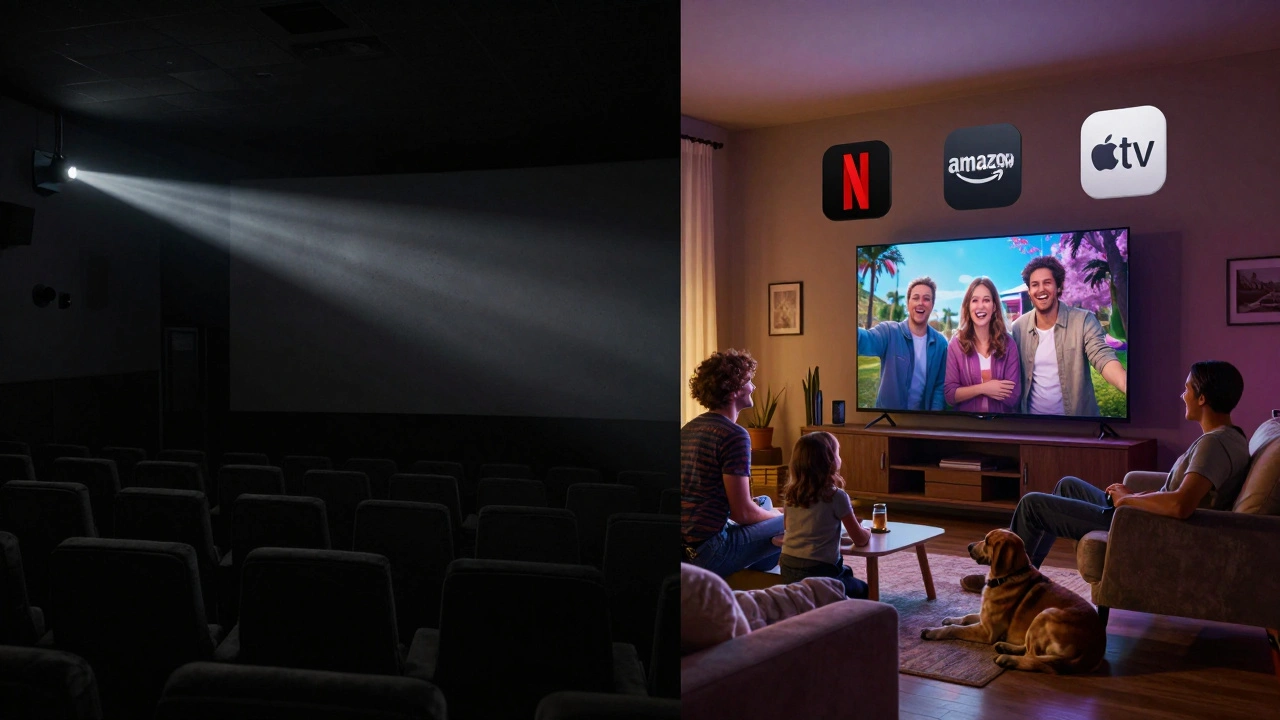
Financial Predictability Trumps Theatrical Hope
Traditional distribution is a lottery. You spend $1 million making a film. You spend another $300,000 on prints and advertising. You hope it plays in 500 theaters. You hope it makes $5 million. You hope critics like it. You hope awards season notices it. And even if all that happens, you might not break even.
Streaming changes the math. A filmmaker can get a $750,000 licensing fee from a platform like Hulu or HBO Max. That covers production costs. It pays the cast and crew. It leaves room for profit. No need to gamble on opening weekend numbers. No need to chase box office records. You know exactly how much you’ll make before the film even drops.
Some filmmakers even negotiate backend deals-like a percentage of streaming revenue after the platform recoups its costs. That means if your film becomes a sleeper hit on Peacock, you keep earning for years. That kind of long-term income? It didn’t exist in the old system.
Streaming Platforms Are Investing Heavily in Original Content
It’s not just about convenience. Platforms need content. Badly. In 2025, Netflix spent over $17 billion on original films and series. Amazon spent $11 billion. Apple and Disney+ added billions more. They’re not just buying movies-they’re commissioning them. They’re hiring filmmakers directly. They’re offering creative freedom in exchange for exclusivity.
That’s why you’re seeing more A-list directors-like Paul Thomas Anderson, Denis Villeneuve, and Greta Gerwig-sign multi-film deals with streaming services. They’re not giving up on cinema. They’re choosing the platform that gives them the budget, the creative control, and the audience reach they can’t get anywhere else.
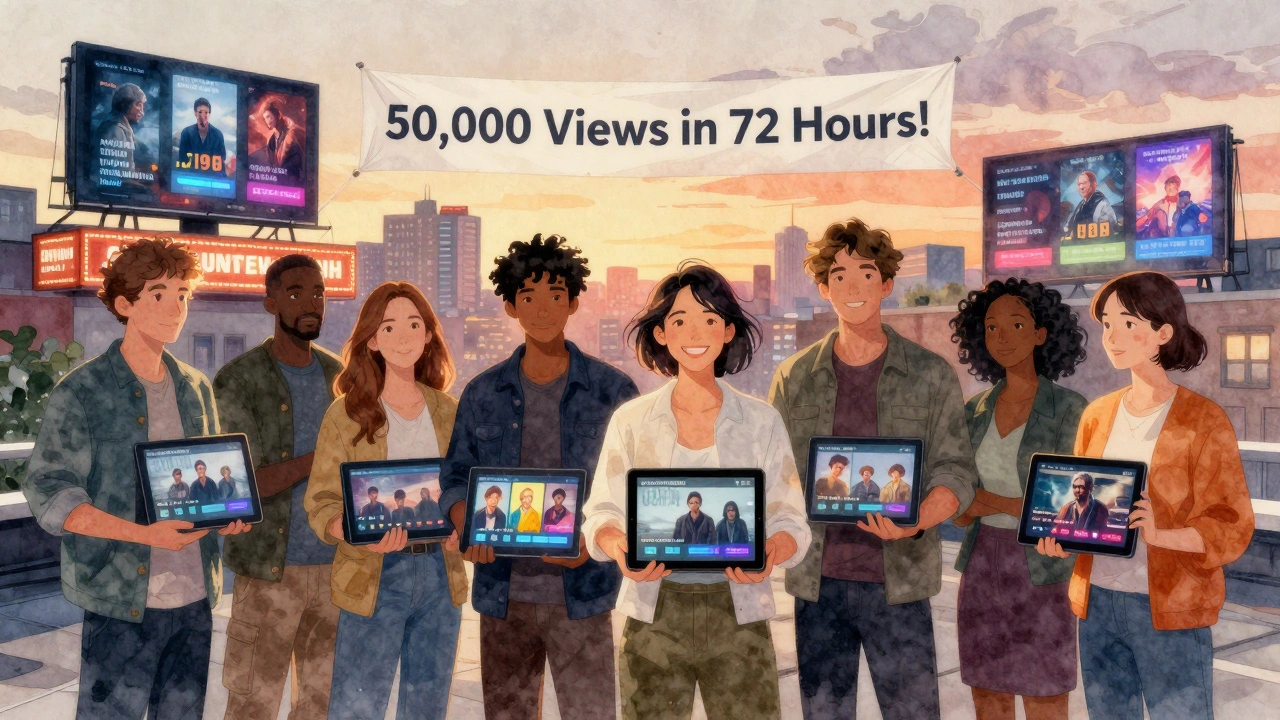
Even smaller filmmakers benefit. Platforms like Shudder, Criterion Channel, and MUBI specialize in curated, high-quality content. They’re hungry for unique voices. They don’t need 10 million viewers to make a film profitable. They just need 50,000 passionate fans.
The Audience Is Already There
People aren’t going to theaters like they used to. In 2024, U.S. box office revenue dropped to $11.4 billion-the lowest since 2003. Meanwhile, global streaming revenue hit $112 billion. That’s nearly ten times bigger. Audiences aren’t rejecting films-they’re rejecting the inconvenience of theaters.
Parents don’t want to pay $15 for tickets, $10 for popcorn, and $20 for parking just to watch a movie that might be bad. Students don’t want to drive across town to catch a 7 p.m. show on a Tuesday. Older viewers don’t want to sit through trailers and loud commercials. Streaming solves all of that.
Filmmakers know this. They’re not ignoring theaters-they’re adapting to where the audience actually is. If your film is on a streaming service, it’s accessible to someone in a dorm room, a nursing home, or a rural town with no multiplex. That’s not a compromise. That’s expansion.
It’s Not Perfect-But It’s Better
Yes, streaming has downsides. Some platforms bury films in their libraries. Some pay low upfront fees. Some don’t promote your film at all. And yes, the magic of watching a film in a dark theater with a crowd? That’s gone for most.
But here’s the truth: the old system wasn’t working for most filmmakers. It was a gatekeeping machine that only rewarded a handful. Streaming isn’t perfect-but it’s fairer. It’s faster. It’s more transparent. And for the vast majority of creators, it’s the only path that lets them make a living from their art.
Filmmakers aren’t abandoning cinema. They’re redefining it. The screen doesn’t have to be in a theater to matter. The audience doesn’t have to be in a row of seats to feel something. What matters now is that the story gets seen. And streaming? It’s the most powerful tool we’ve ever had to make that happen.
Why are indie filmmakers choosing streaming over theatrical releases?
Indie filmmakers choose streaming because it offers upfront payments, global reach, creative control, and faster release timelines. Theatrical releases often require high marketing costs, offer minimal revenue shares, and rarely reach audiences beyond major cities. Streaming platforms pay directly, often covering production budgets, and let filmmakers release on their own schedule.
Do streaming deals pay better than box office revenue?
For most indie films, yes. A typical theatrical release might earn $500,000 in box office, but after theaters take 50% and marketing costs are deducted, the filmmaker may see only $100,000-or nothing at all. Streaming deals often pay $500,000 to $1.2 million upfront, guaranteeing income regardless of viewership. Some platforms also offer backend royalties, meaning earnings continue as long as the film streams.
Can a film still get awards attention without a theatrical run?
Yes. The Academy of Motion Picture Arts and Sciences now allows films that premiere on streaming platforms to qualify for Oscars, as long as they meet certain criteria-like a one-week qualifying run in a commercial theater in Los Angeles or a full digital release with subtitles. Many films now do a minimal theatrical run just to qualify, then stream widely. Others skip theaters entirely and rely on critics and audience buzz to build award momentum.
What platforms are best for indie filmmakers?
It depends on the film. Netflix and Amazon pay the most for high-profile projects. For niche genres, platforms like MUBI (art house), Shudder (horror), and Criterion Channel (classic and curated) offer better exposure and loyal audiences. Hulu and Apple TV+ often buy films with strong festival buzz. Many filmmakers now pitch to multiple platforms at once to get the best deal.
Is it harder to build an audience on streaming than in theaters?
It’s different, not harder. In theaters, you rely on word-of-mouth and reviews to drive crowds. On streaming, you need to actively promote your film through social media, email lists, and influencer outreach. Filmmakers now build their own marketing teams. But the upside? You reach people globally, not just in cities with theaters. A well-targeted campaign can turn a small film into a viral hit on a platform like YouTube or TikTok.


Comments(10)