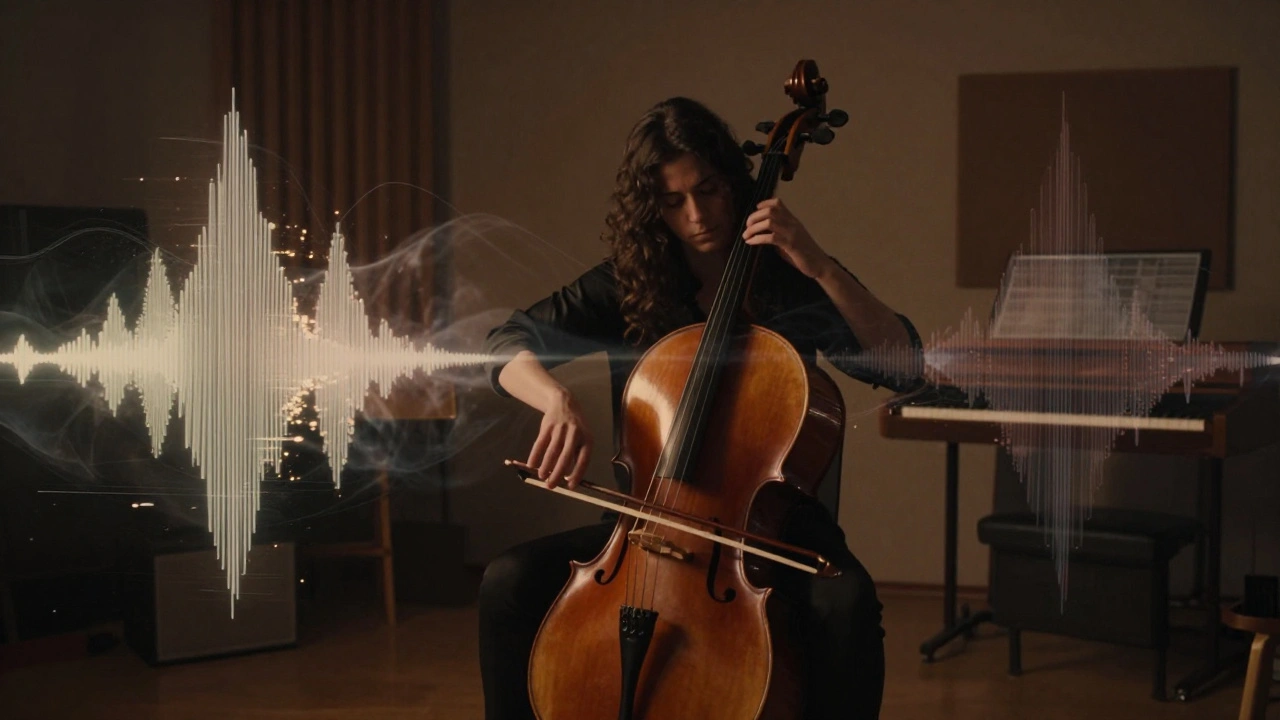
When you hear a movie like Dune or Blade Runner 2049, you don’t just hear strings and brass-you hear pulsing basslines, glitchy textures, and ambient drones woven into the same emotional fabric as a full symphony. That’s the power of hybrid scores. It’s not about replacing the orchestra with synths. It’s about making them work together in ways that feel alive, unpredictable, and deeply human.
Why Hybrid Scores Work So Well in Film
Orchestral music carries emotion. A swelling string section can make you cry. A lone cello can feel like loneliness. Electronic sounds carry tension. A low sub-bass rumble makes your chest vibrate. A distorted pulse can feel like a heartbeat speeding up under pressure. When you combine them, you get the emotional depth of a live ensemble with the raw energy and modern texture of digital sound design.
Think about Interstellar. Hans Zimmer didn’t just use a piano and strings-he turned a pipe organ into a bass synth, layered it with analog synths, and made the whole score feel like gravity itself was breathing. The orchestra gave it soul. The electronics gave it scale.
This isn’t new. John Carpenter used synths in the 70s. Vangelis did it in Blade Runner. But today’s composers have tools that make blending seamless. You’re not just adding a synth patch on top-you’re rethinking how every instrument speaks to the other.
Start With the Emotion, Not the Tools
Too many composers begin by asking: "Which synth should I use?" or "Should I sample the violins?" That’s backward. Start with the scene.
What’s the character feeling? Is it dread? Wonder? Numbness? Is the setting a neon-lit city or a frozen wasteland? The emotion tells you what the orchestra should do-and what the electronics should do to support it.
Example: A quiet moment where a character remembers a lost loved one. The strings play a simple melody, slow and warm. But underneath, you hear a granular synth slowly morphing a recording of their voice-just a whisper, barely audible. The orchestra holds the heart. The electronic layer holds the memory. Together, they make the moment feel haunted.
Don’t force synths into every scene. Use them like spices. A pinch of distortion here. A wash of reverb there. Too much, and it becomes noise. Too little, and it feels like an afterthought.
How to Blend Without Clashing
One of the biggest mistakes? Letting the orchestra and electronics fight for the same space. If your cellos are playing a low C and your synth bass is also hitting C, you’re creating mud. You need separation.
Here’s how real composers do it:
- Frequency carving: Use EQ to cut the low-mids (200-500 Hz) from your orchestra when the synth bass is active. Let the strings stay bright and clear above 800 Hz.
- Dynamic contrast: Let the orchestra swell during emotional peaks. Let the electronics pulse or glitch during tension. They shouldn’t both be loud at the same time unless you want chaos.
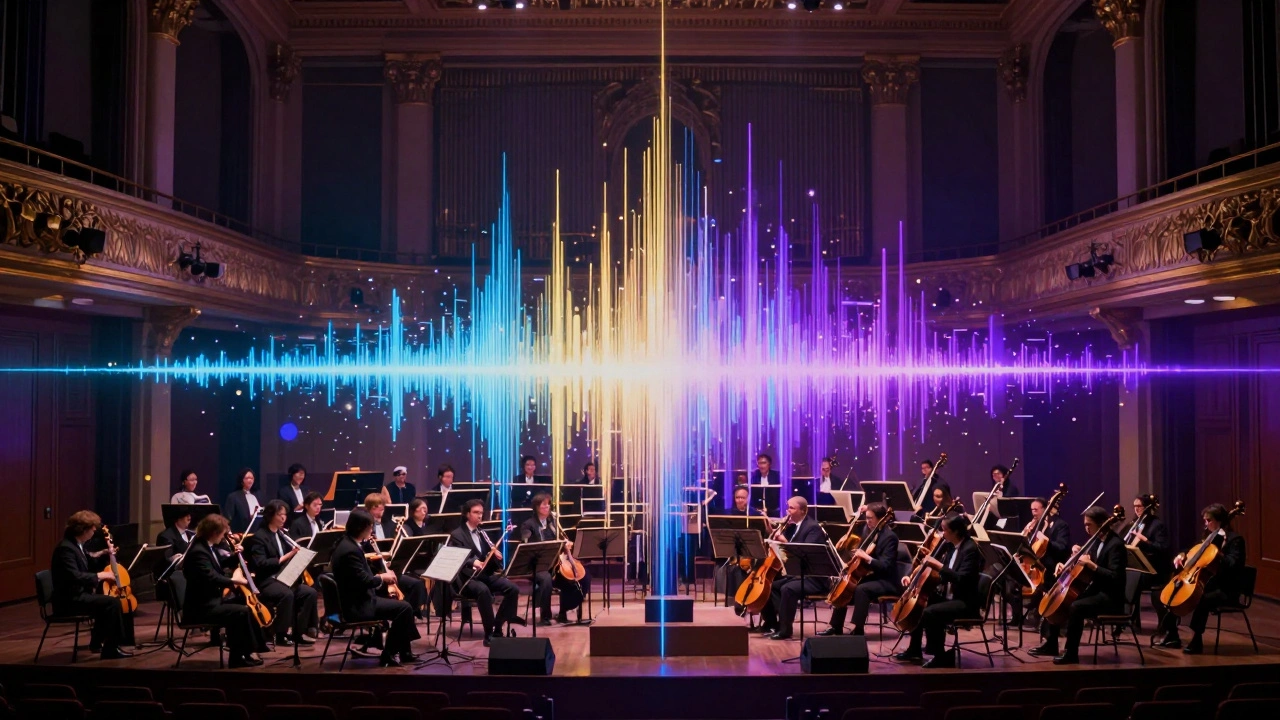
- Texture layering: Use the orchestra for melody and harmony. Use synths for rhythm, atmosphere, and texture. A string quartet carries the theme. A granular synth fills the space between notes with static and breath.
Also, don’t forget timing. A synth pulse can be perfectly synced to a drum hit. But a string swell should feel organic-slightly behind or ahead of the beat. That slight imperfection is what makes it feel human.
Tools That Make Blending Easier
You don’t need a $100,000 studio. But you do need the right tools to make the blend believable.
- Orchestral libraries: Spitfire Audio’s Albion series, Native Instruments’ Symphonic Orchestra, and EastWest’s Hollywood Orchestra are industry standards. They’re not just samples-they’re recordings of real players in real rooms.
- Synths: Omnisphere 2, Serum, and Massive X are go-tos. They’re not just for EDM-they’re for sculpting sound that feels alien yet familiar.
- Processing: Use convolution reverb (like Altiverb) to place your synths in the same acoustic space as the orchestra. If the strings were recorded in a hall, your synth should sound like it was too.
- Time manipulation: Pitch-shift and stretch a recording of a cello. Slow it down 300%. Now it’s a drone. Add a touch of bit-crushing. Now it’s a memory. That’s how you turn an instrument into an emotion.
Some composers record live musicians playing to a click track, then manipulate those recordings in real time. Others start with synths and layer live strings on top. There’s no right way-only what serves the story.
Real Examples You Can Learn From
Study these scores. Listen with headphones. Turn off the visuals. Just focus on how the sounds interact.
- Arrival (Jóhann Jóhannsson): Deep, resonant brass and low drones blend with glitchy, reversed vocal samples. The orchestra feels ancient. The electronics feel alien. Together, they make contact feel terrifying and beautiful.
- Stranger Things (Kyle Dixon & Michael Stein): Analog synths mimic 80s horror, but the basslines are played on a cello. The electronics are retro. The orchestra is modern. The blend creates nostalgia with unease.
- God of War (Bear McCreary): Norse folk instruments (Hardanger fiddle, tagelharpa) are layered with distorted synths and percussion. The orchestra tells the myth. The electronics tell the rage.
Notice how none of these scores sound like "electronic music with strings." They sound like one thing-something new.
Common Pitfalls to Avoid
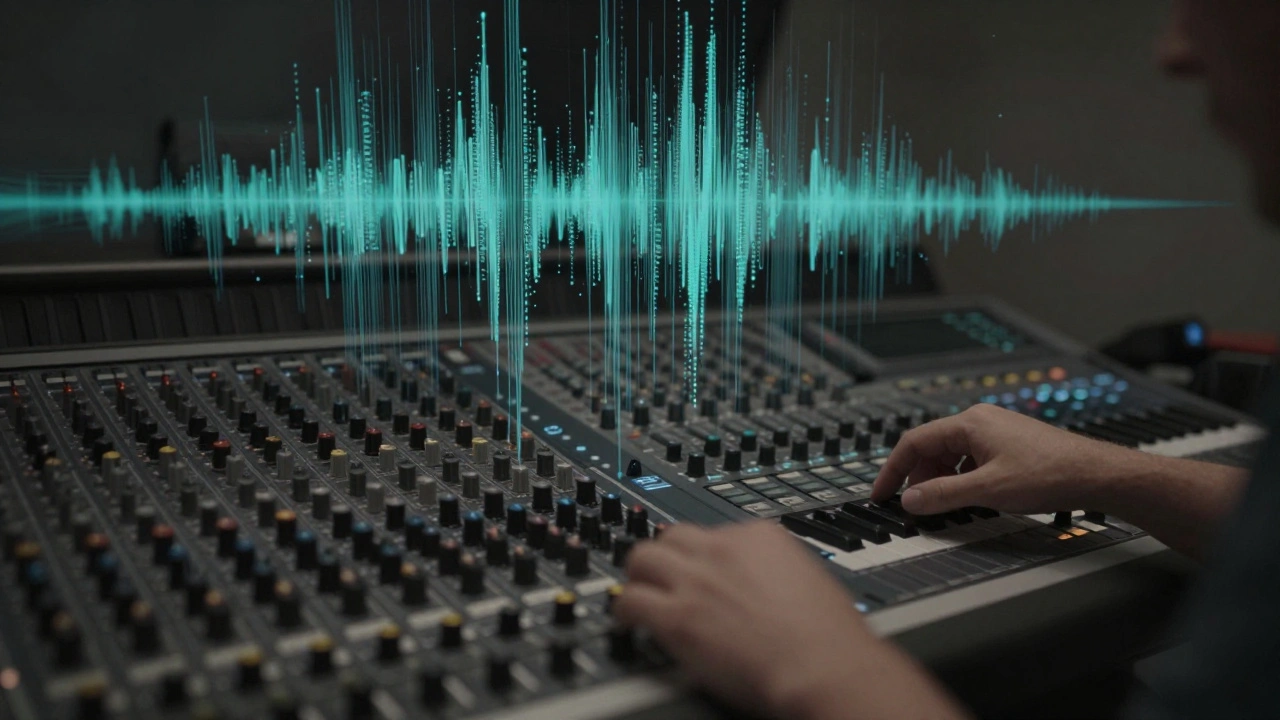
Hybrid scoring sounds cool-until it sounds cheap.
- Using stock presets: That "epic cinematic synth" from Splice? It’s been used in 500 trailers. Find your own sound. Resample. Distort. Reverse. Make it yours.
- Overloading with effects: Reverb, delay, chorus, saturation-use them to serve the emotion, not to hide weak writing.
- Ignoring dynamics: If every section is loud and dense, nothing stands out. Let silence breathe. Let one instrument speak alone.
- Forgetting the story: If your hybrid score doesn’t serve the character’s journey, it’s just noise. Ask: "Does this sound make the audience feel what the character feels?" If not, scrap it.
Where Hybrid Scores Are Headed
AI tools are starting to generate orchestral mockups in seconds. But they can’t feel. They can’t understand grief. They can’t make a single note feel like a goodbye.
The future of hybrid scoring isn’t about more synths or bigger libraries. It’s about deeper human choices. A composer who knows how to make a violin cry and a granular synth whisper the same truth will always have work.
More studios are hiring composers who can play live instruments AND code. Who can write a theme on piano, then turn it into a glitchy, evolving sound that follows the protagonist through a digital dream. The line between composer and sound designer is gone. The hybrid scorer is the new standard.
Start Small. Build Your Own Hybrid Language
You don’t need a 90-piece orchestra. Start with one instrument and one synth.
Record yourself playing a simple melody on cello or piano. Load it into your DAW. Stretch it. Pitch it down. Add a touch of distortion. Layer a sub-bass underneath. Now add a pad that swells slowly-like a heartbeat.
That’s your first hybrid sound. Now write a 30-second scene around it. A character opens a door. A memory flashes. The sound changes. The music tells the story.
Repeat. Every time you do, you’re not just making music. You’re building a language only you can speak.
What’s the difference between a hybrid score and a regular film score?
A regular film score uses only acoustic instruments-strings, brass, woodwinds, percussion. A hybrid score blends those with electronic sounds like synths, samples, glitches, and digital effects. The goal isn’t to replace the orchestra, but to expand its emotional range with modern textures.
Do I need expensive gear to make hybrid scores?
No. You can start with free orchestral samples like Spitfire’s LABS library and free synths like TAL-U-NO-LX or Helm. What matters isn’t the price-it’s how you use what you have. A well-treated cello sample and a single analog-style synth can create a powerful hybrid sound if you focus on emotion and space.
Can I use hybrid scoring for indie films or short films?
Absolutely. In fact, hybrid scoring is perfect for indie films. It lets you create big, cinematic sounds without hiring a full orchestra. Many award-winning shorts use hybrid scores because they’re flexible, emotionally rich, and cost-effective when done well.
How do I make synths sound "orchestral"?
Don’t try to make synths sound like orchestras. Instead, make them feel like they belong in the same world. Use convolution reverb to place them in the same acoustic space as your orchestra. Add subtle pitch modulation to mimic the slight variations in human playing. Layer synth pads with real strings to blur the line. It’s about cohesion, not imitation.
What’s the most important skill for a hybrid composer?
Listening. Not just to music, but to silence. To the space between notes. To how a real musician breathes before playing a note. To how a synth evolves over time. The best hybrid scores don’t scream-they whisper, pulse, and fade in ways that feel alive. That comes from deep listening, not technical skill.



Comments(8)