You made a movie. It cost $10 million. It grossed $25 million worldwide. Sounds like you’re rich, right? Wrong. You might actually owe money to your investors. Why? Because the money doesn’t hit your bank account in a straight line. It flows through a complex system called a waterfall model. This isn't just accounting jargon; it’s the set of rules that dictates who gets paid first, second, and last. If you don't understand how these recoupment orders work, you could be working for free while everyone else cashes checks.
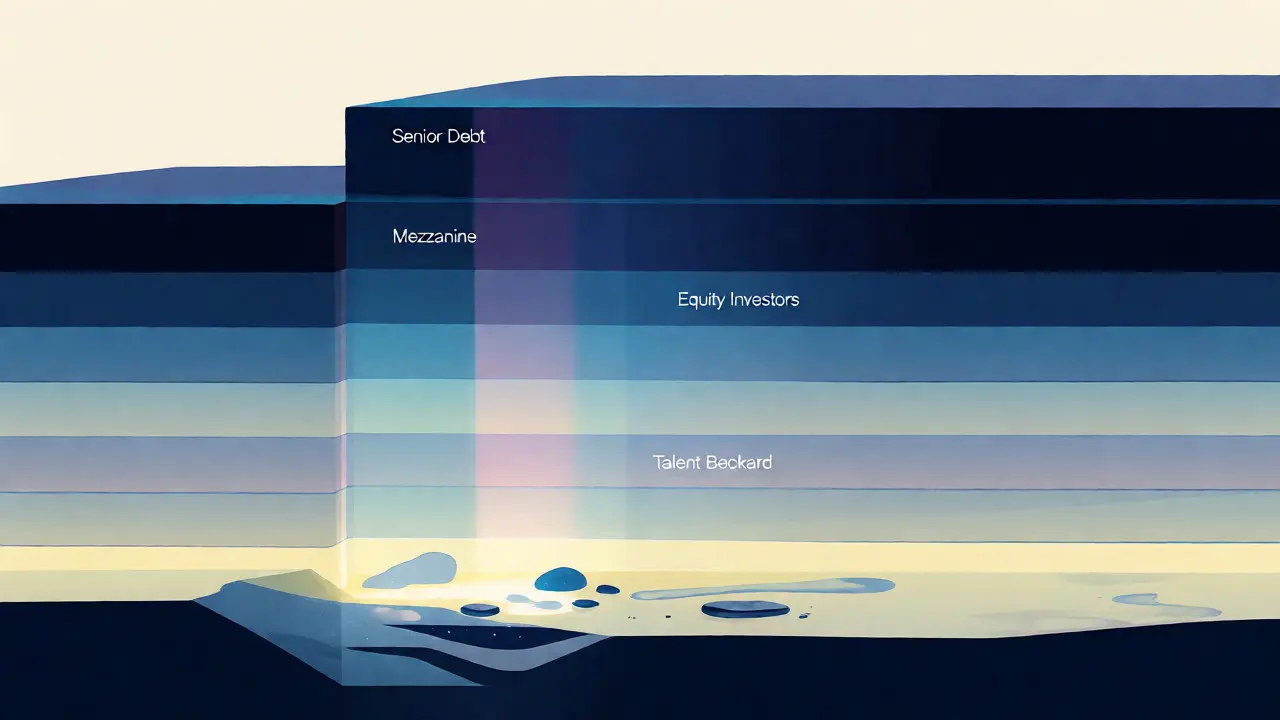
Think of a film’s revenue like water flowing down a series of terraced pools on a hillside. The top pool fills up first. Only when it overflows does the water spill into the next one down. In Hollywood, the "water" is every dollar earned from theatrical tickets, streaming licenses, TV sales, and merchandise. The "pools" are the different stakeholders: distributors, sales agents, financiers, producers, and talent. The order matters more than the amount. A distributor taking their fee before an investor sees a dime changes everything about your return on investment.
The Anatomy of Gross vs. Net Profits
Before we look at the tiers, you need to grasp the biggest trap in entertainment contracts: the difference between Gross Receipts and Net Profits. Beginners often assume "profit sharing" means splitting the box office take. It rarely does. Studios have mastered the art of defining "net" so narrowly that profitable films can appear to lose money on paper. This is famously known as "Hollywood accounting."
Here is the basic flow of funds:
- Gross Box Office: Total ticket sales.
- Distributor Share: The studio or indie distributor keeps 40-50% immediately.
- Exhibitor Share: Theaters keep the rest (often higher for opening weeks).
- Marketing Costs (P&A): Prints and advertising expenses are deducted next.
- Distribution Fees: The distributor charges a percentage for handling the release.
- Sales Agent Commissions: International sellers take their cut.
- Recoupable Expenses: Legal fees, audit costs, and travel.
Only after all these deductions do you reach the "producer's share." And even then, you haven't seen your money yet. You’ve only reached the starting line of the waterfall.
Tier 1: Senior Debt and Mezzanine Financing
The first tier of the waterfall is almost always reserved for debt holders. These are the people who lent you money with a fixed interest rate. They don’t care if the movie wins an Oscar; they care about getting their principal back plus interest. Typically, this includes banks, gap lenders, or private equity firms that provided senior loans.
Let’s say you raised $5 million in senior debt at 12% annual interest. Before any producer or actor gets a bonus, that $5 million plus accrued interest must be repaid in full. This is non-negotiable in most credit agreements. If the film underperforms, these lenders eat first. If the film overperforms, they still eat first. Their position is protected by collateral-usually the film’s assets themselves.
| Stakeholder Type | Risk Level | Potential Return | Payment Priority |
|---|---|---|---|
| Senior Lenders | Low | Fixed Interest (8-15%) | First |
| Mezzanine Investors | Medium | Fixed + Kicker (15-25%) | Second |
| Equity Investors | High | Variable (0x to 3x+) | Third/Fourth |
| Deferred Talent | Very High | Backend Points | Last |
Tier 2: Mezzanine Capital and Preferred Returns
Below the senior debt sits mezzanine capital. This is hybrid financing-it looks like debt but behaves like equity. Mezzanine investors usually accept lower priority than banks in exchange for higher returns. They often get a "preferred return," which is a guaranteed percentage (say, 20%) before anyone else shares in the upside.
Imagine you have a $2 million mezzanine deal with a 20% preferred return. Even if the movie makes a small profit, those investors get their $2 million plus $400k before the equity guys see a cent. This tier acts as a buffer. It allows producers to raise more money without giving up too much ownership, but it pushes the actual profit-sharing further down the line. Many independent filmmakers underestimate how quickly these preferred returns stack up.
Tier 3: Equity Investors and ROI Thresholds
Now we reach the equity investors. These are the individuals or funds who bought shares in the production company. They took the most risk because they were behind the banks and mezzanine folks. To compensate for that risk, their contracts usually include a hurdle rate. A common structure is "100% ROI plus 50/50 split." This means investors get their original investment back, plus 100% of it (doubling their money), before any profit split occurs.
If you invested $100k, you need $200k in distributable net profits before you start sharing additional gains. If the film generates $300k in net profits after debt service, the first $200k goes to pay back the initial $100k plus the 100% premium. The remaining $100k is then split according to the agreed ratio. This threshold protects early backers from being diluted by late-stage deals or inflated overheads.
Tier 4: Producer Fees and Deferred Compensation
Where do the producers fit in? Usually, they sit below the equity investors but above the talent backend. Producers often defer their fees until the film reaches profitability. However, some aggressive structures allow producers to take a small management fee off the top of gross receipts. Be careful here. If the producer takes 5% of gross before recoupment, that’s real money gone forever.
Most standard agreements place producer bonuses in Tier 4. Once the equity investors have hit their ROI threshold, producers receive a lump sum or a percentage of remaining profits. This aligns incentives: the producer wants the film to perform well enough to clear the hurdles so they can get paid. But remember, if the film barely breaks even, the producer might end up with zero compensation despite years of work.
Tier 5: Talent Backend and Contingent Payments
Finally, we arrive at the bottom of the waterfall: the talent. Stars, directors, and writers often negotiate for "points"-a percentage of net profits. For A-list actors, this might be 5-10% of the producer’s net share. For indie projects, it might be a flat deferred fee contingent on recoupment.
Because talent sits at the very bottom, they bear the highest risk. If the film fails to recoup its costs, the lead actor gets nothing extra beyond their upfront salary. This is why big stars demand high upfront fees. They know the backend is illusory. When you read that a star signed on for "$1M upfront plus 10% of gross," check the definition of gross. Often, it’s not true gross; it’s adjusted gross after distribution fees, which drastically reduces the pie.
Common Pitfalls in Waterfall Structures
Filmmakers frequently stumble into three specific traps when designing their recoupment plans.
- The Cross-Collateralization Trap: If you make a trilogy, revenues from Film B might pay off debts from Film A. This sounds safe for lenders but terrible for producers. Your successful sequel could effectively subsidize the failure of the prequel, leaving you with no profit from either.
- Ambiguous Definitions of "Net": Never sign a contract where "net profits" is left undefined. Specify exactly what costs are deductible. Is marketing included? What about legal fees for unrelated lawsuits? Vague terms lead to expensive audits and litigation.
- Overlooking Distribution Guarantees: Sometimes a distributor pays a minimum guarantee (MG) upfront. This cash counts toward recoupment immediately. If you spend it on reshoots before calculating the waterfall, you might accidentally create a deficit that never closes.

Real-World Example: Breaking Down the Numbers
Let’s run a hypothetical scenario for a mid-budget indie thriller titled Midnight Echo.
- Budget: $5 Million
- Total Gross Receipts: $12 Million
- Distributor Fee & Marketing: $6 Million
- Net Available for Recoupment: $6 Million
Step 1: Senior Debt. You owe $3M principal + $300k interest = $3.3M. Remaining: $2.7M.
Step 2: Mezzanine. You owe $1M principal + 20% preferred ($200k) = $1.2M. Remaining: $1.5M.
Step 3: Equity Hurdle. Investors put in $1M. They need 100% ROI ($2M total). You only have $1.5M left. So, investors get $1.5M. They are still short $500k on their hurdle.
Result: No money reaches the producer or talent backend. The film was a financial success in gross terms ($12M vs $5M budget), but due to the waterfall structure, the equity investors didn’t even hit their break-even-plus-premium target. Everyone else got zero.
This illustrates why understanding the math before signing is critical. A "hit" movie can yield zero personal profit if the structure is unfavorable.
How to Negotiate Better Terms
You aren’t powerless. There are ways to flatten the curve or improve your position.
- Negotiate a Lower Hurdle: Instead of 100% ROI, try for 50% ROI plus a smaller split. This gets money to you faster.
- Cut Off Overhead: Cap the amount of overhead or legal fees that can be deducted from net profits. Prevents the studio from burying you in administrative costs.
- Define "Adjusted Gross": Push for backend points based on Adjusted Gross rather than Net Profits. Adjusted Gross deducts fewer items, making it easier to qualify for payments.
- Include Audit Rights: Ensure you can hire an independent auditor to verify the numbers. Without this, you’re trusting the distributor’s word blindly.
Remember, the waterfall isn’t static. It’s a negotiation tool. The clearer you are about the tiers, the less room there is for disputes later. Use simple language in your term sheets. Avoid legalese where possible. If you can’t explain the payment schedule to a smart friend in five minutes, it’s too complicated.
Frequently Asked Questions
What is the difference between gross and net profits?
Gross profits refer to total revenue generated by the film before any expenses are deducted. Net profits are what remains after subtracting all allowable costs, including production budgets, marketing expenses (P&A), distribution fees, and other overheads. In Hollywood, net profits are often manipulated through accounting practices, meaning a film can be profitable in gross terms but show a loss in net terms.
Why do investors get paid before producers?
Investors provide the capital necessary to make the film, assuming significant financial risk. The waterfall model prioritizes them to ensure they recoup their initial investment and earn a preferred return before producers or talent receive backend compensation. This structure incentivizes investors to fund projects by offering a clearer path to returning capital.
Can a film be profitable but still not pay out to talent?
Yes, absolutely. Due to high distribution fees, marketing costs, and recoupment hurdles for lenders and equity investors, the net profit pool available for talent backend can remain empty even if the film grosses significantly more than its production budget. This is often referred to as "going in the black" versus "making a profit" for participants.
What is cross-collateralization in film financing?
Cross-collateralization is a clause that allows losses from one project to be offset against profits from another within the same portfolio or franchise. For example, if a studio produces two films and one loses money while the other makes money, the profits from the successful film may be used to cover the losses of the unsuccessful one before any distributions are made to individual project stakeholders.
How do streaming platforms affect traditional waterfalls?
Streaming deals often involve large upfront licensing fees rather than variable backend points based on viewership. This simplifies the waterfall because the license fee enters the recoupment stream immediately as gross revenue. However, it eliminates the potential for massive backend upside if a title becomes a viral hit, as the platform has already paid a fixed price.