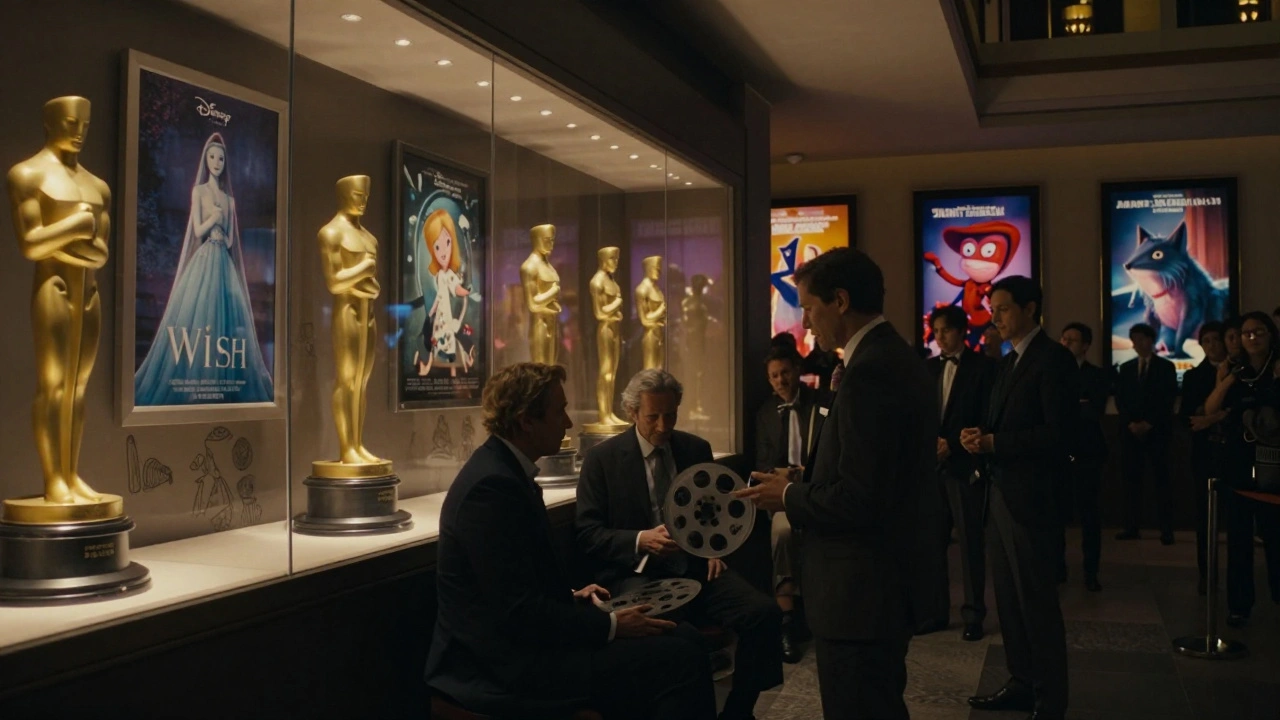
Animated Feature Race isn’t just about pretty visuals or funny voices. It’s a brutal, year-long battle where studios spend millions, campaign relentlessly, and hope their film stands out in a field that’s getting more crowded every year. Since the Academy introduced the Best Animated Feature category in 2001, the competition has evolved from a side note to one of the most talked-about races of awards season. Studios don’t just make movies anymore-they build campaigns, hire PR firms, screen films for voters, and even host Q&As with voice actors. It’s a system that rewards not just creativity, but strategy.
How the Race Starts: The Eligibility Hurdle
Not every animated film gets to compete. To qualify for the Oscars, a film must be at least 40 minutes long, released in a commercial theater in Los Angeles County for at least seven consecutive days, and have a majority of its animation done by hand, computer, or a mix of both. Stop-motion films count too, but live-action films with heavy CGI effects-like The Lion King (2019)-don’t. That rule alone knocks out dozens of contenders every year.Netflix, Disney, and Sony each submit 3-5 films annually. Indie studios like Laika or Cartoon Saloon might submit just one. The cutoff is usually in late October, so studios rush to meet it. In 2024, over 50 films were considered, but only 15 made the longlist. By November, that’s whittled down to five nominees. The process is opaque. Studios don’t know who voted or how many ballots they received. They just know if they made the cut.
The Campaign Machine: Marketing for Voters, Not Audiences
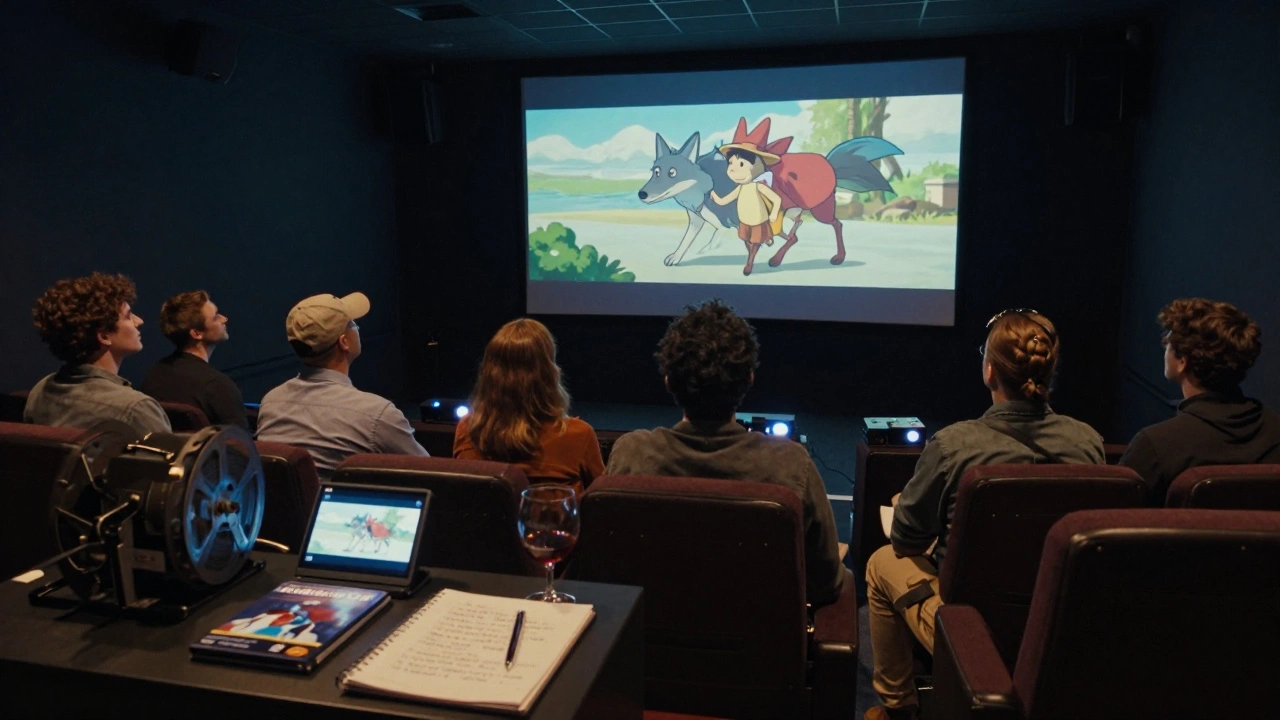
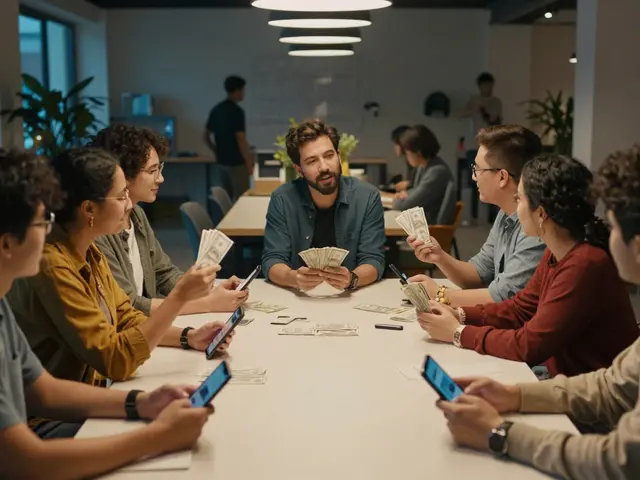
Unlike live-action films, animated movies often don’t get big premieres or red carpet events. So studios create their own. They host private screenings in Beverly Hills for Academy members. They send out physical screeners on DVD or digital links. They print glossy magazines with behind-the-scenes features. They even hire former Oscar-winning directors to host intimate panels.Disney’s Wish (2023) spent over $20 million on its campaign-more than some live-action Oscar hopefuls. They flew animators to New York for Q&As. They partnered with schools to show the film to kids, hoping parents would vote. Sony’s Spider-Man: Across the Spider-Verse (2023) didn’t just rely on its popularity-it showed voters the 1,200 different hand-drawn styles used in the film. That wasn’t just marketing. It was education.
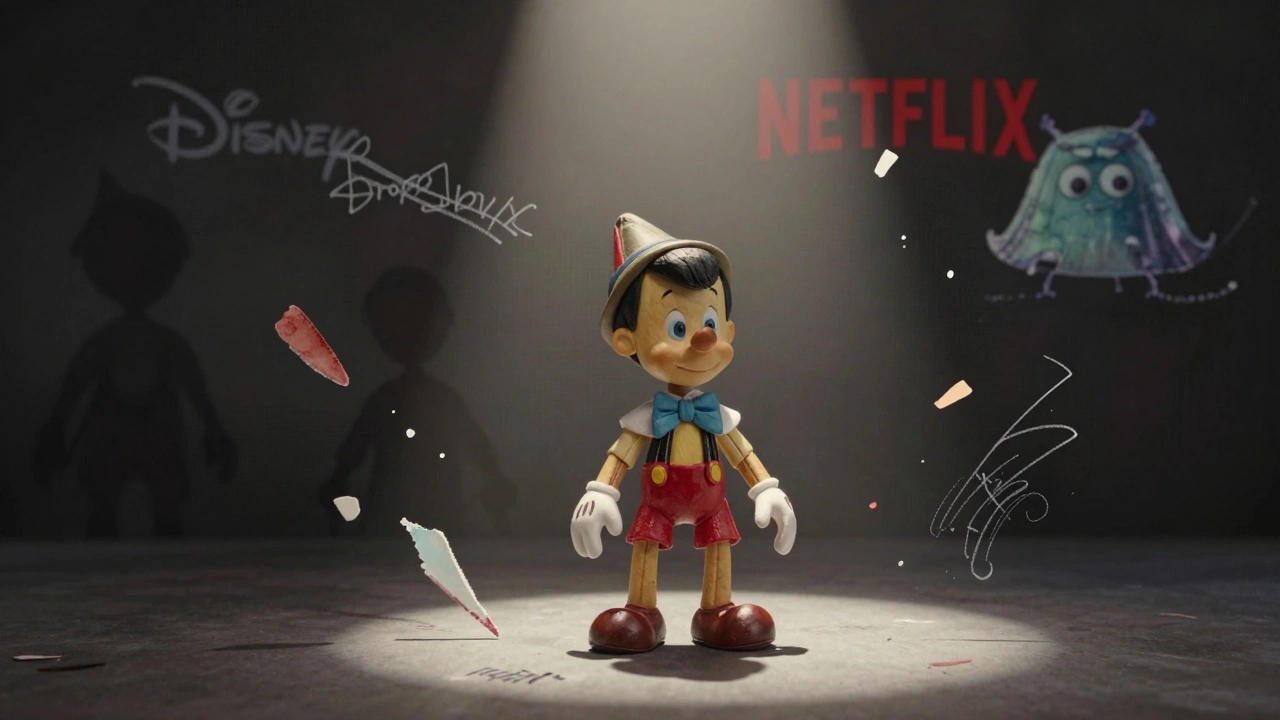
Netflix, which dominates the category now, doesn’t even bother with theaters. They screen their films directly to voters via their platform. They don’t need box office numbers. They just need votes. In 2022, Guillermo del Toro’s Pinocchio won Best Animated Feature despite having a theatrical run of less than two weeks. It was all about the campaign.
Who Votes? And Why It Matters
The Academy’s animation branch has about 400 members-animators, directors, producers, and technicians. They’re not film critics. They’re not general moviegoers. They’re people who’ve spent decades working in animation. That means they care about technique, originality, and craftsmanship. A film with stunning visuals but a weak story? It might get passed over. A film with a simple story but groundbreaking animation? It could win.In 2021, Over the Moon from Netflix was considered a favorite-until voters realized it used a lot of pre-existing assets from a Chinese TV series. It didn’t make the final five. Meanwhile, Wolfwalkers, a hand-drawn indie film from Ireland, won over them because of its brushstroke textures and emotional depth. It wasn’t the most popular. It was the most authentic.
There’s also a cultural bias. Western studios dominate the category. In the last 20 years, only three non-English films have won: Wallace & Gromit: The Curse of the Were-Rabbit (2005), Chico & Rita (2010), and Guillermo del Toro’s Pinocchio (2022). Even then, two were co-productions with U.S. studios. International films often get overlooked unless they’re heavily marketed.
The Big Players: Who’s Winning and How
Disney and Pixar still lead the pack with 11 wins since 2001. But their dominance has slipped. In 2020, Toy Story 4 won. In 2021, it was Soul. But in 2022, the win went to a stop-motion film made in Germany. In 2023, it was a Spanish-American co-production. The tide is turning.Netflix has become the biggest challenger. They’ve won four times since 2018: Klaus (2019), Over the Moon (2020, nominated), Marcel the Shell with Shoes On (2021, nominated), and Pinocchio (2022). Their formula? Low-budget, emotionally driven stories with unique art styles. They don’t need box office hits. They just need voters to feel something.
Laika, the Portland-based studio behind Coraline and Missing Link, plays a different game. They make one film every three years. Their budget is $60-80 million. They use stop-motion. They don’t campaign hard. But when they win, they win big. ParaNorman (2012) was nominated. Guillermo del Toro’s Pinocchio (2022) won. Their strength? They make films that feel handmade. In a world of CGI perfection, that’s rare.
What Wins? The Hidden Rules
There’s no official rulebook, but after 20+ years, patterns emerge:- Emotion beats spectacle. Inside Out (2015) won because it made adults cry over a little girl’s sadness. Elemental (2023) lost because it felt too much like a Pixar formula.
- Originality matters more than sequels. Shrek won in 2001 because it was fresh. Shrek 2 didn’t even get nominated in 2004.
- Art style can be a secret weapon. Spider-Verse won because it looked like nothing else. Voters saw it and said, “I’ve never seen this before.”
- Timing helps. Films released in late fall (October-December) have an edge. They’re fresh in voters’ minds.
- Voice talent doesn’t matter. No animated film has ever won because of a star voice. Voters care about the animation, not who’s talking.
That’s why Wish lost. It had Disney’s name, a pop soundtrack, and a young star. But it didn’t feel new. It felt like a remix of older Disney films. Voters noticed.
The Future: More Diversity, More Pressure
The race is changing. More international studios are entering. South Korea’s The King’s Affection (2023) made the longlist. Japan’s Studio Ghibli is quietly preparing its next film. India’s first animated Oscar contender, Chhota Bheem: Kung Fu Dhamaka, is in development.At the same time, the pressure is rising. Studios are spending more than ever. Netflix spent $150 million on animation in 2023 alone. Disney’s animation division lost $200 million in 2022. The business is becoming more like Hollywood: expensive, risky, and winner-takes-all.
But the heart of the race hasn’t changed. It’s still about telling a story that moves people. Whether it’s a clay puppet in Germany, a watercolor world in Ireland, or a graffiti-style New York in Spider-Verse, the winner is the one that makes voters feel something real.
Why This Race Still Matters
Animated films aren’t just for kids. They’re some of the most personal, daring, and technically brilliant works in cinema. The Best Animated Feature category gives them a stage. It’s not perfect. It’s biased. It’s expensive. But without it, films like Wolfwalkers or Pinocchio might never get seen by millions.Every year, someone asks, “Why does animation need its own award?” The answer is simple: because it’s not just animation. It’s art. And it deserves to be judged on its own terms.
What qualifies as an animated feature for the Oscars?
To qualify, a film must be at least 40 minutes long, have a majority of its animation created by hand, computer, or a combination of both, and be released in a commercial theater in Los Angeles County for at least seven consecutive days. Films with heavy live-action CGI, like photorealistic remakes, are not eligible.
Do voice actors influence the outcome of the race?
No. Academy voters in the animation branch focus on the animation quality, storytelling, and artistic innovation-not celebrity voices. Even if a film stars a big-name actor, it won’t win because of them. Voters care about the craft, not the name on the credits.
Why do Netflix films win so often?
Netflix doesn’t rely on box office numbers. They target Academy voters directly with screenings, screeners, and campaigns. Their films often have unique art styles and emotional depth, which resonate with voters who value originality. They also release films in the late fall, keeping them fresh in voters’ minds.
Is the Best Animated Feature category biased toward Western studios?
Yes. Of the 23 winners since 2001, only three were non-English films, and two were co-productions with U.S. studios. International films often lack the marketing budgets or industry connections to compete. But that’s slowly changing, with more submissions from Korea, Japan, and India gaining traction.
What’s the biggest mistake studios make in the race?
Trying to copy what won last year. Voters are tired of formulaic stories and recycled Pixar tropes. The winners are the ones that take risks-new animation techniques, unconventional narratives, or bold visual styles. Playing it safe almost always loses.




Comments(6)