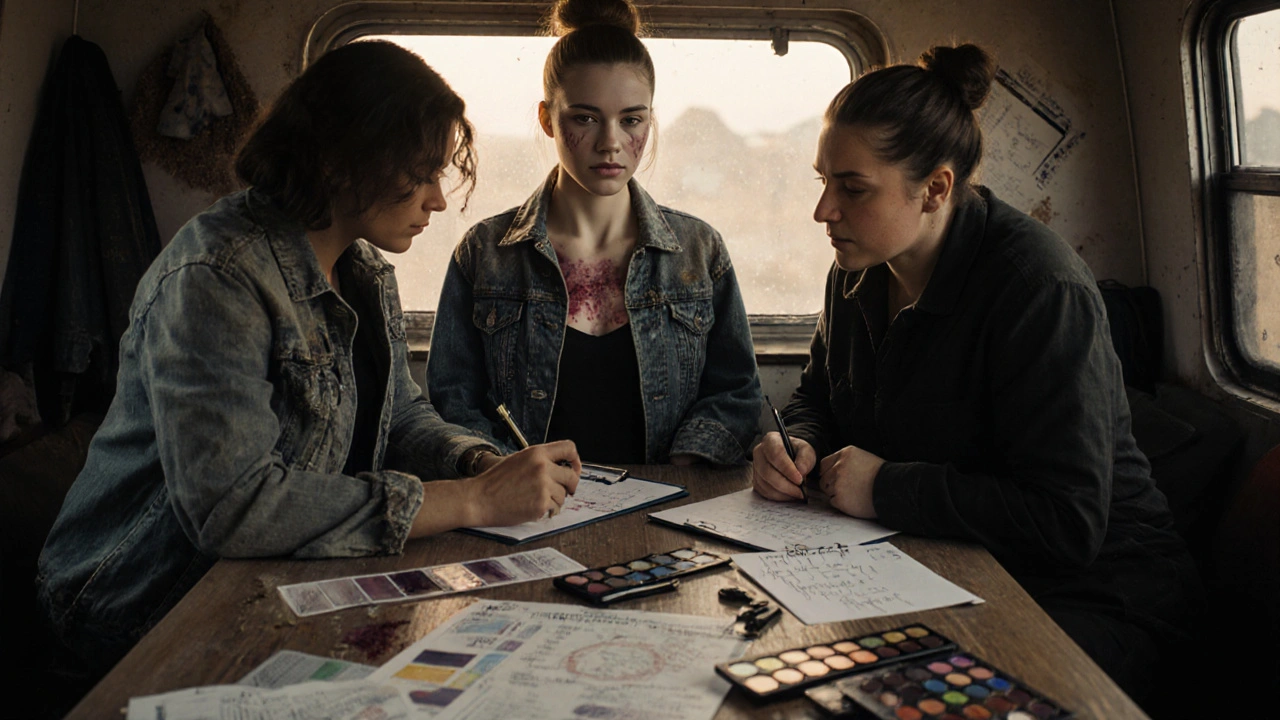
On a film set, a character doesn’t just walk in wearing a costume. They arrive fully formed-hair styled to match their trauma, makeup showing the toll of a three-day chase, clothes stained with sweat and dirt from scenes shot weeks apart. This isn’t magic. It’s the quiet, relentless work of three departments: hair, makeup, and wardrobe. When they work together, the audience believes the character is real. When they don’t, the whole film feels off-even if the acting is perfect.
Why Coordination Isn’t Optional
Think about a character who starts the movie as a polished corporate lawyer and ends it as a fugitive covered in mud and blood. That transformation isn’t just about costume changes. It’s about how the hair loses its shine, how the foundation cracks under stress, how the suit gets torn in one scene and re-stitched for the next. If the hair department styles the lawyer’s hair sleek and center-parted on Monday, but the makeup team forgets to fade the dewy skin tone by Friday, the character doesn’t evolve. They look like two different people.
That’s why the head of each department sits in the same room during pre-production. They don’t just read the script-they study the character arc, the locations, the lighting conditions, even the weather forecast for shooting days. A scene set in a rainy alley in Montreal? The wardrobe team needs waterproof fabrics. The makeup team needs sweat-resistant products. The hair team needs pins and sprays that hold through humidity and wind.
The Daily Dance: On-Set Workflow
Each morning, the hair, makeup, and wardrobe leads meet with the director and cinematographer. They review the day’s shots. What’s the lighting like? Is it golden hour? Harsh fluorescent? Is the camera going in for a close-up of the eyes or a wide shot of the whole body? Each answer changes their approach.
For example, if the scene calls for a close-up of a character’s face after a fight, the makeup artist won’t just apply bruises. They’ll layer reds, purples, and yellows to mimic the natural progression of a bruise over time. The hair team will mess up the style slightly-strands pulled loose from the earlier scene’s neat bun. The wardrobe team will add a tear along the seam of the jacket from a previous fight, not just a fresh one.
It’s not about making the character look ‘pretty.’ It’s about making them look lived-in.
On set, the three departments often share a trailer or a designated area. They keep detailed logs: which outfit was worn on which day, what makeup was applied, how many times the hair was restyled. If a scene is shot out of order-say, a death scene filmed on day 3 but the character dies on day 20 of the story-the team has to reverse-engineer the look. They’ll remove the subtle signs of aging, wipe away the sunburn from a desert shoot, and restore the original hairstyle from the beginning of the film.
Tools of the Trade
It’s not just brushes and wigs. The tools these teams use are specialized and often custom-made.
- Wardrobe: Fabric swatches tested under LED, HMI, and tungsten lights. Clothes are pre-washed and distressed with sandpaper, bleach, and even coffee stains to look authentic. Buttons are sewn on with thread that matches the fabric’s age, not its newness.
- Makeup: Airbrush systems for seamless skin tone blending, silicone appliances for scars and wrinkles, and color-correcting gels that don’t show up under infrared cameras used in night scenes.
- Hair: Heat-resistant synthetic fibers for scenes with fire, hairpieces with built-in scalp texture to blend with real skin, and spray adhesives that hold through rain, sweat, and stunts without leaving residue on camera lenses.
One of the most underrated tools? A simple notebook. Every change, every adjustment, every note from the director gets written down. If the lead actor says, ‘I feel like my hair’s too clean today,’ the hair team doesn’t just mess it up. They figure out why. Was it the lighting? The angle? Did the previous scene’s makeup make the hair look greasy? They adjust accordingly.
Real Examples That Changed the Game
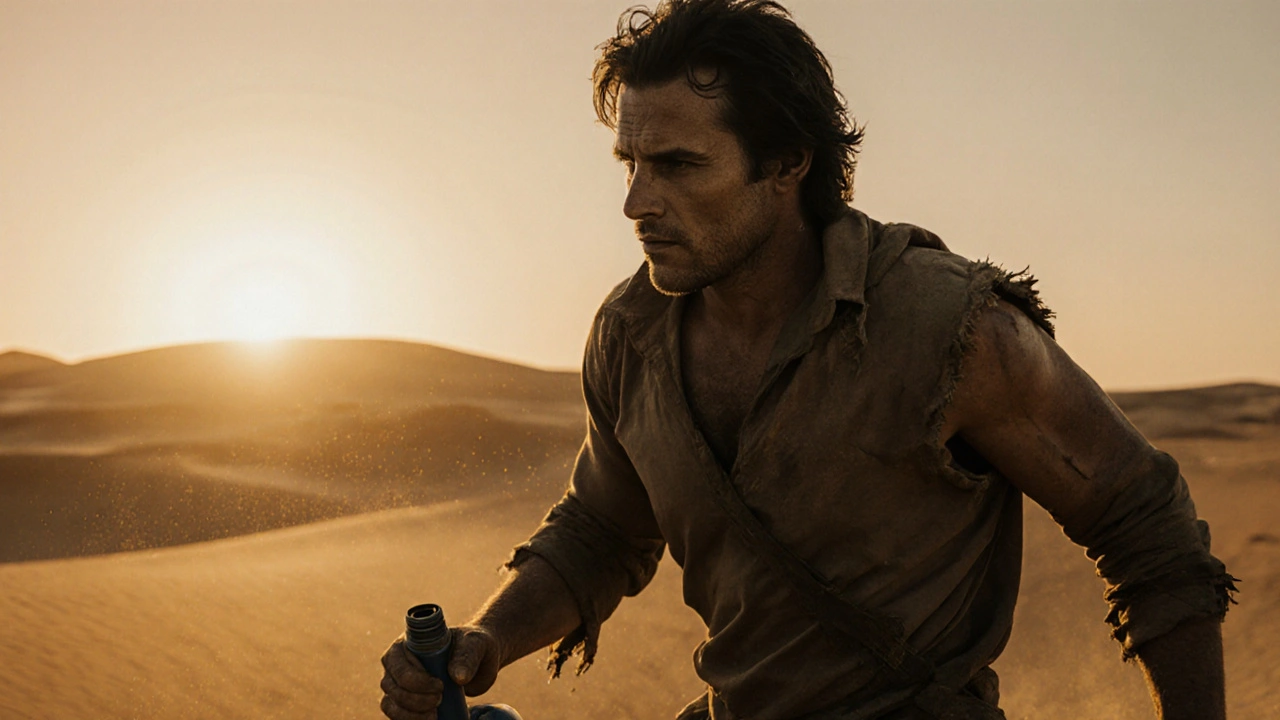
In Mad Max: Fury Road, the hair and makeup teams didn’t just style characters-they built identities. Immortan Joe’s white face paint wasn’t just makeup. It was a mask of power, cracked and peeling to show his decay. Furiosa’s shaved head wasn’t a fashion choice-it was a symbol of survival. The wardrobe team made her leather gear from repurposed motorcycle parts, each scratch and dent documented so it stayed consistent across 18 months of shooting.
In The Crown, the wardrobe team used actual 1950s fabrics and dyes to match the Queen’s real outfits. The hair team studied archival footage to replicate the exact curl pattern of her ponytail. Makeup artists used no foundation on Claire Foy-just powder and blush-to mimic how women in the 1950s avoided heavy makeup on camera. The result? A look so accurate, viewers thought they were watching real archival footage.
Even in horror films like Hereditary, the subtle changes matter. The mother’s hair slowly becomes unkempt as her mental state unravels. The makeup gets paler, the lips drier. The wardrobe shifts from soft sweaters to stiff, dark clothes. No one says it out loud. The audience just feels it.
Pitfalls That Break the Illusion
Bad coordination doesn’t always look obvious. Sometimes it’s just… wrong.
- A character wears a wool coat in a desert scene, but the hair team didn’t account for static from the fabric. The hair stands on end unnaturally.
- Makeup fades under hot lights, but wardrobe didn’t change the shirt color to match the new skin tone. The character looks jaundiced.
- Hair is restyled for a flashback, but the wardrobe team uses a modern belt. The audience snaps out of the story.
These aren’t mistakes you notice on purpose. You notice them because something feels ‘off.’ Your brain knows the character isn’t real. And once that happens, the whole film loses trust.
How to Spot Great Coordination
You don’t need to be a film student to tell when it’s done right. Watch for these signs:
- The character’s clothes look worn, not just dirty. There’s a pattern to the wear-frayed cuffs from constant typing, scuffed shoes from pacing.
- The makeup changes subtly between scenes. Not just ‘more dirt,’ but the type of dirt changes. Dust from a road? Sweat from a fight? Oil from machinery?
- Hair moves naturally with the environment. If it’s windy, strands fly. If it’s humid, it clings to the neck.
Great coordination doesn’t scream for attention. It disappears into the character. You stop noticing the hair, the makeup, the clothes-and you start believing in the person.
What Happens When Departments Don’t Talk
On low-budget films, budget cuts often mean one person does hair and makeup. Or wardrobe is outsourced to a thrift store with no communication to the set. That’s when you get the classic mistake: a character in a 1980s blazer with modern hair extensions. Or a medieval knight with perfectly manicured nails.
It’s not laziness. It’s lack of structure. When departments don’t have daily check-ins, when there’s no central log, when the director doesn’t demand consistency, the character becomes a collage of random details.
One indie film I saw last year had a scene where the protagonist was supposed to be recovering from a stroke. The makeup team applied slight facial asymmetry. The hair team kept it messy. But the wardrobe team gave him a perfectly pressed button-down shirt. The result? A man who looked like he just stepped out of a dry cleaner, not a hospital. It broke the scene.
The Invisible Art
These departments never get Oscar nominations for ‘Best Coordination.’ But they’re the reason characters feel human. They’re the reason you cry when a hero takes off their coat and you see the scars underneath. The reason you notice a villain’s hair is greasier than before-and you know they’re losing control.
On set, the hair, makeup, and wardrobe teams work like a single organism. They speak in shorthand. They anticipate needs. They fix problems before the camera rolls. They don’t just dress the actor. They build the soul of the character.
Next time you watch a film, pay attention to the little things. The way a sleeve catches light. The crack in a lipstick line. The frayed edge of a collar. That’s not accident. That’s art. And it’s all because three teams refused to work in silos.
Why do hair, makeup, and wardrobe need to coordinate on set?
They need to coordinate because a character’s appearance must evolve consistently with their story. If the makeup shows fatigue but the hair looks freshly styled, or the clothes are clean after a muddy scene, the audience loses belief in the character. Coordination ensures every visual detail supports the narrative, not fights against it.
What tools do film makeup artists use that regular people don’t know about?
Film makeup artists use airbrush systems for seamless skin, silicone appliances for scars and wrinkles, and color-correcting gels that don’t reflect under infrared lighting. They also use sweat-resistant formulas that last through long shoots and heat lamps, and pigments that match skin tones under different camera lights-something consumer makeup rarely does.
How do wardrobe teams make clothes look worn without ruining them?
They use sandpaper, bleach, coffee stains, and even vinegar to distress fabric. They test fabrics under the exact lighting conditions of the shoot. Buttons are sewn with thread that matches the fabric’s age, not its newness. Each tear or stain is documented so it stays consistent across scenes shot weeks apart.
Can one person handle hair, makeup, and wardrobe on a film set?
On very low-budget or indie films, yes-but it’s risky. One person can’t track all the details across scenes, lighting changes, and character arcs. Mistakes happen: mismatched hair styles, inconsistent makeup fading, clothes that don’t match the character’s journey. Coordination requires focus, and splitting those roles is usually the smarter choice.
What’s the biggest mistake in film hair and makeup coordination?
The biggest mistake is assuming the character looks ‘right’ at the start of the day and doesn’t need to change. Hair gets oily, makeup fades, clothes wrinkle. If teams don’t check in between takes or update their logs, the character’s appearance becomes inconsistent-and the audience senses it, even if they can’t explain why.
Good coordination doesn’t make headlines. But it makes movies unforgettable.



Comments(8)