
Who actually votes for the Oscars and other major film awards?
The Oscars aren’t decided by critics, box office numbers, or social media trends. They’re decided by a very specific group of people - around 10,000 industry professionals who are invited to join the Academy of Motion Picture Arts and Sciences. These are the same people who vote for the Golden Globes, BAFTAs, and other major awards. But who are they? And why does it matter?
If you’ve ever wondered why certain films win while others get overlooked - even when they’re more popular or critically praised - the answer isn’t always about quality. It’s about voter demographics. The people casting those votes have backgrounds, biases, and habits that shape the outcome more than most audiences realize.
The Academy: A snapshot of who’s voting
The Academy’s membership is made up of working professionals in film - actors, directors, writers, cinematographers, producers, and more. Each branch elects its own members, and you need to be nominated for an Oscar or have a significant body of work to qualify. That sounds fair - until you look at the numbers.
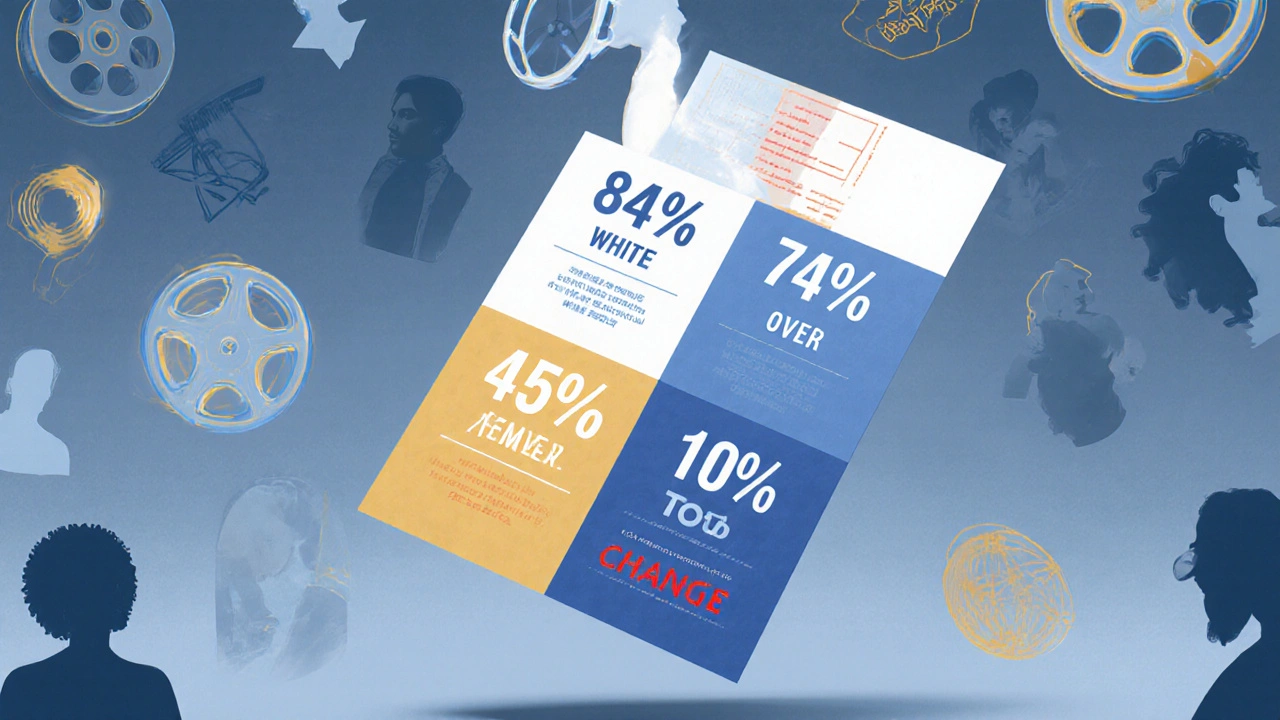
In 2024, the Academy reported that 78% of its members were over the age of 50. Only 18% were under 40. The median age? 62. That’s older than most people’s grandparents. Meanwhile, the average U.S. moviegoer is 38. So the people deciding which films get honored are not the same people buying tickets.
Gender-wise, women make up about 45% of the Academy. That’s an improvement from 25% in 2015, but it still doesn’t reflect the gender balance in the industry. In 2023, women directed just 16% of the top 100 films. The voters aren’t mirroring reality - they’re reflecting an older, male-dominated system.
Race is even starker. In 2024, 84% of Academy voters identified as white. Black, Latino, and Asian voters combined make up less than 10%. That’s a problem when films like Parasite or Minari break through but still struggle to win top prizes. The voting pool doesn’t look like the world these films portray - or the audiences watching them.
It’s not just the Oscars - other awards have the same issue
The Golden Globes are voted on by the Hollywood Foreign Press Association (HFPA), a group of about 90 international journalists. In 2021, the HFPA faced major backlash when it was revealed that not a single member was Black. The group was dissolved and rebuilt, but the new version still lacks diversity. Many voters are based in Los Angeles, have decades-long relationships with studios, and often vote based on access - not art.
BAFTAs, the British equivalent, have a different problem: they’re dominated by UK-based voters who favor British productions. In 2023, 11 of the top 12 nominated films were either British or co-produced in the UK. Even when American films like Oppenheimer dominated globally, BAFTA voters still leaned heavily toward homegrown stories.
And don’t forget the Screen Actors Guild (SAG) Awards. These are voted on by 100,000 actors - more diverse than the Academy, but still skewed toward established stars and studio-backed projects. A small indie film with no star power rarely wins here, even if it’s critically acclaimed.
How voting systems favor the same winners
Most major awards use ranked-choice voting. Voters rank their top choices. If no film gets over 50% of first-place votes, the lowest-ranked film is eliminated, and its votes are redistributed. This sounds fair - until you realize what it rewards.
It favors films that are broadly acceptable, not groundbreaking. A movie like Everything Everywhere All At Once won because it appealed to a wide range of voters - action fans, comedy lovers, drama enthusiasts. But a more polarizing film like The Lighthouse or Titane rarely wins, even if critics adore it. Why? Because it doesn’t have broad appeal among older, more conservative voters.
Also, campaigns matter. Studios spend millions on Oscar campaigns: screenings, ads, dinners, gifts. The Academy doesn’t allow direct lobbying, but it doesn’t stop studios from inviting voters to private events. A well-placed dinner with a director can sway a vote more than a thousand reviews.
And let’s not forget the timing. Most films that win awards are released between September and December. Why? Because that’s when studios strategically release them to stay fresh in voters’ minds. A great film released in March? It’s already forgotten by January.
Who benefits from this system?
The system rewards predictability. Big studios with deep pockets. Established directors with long track records. White, male, middle-aged actors. Films that feel safe - not challenging.
Look at the Best Director category over the last 20 years. Only six women have ever been nominated. Only two have won. And both were white. Meanwhile, directors of color have been nominated just twice - and both were men.
Actors of color face similar barriers. In 2024, 32% of Oscar nominees in acting categories were people of color - the highest ever. But only 12% of winners were. That’s not because the performances weren’t good. It’s because the voters - who are mostly older and white - still gravitate toward familiar faces and types.
Even when films win, the winners are often the same names: Steven Spielberg, Martin Scorsese, Meryl Streep, Leonardo DiCaprio. They’re not necessarily the best - they’re the most trusted. The system rewards legacy over innovation.
Change is happening - slowly
The Academy has tried to fix this. Since 2016, it’s invited more women and people of color to join. Over 2,000 new members were added between 2015 and 2024. More than half were from underrepresented groups. That’s real progress.
Younger voters are starting to join. In 2024, the Academy added 1,000 members under 40 - the largest cohort ever. Some of them are filmmakers from streaming platforms like Netflix and Apple TV+, who weren’t part of the old studio system. They vote differently. They’re more likely to support international films, documentaries, and films with diverse casts.
Streaming platforms are also changing the game. Before, voters had to see films in theaters. Now, they can watch on their TVs. That’s helped films like Marriage Story and Sound of Metal win - they didn’t have wide theatrical releases, but they were easy to access.
And then there’s the audience. Social media has made voters more accountable. When the Oscars ignored Black Panther in 2019, people called them out. When Minari didn’t win Best Picture in 2021, the backlash was loud. Voters know they’re being watched.
What does this mean for you?
It means the Oscars aren’t a true reflection of the best films of the year. They’re a reflection of who’s voting. And that group is slowly changing - but not fast enough.
If you care about representation in film, don’t just wait for the Oscars to catch up. Support films from underrepresented voices. Watch indie films. Attend local screenings. Talk about them online. Vote with your wallet and your attention. The real power isn’t in the ballot box - it’s in your streaming queue.
The next time you see a film win an award, ask: Who voted for this? And who’s still being left out?
Why some films win and others don’t - the hidden rules
There are unspoken rules in awards season. You won’t find them in any official handbook, but veteran producers and publicists know them by heart.
- Don’t make a film too long. Films over 140 minutes rarely win Best Picture. Voters get tired. Lawrence of Arabia won in 1962 - but that was a different era.
- Make it emotional. Films about loss, grief, or redemption win more than comedies or action movies. The Revenant won because it was brutal and raw. Paddington 2 was loved by critics - but it didn’t stand a chance.
- Have a white male lead. Even in 2024, films with white male protagonists still dominate the top categories. Oppenheimer won because it fit the mold - even though The Holdovers had more heart.
- Don’t be too weird. Experimental films rarely win. Even if they’re brilliant. The Lighthouse got nominations but no wins. Everything Everywhere All At Once won because it balanced weirdness with accessibility.
These aren’t rules written in stone. But they’re the patterns that repeat - because the voters who decide them are the same people year after year.
What’s next for film awards?
The future of film awards depends on two things: who joins the voting bodies - and who’s watching.
More young voters mean more diversity. More international voters mean more global stories. More streaming access means more films get seen. But change won’t happen unless audiences keep pushing.
Right now, the system is still tilted. But it’s not broken. It’s just outdated. And like any outdated system, it can be changed - if enough people care enough to demand it.
Are Oscar voters representative of the general moviegoing public?
No. The average Oscar voter is a 62-year-old white man who works in the film industry. The average moviegoer in the U.S. is 38, and nearly half of ticket buyers are people of color. The voters are not a mirror of the audience - they’re a reflection of an older, more homogenous industry.
Why do same actors and directors keep winning?
Because voters tend to reward familiarity. The Academy has a long memory. Actors like Meryl Streep or directors like Martin Scorsese have built reputations over decades. Voters trust them. New talent, even if more talented, often gets overlooked unless they fit a familiar mold - white, male, and already established.
Do streaming films have a better chance now?
Yes. Since the pandemic, the Academy has allowed films released on streaming platforms to qualify. That’s helped films like Marriage Story, Sound of Metal, and The Power of the Dog win awards. Accessibility matters - if voters can watch a film easily, they’re more likely to vote for it.
Why do international films rarely win Best Picture?
Most voters haven’t seen them. International films often don’t get wide marketing in the U.S., and many voters don’t watch subtitled films. Parasite won in 2020 because it had massive buzz, studio backing, and a universal story. But even then, it was the first non-English film to win Best Picture - and it took 92 years.
Can social media change who wins awards?
Yes - indirectly. When audiences loudly criticize a nomination list - like when Black Panther was snubbed in 2019 - voters take notice. Studios also use social media to push campaigns. While voters don’t vote based on Twitter trends, they’re aware of public opinion. That pressure has led to more diverse nominations in recent years.
What you can do about it
You don’t need a ballot to influence film awards. You have more power than you think.
- Watch films from underrepresented voices - even if they’re not nominated.
- Leave reviews on IMDb, Letterboxd, or Rotten Tomatoes. These influence which films get attention.
- Support indie theaters that screen diverse films.
- Ask your local library or community center to host film nights with international or indie movies.
- Share films you love on social media. A single post can spark a conversation that leads to change.
The Oscars will keep happening. But the real winners aren’t the ones holding the statuettes. They’re the filmmakers who keep telling stories - and the audiences who choose to listen.







Comments(8)