Think about Shrek. Now try to imagine Mike Myers not voicing the ogre. It’s impossible, right? That disconnect you feel isn’t just nostalgia; it’s proof that in animation, the voice actor *is* the character. Unlike live-action films where a face anchors the performance, animated characters start as blank slates. The director doesn’t just pick a sound; they build a soul from scratch. If you’re an aspiring voice actor, a filmmaker, or just a fan wondering why certain pairings work while others flop, understanding the mechanics of voice casting is your key to unlocking the magic behind the screen.
The Myth of Star Power vs. Character Fit
For years, studios believed throwing a big movie star at a cartoon mouse guaranteed box office gold. And sure, having Dwayne "The Rock" Johnson in Moana helped sell tickets. But did he make Maui better? Maybe. Did his singing ability carry the role? Absolutely. However, look at The Incredibles. Brad Bird didn’t cast A-list celebrities for every spot. He cast Craig T. Nelson, known more for TV sitcoms than blockbuster movies, as Mr. Incredible. Why? Because Nelson had a warm, authoritative baritone that felt like a dad who could actually lift a bus without sounding like he was trying too hard.
This highlights the first rule of modern animation casting: fit trumps fame. Directors are increasingly moving away from pure celebrity casting unless the star brings a specific vocal quality that defines the character. Take Kung Fu Panda. Jack Black wasn’t chosen because he was famous; he was chosen because his manic energy and improvisational style matched Po’s clumsy, enthusiastic spirit perfectly. You can hear the joy in his voice. A traditional dramatic actor might have played Po as goofy but lacked that infectious zest. When you watch these films, notice how the voice dictates the movement. Animators literally tweak the character’s eyebrows and posture based on the audio track they receive.
Anatomy of a Perfect Match: Timbre and Texture
Voice acting isn’t just about reading lines with emotion. It’s about texture. Each character design has a sonic equivalent. A massive, rocky villain needs a voice with gravel and weight-think James Earl Jones’ Darth Vader or Mark Hamill’s Joker. A small, quick-witted sidekick needs a lighter, faster cadence. This is what we call vocal timbre.
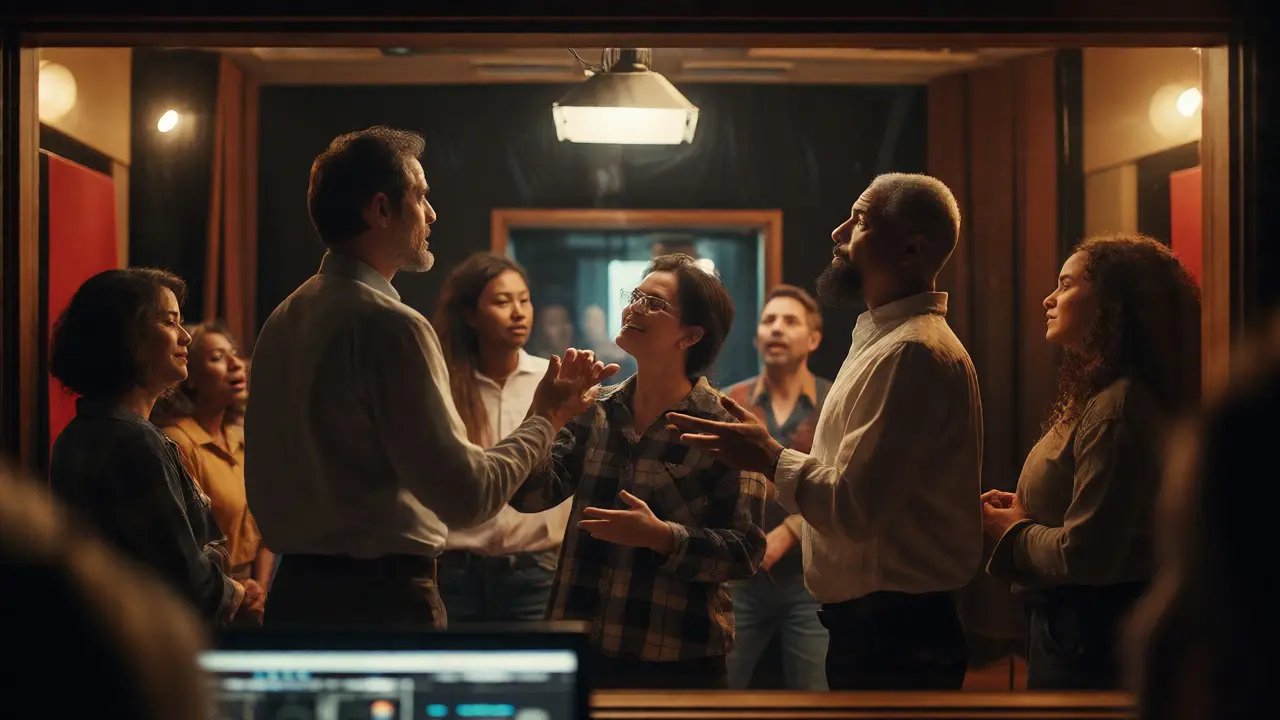
Directors often hold "chemistry reads," where potential actors perform scenes together. They aren’t just listening for individual talent; they’re listening for contrast. If two characters need to argue, their voices must clash in interesting ways. If they are friends, their rhythms should complement each other. Consider the dynamic between Woody and Buzz Lightyear in Toy Story. Tom Hanks provides a steady, reassuring tenor, while Tim Allen offers a sharper, more robotic precision. The friction between Hanks’ warmth and Allen’s stiffness creates the comedy. Without that sonic contrast, the friendship feels flat.
| Character Archetype | Preferred Vocal Quality | Common Pitfalls | Example Pairing |
|---|---|---|---|
| The Heroic Leader | Steady, resonant, clear diction | Sounding too arrogant or stiff | Mufasa (James Earl Jones) |
| The Comic Sidekick | High-pitched, rapid-fire, erratic | Becoming annoying rather than funny | Donkey (Eddie Murphy) |
| The Wise Mentor | Slow, deep, textured with age | Sounding sleepy or disengaged | Gandalf (Ian McKellen) |
| The Villain | Sharp, sibilant, unpredictable | Overacting the menace | Hades (James Woods) |
The Role of Improvisation in Finalizing the Cast
Here’s a secret most audiences don’t know: much of the final dialogue in major animated features is improvised. Voice actors rarely stick strictly to the script. Directors encourage them to play with the words, find natural pauses, and inject personal quirks. This flexibility is a huge factor in casting decisions. Can this actor improvise? Will they surprise me?
Look at Zootopia. Ginnifer Goodwin (Judy Hopps) and Jason Bateman (Nick Wilde) were given room to riff. Their banter feels authentic because it’s partly unscripted. Bateman’s dry delivery contrasts beautifully with Goodwin’s earnest optimism. If the casting director had picked two high-energy comedians, the scene would have been loud and chaotic. By pairing a low-key skeptic with a high-energy optimist, the film created a believable buddy-cop dynamic. This relies heavily on the actors' ability to listen and react, not just deliver lines.
However, improvisation has limits. In musicals, the constraints are tighter. Singers must match the composer’s intended melody and lyric rhythm. This is why non-singers are often dubbed in animated musicals, or why singers are cast despite limited acting range. Idina Menzel in Frozen carries the emotional weight through her vocal power, even if her acting nuances are secondary to her belting capability. The trade-off is accepted because the song is the plot driver.
Diversity and Authenticity in Modern Casting
The landscape of voice casting is shifting rapidly toward authenticity. For decades, white actors voiced characters of color, and male actors voiced female robots or aliens. Today, studios face pressure-and internal desire-to cast actors who share cultural or identity backgrounds with their characters. This isn’t just political correctness; it enriches the storytelling.
When Coco was released, Pixar ensured the main cast was largely Latino. Anthony Gonzalez, who voiced Miguel, brought a genuine Mexican-American perspective to the role. His pronunciation of Spanish terms and his cultural intuition added layers that a generic casting choice couldn’t replicate. Similarly, Raya and the Last Dragon featured Kelly Marie Tran, a Vietnamese-American actress, grounding the Southeast Asian-inspired fantasy in real human experience.
This trend extends to disability representation. Hearing-impaired actors are now voicing deaf characters, bringing nuanced sign language interpretations and emotional truths that hearing actors often miss. The goal is no longer just "who sounds best" but "who represents best." Audiences are more literate in media than ever before; they notice when a cultural accent is faked versus lived.
How Animation Studios Run the Gauntlet
If you want to break into this field, you need to understand the pipeline. It starts with the casting breakdown, a document describing the character’s age, tone, and quirks. Agents submit demos. Directors listen to hundreds of auditions, narrowing down to a shortlist of 5-10 actors per role.
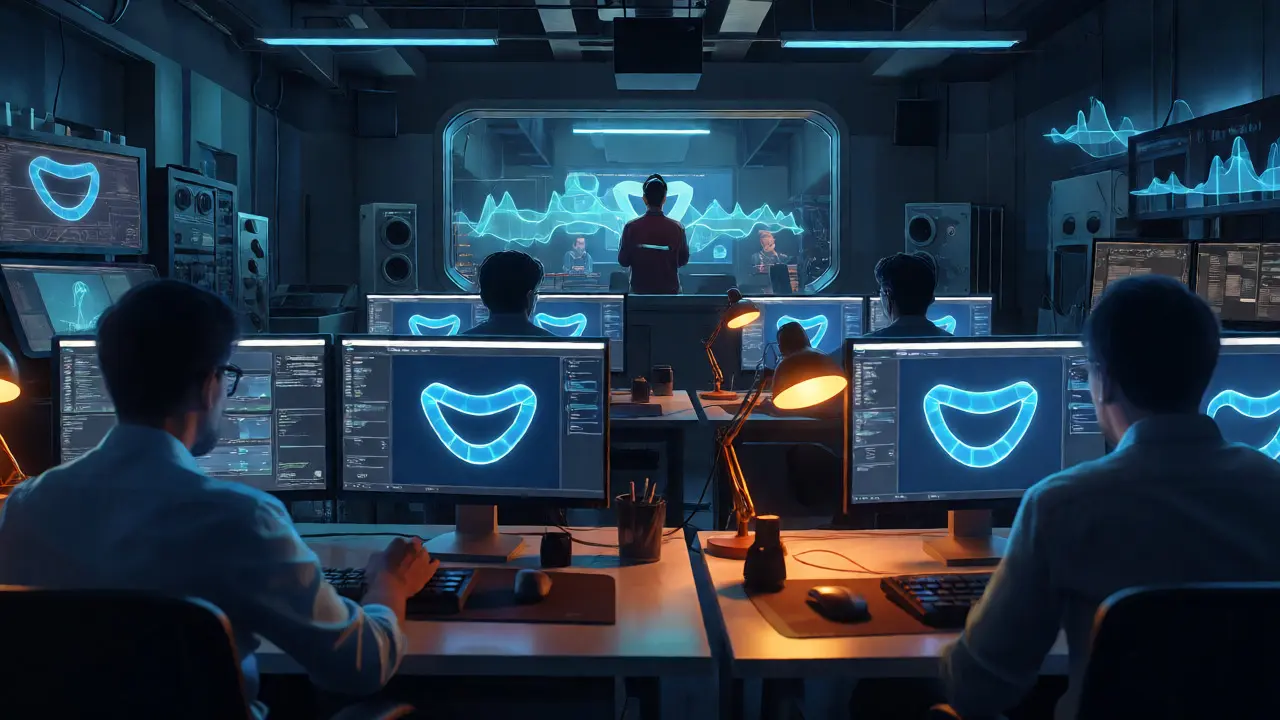
Then come the callbacks. These are intensive sessions where actors read against each other. Sometimes, the director will record multiple versions of a line with different inflections. This material goes to the animators early in the production cycle. Yes, the voice comes first. The animators use the audio waveforms to design the mouth shapes (phonemes) and facial expressions. If you change the actor later, you might have to re-animate entire sequences. That’s expensive. So, the initial casting decision is locked in early, often before the script is fully polished.
- Step 1: Character Design meets Audio Concept. Artists sketch characters while directors hum potential voices.
- Step 2: Open Calls and Agent Submissions. Thousands of auditions are screened.
- Step 3: Chemistry Reads. Shortlisted actors perform scenes together.
- Step 4: Director Approval and Contracting. Legal clears rights for likeness and usage.
- Step 5: Recording Sessions. Actors record in isolation booths, often alone, reacting to prompts.
Pitfalls to Avoid: When Casting Goes Wrong
We’ve all seen it happen. A movie releases, and the voice feels wrong. What went awry? Usually, it’s a mismatch of scale. A tiny, cute creature voiced by someone with a booming, theatrical projection feels disjointed. Or worse, the voice actor imposes their own persona onto the character, making every role sound like themselves. Think of Adam Sandler in some of his animated roles-you recognize Sandler, not necessarily the character.
Another common error is ignoring the ensemble balance. If every character speaks in a similar pitch and speed, the audience gets confused. Directors aim for a "vocal palette"-a mix of highs, lows, rasps, and smooth tones. If the hero and the villain both have deep, gravelly voices, the conflict lacks auditory distinction. Successful casting ensures each character has a unique sonic fingerprint.
The Future of Voice Acting in AI Era
With the rise of synthetic voice technology, some worry about the future of human voice actors. Can AI replicate the nuance of a Robin Williams or a Tara Strong? Currently, no. AI can mimic tone, but it struggles with intent, subtext, and spontaneous humor. The value of a human actor lies in their ability to interpret silence, hesitation, and breath. These micro-expressions convey emotion more powerfully than words.
Studios are using AI for background chatter and crowd noise, freeing up human talent for lead roles. The demand for versatile voice actors who can handle video games, audiobooks, and animation remains strong. The skill set is evolving, though. Actors now need to be comfortable recording remotely, managing their own home studios, and delivering consistent performances without a director physically present in the booth.
Why do stars get paid so much for voice roles?
Stars command higher fees because their name helps market the film internationally. However, their actual recording time is often short-sometimes just a few days. The bulk of the budget goes to animation, not voice talent. Many supporting roles are filled by professional voice actors for significantly less money.
Do voice actors see the animation while recording?
Rarely. Most recording happens early in production using storyboards or rough sketches. Actors rely on the director's verbal cues and their imagination to visualize the action. Some modern studios provide animatics (moving sketches), but full animation is usually added after the audio is recorded.
Is it harder to voice animate characters than live-action roles?
It requires different skills. Live-action allows you to use your body and face. Voice acting demands that you project all emotion through your voice alone. You must sustain energy levels for hours without physical exhaustion affecting your vocal cords. It’s physically demanding in a different way.
Can anyone become a voice actor?
Technically, yes, but success requires training. You need control over pitch, pace, and volume. You also need resilience, as rejection rates are high. Building a demo reel that showcases versatility is essential. Networking with agents who specialize in animation is crucial for breaking into feature films.
What is a 'chemistry read'?
A chemistry read is an audition where two or more actors perform a scene together. Directors assess how their voices blend, whether they interrupt each other naturally, and if their comedic or dramatic timing aligns. It’s vital for ensuring the ensemble feels cohesive.


Comments(6)