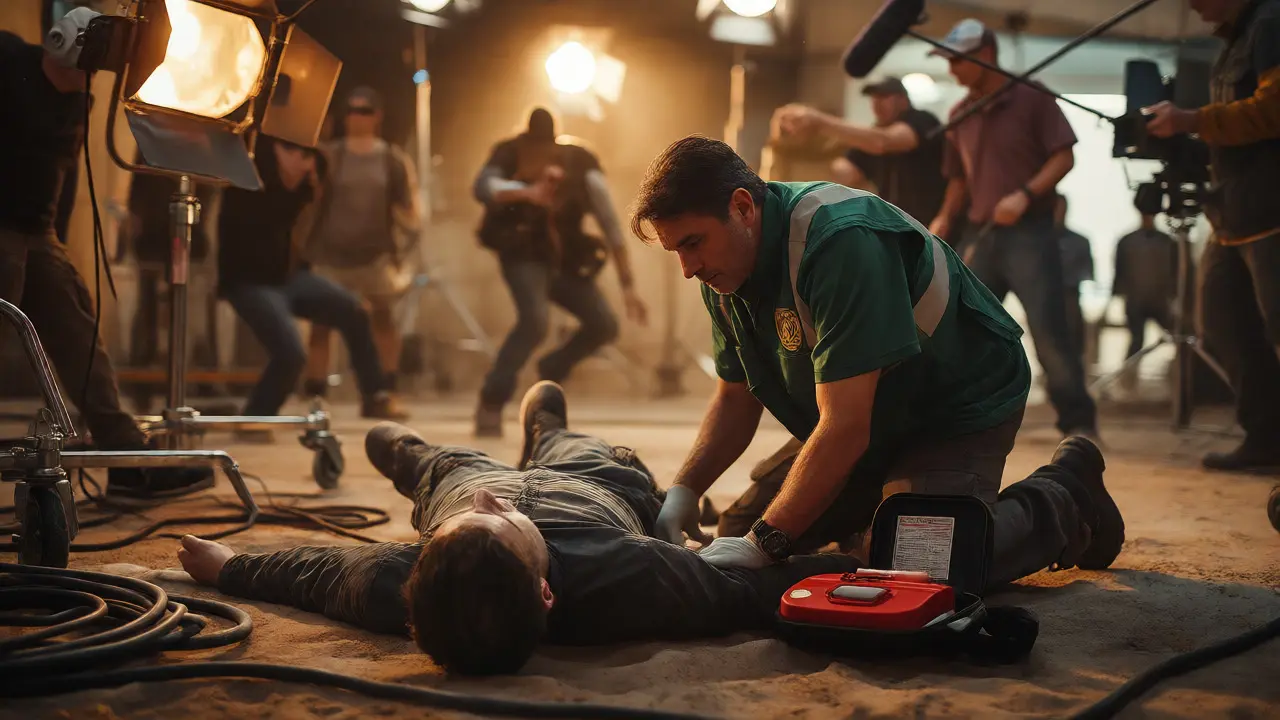
You’re halfway through a twelve-hour shoot day. The stunt coordinator just cleared the wire work, the actors are sweating under hot lights, and the AD is screaming for the next take. Then, someone collapses. Not an actor playing dead, but a grip who actually went down. What happens next? If your answer involves calling 911 and waiting twenty minutes while chaos ensues, you’re gambling with lives and your schedule.
Having Set Medics is not just a box to check for insurance; it’s the backbone of on-set safety management. But hiring them isn’t enough. You need rock-solid Emergency Protocols that everyone-from the intern to the director-understands. Let’s break down how to keep your crew safe without killing your momentum.
Why Your Insurance Policy Is Lying to You
Most producers think they’re covered because they bought general liability insurance. They aren’t. That policy covers accidents, sure, but it doesn’t prevent the lawsuit that comes from negligence. Did you have a paramedic on site when required? Did you follow the specific medical guidelines for stunts or high-altitude shoots?
Screen Actors Guild-American Federation of Television and Radio Artists (SAG-AFTRA) has strict rules about medical coverage for performers. But what about the crew? A certified set medic bridges that gap. They handle everything from heat exhaustion and minor cuts to recognizing the early signs of cardiac arrest. Without one, you’re relying on bystander CPR, which often fails if the responder isn’t trained recently.
Think of it this way: A broken wrist stops one person. A heart attack stops the entire production. The cost of a medic is negligible compared to shutting down a $50,000-a-day shoot for a hospital transfer.
The Three Tiers of On-Set Medical Support
Not every shoot needs the same level of care. Overstaffing wastes money; understaffing risks lives. Here’s how to match your medical support to your risk profile:
| Production Type | Recommended Staff | Equipment Needs | Response Time Goal |
|---|---|---|---|
| Standard Dialogue/Indoor | Certified First Aid/CPR Provider | AED, Basic Trauma Kit | < 2 Minutes |
| Action/Stunts/Water | EMT-Basic or Paramedic | Oxygen, Advanced Airway, Spine Board | < 1 Minute |
| High Risk/Remote Location | Paramedic + Nurse Practitioner | Defibrillator, IV Fluids, Medications | < 30 Seconds |
For a standard office drama, a first aid provider might suffice. But add a car chase or a night shoot in freezing temperatures, and you need an EMT-Basic at minimum. Why? Because cold exposure leads to hypothermia, which can be subtle until it’s critical. An EMT can assess vitals and stabilize before EMS arrives.
Building Your Emergency Action Plan (EAP)
An Emergency Action Plan is useless if it’s buried in a binder nobody reads. It needs to be simple, visual, and drilled.
Your EAP must answer three questions instantly:
- Who calls for help? Designate a specific person, usually the First AD or Safety Coordinator, so no one assumes someone else did it.
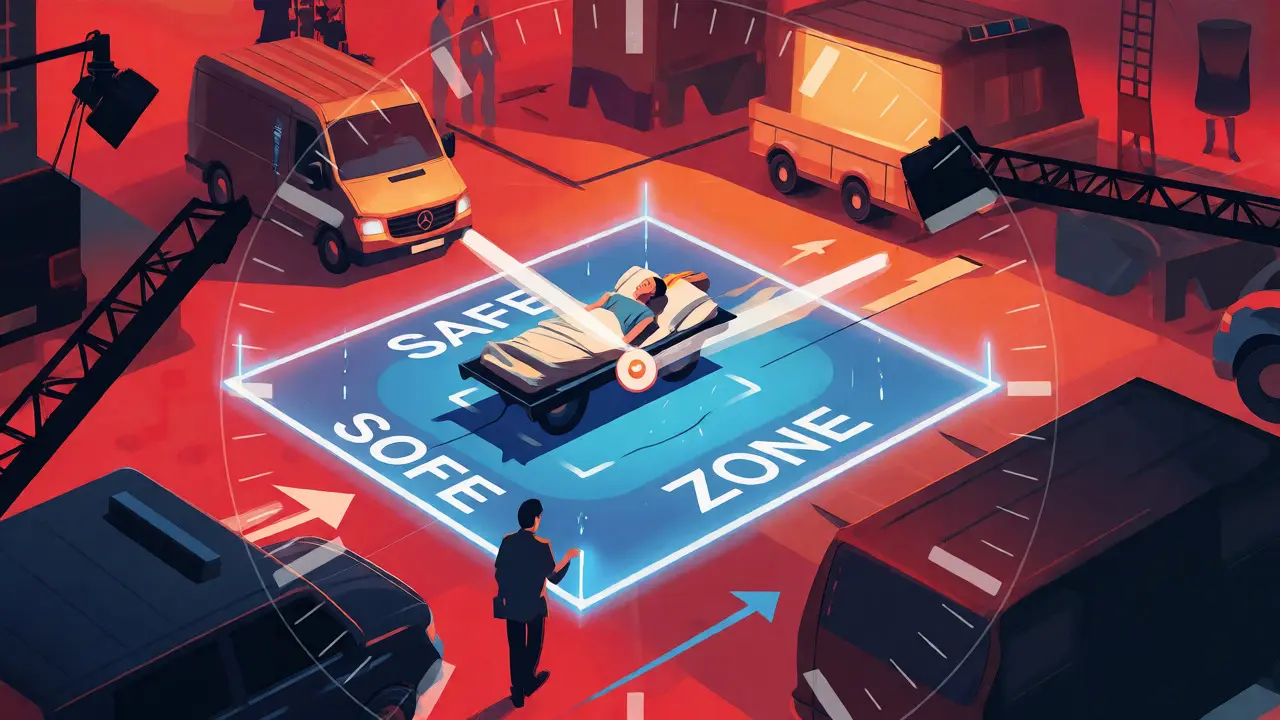
- Where does the patient go? Have a designated "Safe Zone" away from cameras and traffic. This protects privacy and prevents tripping hazards.
- How do we clear the path? Stunt coordinators and drivers must know exactly where to move vehicles to allow ambulance access.
Don’t forget the "Golden Hour." In trauma cases, treatment within the first hour significantly improves survival rates. Your protocol should prioritize rapid extraction over perfect diagnosis. Get them out of the danger zone, then treat.
Communication: The Code Words That Save Lives
Film sets are loud. Radios crackle. People shout. Using plain language like "Help! He's hurt!" can cause panic or get lost in the noise. Use standardized codes.
Many productions adopt medical codes similar to hospitals, adapted for film:
- Code Blue: Cardiac arrest or respiratory failure. Requires immediate defibrillation and CPR.
- Code Red: Fire or hazardous material spill.
- Code Yellow: Minor injury requiring medic attention, but no shutdown needed.
Crucially, establish a radio silence protocol. When a Code Blue is called, all non-essential radio chatter stops. Only the medic, the caller, and the AD speak. This clarity allows the medic to focus entirely on the patient.
Special Considerations: Heat, Cold, and Fatigue
Weather kills more crew members than stunts do. According to the Occupational Safety and Health Administration (OSHA), heat illness is a leading cause of workplace death in outdoor industries.
If you’re shooting in summer, mandate water breaks every 45 minutes. Provide electrolyte drinks, not just water. Hyponatremia (diluted blood sodium) is real and dangerous. Conversely, in winter, watch for frostbite on extremities. Set medics should conduct hourly wellness checks during extreme weather conditions.
Fatigue is another silent killer. After 14 hours on set, reaction times drop to those of a drunk driver. Your medic should monitor crew alertness. If someone looks confused or slurred speech, pull them off the set immediately. Don’t let pride override physiology.
The Legal Shield: Documentation Matters
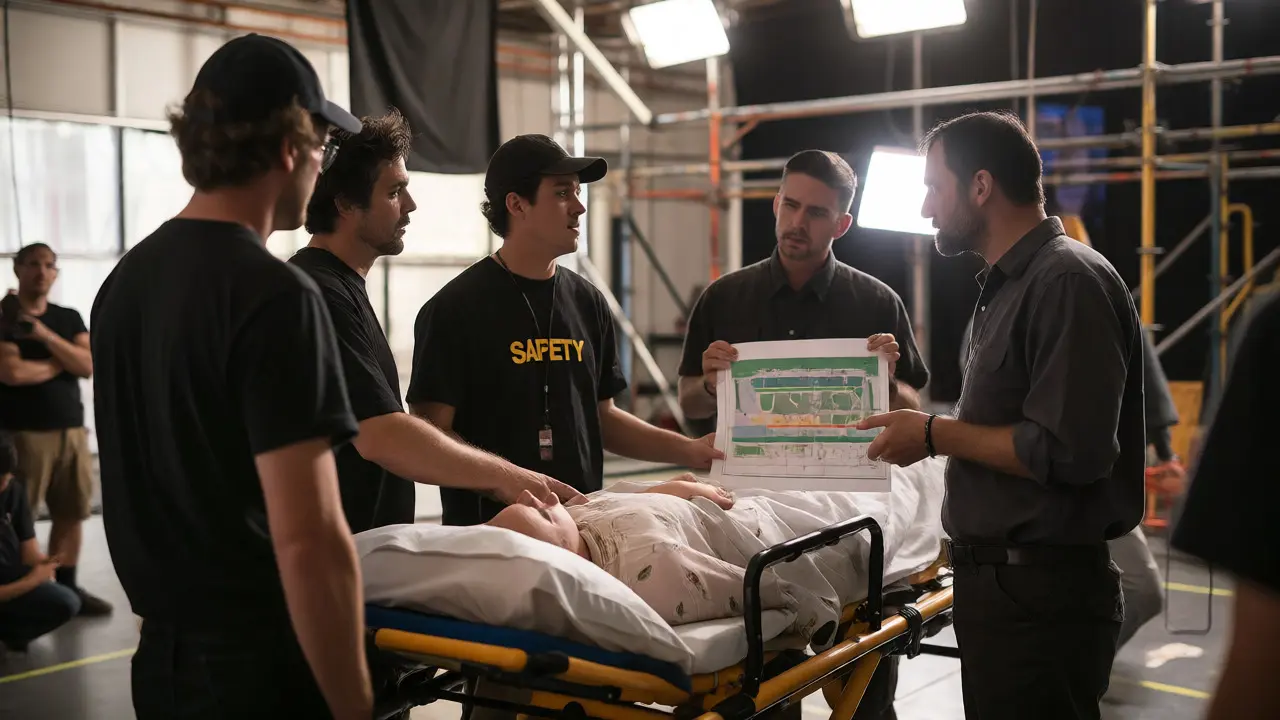
If an incident occurs, your paperwork is your best defense. Every visit to the medic, no matter how minor, must be logged. Include:
- Date and time of incident.
- Description of symptoms observed.
- Treatment provided.
- Whether the individual was referred to external care.
This log proves you acted promptly. If a crew member claims they were injured on set two weeks later, your records show they left the set complaining only of a headache, not a back spasm. Consistency here saves you from fraudulent workers' comp claims.
Training Drills: Practice Makes Perfect
You wouldn’t rehearse a complex camera move without testing it. Do the same for emergencies. Conduct a mock drill once per week during pre-production or early shooting days.
Simulate a scenario: An actor faints during a monologue. Time how long it takes for the medic to arrive, assess, and begin transport. Did the crowd part? Was the stretcher ready? Did anyone block the exit?
These drills expose flaws in your plan. Maybe the gate to the parking lot is locked. Maybe the radio channel is jammed. Fix these issues now, not when someone is actually bleeding.
Do I legally need a set medic for every film shoot?
It depends on your location and union contracts. SAG-AFTRA requires medical personnel on set for certain stunt-heavy scenes. However, many states require licensed medical professionals for any production involving hazardous activities. Always check local labor laws and insurance requirements.
What is the difference between a First Aider and a Paramedic?
A First Aider handles basic injuries like cuts and sprains and performs CPR. A Paramedic is a higher-level clinician who can administer medications, perform advanced airway management, and interpret ECGs. For high-risk productions, a Paramedic is essential.
Who pays for the set medic?
The production company typically hires and pays the medic directly as a line item in the budget. Sometimes, if a specific actor requires personal medical supervision due to known conditions, their agent may negotiate coverage, but the production usually bears the operational cost.
Can a set medic transport patients to the hospital?
Usually, no. Most set medics stabilize patients and wait for local EMS (ambulance services) to transport them. Transporting patients requires specialized ambulances and licenses that most private medics don’t carry. Their job is to keep the patient alive until professional transport arrives.
What should be included in a basic set medical kit?
At minimum: an Automated External Defibrillator (AED), oxygen tank with masks, cervical collars, spine board, gauze, bandages, antiseptic wipes, gloves, and splints. For remote locations, include IV fluids and epinephrine auto-injectors.