Quick Takeaways:
- Voice acting requires full-body movement to make the sound feel authentic.
- The process varies wildly between pre-recording and post-sync (ADR).
- Microphone technique is just as important as the acting itself.
- Modern animation relies heavily on a mix of celebrity star power and trained voice specialists.
The Invisible Art of Voice Performance
When we watch a movie, we see a colorful character and hear a voice, and our brain glues them together. But Voice Acting is the art of using the voice to convey a character's personality, emotion, and physical state without the help of facial expressions or body language. Unlike stage acting, where you can use a shrug or a glare to tell a story, a voice actor has one tool: the air leaving their lungs.
Think about a character like Stitch from Lilo & Stitch. The performance isn't just about a weird voice; it's about the guttural sounds, the breathing, and the rhythm of the speech. The actor has to manipulate their vocal cords to create sounds that don't exist in natural human speech, all while keeping the emotion real. If the voice sounds like it's coming from a throat but the character is a giant monster, the illusion breaks.
The Physicality of Sound
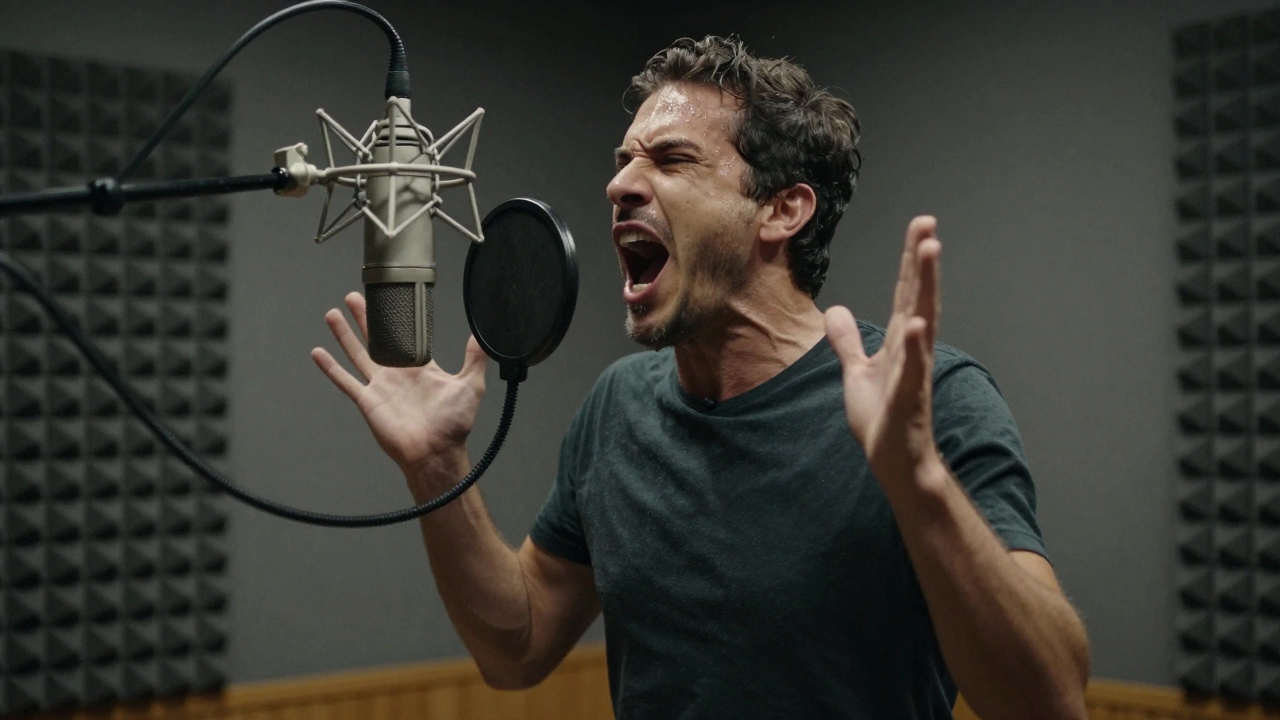
One of the biggest myths is that voice actors just sit in a chair and read. In reality, a professional Recording Studio is often a gym for the voice. If a character is running away from a dragon, the actor doesn't just "sound" out of breath-they actually run in place, jump, or do push-ups before a take to get their heart rate up. This is because the human ear can tell the difference between a "fake' pant and a real one.
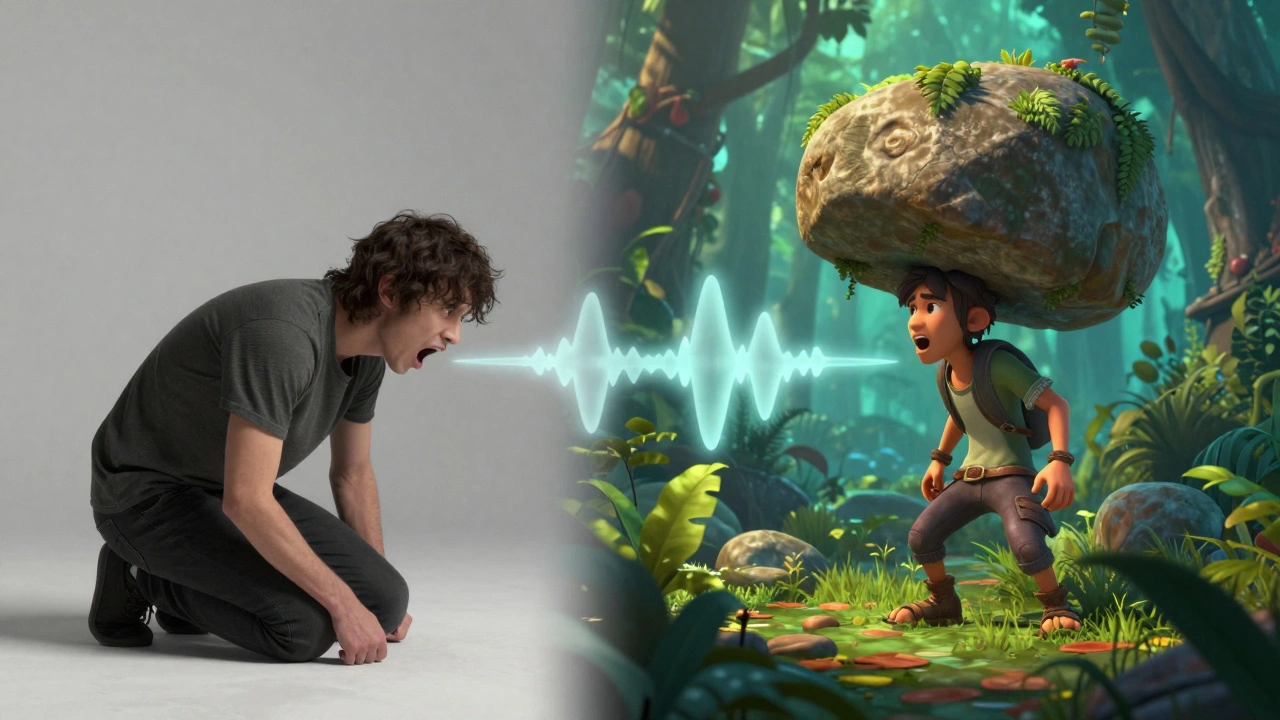
Physicality also affects the tone. If a character is crushed under a rock, the actor might lean their entire body weight against a wall or crouch in a tight ball to compress their diaphragm. This physical restriction changes the resonance of the voice, making the struggle feel authentic. When you see a character in a 3D Animation film sounding exhausted, it's usually because the actor is actually exhausted.
| Feature | Pre-Recording (Standard) | Post-Sync / ADR |
|---|---|---|
| Timing | Recorded before animation begins | Recorded after animation is done |
| Creative Control | Actor drives the character's rhythm | Actor must match existing lip-sync |
| Purpose | Sets the blueprint for animators | Fixes errors or adds sound effects |
| Flexibility | High - lines can be changed/improvised | Low - timing is locked to the frame |
The Workflow: From Script to Screen
In most modern Animation Films, the voice recording happens first. Why? Because animators use the recording as a map. They analyze every breath, every click of the tongue, and every pause to create the character's movements. If an actor laughs mid-sentence, the animator will create a specific facial twitch to match that exact moment. This is why the voice actor's performance is essentially the "lead" in the production process.
Then there's the process of ADR (Automated Dialogue Replacement). You've probably seen this in credits. ADR happens when the original recording isn't clear enough, or when the director decides a line needs a different emotion after the animation is already finished. This is the hardest part of the job. The actor has to match the exact timing of a pre-existing mouth movement, often down to a fraction of a second, while still making the performance sound natural.
Microphone Technique and Vocal Health
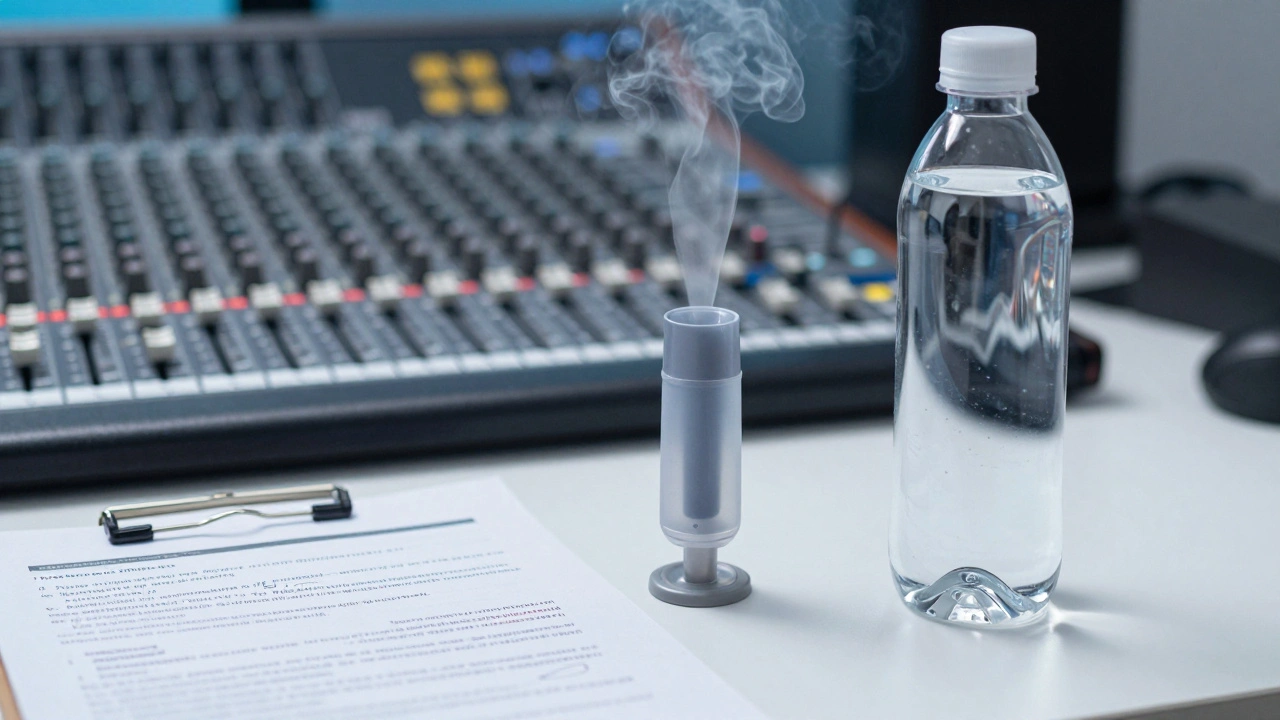
A huge part of the job is understanding the Condenser Microphone. These mics are incredibly sensitive; they pick up everything from a stomach growl to the sound of a lip smack. Voice actors use "pop filters" to stop the blasts of air from letters like 'P' and 'B' from peaking the audio. But the real skill is in the positioning. If a character is whispering a secret, the actor moves inches away from the mic to create an intimate, bass-heavy sound. If they are shouting across a valley, they might step back three feet to avoid distorting the sound.
But all this effort puts a massive strain on the vocal cords. Screaming, growling, and speaking in high-pitched registers for eight hours a day can lead to vocal nodules-small calluses on the vocal folds that can ruin a career. Professional voice actors treat their voices like athletes treat their muscles. They use "vocal steaming," drink massive amounts of room-temperature water, and avoid caffeine or dairy before a session because those can create mucus or dry out the throat, making "mouth clicks" audible on the track.
Celebrity Casting vs. Career Voice Actors
There is a constant tension in the industry between casting a famous movie star and a trained voice specialist. A celebrity brings "marketability"-their name on the poster sells tickets. However, a career voice actor often has a wider range. They can jump from a gravelly villain to a squeaky sidekick in a single session without straining their voice.
The best animation happens when these two worlds collide. Some celebrities are naturally gifted at voice work, using their unique cadence to give a character a distinct identity. Others struggle because they try to "act" with their face, forgetting that the microphone doesn't care how they look. The magic happens when the Voice Director can push a performer to stop "performing" and start "being" the character.
Common Pitfalls in Voice Performance
Beginners often make the mistake of "over-acting." They think that because it's a cartoon, everything needs to be 200% bigger. But with modern high-definition animation, subtle performances often land better. If the animation is expressive, the voice doesn't need to do all the heavy lifting. The most effective performances are those that find the human truth in a non-human character.
Another common error is ignoring the "breath." In real life, we breathe to emphasize points, to show anxiety, or to recover from exertion. In a bad voice-over, the breaths are edited out or sound misplaced. A great actor uses the breath as a punctuation mark, telling the audience how the character feels before they even speak a word.
Do voice actors record together in the same room?
Rarely. Most of the time, actors record their lines individually. The director then edits these separate tracks together to create a conversation. However, some studios now encourage "ensemble recording" where actors can react to each other in real-time, which often leads to more natural chemistry and spontaneous improvisation.
What is the difference between voice acting and voice-over?
Voice-over (VO) is a broad term that includes commercials, audiobooks, and corporate narrations where the goal is often to deliver information clearly. Voice acting specifically refers to creating a fictional character, involving emotional arcs, character development, and dramatic performance.
How do actors create consistent voices for long series?
They use "voice anchors." This involves identifying a specific physical placement in the throat or mouth-like pushing the tongue forward or tightening the back of the throat-that triggers the character's sound. They often record a "reference track" of key phrases to listen to before every session to ensure the pitch and tone haven't drifted over the years.
Can anyone become a voice actor?
Technically, yes, but it requires a specific skill set. It's less about having a "cool voice" and more about acting ability. The industry prioritizes people who can take direction quickly and deliver a consistent emotional performance across hundreds of takes without losing their voice.
What is a 'scratch track'?
A scratch track is a temporary recording, often done by the director or a writer, used to give the animators a rough idea of the timing and rhythm. These are eventually replaced by the final professional voice actor's performance.
Next Steps for Aspiring Voice Talent
If you're looking to get into the field, don't start by buying the most expensive gear. Start by practicing active listening. Watch your favorite animated films and mute the audio-try to imagine how the character would sound based on their movement. Then, turn the sound back on and analyze where the actor breathes and how they emphasize certain syllables.
For those with a basic setup, record yourself reading a scene and then try to perform it again, but this time, physically act out every movement. Compare the two recordings. You'll likely find that the one where you were moving around sounds significantly more "alive" and believable. The goal isn't to sound like a cartoon; it's to sound like a person who happens to be a cartoon.