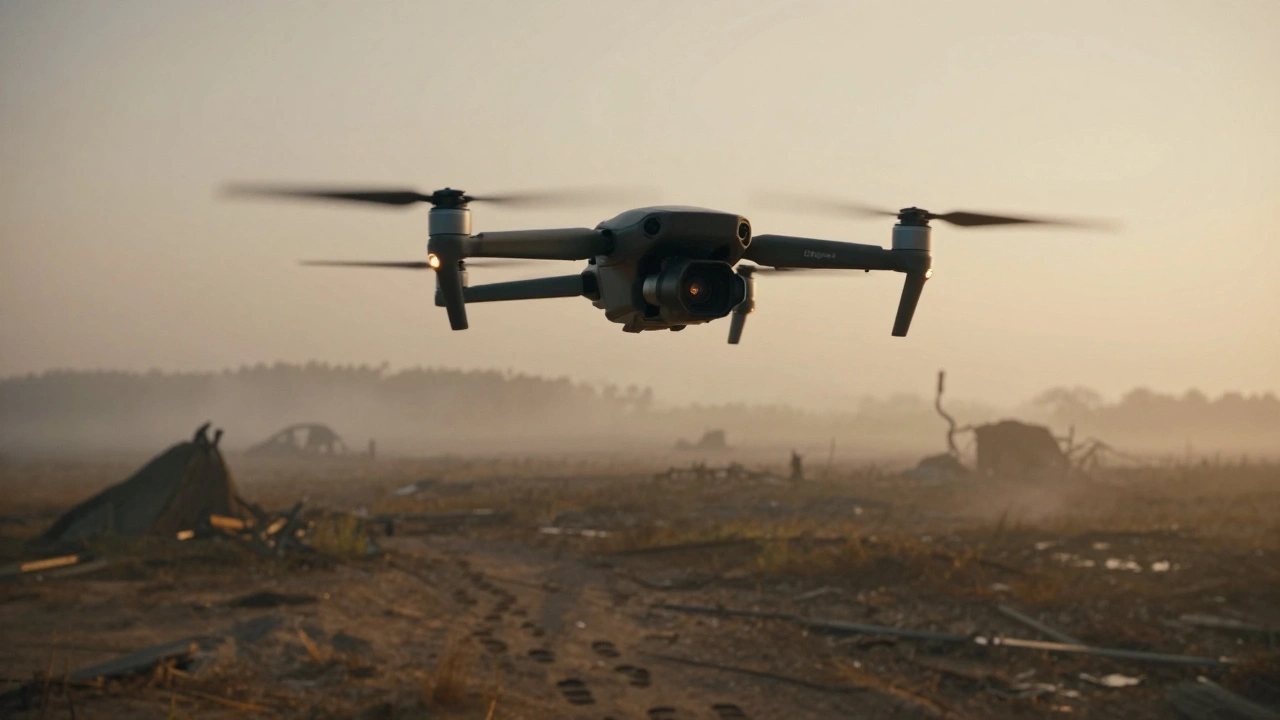
Drone cinematography has changed how feature films capture the sky. No longer just a fancy tool for big-budget blockbusters, drones are now part of the standard toolkit for directors who want sweeping landscapes, dynamic chase sequences, or intimate character moments from above. But using a drone on set isn’t just about pressing record and flying high. There are rules. And there’s art. Get either wrong, and you risk grounding your shoot-or ruining your shot.
Why Drones Changed Feature Film Production
Before drones, aerial shots meant helicopters, cranes, or wires. Helicopters cost $2,000 to $10,000 per hour. They’re loud. They shake the camera. They can’t fly close to trees, buildings, or people without risking safety. Drones changed that. A single DJI Inspire 3, for example, can carry a cinema-grade RED Komodo camera and hover within three feet of a moving actor. The result? Fluid, silent, low-altitude shots that feel intimate yet epic.
Think of the opening sequence of 1917-the long, continuous tracking shot through no-man’s-land. While most of it was done on foot with a Steadicam, the aerial transition over the battlefield? That was a drone. It gave the illusion of a single, unbroken take from ground to sky. No helicopters. No wires. Just a small drone and a skilled pilot.
By 2025, over 60% of mid-budget feature films used drones for at least one key scene, according to the International Cinematographers Guild. It’s no longer optional. It’s expected.
Regulations Are Not Optional
Drone operators in the U.S. must follow FAA Part 107 rules. That means:
- Maximum altitude: 400 feet above ground level
- No flying over people not involved in the operation
- Daylight-only flights unless you have a waiver
- Visual line-of-sight required at all times
But film shoots rarely fit neatly into those boxes. You need to fly over actors. You need to shoot at dusk. You need to go beyond 400 feet for a mountain panorama. That’s where Part 107 waivers come in.
Production companies apply for waivers through the FAA’s LAANC system. The most common ones are:
- Waiver for flying over people
- Waiver for night operations
- Waiver for altitude above 400 feet
Getting approved takes time-often 60 to 90 days. That’s why big productions start the paperwork six months before shooting. Smaller crews? They get caught off guard. One indie film in New Mexico shut down for two weeks because their drone pilot didn’t file the waiver. The director lost $120,000 in location fees.
Outside the U.S., rules vary wildly. In the UK, the CAA requires a Permission for Commercial Operations (PfCO). In Canada, it’s a Special Flight Operations Certificate. In the EU, you need a drone operator ID and a competency certificate. Never assume rules are the same across borders. A shot that’s legal in Georgia might be illegal in Georgia, the country.
How Aesthetics Drive Drone Use
It’s not enough to just get the shot. You need to make it feel intentional. A drone shot that feels like a gimmick breaks immersion. A great drone shot feels inevitable.
Take The Revenant. The opening sequence doesn’t just show a forest-it pulls the viewer into the chaos of battle. The drone doesn’t fly high. It dives low, weaving between trees, following runners, then rising sharply as the ambush begins. It’s not just beautiful. It’s emotional.
Good drone cinematography follows the same rules as traditional camera movement:
- Speed matters. Too fast? It feels like a video game. Too slow? It drags.
- Composition matters. Rule of thirds still applies. Avoid centering the subject unless you’re going for symmetry.
- Lighting matters. Drone cameras struggle in low contrast. Golden hour is your friend.
- Weather matters. Wind over 15 mph ruins smooth motion. Rain? Don’t even try.
Many directors now work with drone operators as part of the camera department-not as a separate vendor. The operator sits in the video village. They talk to the DP. They rehearse moves with the actors. This isn’t just flying a remote. It’s performing.
Equipment Choices Matter
Not all drones are made for film. A DJI Mavic 3 Pro can shoot 5.1K video, but it’s not built for heavy lenses or long takes. For feature films, crews use:
- DJI Inspire 3 with Zenmuse X9 camera-used in Oppenheimer and Dune: Part Two. Captures 8K at 75 fps. Handles high winds. Built-in dual operators (pilot + camera operator).
- Freefly Alta X with RED V-RAPTOR-used in The Batman. Can carry heavier cinema cameras. Longer flight time. More stable in turbulence.
- Autel EVO Nano+ 2-used for tight, low-budget scenes. Compact. Quiet. Great for indoor or forest shots.
Costs range from $15,000 for a basic setup to over $100,000 for full cinema-grade rigs. But it’s not just about the hardware. The operator’s skill is worth more. A top drone cinematographer charges $1,500 to $4,000 per day. That’s more than a grip. That’s more than a gaffer.
Common Mistakes on Set
Even experienced crews mess up. Here’s what goes wrong:
- Trying to fly in wind without checking the forecast. One film in Iceland lost three days because they didn’t know the jet stream was shifting.
- Using a drone with no redundancy. If the battery dies mid-shot, you lose the take. Top crews carry three batteries per drone-and a backup drone.
- Not communicating with the sound team. Drone motors hum. Even quiet ones can ruin dialogue recordings. Some shoots use sound blankets or record ambient audio separately.
- Forgetting the legal side. A producer in Toronto thought they could fly over a park because it was public. They got fined $5,000 and banned from filming for a year.
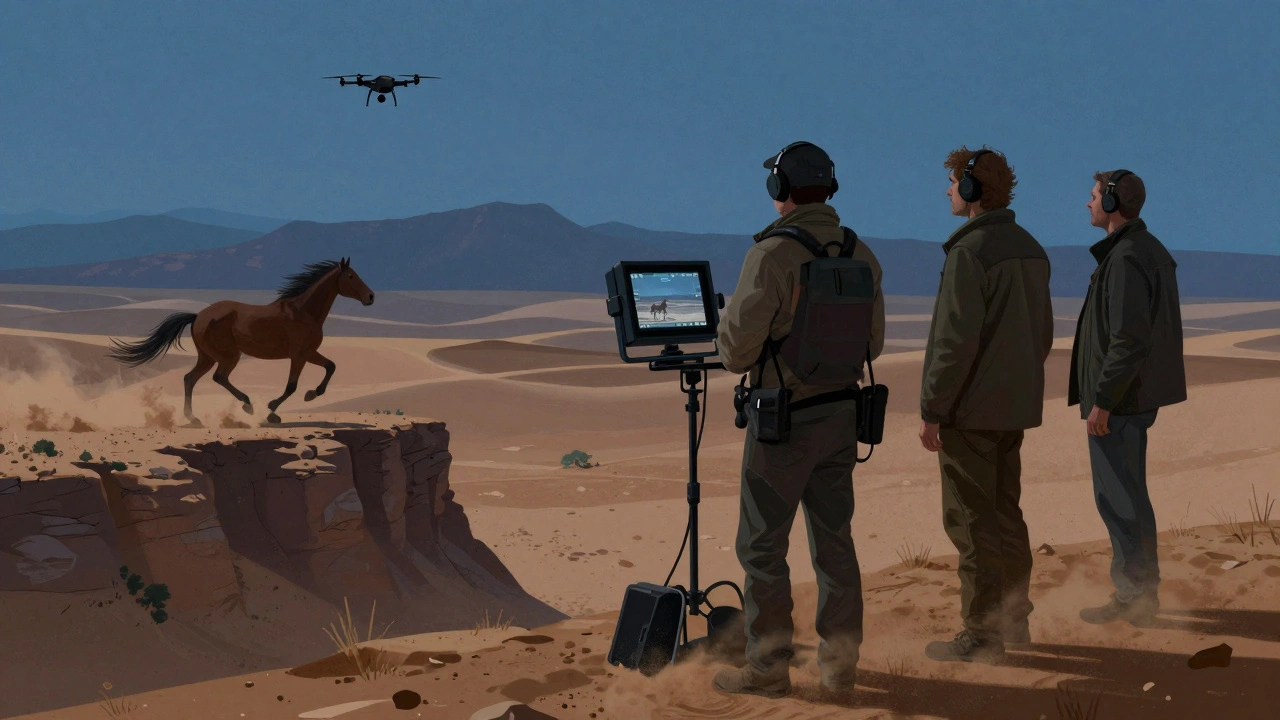
One crew in Scotland used a drone to capture a horse galloping across a cliff. They got the shot. But the horse spooked. The rider fell. The drone crashed. The rider was fine. The drone wasn’t. The insurance claim took six months. The director says now: "Always scout the environment like it’s a minefield. Because it is."

When Not to Use a Drone
Just because you can doesn’t mean you should. Some scenes are better with a crane, a helicopter, or even a cable rig.
- Low-light interiors: Drones lack the sensitivity of large cinema cameras in darkness.
- High-speed action: Drones can’t match the acceleration of a helicopter in a car chase.
- Extreme weather: Snow, sand, salt air-these damage drone motors and sensors.
- Emotional close-ups: A drone hovering over a character’s face feels cold. A handheld camera feels human.
Some directors, like Denis Villeneuve, use drones only for establishing shots. Others, like Ava DuVernay, use them as the main camera for entire sequences. There’s no right answer. Only what serves the story.
What’s Next for Drone Cinematography
AI-assisted flight paths are coming. Cameras now auto-track actors using facial recognition. Drones can follow a person without a pilot. In 2025, the first fully autonomous drone shot was used in a feature film-The Last Light, shot in Iceland. The drone followed the lead actor through a lava field, adjusting altitude and speed based on his movements. No human pilot. Just code and sensors.
But the best shots still come from collaboration. The director’s vision. The DP’s eye. The pilot’s instinct. The drone is just the tool. The art is in how you use it.
Can I use a consumer drone like a DJI Mavic for a feature film?
Yes, but only for low-budget or indie films with limited needs. Consumer drones like the Mavic 3 Pro can shoot 5.1K video and are great for establishing shots or tight spaces. But they lack the stability, lens options, and redundancy of professional cinema drones like the Inspire 3. If your film is going to theaters or festivals, you’ll need higher-end gear to match the look of other films.
Do I need a pilot’s license to fly a drone on a film set?
In the U.S., you need a Part 107 Remote Pilot Certificate from the FAA. Even if you’re not the one flying, the person operating the drone must have it. Some states require additional permits. Outside the U.S., rules vary-Canada requires a Special Flight Operations Certificate, the UK requires a PfCO. Never assume a hobbyist license is enough.
How far in advance should I plan drone shots?
At least 90 days for U.S. FAA waivers. If you’re filming internationally, start six months ahead. Location scouting, weather patterns, airspace restrictions, and permits all take time. Rushing this step can shut down your entire shoot. Many productions now hire a drone coordinator early in pre-production to handle logistics.
Can drones replace helicopters for aerial shots?
For most scenes, yes. Drones are quieter, cheaper, and more agile. But helicopters still win for long-range shots over 1,000 feet, high-speed chases, or when carrying heavy cinema cameras like the Alexa LF. Drones can’t carry 20-pound rigs for more than 15 minutes. Helicopters can. So they’re not gone-just used differently.
What’s the biggest risk when using drones on set?
The biggest risk isn’t the drone crashing-it’s the legal and safety fallout. Flying over people without a waiver can lead to fines, lawsuits, or criminal charges. A drone hitting a crew member or actor can cause serious injury. Always prioritize safety over the perfect shot. Use spotters, establish no-fly zones, and never fly in poor weather.


Comments(9)