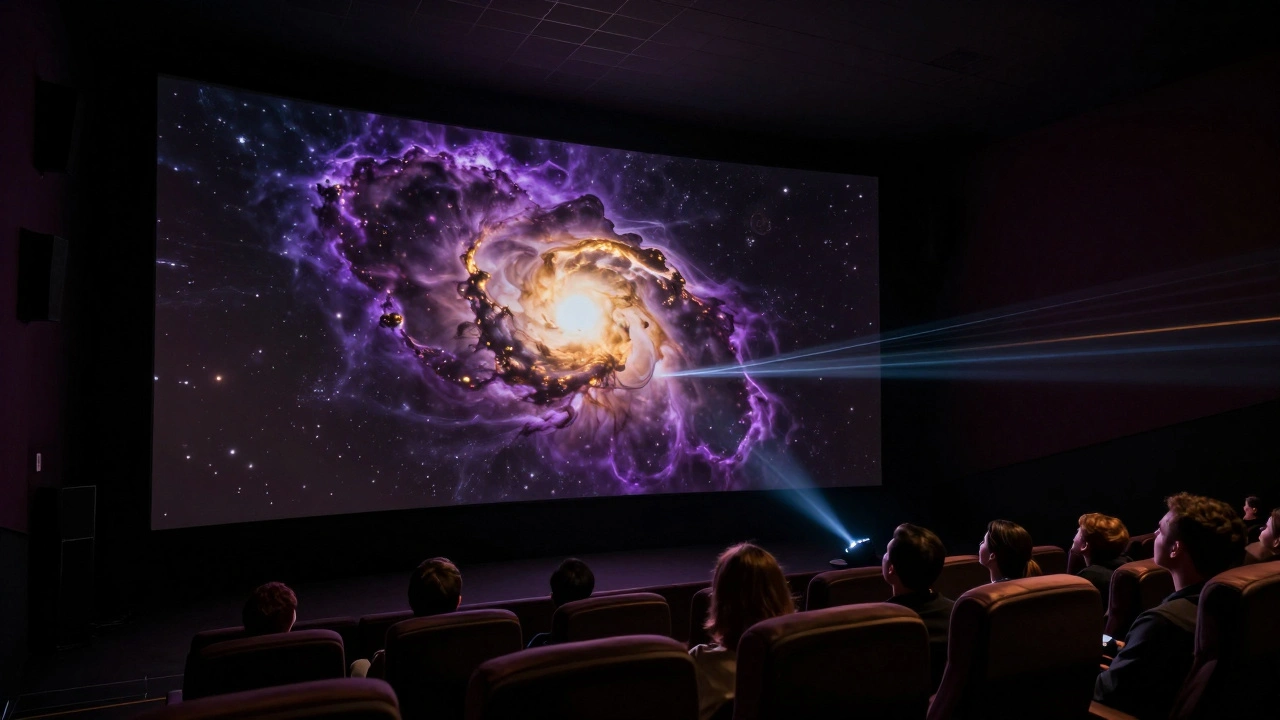
Movie theaters aren’t just showing films anymore-they’re becoming immersive environments. The big screen isn’t just bigger; it’s smarter. HDR, HFR, and spatial audio have moved from buzzwords to standard features in premium theaters. But where are they headed next? This isn’t about flashy upgrades. It’s about how these technologies are reshaping what a movie experience actually means.
HDR Is No Longer a Luxury-It’s a Requirement
High Dynamic Range (HDR) used to be a selling point for premium formats like Dolby Vision or IMAX Laser. Now, if a theater doesn’t have HDR, audiences notice. They notice the washed-out whites in a snowy scene. They notice how shadows in a night chase turn into a muddy blur. HDR isn’t just about brightness-it’s about contrast. A true HDR projector can hit 1,000 nits or more, preserving detail in both the brightest highlights and deepest blacks.
By 2026, nearly all new commercial theater installations use HDR-capable laser projectors. The shift happened fast because audiences started comparing. A 2024 survey by the National Association of Theatre Owners found that 68% of frequent moviegoers said they’d pay more for a theater with HDR if it meant seeing a film as the director intended. That’s not a niche preference-it’s a market shift.
Next up? Real-time HDR calibration. Imagine a system that scans the screen before each showing, adjusts brightness and color based on ambient light, and even remembers your seat’s viewing angle. That’s already being tested in select theaters in Los Angeles and Tokyo. It’s not science fiction-it’s the next firmware update.
HFR: Why 48fps Isn’t the End-It’s the Beginning
High Frame Rate (HFR) scared people at first. Peter Jackson’s The Hobbit at 48fps looked too real, like a soap opera. But that wasn’t HFR’s fault-it was the content. The same 24fps film stock was being played faster, without re-shooting. That’s like putting a sports car engine in a tractor and wondering why it handles poorly.
Now, studios are shooting HFR content designed for it. Avatar: The Way of Water was filmed at 48fps and mastered in 120fps. The result? Motion that feels natural, not jittery. In underwater scenes, every ripple, every fish darting past, has smooth motion. No motion blur. No strobing. It’s like watching life, not a movie.
By 2026, theaters with 120fps-capable projectors are growing. They’re not everywhere-but they’re in the right places. Major markets like New York, London, and Sydney now have at least one theater that can play 120fps. The real win? It’s not about speed. It’s about clarity. In action scenes, you can track every object. In close-ups, you see micro-expressions you’d miss at 24fps.
The future? 120fps is just step one. Studios are experimenting with 144fps and even 160fps for VR cinema experiences. But the real breakthrough will come when filmmakers start writing scenes around HFR. Think of a slow-motion conversation that feels real because every flicker of emotion is captured. That’s the next frontier.
Spatial Audio Is No Longer About Speakers-It’s About Movement
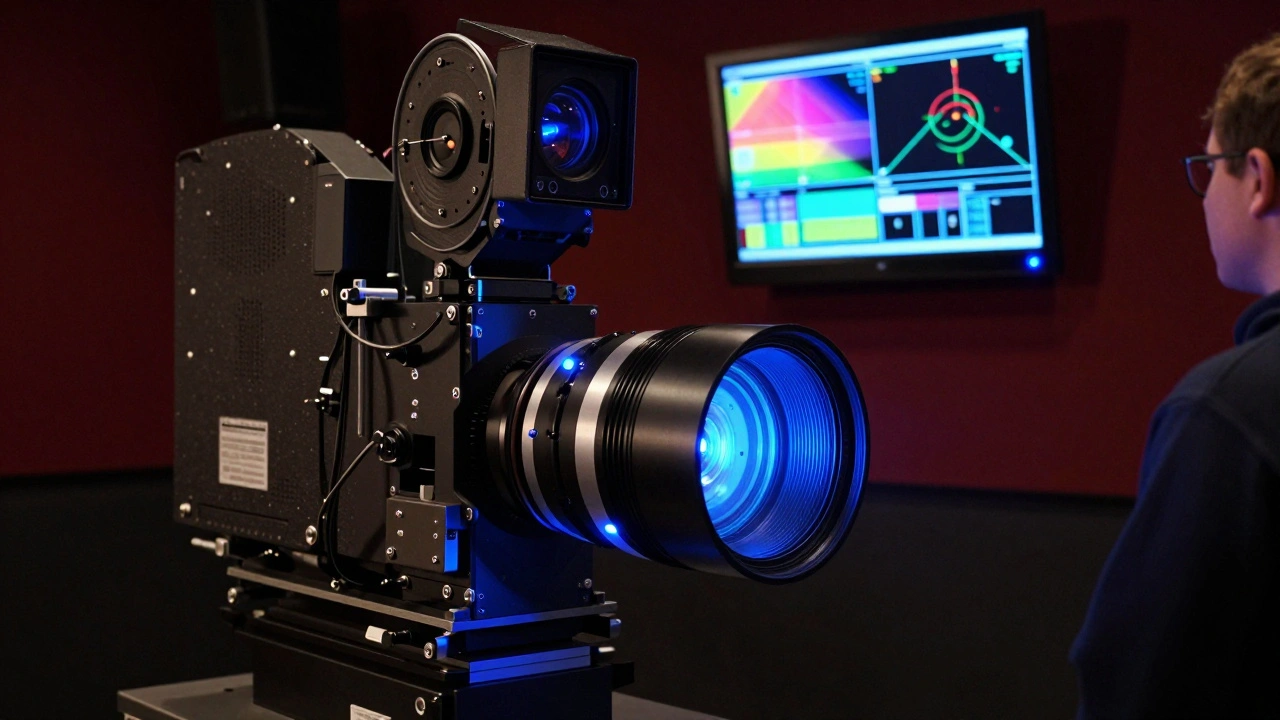
Surround sound used to mean five speakers and a subwoofer. Now, it’s about object-based audio. Dolby Atmos, DTS:X, and newer formats like Auro-3D don’t just assign sound to channels-they treat each sound as a moving object in 3D space. A helicopter doesn’t just come from the left speaker. It flies overhead, dips behind you, then fades into the distance.
But here’s what’s changing: the audio is starting to adapt to the room. New theater systems now use microphones to map the audience’s seating. If the front rows are full but the back is empty, the system adjusts volume and directionality to prevent sound from being lost. It’s not just immersive-it’s intelligent.
By 2026, theaters are testing personalized audio zones. Imagine putting on a pair of lightweight, wireless earbuds at the concession stand. They sync with your seat. The audio follows you as you walk-no drop-off, no echo. That’s not a gimmick. It’s being piloted in theaters in Chicago and Berlin. The goal? Let people move during a film without losing the sound.
And then there’s haptic audio. Some theaters are embedding subtle vibrations into seats-enough to feel a distant explosion, but not enough to distract. It’s not about shaking the chair. It’s about making you feel the rumble in your chest. That’s the next layer.
The Convergence: When HDR, HFR, and Spatial Audio Work Together
The real magic isn’t in each technology alone. It’s in how they sync.
Think of a scene from a new sci-fi film: a spaceship glides silently through a nebula. HDR shows the glowing gas in crisp detail. HFR makes the motion feel weightless and fluid. Spatial audio places the hum of the engines around you, then lets them fade as the ship moves out of frame. All three work in unison.
That’s why the biggest theater chains are now bundling these technologies under one premium label: Immersive Cinema. It’s not just a marketing term. It’s a technical standard. To qualify, a theater must meet specific thresholds: minimum 1,000 nits brightness, 120fps playback, and object-based audio with at least 32 discrete channels.
These theaters are already seeing 30% higher ticket sales for premium showings. And the demand is growing. Parents bring kids not just for the story, but for the feeling. Young adults return because it’s not just a movie-it’s an event. And older audiences say they finally feel like they’re inside the story.
What’s Next? The Invisible Upgrades
The next wave won’t be flashy. It’ll be quiet.
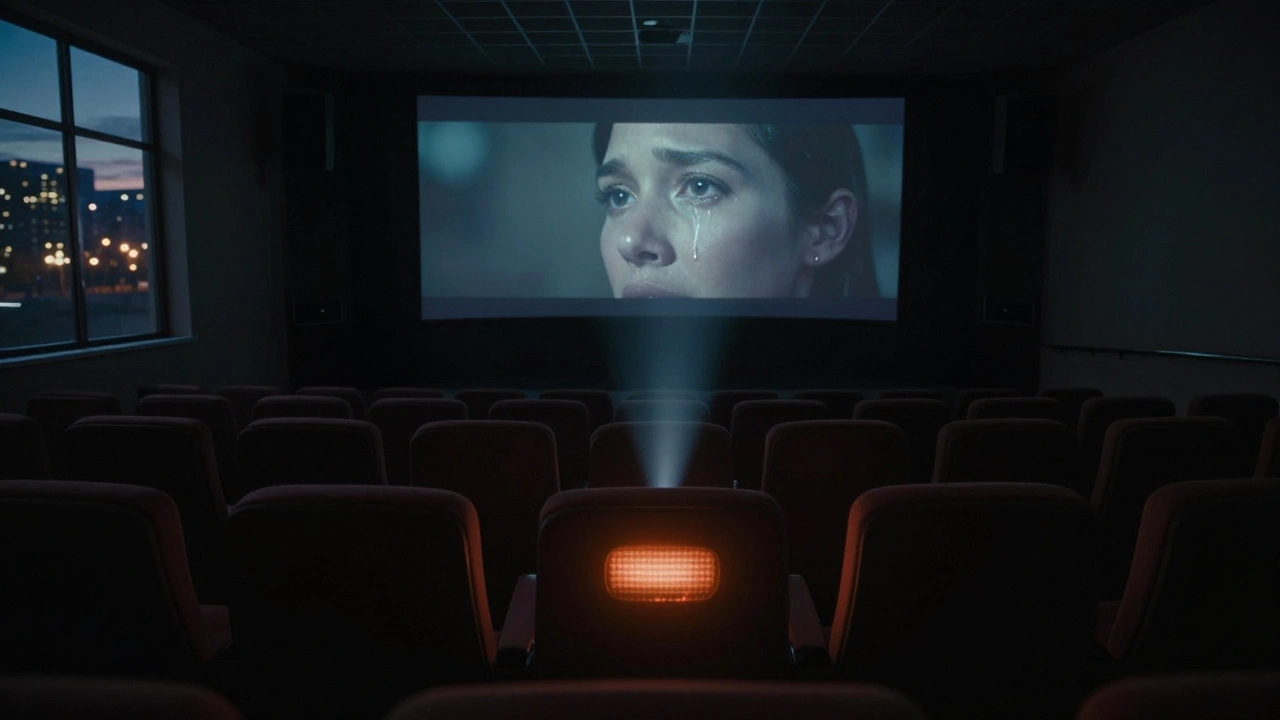
One theater in Atlanta now uses AI to analyze each film frame by frame. It adjusts HDR levels in real time based on the scene’s emotional tone. A quiet moment gets softer contrast. A tense moment gets sharper highlights. No human operator. Just algorithms trained on decades of cinematography.
Another innovation: light-based tracking. Instead of relying on your phone or a remote, the theater uses infrared sensors to detect where you’re looking. If you glance away from the screen during a key moment, the audio subtly shifts to guide your attention back. It’s not manipulation-it’s curation.
And then there’s the silent revolution: thermal sensors. They monitor how warm the theater is-not for comfort, but for projection. Laser projectors lose brightness as they overheat. Now, sensors adjust cooling in real time to maintain consistent image quality. No more dimming halfway through the film.
Why This Matters Beyond the Screen
This isn’t just about better visuals. It’s about survival.
Streaming is better than ever. 4K HDR, Dolby Atmos, even HFR on home systems. So why go to the theater? Because the theater offers something no home can replicate: shared presence. The darkness. The silence before the credits. The collective gasp.
But if theaters don’t keep upgrading, that experience will feel outdated. The future of cinema isn’t about beating streaming. It’s about offering something streaming can’t touch-a fully sensory, emotionally resonant event.
HDR, HFR, and spatial audio aren’t just tech specs. They’re tools to rebuild that magic. And they’re working.
Do I need special glasses to see HDR or HFR in theaters?
No. HDR and HFR are delivered through the projector and screen, not through glasses. Unlike 3D movies, which require polarized lenses, HDR and HFR work with your eyes as they are. The only time you’ll need glasses is if the film is in 3D-which is becoming rarer. Most new releases in premium formats are 2D only, with enhanced image and sound.
Can I watch HFR content at home?
Yes, but it’s limited. A few high-end TVs now support 120fps playback, and some streaming services like Apple TV+ and Amazon Prime Video offer select titles in 48fps or 60fps. However, true HFR cinema-like 120fps or higher-is still exclusive to theaters. Home systems lack the brightness, contrast, and screen size to deliver the full effect. The theater experience is still unmatched for HFR.
Are HDR and HFR only for action or sci-fi films?
No. While action and sci-fi films benefit most visibly, HDR and HFR enhance every genre. A quiet drama like The Last Picture Show in HDR reveals subtle skin tones and candlelight textures. A romantic comedy in HFR makes subtle glances and smiles feel more intimate. Even animated films gain depth-colors pop, motion flows naturally. The technology serves the story, not the genre.
Why don’t all theaters have these upgrades?
Cost and space. Upgrading to a 120fps laser projector with HDR and object-based audio can cost over $500,000 per screen. Smaller theaters, especially in rural areas, can’t afford it. Many are waiting for prices to drop or for studios to offer financial incentives. But in major cities, the upgrades are happening fast-because audiences are demanding them.
Will these technologies make older films look better?
Yes, but with limits. Studios are now remastering classic films in HDR and even upscaling them to HFR using AI. You can now see Blade Runner 2049 in 120fps, or Star Wars: A New Hope in true HDR. But these are restorations, not recreations. The original film’s motion blur and contrast are still part of its style. The goal isn’t to erase history-it’s to give it new life.



Comments(9)