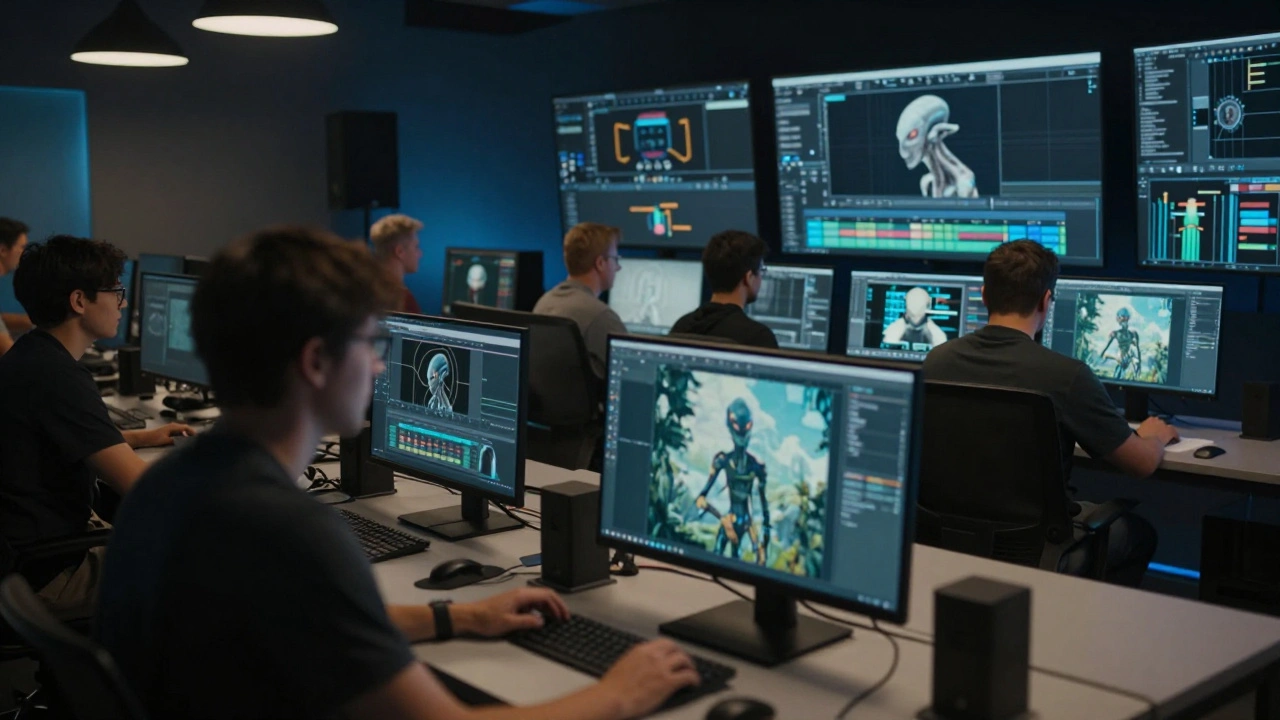
Visual Effects, commonly known as VFX, are the invisible threads that stitch reality and imagination together in modern cinema. Unlike practical effects-like exploding cars or mechanical dinosaurs-you can’t see them on set. They happen later, in the quiet hum of server farms and the glow of color-calibrated monitors. But their impact? Massive. From the subtle removal of a safety wire to the creation of entire alien worlds, VFX define what’s possible in storytelling today.
You don’t need to be a director to appreciate this craft. If you’ve ever watched a blockbuster and thought, “How did they do that?”-you’re already inside the world of visual effects. This isn’t about magic tricks. It’s about precision, pipeline discipline, and tools that have become industry standards over decades of trial, error, and technological leaps.
The Core Pipeline: How VFX Actually Gets Made
Most people think VFX is just “adding stuff” to footage. In reality, it’s a tightly choreographed sequence of steps, each with its own specialists and software. The standard pipeline looks like this:
- Pre-production: Artists review scripts, shot lists, and concept art. They plan what needs to be created digitally before cameras roll.
- On-set data capture: Technicians record camera metadata, lighting conditions, and reference plates (clean shots without actors) to help match digital elements later.
- Modeling and Texturing: 3D artists build characters, props, or environments using software like Maya or ZBrush. Every surface gets materials that react realistically to light.
- Rigging and Animation: Digital skeletons are added to models so they can move. Animators then bring them to life, often guided by performance data.
- Simulation: Physics-driven effects like fire, water, smoke, or destruction are generated using solvers in tools like Houdini.
- Lighting and Rendering: Scenes are lit to match live-action footage, then rendered frame-by-frame into image sequences.
- Compositing: All layers-live action, CGI, simulations-are combined into final frames using programs like Nuke.
- Color Grading and Delivery: Final shots are adjusted for consistency and exported in formats ready for theater or streaming.
This isn’t a linear process. Shots go back and forth between departments based on feedback from directors, VFX supervisors, and editors. A single shot might involve 50+ artists across multiple studios.
Motion Capture: Bridging Performance and Digital Realism
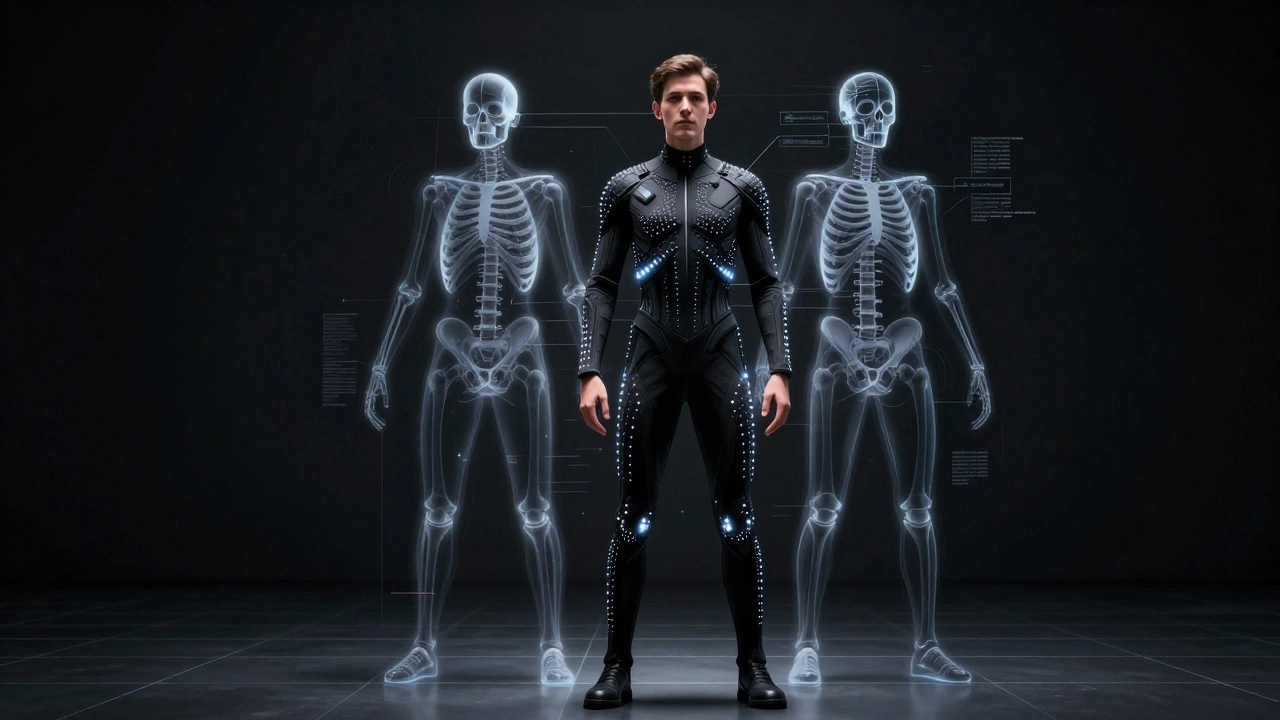
Motion capture, or mocap, records an actor’s movements and translates them onto a digital character. It’s not just about walking or running-it captures micro-expressions, weight shifts, and emotional nuance.
The technology has evolved dramatically. Early systems used bulky suits with reflective markers. Today, companies like Performance Capture Group use optical and inertial sensors that track facial muscles down to the millimeter. When Andy Serkis played Gollum in The Lord of the Rings, he wore a helmet-mounted camera to record eye movement-a technique now standard in high-end productions.
But mocap isn’t foolproof. Lighting changes, marker occlusion (when markers get blocked), and poor calibration can ruin takes. That’s why top studios invest heavily in stage design and real-time preview systems. Directors can watch animated versions of scenes during filming, making creative decisions faster.
| System Type | Accuracy | Setup Time | Best Use Case |
|---|---|---|---|
| Optical (Marker-Based) | High | Long | Film-grade realism |
| Inertial (Wearable Sensors) | Medium | Short | Quick iterations, indie projects |
| Lidar Scanning | Very High | Medium | Environment reconstruction |
Compositing: Where Magic Meets Mathematics
If modeling builds the pieces, compositing glues them together. It’s the art of blending multiple image layers so seamlessly that viewers never notice the seams.
Nuke dominates this space. Why? Because it handles node-based workflows efficiently, allowing artists to tweak color, add shadows, remove unwanted objects, and match grain patterns-all without destroying original data. Nodes also make collaboration easier; one artist’s work feeds directly into another’s.
A typical composite shot includes:
- Live-action plate
- CGI foreground element
- Background extension
- Atmospheric haze or dust
- Grain overlay to match film stock
Each layer must match in perspective, lighting, depth of field, and motion blur. Even small mismatches break immersion. For example, if a digital car casts no shadow under bright sunlight, audiences instinctively know something’s off-even if they can’t explain why.
Simulation Tools: Creating Chaos with Control
Fire, water, explosions, crowds-these aren’t filmed. They’re simulated. And simulating chaos requires extreme control.
Houdini is the go-to tool for procedural simulation. Instead of animating every particle manually, artists set rules: “Water flows downhill,” “Smoke rises when heated,” “Debris scatters outward.” The software calculates millions of interactions based on physics equations.
Take the tsunami scene in 2012. Artists didn’t animate waves-they defined ocean volume, wind speed, coastline geometry, and gravity. Houdini computed how those forces interacted over time. Result? A disaster that felt terrifyingly real.
Simulations take forever to render. A ten-second explosion might require hours of computation per frame. Studios use render farms-clusters of computers working in parallel-to finish jobs on schedule.
Real-Time Rendering: Changing the Game
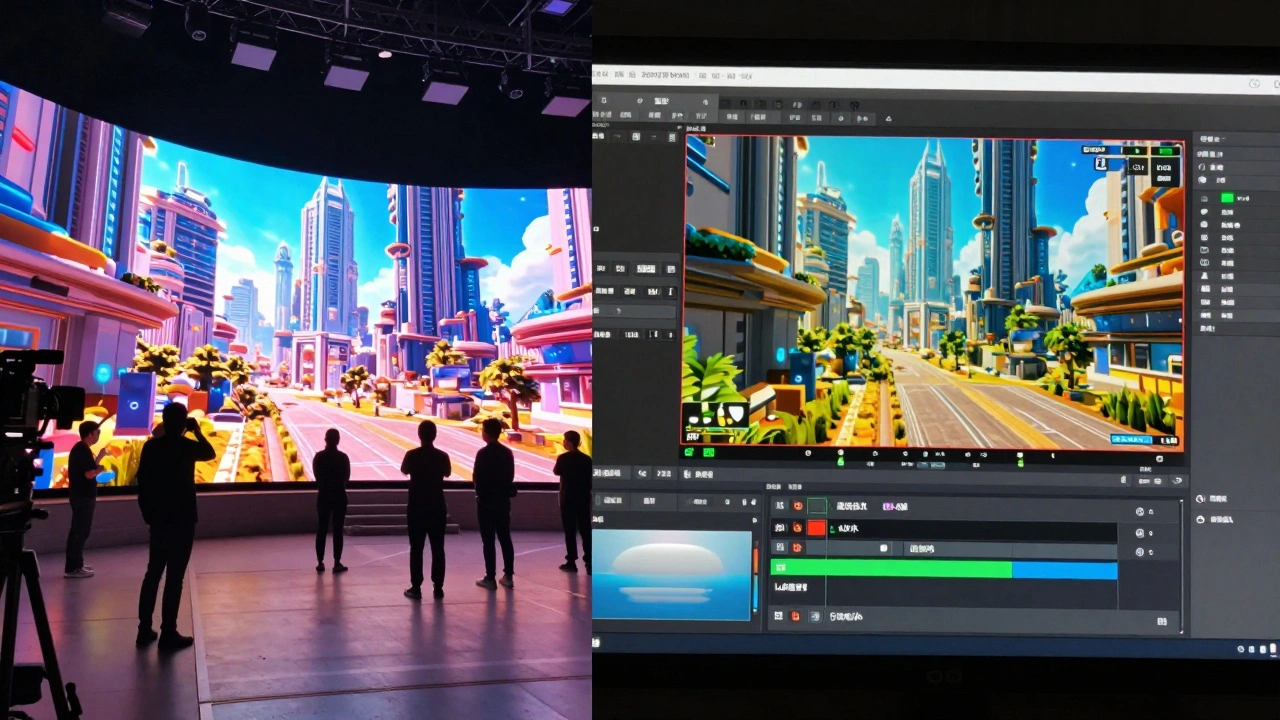
Traditionally, rendering took days. Now, engines like Unreal Engine allow near-instant previews. This shift matters because it lets directors see final-quality visuals while shooting.
On The Mandalorian, LED walls displayed dynamic backgrounds behind actors. Cameras tracked position and lens settings in real time, adjusting reflections and perspective accordingly. No green screen needed. Actors reacted to actual environments, improving performances.
This approach reduces post-production time significantly. Fewer fixes mean lower costs and fewer reshoots. More importantly, it keeps creativity alive throughout production-not locked away until months later.
Common Pitfalls and How to Avoid Them
VFX fails when expectations outpace planning. Here’s what goes wrong-and how to fix it:
- Poor pre-vis: Without rough animations showing timing and camera angles, teams waste weeks guessing. Solution: Build low-fidelity prototypes early.
- Ignoring lighting references: Digital elements look fake if they don’t match on-set illumination. Always shoot HDRi maps (high-dynamic-range images) for accurate environment lighting.
- Overcomplicating shots: Adding too many effects distracts from story. Ask: Does this serve emotion or spectacle?
- Skipping tests: Never assume a complex effect will work. Test small versions first-especially for simulations involving fluid dynamics or cloth.
Also remember: simpler is often better. Some of the most convincing VFX rely on minimal changes-like extending a background slightly or removing a modern sign from a period piece.
What software do Hollywood VFX studios actually use?
Top studios primarily use Autodesk Maya for modeling and animation, SideFX Houdini for simulations, Foundry Nuke for compositing, and Unreal Engine for real-time visualization. These tools form the backbone of nearly all major productions due to their stability, integration capabilities, and industry-wide support.
Is motion capture still relevant in 2026?
Yes, absolutely. While AI-assisted animation exists, motion capture remains essential for capturing nuanced human performance. Modern systems combine facial tracking, body suits, and virtual production stages to deliver emotionally authentic digital characters. Films like Dune and Avatar: The Way of Water relied heavily on advanced mocap techniques.
Can independent filmmakers access professional VFX tools?
Partially. While full licenses for Maya or Houdini cost thousands annually, free alternatives exist: Blender offers robust modeling and compositing features, DaVinci Resolve includes Fusion for basic compositing, and OpenVDB supports open-source simulation development. However, achieving Hollywood-level quality still demands skilled artists regardless of software choice.
Why does compositing matter more than individual effects?
Because even perfect CGI looks artificial if poorly integrated. Compositing ensures lighting matches, shadows align, colors blend naturally, and textures feel consistent. Viewers forgive minor imperfections in models-but instantly detect mismatched edges or unnatural blending. Great compositing hides its own existence.
How long does it typically take to complete a VFX shot?
It varies widely. Simple shots (wire removal, background extensions) may take days. Complex sequences involving crowds, destruction, or photorealistic creatures can require weeks or months per shot. Average turnaround ranges from two to six weeks depending on complexity, revision cycles, and team size.