
Every year, around October, horror movies flood theaters. By November, family films start showing up in droves. It’s not random. There’s a rhythm to what audiences want-and studios know it. Family movies and horror films don’t just coexist seasonally; they dominate specific windows of the year with surprising consistency. If you’ve ever wondered why you see It in October and The Lion King in July, the answer isn’t just marketing. It’s data.
Why Family Films Rule the Summer and Holidays
Family movies don’t just get released during school breaks-they thrive because of them. Between late May and early September, when kids are out of school, family films pull in nearly 40% of their total domestic box office revenue. In 2023, Inside Out 2 made $608 million in the U.S. alone, with over 70% of that coming between June and August. That’s not an accident. Studios plan releases around vacation schedules, not just creative timelines.
The same pattern holds during the winter holidays. Between Thanksgiving and New Year’s Day, family films account for five of the top ten highest-grossing domestic releases of the year, on average. In 2022, Avatar: The Way of Water made $642 million domestically, but even smaller films like The Super Mario Bros. Movie pulled in $558 million during the same window. Why? Parents are looking for safe, shared experiences. Schools are closed. Grandparents visit. Everyone’s home.
These films don’t need to be critically acclaimed to succeed. They just need to be colorful, simple, and easy to watch with kids. Think Despicable Me, Encanto, or Paddington 2. They don’t need deep plots-they need emotional moments, humor that works for all ages, and a sense of wonder. Studios know this. That’s why they spend months building hype with toy tie-ins, school screenings, and TV specials that start as early as September.
Horror Finds Its Sweet Spot in Fall and October
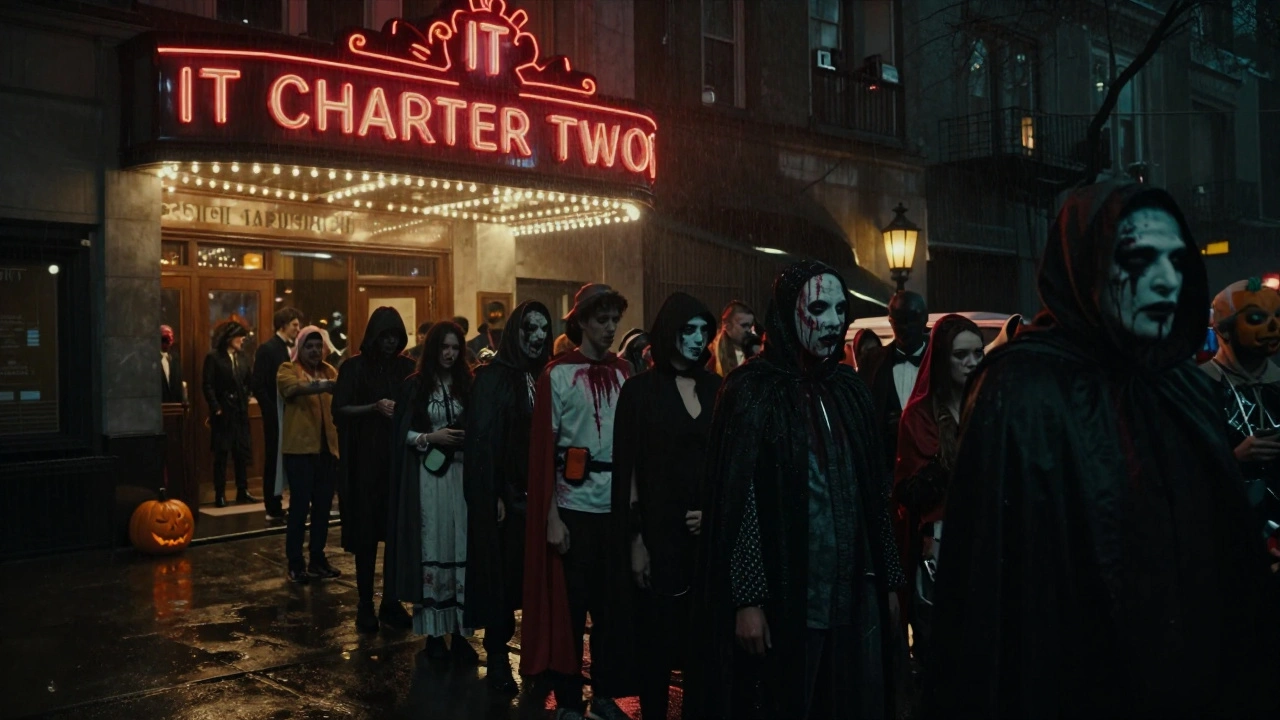
Horror movies are the opposite. They don’t need summer crowds. They need darkness, chill, and a reason to huddle together. October is their golden month. Since 2010, the top five horror films each year have averaged 68% of their total domestic gross in October alone. In 2023, It Chapter Two made $125 million in the U.S. Over $86 million of that came in October. Hereditary (2018) made $43 million total-$31 million in October.
It’s not just about Halloween. It’s about ritual. People plan horror movie nights. They buy tickets as a group. They dress up. They treat it like a social event. Studios know this. That’s why they release horror films in waves: early September for early adopters, mid-October for peak demand, and late October for last-minute hype. The Conjuring franchise has released a new film every two years since 2013, always timed to hit theaters by October 15 at the latest.
Even lower-budget horror films benefit. In 2021, Halloween Kills opened with $35 million in October. Its budget? $30 million. It turned a profit before it even left theaters. Compare that to a summer blockbuster with a $200 million budget-it needs to make $400 million just to break even. Horror doesn’t need that kind of scale. It just needs the right timing.
Why Summer Isn’t for Horror (and Winter Isn’t for Family)
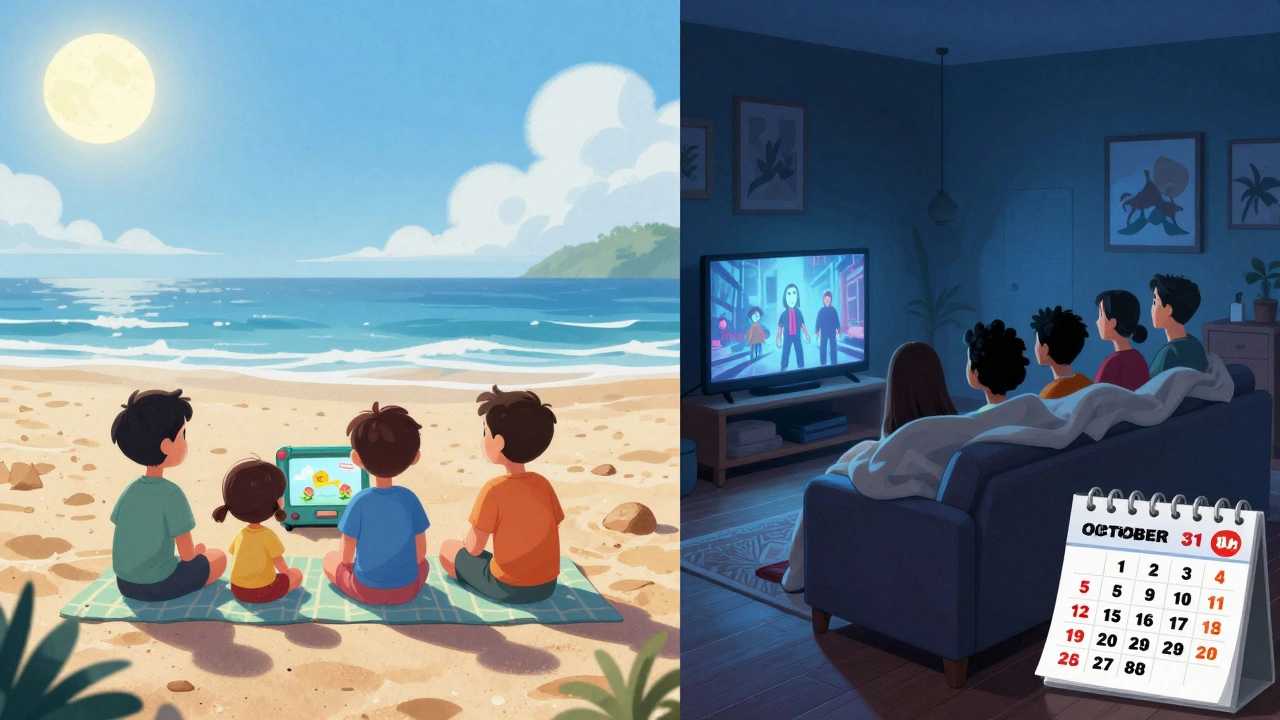
There’s a reason you rarely see a horror movie in June. Audiences aren’t looking for scares when they’re at the beach or on road trips. In 2022, Prey came out in August and made $78 million. That’s good-but it was still 30% less than what Minions: The Rise of Gru made in July. The audience mindset shifts. In summer, people want escape. In fall, they want adrenaline.
And winter? It’s not ideal for family films either. After Christmas, kids go back to school. Parents are broke. The holidays are over. Family movies released in January or February typically make less than half what they would have made in December. Wish (2023) opened in November and made $138 million. When it was re-released in February, it earned $4 million. That’s not a flop-it’s a pattern.
Studios test this every year. In 2020, Ghostbusters: Afterlife was moved from July to November. It made $137 million domestically-nearly triple what it would have made in summer. Meanwhile, Black Widow, released in July, made $183 million, but that was a Marvel movie with global appeal. Most non-franchise films don’t have that luxury. Timing is everything.
The Data Behind the Seasons
Here’s what the numbers show over the last 15 years:
| Genre | Top Season | Average Domestic Gross (Top 5 Films) | Percentage of Total Revenue in Peak Season |
|---|---|---|---|
| Family | Summer (June-August) | $427 million | 69% |
| Family | Holiday (Nov-Dec) | $385 million | 72% |
| Horror | October | $108 million | 68% |
| Horror | September | $62 million | 39% |
| Action/Adventure | Summer | $512 million | 58% |
| Comedy | January | $89 million | 51% |
Notice how horror’s peak is narrower than family’s. Family films have two strong windows-summer and holidays. Horror has one: October. That’s why studios can afford to take risks on horror. If it flops in October, it’s still a low-budget gamble. But if it hits, it’s pure profit.
Family films, on the other hand, are high-stakes. A single misstep-like releasing a film too early or too late-can cost tens of millions. The Wild Robot (2024) opened in September and made $112 million. But it would have made $150 million if it had waited until November. That’s the difference between a hit and a miss.
What Happens When the Calendar Gets Broken?
There are exceptions. Sometimes, a horror film breaks the mold. Get Out came out in February 2017 and made $255 million. But it wasn’t just a horror movie-it was a cultural event. It had social commentary, buzz, and a director with a following. That’s rare.
Or take Barbie in 2023. It came out in July and made $658 million. But again, it wasn’t just a family film. It was a phenomenon. It crossed age groups, genders, and genres. Most films don’t get that kind of lightning in a bottle.
When studios ignore seasonality, the results are predictable. In 2021, The Green Knight was released in July as a fantasy drama. It made $7 million. The same film, released in October 2022 as a Halloween feature, made $21 million in limited theaters. Timing changed everything.
Even streaming platforms know this. Netflix released Monster House in 2022 as a Halloween special. It became their most-watched animated film of the year. Disney+ dropped Wish in November-not because it was ready, but because that’s when families are watching.
What This Means for Viewers and Investors
If you’re a parent planning a movie night, October isn’t the time to look for animated adventures. Stick to November and December. If you’re a teen looking for chills, don’t wait for July. October is your month.
For investors or indie filmmakers, this is a roadmap. Don’t spend $10 million on a horror film and release it in May. You’ll lose money. But put that same budget into a horror film with a tight release in late September, and you’ve got a shot at turning a profit before Christmas.
Family films? Build them for summer. Build them for holidays. Don’t force them into January. The audience isn’t there. The data doesn’t lie.
Why This Pattern Won’t Change
Some say streaming will kill seasonality. But it hasn’t. In fact, it’s reinforced it. When people binge, they binge in clusters. Halloween is a binge night. Summer vacation is a binge week. Studios aren’t just releasing films-they’re scheduling events.
The rhythm of the calendar is deeper than marketing. It’s cultural. Kids have school breaks. Adults have holidays. Fear thrives in the dark. Joy thrives in daylight. The box office doesn’t just reflect what’s on screen-it reflects how we live.
Why do horror movies always come out in October?
Horror films release in October because that’s when audiences are primed for them. Halloween creates a cultural ritual-people plan movie nights, dress up, and seek thrills. Studios have tracked this for decades: 68% of horror films’ total domestic revenue comes in October. It’s not tradition-it’s data.
Are family movies more profitable than horror films?
On average, yes-but for different reasons. Family films have higher budgets and higher grosses, often making $400 million or more. But horror films have much lower budgets-often under $10 million-and still turn massive profits. A horror film making $100 million on a $5 million budget is more profitable than a family film making $500 million on a $200 million budget.
Can a horror movie succeed in the summer?
It’s rare. Summer audiences want escape, not fear. Exceptions like Get Out or Prey succeed because they’re cultural moments, not just horror films. They tap into broader themes-race, identity, survival-that transcend genre. Most horror films released in June or July underperform by 40-60% compared to October releases.
Why do family films do better during holidays than in summer?
Holiday seasons mean families are together. Parents have time off. Grandparents visit. Schools are closed. It’s the only time of year when multi-generational groups go to theaters together. In summer, families are often traveling or busy. In December, they’re home-and looking for shared experiences. That’s why December releases often outperform July ones.
Should I wait to watch a family movie on streaming?
If you’re watching with kids, waiting is fine. But if you want to experience the event-see it on the big screen, feel the energy-it’s best to catch it in theaters during its peak window. Family films are designed for shared moments. Streaming misses that. Theatrical releases are part of the tradition.
Next Steps for Moviegoers and Industry Insiders
If you’re planning a family movie night, mark your calendar for late November. That’s when the best films drop. If you’re into horror, start your watchlist in early October. Don’t wait for Halloween night-most of the buzz happens in the first two weeks.
For filmmakers or producers: don’t guess. Look at the numbers. If you’re making a horror film, build your release plan around October. If it’s a family film, lock in summer or winter. The audience isn’t waiting for you-they’re waiting for the right time. And that time is predictable.







Comments(9)