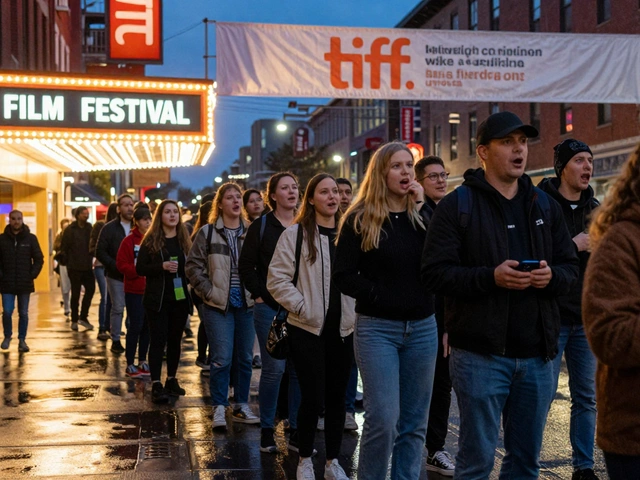
Not all film festival awards are created equal
Walking away with a trophy at a small regional festival feels great. But if you’re trying to build a real career in film, only a handful of prizes actually open doors. The difference between a nice plaque and a career turning point isn’t just prestige-it’s access, visibility, and industry trust. A win at Sundance can get you a distributor. A win at Locarno might land you a European agent. But a win at the Venice Golden Lion? That can change your entire trajectory.
The big three: Sundance, Cannes, and Venice
These are the festivals that studios, agents, and financiers watch like hawks. Sundance doesn’t just hand out awards-it launches careers. In 2024, three out of the top five indie films that secured U.S. distribution deals came from Sundance’s Grand Jury Prize or Audience Award winners. The prize itself? It’s not the money. It’s the post-screening meetings. Buyers are waiting. Agents are calling. Producers are texting.
Cannes is different. Winning the Palme d’Or doesn’t guarantee box office success, but it guarantees global attention. Directors like Chloé Zhao and Bong Joon-ho didn’t just win-they became household names overnight. Cannes doesn’t just award films. It awards career legitimacy. If your name appears on a Palme d’Or winner, you’re no longer an unknown filmmaker-you’re someone the industry has vetted.
Venice is the quiet powerhouse. It’s where auteurs go to be taken seriously. Winning the Golden Lion here means you’ve been judged by critics who’ve seen everything. It’s not flashy like Cannes, but it’s deeply respected. In 2023, the Golden Lion winner went on to receive seven Oscar nominations, including Best Picture. That’s not coincidence. Venice has a direct pipeline to the Academy.
The Oscar qualifying gatekeepers
The Oscars don’t accept every film. To be eligible for Best Picture, you need to have screened in a qualifying festival. That list is short: Sundance, Tribeca, Toronto, Venice, Cannes, Berlin, and a few others. Winning one of these doesn’t mean you’ll get nominated-but not winning one means you’re not even in the running.
Here’s the reality: if you’re making an indie film and you don’t target these festivals, you’re not just missing out on awards-you’re missing out on eligibility. In 2024, 89% of Best Picture nominees had premiered at one of these seven festivals. The rest? They were studio films with wide releases. For indie filmmakers, the path to the Oscars starts at a festival screen, not a distributor’s office.
What about Berlin, Toronto, and others?
Berlin’s Golden Bear is prestigious, but it’s less of a commercial springboard than Venice or Cannes. It’s more about artistic recognition. Still, if you win here, you’ll get European distribution deals and critical coverage. Toronto (TIFF) is different. It’s not a competition-focused festival like Cannes. But it’s the biggest buyer’s market in North America. Winning the People’s Choice Award at TIFF? That’s a signal to Hollywood: this film connects with audiences. In 2022, the TIFF winner went on to earn $120 million worldwide and received three Oscar nominations.
Smaller festivals like Locarno, San Sebastián, and Rotterdam matter too-but for different reasons. Locarno is where European arthouse distributors scout talent. Rotterdam is a launchpad for experimental films that later get picked up by streaming platforms. These aren’t career killers if you don’t win, but they’re essential stepping stones if you’re building a long-term profile.

The hidden prize: market access, not just the trophy
The real value of a festival win isn’t always in the award itself. It’s in the market that surrounds it. At Cannes, the Marché du Film is where deals are made. A film that wins the Grand Prix might not get a theatrical release in the U.S., but if a sales agent sees it at the market and signs a distribution deal, your film suddenly has a path to audiences.
Many filmmakers think winning means fame. But the real win is getting a sales agent to call you back. In 2023, a low-budget horror film from a first-time director won the Midnight Madness award at Sundance. It didn’t get an Oscar nod. But it sold for $3 million at the market. That’s not just a prize-that’s a career.
What happens after you win?
Winning is just the beginning. The real work starts after the lights come up. You’ll get flooded with emails. Some are from legitimate distributors. Others are from companies that want your film’s title for a low-budget sequel. You need to know the difference.
Top-tier distributors like A24, Neon, and Focus Features have scouts at every major festival. They’re not looking for the loudest winner-they’re looking for the most sustainable talent. If you win at Sundance and your film has strong audience scores, you’ll be invited to pitch your next project. That’s how directors like Jordan Peele and Greta Gerwig got their second films financed.
Don’t assume a win means instant success. It means you’ve earned the right to be heard. Now you have to make the most of it.
What doesn’t matter
There are hundreds of film festivals. Most of them don’t move the needle. Winning Best Short Film at a festival in rural Nebraska won’t get you a manager. A jury prize from a festival with fewer than 100 attendees won’t land you a meeting with Netflix. That’s not to say those wins aren’t meaningful-they’re not worthless. But if your goal is to make a living as a filmmaker, you need to focus on the festivals that matter to the industry.
Don’t spread yourself too thin. Submitting to 20 festivals just to say you’ve been selected? That’s a trap. It drains your budget and your energy. Focus on five. Get in. Win. Or at least get seen.
Real stories: What winning actually did
Director Emerald Fennell won the Grand Jury Prize at Sundance in 2020 for Promising Young Woman. That win didn’t just get her distribution-it got her an Oscar nomination for Best Original Screenplay. She didn’t have a big studio backing her. She had a festival win and a killer script.
On the other side, a documentary filmmaker from Texas won Best Documentary at SXSW in 2022. The prize was $15,000. But the real win? A producer from HBO saw the screening, reached out, and signed her for a three-part series. That’s the kind of ripple effect no one talks about.
How to pick the right festival
- If you’re making a narrative indie film: target Sundance, Tribeca, or Toronto.
- If you’re making a global or arthouse film: aim for Cannes, Venice, or Berlin.
- If you’re making a documentary: Sundance, Hot Docs, or IDFA.
- If you’re making a genre film (horror, sci-fi, thriller): consider Fantastic Fest, Sitges, or Tribeca’s Midnight section.
- If you’re trying to get noticed in Europe: Locarno, San Sebastián, or Rotterdam.
Don’t just pick the biggest name. Pick the one where your film fits. A musical comedy won’t thrive at Cannes. A slow-burn drama won’t shine at Fantastic Fest. Know your audience-and know where they’re watching.
Final truth: Awards are just the first step
Festival awards are not magic. They don’t guarantee success. But they do guarantee access. The film industry is built on relationships. And the only way to get in the room is to be seen by the right people at the right time. Winning a prize at the right festival is the fastest way to make that happen.
So if you’re making a film, don’t treat festivals like a checklist. Treat them like your career’s most important audition. Choose wisely. Prepare thoroughly. And when you win? Don’t just celebrate. Start planning your next move.
Do film festival awards really help indie filmmakers get distributed?
Yes-especially at top-tier festivals like Sundance, Cannes, and Toronto. Distributors like A24, Neon, and Focus Features actively scout winners at these events. A win signals that your film has already been vetted by audiences and critics, making it much easier to secure a deal. In 2024, over 70% of indie films that secured U.S. distribution had premiered at one of the top seven qualifying festivals.
Can you get an Oscar nomination without winning a festival award?
Technically, yes-but it’s extremely rare. To be eligible for the Oscars, your film must have screened in a qualifying festival. Most nominees come from Sundance, Toronto, Cannes, or Venice. While studio films can bypass festivals with wide releases, indie films without festival exposure rarely make it onto the Academy’s radar. In 2024, every Best Picture nominee had premiered at one of the seven qualifying festivals.
Is it worth entering small or regional film festivals?
Only if you’re building experience or testing your film with audiences. Winning at a small festival won’t get you a distributor or agent. But if you’re just starting out, it can help you refine your submission materials and learn how to pitch. Use them as training grounds-not as your main strategy.
What’s the difference between a jury prize and an audience award?
A jury prize is chosen by industry professionals-directors, critics, producers. It signals artistic merit and industry approval. An audience award reflects public reaction. Both matter, but in different ways. Jury prizes attract distributors and agents. Audience awards signal box office potential. A film that wins both, like Parasite at Sundance, becomes a rare phenomenon.
How much does it cost to submit to top film festivals?
Submission fees vary. Sundance charges $75 for early entries and up to $200 for late ones. Cannes doesn’t charge for submissions, but you need an official representative. Toronto charges around $100. Budget $500-$1,500 if you’re targeting three major festivals. That’s a fraction of the cost of marketing your film later-especially if you win.