Back in 2019, LED volumes were still a buzzword in Hollywood backrooms. Today, they’re the standard for high-end film and TV shoots-from The Mandalorian to Avatar: The Way of Water. If you’re working on a project that needs realistic lighting, dynamic backgrounds, or wants to cut down on location travel, you’re probably considering virtual production. But what exactly does it take to build a digital film environment that feels real? And why are studios ditching green screens for walls of LEDs?
What Is an LED Volume?
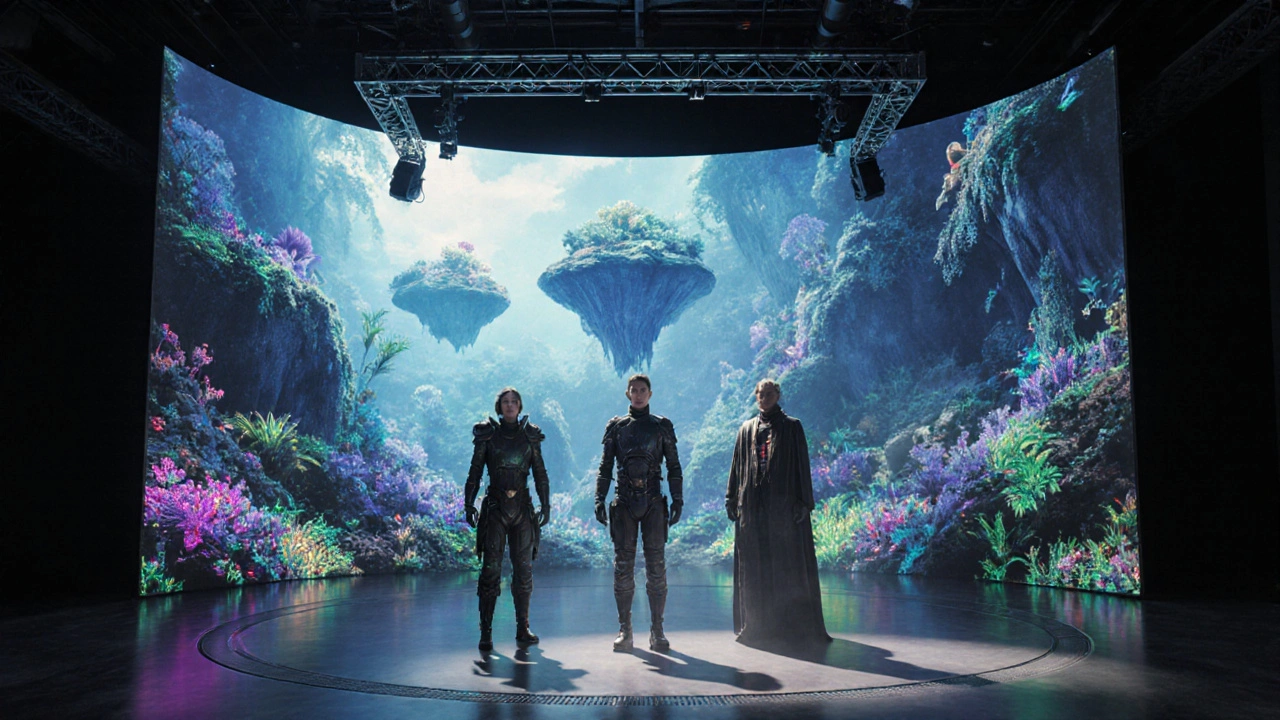
An LED volume is a stage enclosed by massive, high-resolution LED panels that display real-time digital environments. Think of it like a 360-degree movie screen surrounding your actors and crew. These panels aren’t just posters-they’re ultra-bright, pixel-dense displays that react to camera movement, lighting changes, and even weather simulations. The image on the wall isn’t pre-rendered and played back. It’s generated live by game engines like Unreal Engine, synced to the camera’s position using motion tracking systems.
Unlike green screens, where you add the background in post, LED volumes give you the environment during filming. That means actors see the mountains, cityscapes, or alien planets in front of them. The lighting from those digital scenes hits their faces and costumes naturally. No more guessing how the sun should fall on a character’s cheek. The light is real because it’s coming from the screen.
How Digital Film Environments Work
Creating a digital film environment starts with building a 3D world. Artists use tools like Maya, Blender, or Substance Painter to design terrain, buildings, and textures. These assets get imported into Unreal Engine, where they’re optimized for real-time rendering. A single environment might contain millions of polygons, complex shaders, and dynamic weather systems-all running at 60+ frames per second.
The magic happens when the camera moves. A camera tracking system-usually made up of infrared sensors and optical markers-detects exactly where the camera is in space. That data feeds into Unreal Engine, which instantly adjusts the perspective of the digital background to match. If you tilt the camera up, the sky shifts. If you pan left, the street extends. It’s like wearing VR goggles, but the whole crew sees the same thing on the LED walls.
For example, on The Mandalorian, a 75-foot-wide, 20-foot-tall LED wall showed the desert of Mandalore. As the camera moved through a narrow canyon, the lighting changed from harsh midday sun to shadowed twilight-all in real time. The actors reacted to the environment, not a blank screen. The result? More authentic performances and lighting that matched the digital world perfectly.
Why LED Volumes Beat Green Screens
Green screens have been around since the 1930s. But they come with big problems. First, actors have to imagine the scene. Second, lighting has to be carefully controlled to avoid spill-green light bouncing off the screen onto the actors. Third, you don’t see the final image until weeks of editing. That makes it hard to direct, act, or even know if a shot works.
LED volumes fix all that. You get:
- Real lighting: The LED panels emit actual light. No need for extra gels or bounce boards to match a background.
- Instant feedback: Directors see the final composite on set. No waiting for VFX artists.
- Reduced post time: Up to 70% less compositing work. Some shots are 95% complete on set.
- Environmental control: No weather delays. Rain, snow, or fire can be simulated without safety risks.
- Cost savings: No need to fly crews to remote locations. A single volume can replace dozens of shoots.
A 2024 study by the Visual Effects Society found that productions using LED volumes cut post-production time by an average of 42 days. That’s two months saved on a typical 120-day shoot.
Hardware and Tech Behind the Scenes
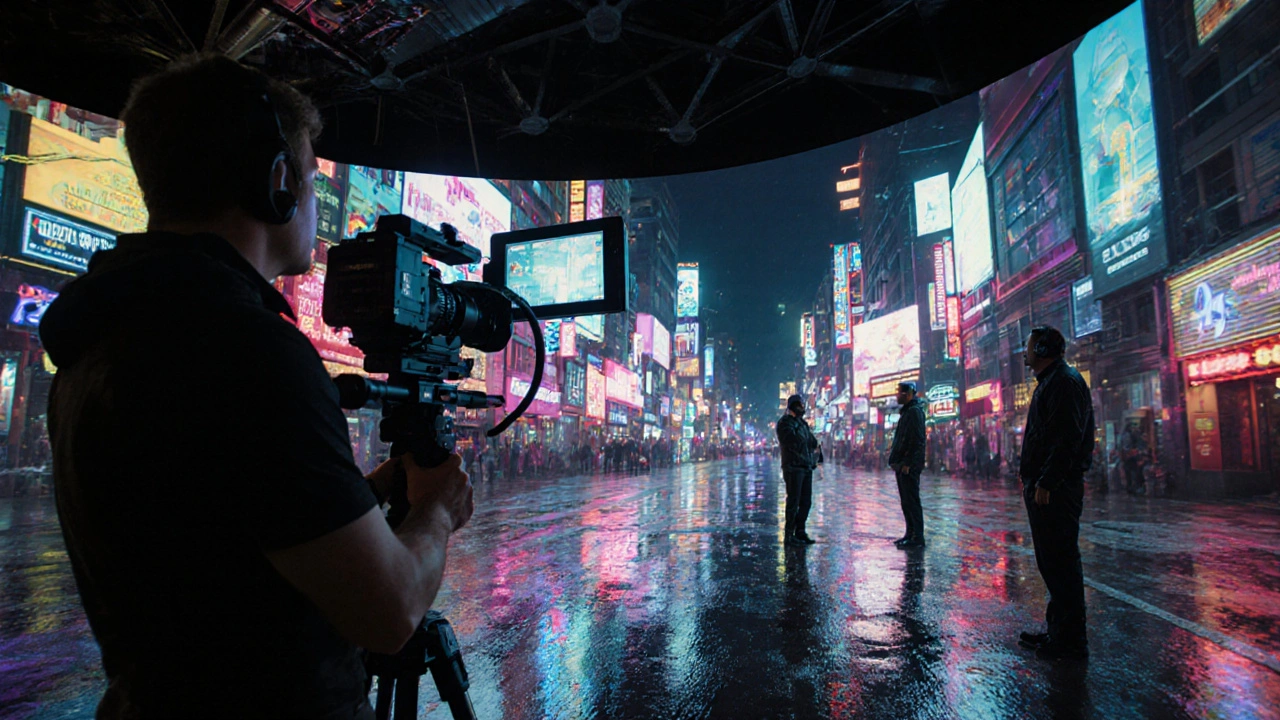
Not all LED panels are created equal. High-end volumes use Sony PXL or Nissan LED panels with pixel pitches as low as 0.9mm. That means no visible pixels-even when shot with 8K cameras. The panels are also extremely bright, often hitting 2,000 to 5,000 nits. That’s brighter than sunlight reflecting off snow.
The system needs:
- Camera tracking: Systems like Vicon or OptiTrack track camera position and rotation in 3D space.
- Render engines: Unreal Engine 5 is the industry standard. It handles Lumen lighting, Nanite geometry, and real-time ray tracing.
- Content pipelines: Artists must deliver assets in formats compatible with Unreal (FBX, USD, PNG sequences).
- On-set control: A dedicated team of technical directors adjusts lighting, camera angles, and environment changes in real time.
Some studios now use AI tools to auto-generate environments from concept art. A director sketches a forest, and an AI model turns it into a 3D scene within minutes. That’s changing how pre-production works-no more waiting weeks for a full build.
Real-World Examples
The Mandalorian (2019-2025) was the first major show to use LED volumes at scale. Its success proved the tech could handle complex, character-driven storytelling. Since then, studios have followed:
- Avatar: The Way of Water used LED volumes for interior scenes on Pandora, letting actors react to floating islands and bioluminescent forests.
- Obi-Wan Kenobi filmed entire spaceport sequences on a 270-degree LED wall, eliminating the need for location shoots in Morocco.
- Andor used LED volumes to simulate the gritty, rain-soaked streets of Ferrix, with dynamic lighting that changed as characters moved under awnings.
Even indie films are catching on. In 2024, a $2 million sci-fi film shot entirely in a rented LED volume in Atlanta saved $800,000 in location and VFX costs. The director said, “We did in two weeks what would’ve taken six months with green screens.”
Limitations and Challenges
LED volumes aren’t perfect. They’re expensive. A full-volume setup can cost $5 million to $10 million. Smaller studios rent time-$15,000 to $30,000 per day. That’s still cheaper than flying to Iceland for a glacier scene.
There are technical limits too:
- Field of view: You can’t show a full horizon if the volume is too small. Some studios use floor LEDs to extend the scene downward.
- Reflections: Shiny props or costumes can reflect the LED panels. Crews use matte sprays or adjust lighting angles to reduce glare.
- Color accuracy: If the LED panel’s color gamut doesn’t match the camera’s, you get washed-out skin tones. Calibration is critical.
- Latency: Even a 10-millisecond delay between camera move and screen update can break immersion. High-end systems keep it under 2ms.
Also, not every scene needs it. A quiet dialogue in a living room? A green screen still works fine. LED volumes shine when the environment is a character-like a stormy alien planet or a neon-drenched future city.
What’s Next for Virtual Production?
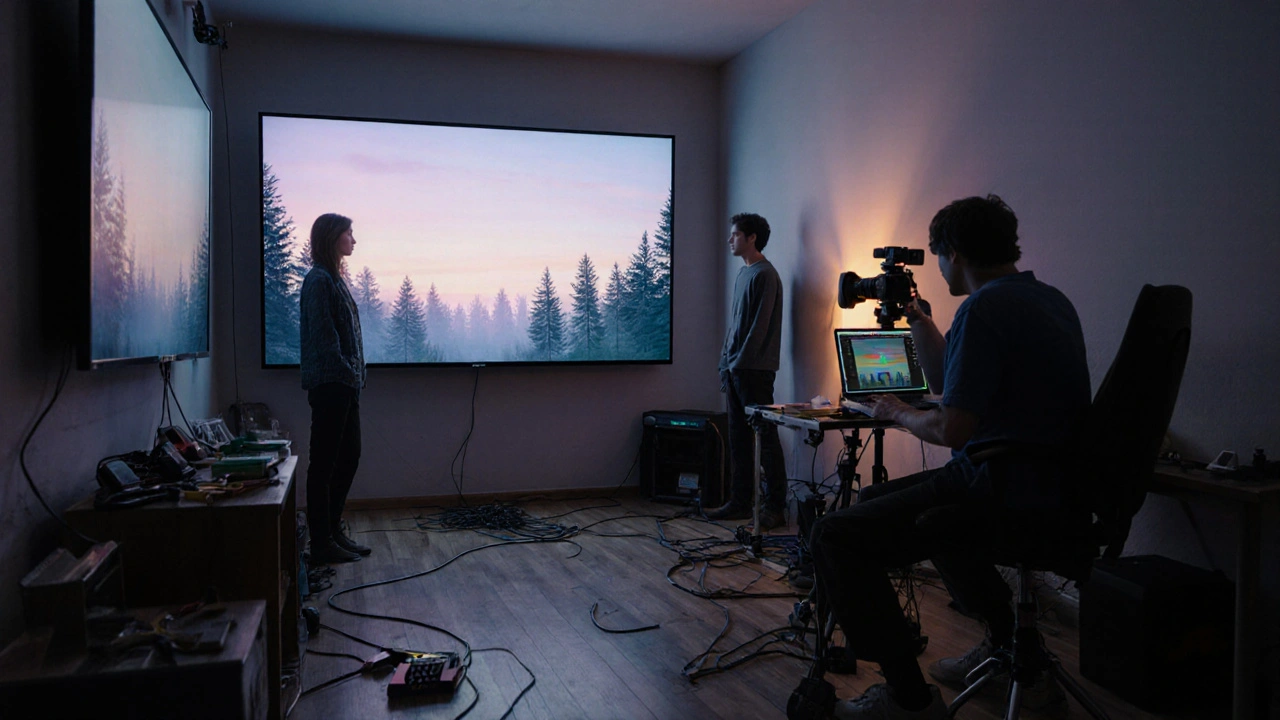
The next wave is smaller, cheaper volumes. Companies like Disguise and Pixotope are building modular LED walls that can fit in a warehouse. Some are even using consumer-grade OLED TVs for low-budget projects. In 2025, a $200,000 setup can produce professional results.
AI is also speeding things up. Generative models now create photorealistic environments from text prompts. Say “cyberpunk alley in 2077, raining, neon signs flickering”-and the system builds it in minutes. Directors are starting to treat digital environments like physical sets: they can be rebuilt, tweaked, and reused instantly.
Streaming platforms are pushing hardest for this tech. Netflix, Disney+, and Amazon Prime want to produce more content faster. Virtual production lets them shoot multiple episodes in the same space, back-to-back. One volume in London now shoots three different series in rotation.
How to Get Started
If you’re a filmmaker or designer thinking about virtual production:
- Start small: Rent time in a studio with an existing volume. Test a single scene before committing.
- Learn Unreal Engine: Even basic knowledge helps. Take the free Unreal Online Learning courses.
- Collaborate early: Bring your VFX and tech teams into pre-production. The volume isn’t just a backdrop-it’s part of the set design.
- Plan lighting: Digital environments control light. Don’t bring in extra lights unless you need to fill shadows.
- Test camera moves: Use a mock-up rig to see how your camera interacts with the LED wall. Too close? You’ll see pixelation.
Virtual production isn’t about replacing reality. It’s about giving filmmakers more control over it. The future of film isn’t just in the camera. It’s in the walls around it.
Are LED volumes better than green screens for all types of films?
No. LED volumes excel when the environment is complex, dynamic, or expensive to film on location-like space, fantasy worlds, or extreme weather. For simple interiors or static backgrounds, green screens are still cheaper and faster. The key is matching the tool to the scene.
How much does it cost to rent an LED volume?
Rental prices vary by size and location. A small 20x15-foot volume might cost $10,000-$15,000 per day. Full-scale Hollywood volumes (50+ feet wide) run $25,000-$50,000 per day. Studios often offer package deals for multi-week shoots.
Can I use consumer LED TVs for virtual production?
Yes, but with limits. Consumer OLED TVs (like LG C3 or Sony A80K) can work for low-budget indie films or commercials. They’re bright enough (1,000-1,500 nits) and have good color. But they lack the brightness, resolution, and durability of professional panels. Avoid them for high-end projects or scenes with fast camera moves.
Do I need to be a coder to use Unreal Engine for virtual production?
No. While programming helps, most virtual production teams use visual scripting tools like Blueprints in Unreal Engine. Artists and directors can change lighting, weather, or camera angles using drag-and-drop interfaces. Technical directors handle the deeper code, but you don’t need to write it.
What’s the biggest mistake people make when starting with LED volumes?
Trying to use pre-rendered video files instead of real-time engines. LED volumes only work if the environment responds to camera movement. Playing a looped video on the wall looks flat and fake. You need live rendering with camera tracking-no exceptions.


Comments(5)