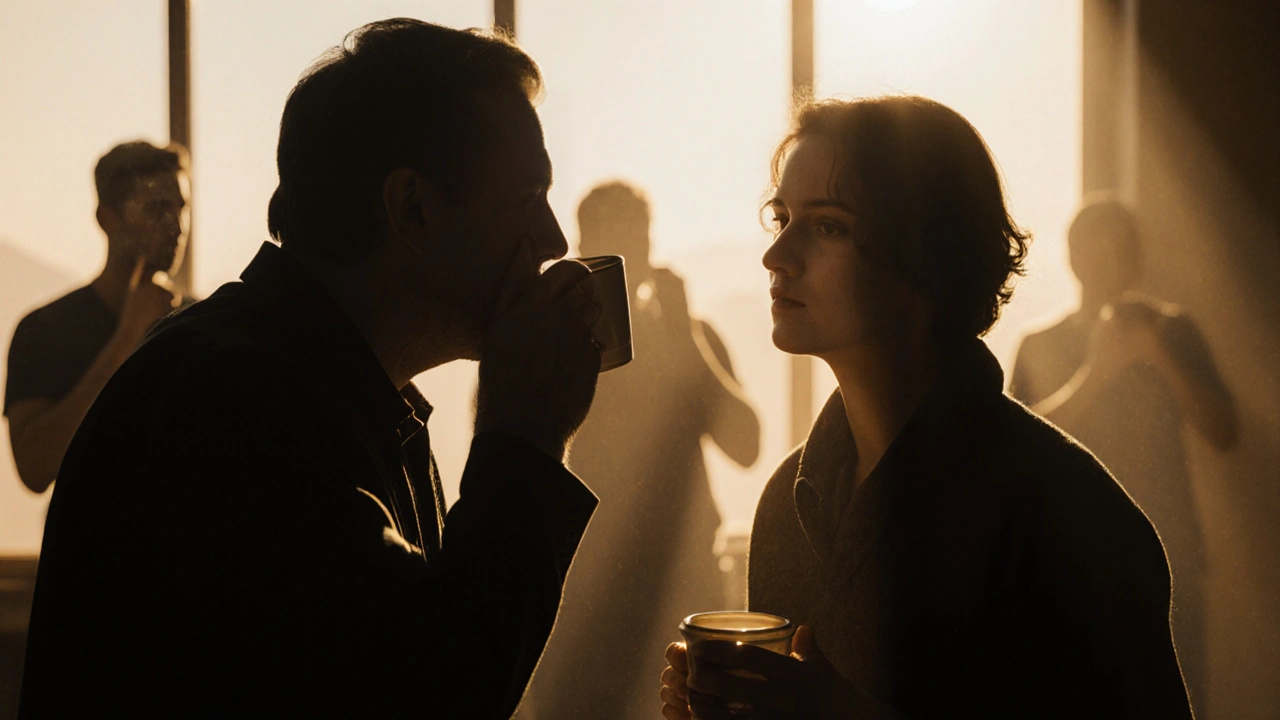
When a director says, "Try it colder," what does that actually mean? If you’ve ever been on a film set and heard feedback like that, you know it’s not a script note. It’s a performance note - and it’s often the most confusing kind. Directors don’t hand out line-by-line instructions like a coach in a high school play. They give fragments, metaphors, emotions, sometimes even silence. And actors? They have to translate that into something real, in front of a camera, with lights hot and crew waiting.
What Performance Notes Really Are
Performance notes aren’t about blocking or timing. They’re about the inner life of the character. A director might say, "You’re hiding from yourself," or "This isn’t grief - it’s guilt." These aren’t directions for movement. They’re invitations to dig deeper. The best directors don’t tell you how to act - they help you uncover what’s already there.
Think of it like tuning an instrument. You don’t change the strings; you adjust the tension. A director’s job is to find the right pressure point in your performance. One actor told me they got the note "You’re holding your breath" during a scene where their character was supposed to be calm. They realized they were tensing up, trying to look "in control." The director wasn’t asking for more emotion - they were asking for surrender.
How Directors Communicate - And Why It’s So Vague
Why don’t directors just say, "Be sadder"? Because sadness isn’t a switch you flip. Emotion is layered. It’s shaped by memory, fear, history. A director who says "I need more vulnerability" isn’t being lazy. They’re pointing to a space you haven’t reached yet - and they trust you to find it.
Some directors use sensory metaphors: "Like you just smelled something rotten," or "Like you’re walking on broken glass." Others use physical cues: "Don’t look at her - look past her," or "Let your hands do the talking." These aren’t tricks. They’re shortcuts to truth. Your body remembers what your mind forgets.
A study from the University of Southern California’s School of Cinematic Arts tracked 120 on-set director-actor interactions. They found that 78% of effective performance notes were indirect. Direct commands like "Cry harder" only worked 12% of the time. The rest? Metaphors, questions, silence. The most powerful note? "What are you thinking right now?" That question forced actors to stop performing - and start being.
How Actors Decode the Notes
Interpreting feedback isn’t about guessing. It’s about listening - and then experimenting. The best actors treat every note as a hypothesis. They don’t take it as law. They test it. Like a scientist.
Here’s how it works in practice:
- Pause. Don’t react immediately. Let the note sink in. What did they really mean?
- Ask one clarifying question. Not "What do you want?" - too vague. Try: "Is this about the subtext, or the physicality?"
- Try it three ways. First, exactly how they said. Second, the opposite. Third, something in between. Record it. Watch it back.
- Look for the pattern. Did they give the same note in three different takes? That’s not a suggestion - that’s the key.
One actor working on a Netflix drama got the note "You’re too nice" in a scene where their character was confronting their ex. They tried being angry. Too loud. They tried being cold. Too robotic. Then they tried being polite - but with a tremor in their voice. That’s when it clicked. The character wasn’t angry. They were terrified of being seen as weak. The note wasn’t about tone. It was about fear disguised as kindness.

The Role of Trust
None of this works without trust. A director can give the most brilliant note in the world - but if the actor doesn’t believe they’re on the same team, it falls flat. That’s why the best directors don’t just give notes. They create safety.
On the set of The Last Thing He Told Me, director Laura Dern made sure every actor knew they could say, "I don’t get it," without judgment. She’d respond with, "Okay, let’s find it together." That changed everything. Actors stopped trying to please. They started exploring.
Trust also means letting actors fail. One director I spoke with said he’d let a scene run for 17 takes - even if the first five were terrible - because he knew the sixth would be the one where the actor stopped trying and just lived in the moment. That’s the magic. It’s not about perfection. It’s about presence.
What Not to Do
There are classic mistakes actors make when receiving notes:
- Overcorrecting. You get "More energy" and suddenly you’re shouting. That’s not energy - that’s noise.
- Taking it personally. "You’re not convincing" isn’t a judgment on you. It’s a note on the character’s arc.
- Waiting for permission. If you’re waiting for the director to say "Go," you’re already late. The note is your permission.
- Trying to fix everything at once. One note at a time. Focus. You can’t fix your posture, your tone, your eye contact, and your backstory in one take.
And never, ever say "I don’t know how to do that." That shuts down the process. Instead, say: "Help me see it." That opens the door.

Real Examples From the Set
Here are three real performance notes - and what they actually meant:
- Note: "You’re holding the coffee like it’s a grenade." Meaning: Your character is terrified of connection. The coffee is a shield. Let it feel heavy, not dangerous.
- Note: "Don’t smile until the third beat." Meaning: The joy is buried. You’re not happy - you’re relieved. Let the smile come from inside, not your lips.
- Note: "Be quiet like you’re listening to your own heartbeat." Meaning: You’re alone in this moment. No one else is real to you. The silence isn’t empty - it’s full.
These aren’t acting exercises. These are the raw tools of filmmaking. They’re not taught in drama school. They’re learned on set, in the quiet between takes, when the crew is silent and the camera is still.
What Happens When It Works
When a director’s note lands right, something shifts. You don’t feel like you’re acting anymore. You feel like you’re remembering. That’s when the scene becomes real. That’s when the audience forgets they’re watching a movie.
One actor described it like this: "I didn’t know I was crying until I heard the sound of the camera rolling. I thought I was just breathing." That’s the goal. Not to perform emotion - to let it leak out, unasked for, unavoidable.
That’s the power of a good performance note. It doesn’t tell you what to do. It reminds you who you are - in that moment, in that character, in that truth.
Final Thought: Notes Are Gifts
Directors don’t give notes to control you. They give them because they believe in you - enough to push you past your comfort zone. The best feedback doesn’t make you better. It makes you braver.
So next time you hear "Try it colder," don’t panic. Don’t overthink. Ask yourself: What am I afraid to feel? Then let it show. The camera will catch it. And so will the audience.




Comments(10)