
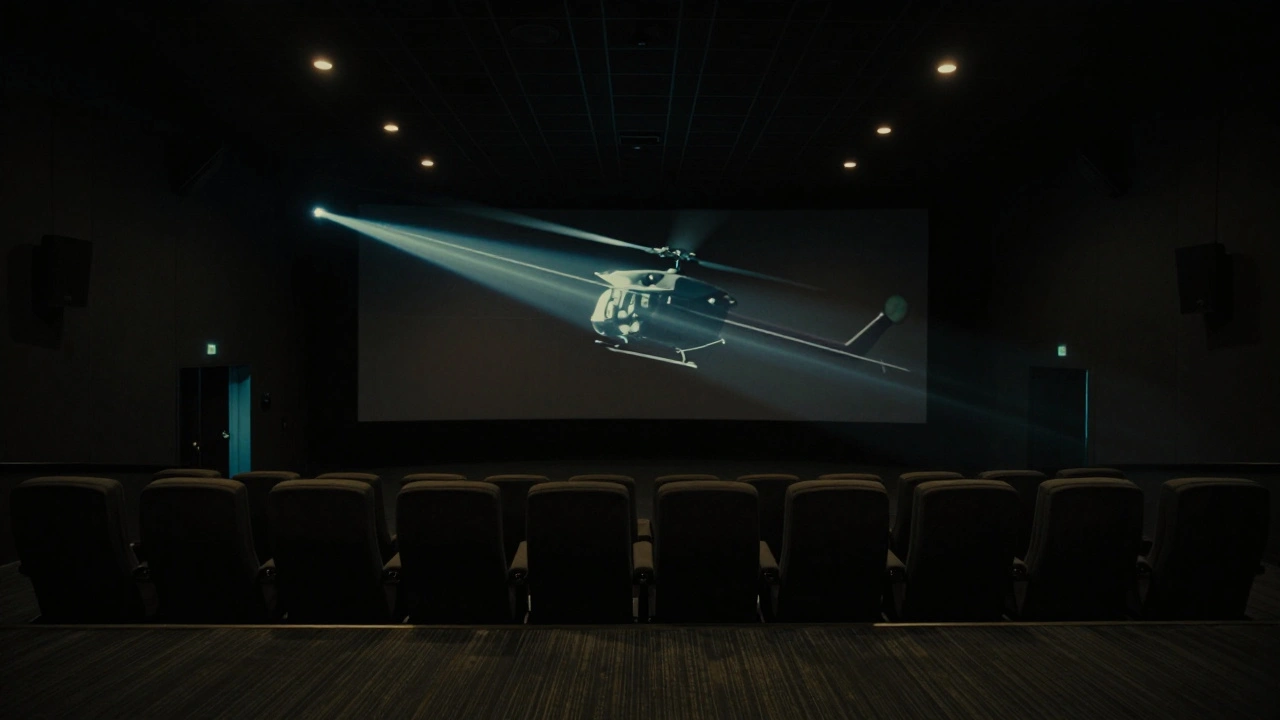
When you sit in a theater and a helicopter flies overhead, or raindrops fall from above, or a whisper moves from your left ear to the right-Dolby Atmos is why it feels real. It’s not just surround sound. It’s sound that moves in three dimensions, placing every note, every footstep, every whisper exactly where the filmmaker intended. For film mixers, this isn’t just a new format-it’s a complete rewrite of how sound tells a story.
What Dolby Atmos Actually Does in a Theater
Dolby Atmos breaks away from traditional channel-based audio. Instead of sending sound through fixed speakers like 5.1 or 7.1, it treats each sound as an object. A bird chirping isn’t tied to the left speaker-it’s a floating object with position, movement, and volume data. The theater’s speaker array-up to 64 speakers, including ceiling-mounted ones-repositions that sound in real time based on where you’re sitting.
This means a scream from a character running across the ceiling doesn’t just come from the top speakers-it follows the character’s path across the room. A train passing behind you doesn’t just get louder-it moves smoothly from rear to front, from floor to ceiling, with natural decay and Doppler shift. That’s not magic. That’s precise object-based mixing.
Atmos doesn’t require more speakers to work. Even a 7.1.4 setup (seven horizontal, one sub, four ceiling) can deliver full immersion. The key is the metadata. Every sound object carries its own coordinates in 3D space, and the renderer in the theater calculates exactly how to play it back for that room’s speaker layout.
Why Mixing for Atmos Is Different from Traditional Surround
Before Atmos, mixers worked with channels. A dialogue track went to the center. Music went to the front left and right. Ambient sounds went to the surrounds. Everything was flattened into a horizontal plane. Atmos flips that. Now, you’re not assigning sounds to speakers-you’re placing them in space.
Think of it like painting with sound. Instead of coloring inside the lines of a 5.1 grid, you’re dropping paint dots anywhere in a 3D cube. A sword clang might start near the floor in the back right, bounce off a stone wall, and land just above the audience’s heads. That’s not a trick-it’s a deliberate choice to make the scene feel tangible.
One of the biggest mistakes new Atmos mixers make is overloading the height channels. Just because you can put a sound above doesn’t mean you should. Too many overhead elements make the mix feel chaotic, not immersive. The best Atmos mixes use height sparingly-only where it adds emotional weight. A distant thunderstorm? Yes. A constant whooshing ceiling effect? No.
Tools of the Trade: What Mixers Actually Use
Dolby Atmos isn’t a plugin. It’s a full production pipeline. The core tool is the Dolby Atmos Renderer, a software application that runs on a dedicated workstation. It’s not a DAW, but it integrates with Pro Tools, Nuendo, and other digital audio workstations through AES67 or Dante network audio protocols.
Most professional Atmos mixes are done in Dolby-certified theaters or mixing stages. These rooms have calibrated speaker arrays, precise microphone placement, and acoustic treatments designed to eliminate reflections. You can’t mix Atmos on studio monitors and expect it to translate. The room is part of the instrument.
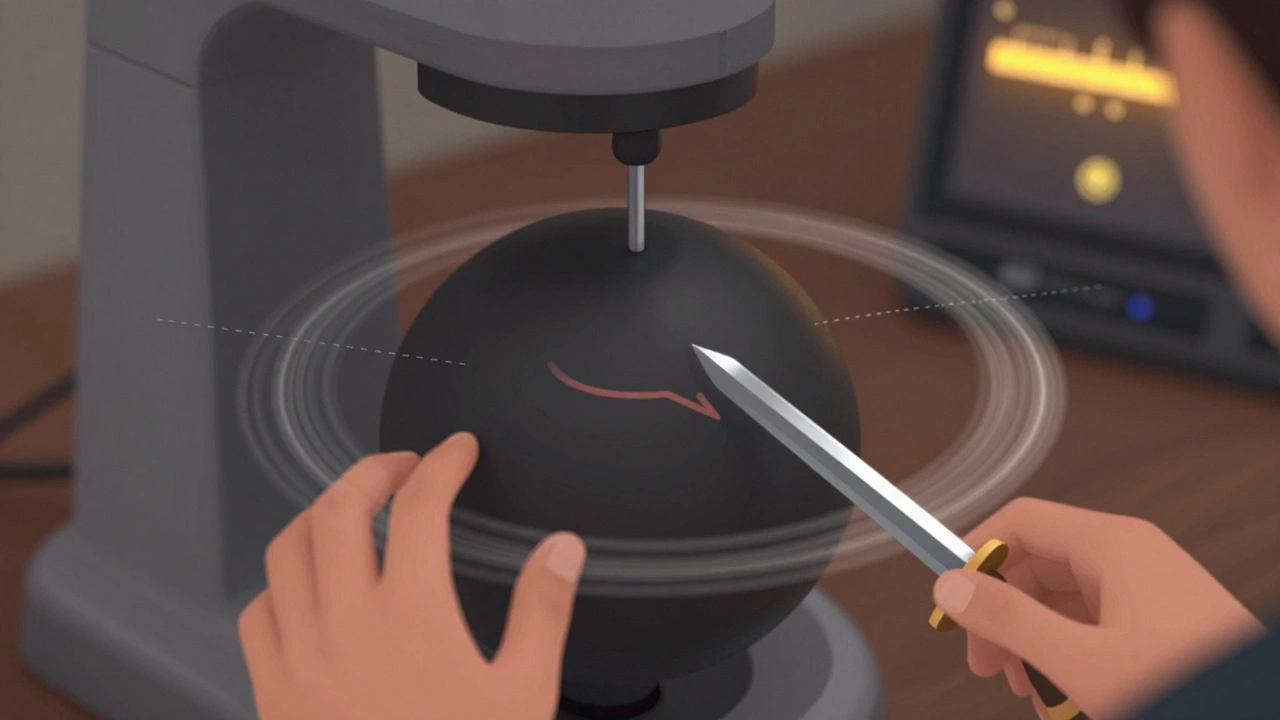
Pro Tools with the Dolby Atmos Music Panner plugin lets you drag sound objects in a 3D sphere. You set X (left/right), Y (front/back), and Z (height) coordinates. You can also assign motion paths-so a sound can arc across the room, or spiral upward. The renderer then bakes all this into a single .ADM (Audio Definition Model) file, which carries the object data and speaker layout instructions.
It’s not just about software. Mixers use specialized meters like the Dolby Atmos Metering Tool to track object density, peak levels, and dynamic range. Too many objects overlapping? The meter turns red. Too quiet? The dynamic range indicator drops. These tools prevent the mix from becoming muddy or fatiguing.
How Atmos Changes the Way You Edit and Design Sound
With Atmos, sound design becomes sculpting. Instead of layering tracks, you’re positioning elements in space. A single gunshot might be split into three objects: the muzzle blast (low, front), the echo off a wall (mid-height, right), and the debris falling (high, rear). Each gets its own volume curve, reverb tail, and motion path.
This means editing is more like animation. You don’t just cut a sound-you animate its journey. A door creaking might start at the back wall, slide across the ceiling, and settle near the protagonist’s ear. That’s not something you can do with a stereo pan knob.
Dialogue gets special treatment. In Atmos, it’s still anchored to the center, but it can now be subtly elevated to match the actor’s position on screen. If a character is lying on the floor, their voice might drop slightly in height. If they’re on a rooftop, the dialogue object moves up. It’s subtle, but it grounds the audience in the scene.
Music in Atmos is often the most powerful tool. A string section doesn’t just swell-it can sweep around the theater. A single violin might glide from left to right, then rise above the audience as the tension peaks. That’s not just cinematic-it’s emotional engineering.
The Hidden Rules of Atmos Mixing
There are unwritten rules that separate good Atmos mixes from great ones:
- Less is more. Dolby recommends no more than 118 simultaneous audio objects. Most professional mixes use 30-60. Crowding the space makes it feel noisy, not immersive.
- Keep the center stable. Dialogue and primary music elements should stay anchored to the center channel. Moving them around confuses the audience.
- Use height for emotion, not decoration. Rain on a roof? Yes. A constant ambient drone overhead? No. Height should enhance, not distract.
- Test in multiple rooms. A mix that sounds perfect in a 7.1.4 theater might collapse in a 5.1.2 setup. Always validate against different speaker configurations.
- Don’t forget the sub. Low-frequency effects (LFE) still matter. A deep rumble from below makes the audience feel the explosion, not just hear it.
One of the most overlooked aspects is headroom. Atmos mixes are mastered to -24 LKFS with a true peak limit of -1 dBTP. That’s quieter than traditional film mixes. Why? Because Atmos systems are more dynamic. Too much loudness kills the impact of sudden moments. Silence, in Atmos, is just as important as sound.
What Happens When It Goes Wrong
Bad Atmos mixes are easy to spot. You hear sounds jumping between speakers like a glitchy video game. A car engine might suddenly switch from front to back with no transition. Voices disappear into the ceiling. Bass rattles the seats but doesn’t feel connected to the action.
One infamous example: a 2023 action film where the entire soundtrack was mixed with too many overhead elements. Audiences reported headaches after 20 minutes. The mixer had treated Atmos like a surround sound upgrade, not a spatial storytelling tool. The result? Critics called it "audio overload."
Another common issue: poor translation to home systems. Many Atmos mixes are rendered for theatrical playback and then downmixed to home theater systems without proper recalibration. The result? A flat, lifeless version that loses all the 3D depth. The fix? Always deliver a separate home theater mix optimized for 5.1.2 or 7.1.4 setups.
Why Atmos Is the New Standard for Theatrical Films
By 2025, over 90% of new theatrical releases in North America and Europe use Dolby Atmos. It’s not a trend-it’s the baseline. Audiences expect it. Studios demand it. Even indie films with $500,000 budgets now budget for Atmos mixing.
Why? Because it works. Studies from the University of Southern California show viewers remember 37% more plot details when sound is spatially accurate. Emotional responses to scenes increase by 52% when Atmos is used correctly. That’s not just marketing-it’s neuroscience.
Atmos isn’t just about fancy speakers. It’s about trust. When a film’s sound moves with the story, the audience stops thinking about the technology. They stop thinking about the theater. They just feel like they’re inside the movie.
Final Thought: It’s Not About Tech. It’s About Feeling.
Dolby Atmos doesn’t make films louder. It makes them deeper. It doesn’t add more sounds-it adds meaning. A whisper in the dark isn’t just heard. It’s felt. A falling leaf isn’t just seen-it’s heard drifting past your ear.
For the mixer, that’s the goal. Not to impress with technical skill, but to disappear. Let the story carry the sound. Let the sound carry the emotion. And let the audience forget they’re sitting in a theater at all.
Do I need special speakers to mix Dolby Atmos?
Yes. You need a calibrated speaker setup with ceiling speakers-typically at least 7.1.4 (seven horizontal, one sub, four ceiling). But the real requirement is a certified Atmos mixing room with acoustic treatment and precise speaker calibration. You can’t mix Atmos on regular studio monitors and expect accurate results.
Can I mix Dolby Atmos at home?
Technically, yes-with Pro Tools, a Dolby Atmos Renderer, and a home theater system that supports Atmos. But without a calibrated room and reference monitoring, your mix won’t translate to theaters. Most professionals use certified studios for final mixes. Home setups are great for drafting, not final delivery.
How many audio objects can Dolby Atmos handle?
Dolby Atmos supports up to 128 simultaneous audio objects, but most theatrical mixes use between 30 and 60. Using too many can cause clutter and reduce clarity. The key is intentional placement, not quantity.
Is Dolby Atmos better than DTS:X?
Both are object-based immersive formats, and they’re very similar in capability. Dolby Atmos has broader adoption in theaters and more certified mixing rooms. DTS:X is more common in home systems. For theatrical releases, Atmos is the industry standard. For home use, the difference is minimal.
What’s the biggest mistake in Atmos mixing?
Using height channels for constant ambient effects-like a steady whooshing overhead sound. That creates listener fatigue. The best Atmos mixes use height sparingly, only for emotional or spatially meaningful moments, like rain falling, birds flying overhead, or a character moving above.


Comments(5)