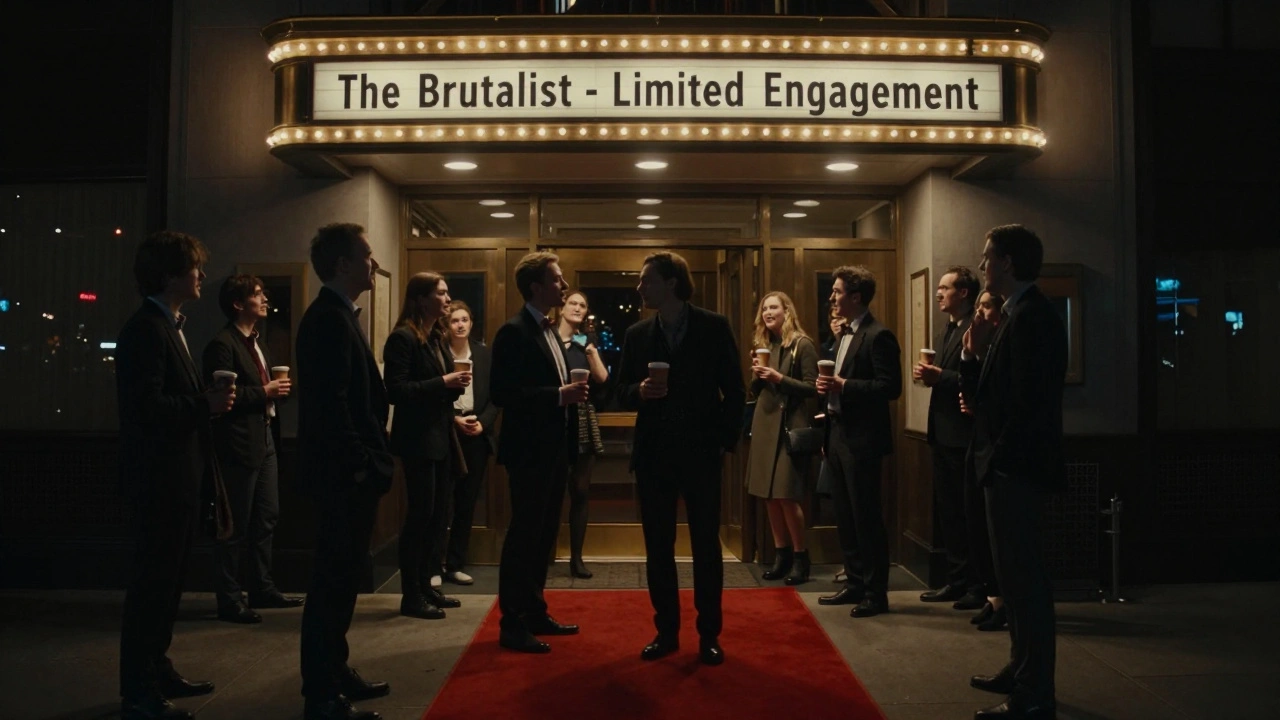
Why studios still push movies into theaters before streaming
It seems backwards. Why spend millions on a limited theatrical run - renting theaters in just 20 cities, paying for prints, hiring staff - when the movie’s going to stream in two weeks? The answer isn’t about ticket sales. It’s about noise.
When limited theatrical release happens, it’s not to make money. It’s to trigger something harder to buy: attention. Critics see it. Film festivals spotlight it. Social media explodes with early reactions. That’s the real product: critical buzz.
In 2024, Netflix’s The Brutalist opened in 12 theaters across New York, LA, and Chicago. It earned $187,000 at the box office. That’s less than a single episode of a top-tier TV show costs to produce. But within 72 hours, 147 major critics published reviews. 89% were positive. That’s what got it onto 12 different Best Picture shortlists. Two weeks later, it hit Netflix. Within 48 hours, it was the #1 movie globally on the platform. Viewers didn’t watch it because it was on Netflix. They watched it because they’d already heard it was the best film of the year.
The pipeline: from screen to stream
This isn’t random. It’s a carefully engineered pipeline. Studios don’t just drop a movie into theaters and hope for the best. They time it like a rocket launch.
First, they pick a late-year window - November to early December. Why? Because that’s when awards season starts. Critics are hungry for standout films to nominate. Festivals like Telluride, Toronto, and New York are packed with industry insiders. A film that plays there gets immediate exposure to the people who write for Variety, The Hollywood Reporter, and The New York Times.
Then, the release is narrow. Usually under 200 screens. Sometimes just 50. The goal isn’t to reach millions. It’s to reach the right millions. Film students. Critics. Academy voters. Influencers with 50,000 followers who actually sway taste. These people don’t go to multiplexes. They go to arthouse theaters. They tweet screenshots. They write long threads. They debate the ending over coffee.
That buzz gets amplified. A single glowing review from Richard Brody at The New Yorker can spark 300,000 Twitter impressions in a day. A positive review on Letterboxd with a 4.5-star rating? That’s a signal to casual viewers: this isn’t just another streaming movie. This is something you need to see.
How buzz turns into streaming numbers
Let’s say your movie gets 92% on Rotten Tomatoes after its limited run. What happens next?
Streaming platforms don’t just wait. They activate. They run targeted ads to people who searched for similar films. They put it in the ‘Critically Acclaimed’ section. They send push notifications to users who watched the director’s last film. They even tweak their recommendation algorithms to prioritize it for viewers who just finished a nominated film.
In 2023, A24’s The Holdovers played in 117 theaters for three weeks. It grossed $5.2 million. Then it went to Apple TV+. Within 10 days, it was watched by 14.3 million households. That’s not because Apple spent $10 million on ads. It’s because the film had already earned its reputation. People didn’t need to be told to watch it. They already wanted to.
Platforms track this. They know that movies with a theatrical buzz have 3.7x higher completion rates than those that drop straight to streaming. Why? Because buzz creates anticipation. Anticipation creates commitment. People don’t just start a movie - they finish it. They talk about it. They rewatch it.
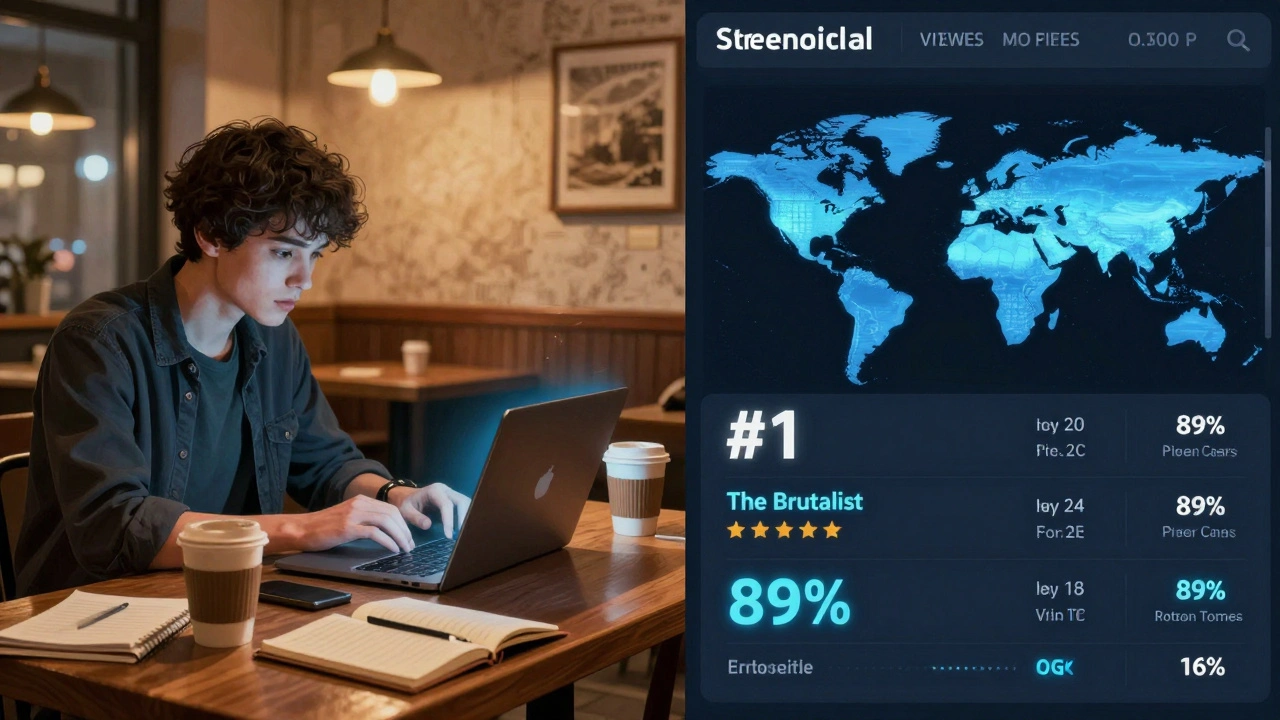
The data behind the strategy
It’s not guesswork. Studios and platforms have hard numbers.
- According to a 2025 internal report from Warner Bros. Discovery, films with a theatrical qualifying run saw a 68% higher viewership lift on their streaming service compared to those that went straight-to-streaming.
- Amazon Prime Video found that movies with at least 100 critic reviews before streaming had a 42% higher retention rate in the first 30 days.
- Disney+ saw a 210% spike in search traffic for The Marvels after its limited theatrical run, even though it was already available on Disney+ the next day.
Platforms also track what happens after the buzz. They look at watch time, rewatch rates, and how often people add the film to their watchlists. A movie with critical buzz doesn’t just get watched - it gets saved. It becomes part of someone’s personal library of films they care about.
When the pipeline breaks
Not every limited release works. Sometimes, the buzz dies. Or worse - it turns negative.
In 2023, Sony’s Wicked had a massive theatrical run, but its streaming debut on Prime Video was underwhelming. Why? Because the film was seen as a spectacle without substance. Critics called it ‘overproduced’ and ‘emotionally hollow.’ The buzz wasn’t about artistry - it was about costume design and choreography. Viewers didn’t feel compelled to watch it again. Completion rates were low. The platform didn’t promote it heavily after the first week.
Another failure: Netflix’s Love Is a Gun. It opened in 50 theaters, got 74% on Rotten Tomatoes, and then vanished on streaming. Why? Because the buzz came from a small group of critics who loved its style, but general audiences found it slow and confusing. The platform didn’t adjust its marketing. They assumed critical praise = mass appeal. It didn’t.
The lesson? Buzz has to be broad. It has to speak to more than just film snobs. It needs to connect emotionally. A movie can be brilliant and still fail if it doesn’t make people feel something.
What viewers really want
People aren’t watching these films because they’re on a streaming service. They’re watching because they heard it mattered.
Think of it like a concert. You don’t go to a live show just because the band is touring. You go because someone told you it was unforgettable. You go because you want to be part of the moment. That’s what limited theatrical releases do. They turn streaming into an event.
Platforms know this. That’s why they’re spending more on qualifying runs, not less. In 2025, 78% of Oscar-contending films on streaming services had a theatrical release. That’s up from 51% in 2020.
It’s not about money. It’s about meaning. Audiences want to feel like they’re seeing something special - not just something convenient. And that’s what critical buzz delivers.
What’s next for the pipeline
The future isn’t more theaters. It’s smarter timing. Studios are testing 48-hour windows now - a movie opens in five cities on a Friday, critics see it, reviews drop by Sunday, and it hits streaming Monday. No wasted weeks. Pure momentum.
Some are even skipping theaters entirely for films that are too niche. But they’re replacing them with curated screenings. A film might not play in theaters, but it gets a private screening for 200 critics and influencers in LA, followed by a live Q&A streamed to subscribers. The buzz still happens. The pipeline just got leaner.
One thing won’t change: if a film doesn’t earn real critical attention before streaming, it’ll drown in the noise. Platforms have too much content. Viewers have too many choices. The only way to rise above is to be talked about - not just advertised.
Why this matters for indie filmmakers
If you’re an indie filmmaker, this pipeline is your lifeline. You don’t need a $50 million budget. You need one great screening. One powerful review. One viral tweet.
Look at Minari. It played in 17 theaters for three weeks. It had no marketing budget. But it got 100% on Rotten Tomatoes. That’s what got it on Apple TV+. That’s what got it nominated for six Oscars. That’s what made it one of the most-watched foreign-language films on streaming in 2021.
You don’t need to be in 500 theaters. You just need to be in the right one.



Comments(9)