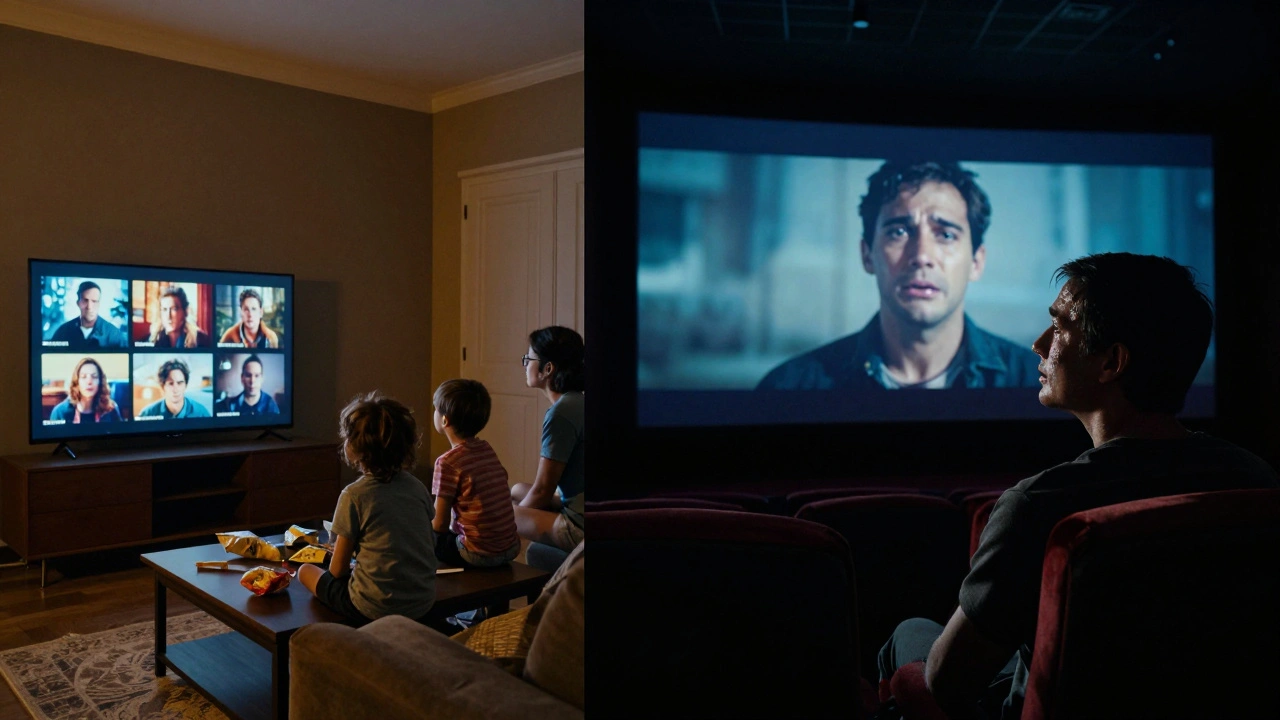
Ever watched a true crime story that pulled you in over eight episodes, then switched to a 90-minute film that left you breathless-and wondered why they felt so different? That’s not just editing. It’s the structure. The docuseries and the feature documentary aren’t just length variations. They’re completely different tools for telling true stories. One spreads out like a slow-burn investigation. The other hits like a single, powerful punch. Choosing between them isn’t about what’s trendy. It’s about what your story needs.
What Exactly Is a Docuseries?
A docuseries is a multi-episode nonfiction series, usually between 3 and 10 episodes, each 30 to 60 minutes long. Think The Keepers, Making a Murderer, or The Last Dance. These aren’t just longer documentaries chopped into parts. They’re built for pacing, suspense, and layered revelation.
Each episode often acts like a chapter: setup, complication, cliffhanger. The format thrives on unfolding secrets over time. It lets you introduce multiple characters, track long-term consequences, and show how systems-police, courts, corporations-respond over months or years. That’s impossible in 90 minutes.
Production-wise, docuseries often shoot for over a year. Filmmakers follow subjects through court dates, interviews, public reactions. They gather hundreds of hours of footage. Then they edit it into a narrative arc that rewards binge-watching. Netflix, Hulu, and Apple TV+ built their reputations on this format because it keeps viewers hooked across weeks.
What Makes a Feature Documentary Different?
A feature documentary is a single, self-contained film, usually 70 to 120 minutes. It’s designed to be watched in one sitting. Think 13th, Free Solo, or Man on Wire. These don’t unfold over time-they build momentum like a novel or a play.
Feature docs focus on intensity, not extension. They take one central idea, one powerful journey, one emotional core, and deepen it relentlessly. A feature doc about climate change doesn’t cover 20 countries. It follows one family losing their home to rising seas. A film about a musician doesn’t trace their whole career-it captures the 48 hours before their first major concert.
Editing a feature documentary is like sculpting. Every minute counts. You cut out filler. You tighten the rhythm. The goal isn’t to keep viewers coming back next week. It’s to make them feel something so deeply they can’t look away for 90 minutes.
When to Choose a Docuseries
Choose a docuseries if your story has:
- Multiple perspectives that need space to breathe
- A long timeline-years, not weeks
- Complex systems at play (government, law, healthcare)
- Unresolved outcomes that evolve over time
- Characters who change dramatically across episodes
Take the case of a small town dealing with a factory shutdown. A docuseries can show the first layoffs, the union negotiations, the political fallout, the mental health crisis that follows, and the eventual rise of a new community business. Each episode can focus on a different angle: workers, city council, families, activists. That depth needs room.
Also, if your story involves legal proceedings, investigations, or public scandals, a docuseries gives you the time to show evidence, reactions, and consequences as they happen. Viewers become invested in the outcome because they’re along for the ride.

When a Feature Documentary Wins
Go with a feature documentary if your story has:
- A single, powerful arc-like a person’s transformation or a single event’s ripple effect
- A tight emotional core you want to amplify
- A visual or physical journey that builds momentum
- A clear beginning, middle, and end within a short timeframe
- High stakes that peak at one moment
Free Solo didn’t need 10 episodes. It needed one: Alex Honnold’s attempt to climb El Capitan without ropes. The entire film is a countdown. Every second builds tension. The climax isn’t spread out-it’s the climb itself. That’s what a feature doc does best: it turns a moment into a monument.
Same with The Act of Killing. It doesn’t try to explain Indonesia’s entire history of political violence. It follows one killer as he reenacts his crimes in movie genres. That one bizarre, haunting experiment becomes a lens for a nation’s trauma. One idea. One journey. One unforgettable experience.
Production Differences: Time, Budget, and Team
Docuseries cost more and take longer. A six-episode series might cost $1.5 million to $5 million. You need a larger crew: multiple editors, researchers, writers, and sometimes even a showrunner. You’re not just making one film-you’re managing a production schedule across months or years.
Feature documentaries are leaner. Budgets range from $200,000 to $1.5 million. You might have one director, one editor, and a small team. The timeline is compressed. You shoot for 3-12 months, then spend 6-12 months editing. There’s no waiting for the next season. You finish, and it’s done.
That also affects distribution. Docuseries often land on streaming platforms that want ongoing content. Feature docs thrive at film festivals like Sundance or Tribeca, then move to theaters or VOD. The audience expectations are different. One asks for patience. The other demands impact.
What Your Audience Wants
People watch docuseries for the ritual. They plan their week around the new episode. They discuss theories on Reddit. They rewatch episodes to catch details. It’s social, serialized storytelling.
Feature documentaries are about immersion. People watch them alone, late at night. They sit in silence after the credits. They feel changed. They might not talk about it right away-but they’ll remember it for years.
Ask yourself: Do you want viewers to come back? Or do you want them to be moved?

Common Mistakes When Choosing
Too many filmmakers force a feature doc into a docuseries just because it’s popular. You end up with fluff-extra interviews that don’t add value, drawn-out scenes that kill momentum. That’s not storytelling. That’s padding.
Or worse: you try to cram a sprawling, multi-year story into 90 minutes. You lose nuance. You oversimplify. You insult the complexity of real life.
One filmmaker I know spent two years filming a family’s battle with the healthcare system. He thought he had a feature. But when he edited it down, he realized he’d left out half the story-the legal fight, the insurance appeals, the second child’s diagnosis. He turned it into a four-part series. It won an Emmy. He didn’t cut his story. He gave it space.
Final Decision Checklist
Before you start filming, ask these questions:
- Does my story have a clear endpoint, or is it still unfolding?
- Can I tell this fully in under two hours, or do I need more room?
- Are there multiple characters or institutions that need equal weight?
- Will the emotional impact be stronger if it’s concentrated-or if it builds over time?
- Do I have the budget and crew for a longer production?
If you answered yes to more than three of the last three questions, go with a docuseries. If you answered yes to the first two and no to the rest, a feature documentary is your best bet.
It’s Not About Format. It’s About Truth.
The best documentaries don’t care what you call them. They care whether they’re honest. Whether they respect the people they follow. Whether they make you think differently.
Some stories need the slow burn. Others need the lightning strike. Your job isn’t to pick the trend. It’s to pick the form that lets your truth speak loudest.
Can a docuseries be as powerful as a feature documentary?
Absolutely. Power doesn’t come from length-it comes from emotional truth. The Keepers and 13th are both devastating, but they work differently. One unfolds slowly, letting dread build over episodes. The other hits hard in one sitting. The impact is just as real in both.
Is it harder to fund a docuseries than a feature documentary?
Yes, usually. Docuseries require larger budgets and longer commitments. Investors want to see a full season plan, not just one film. But streaming platforms often offer upfront funding if the concept is strong. Feature docs rely more on grants, festivals, and crowdfunding, but they’re easier to pitch as standalone projects.
Can I start with a feature and turn it into a docuseries later?
It’s possible, but risky. If you shoot a feature with no plan for expansion, you’ll miss key moments that would support a series. You might not interview the right people, or capture the long-term outcomes. It’s better to decide early. If you think the story could grow, plan for it from the start-even if you begin with a short film.
Do audiences prefer one format over the other?
It depends on the subject. True crime and political scandals do better as docuseries-people want to dig deeper. Personal journeys, environmental crises, or artistic portraits often land harder as features. But there’s no hard rule. Viewers are drawn to strong storytelling, no matter the format.
What’s the biggest mistake new filmmakers make when choosing?
They pick the format based on what’s popular, not what their story needs. A docuseries isn’t just a long documentary. A feature isn’t just a short one. They’re different storytelling muscles. Using the wrong one makes your film feel flat, rushed, or bloated. Always let the story decide-not the market.
If you’re unsure which path to take, screen both versions. Cut a 90-minute version and a 4-episode version. Show them to trusted viewers. Ask: Which one left you thinking? Which one made you feel like you needed more? That’s your answer.


Comments(8)