You know that feeling when you watch a movie and the CGI feels... off? The lighting doesn't match the actors' faces, or the explosion looks like it was pasted in from a different dimension. That disconnect usually isn't the fault of the artists grinding away at their desks for twelve hours. It’s often a breakdown in communication between the physical set and the digital world. Enter the VFX Supervisor. This role is less about pushing pixels and more about being the ultimate translator between reality and imagination. If you think this job is just about telling people to "make it look real," you’re missing the massive logistical beast behind the curtain.
The Core Mission: Bridging Reality and Digital
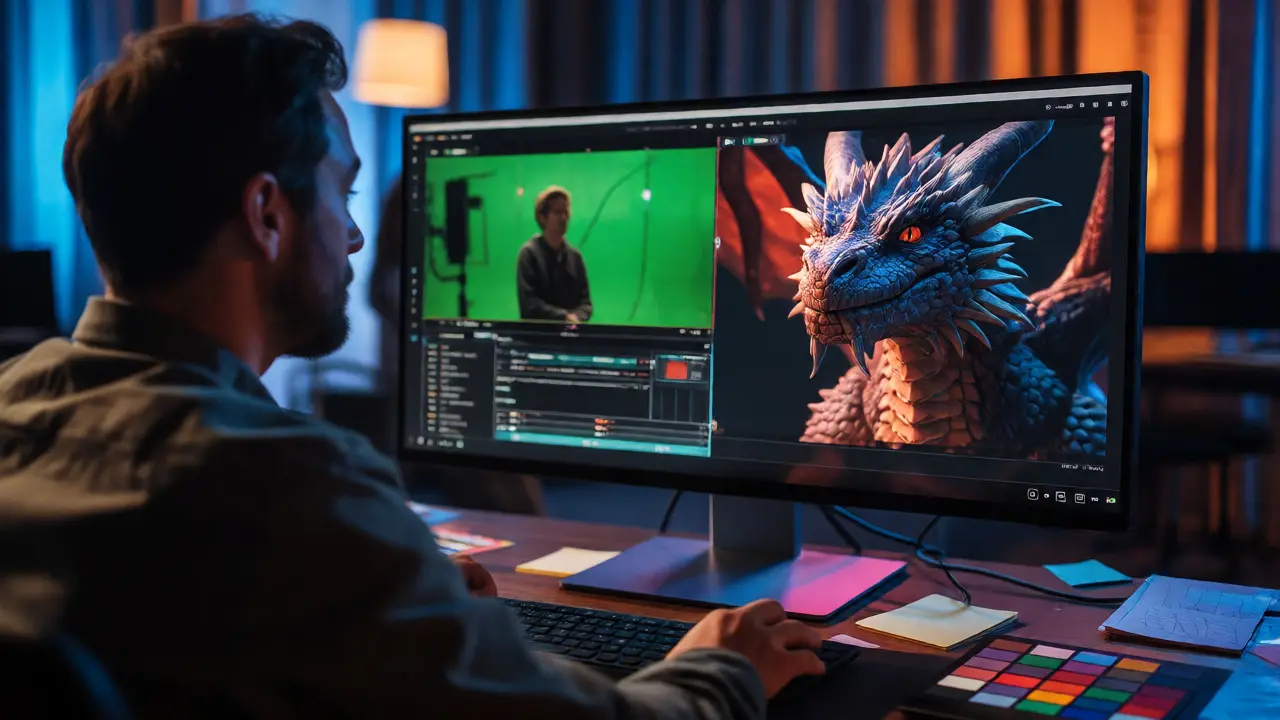
A VFX Supervisor is the senior creative and technical lead responsible for overseeing all visual effects work in a film production. Think of them as the architect of the impossible. While the Director of Photography (DP) handles what the camera sees in the moment, the VFX Supervisor plans for what the computer will see later. They ensure that the digital elements-whether it's a dragon flying over New York or a simple wire removal-blend seamlessly with live-action footage.
This role requires a rare hybrid skill set. You need the artistic eye to judge composition and lighting, but also the technical brain to understand render farms, simulation algorithms, and file formats. If the supervisor fails, the post-production phase becomes a nightmare of re-shoots and endless revision cycles. If they succeed, the audience never knows the effect exists.
Pre-Production: Where the Battle is Won
Most people assume VFX starts after filming wraps. Wrong. By then, it’s too late. The heavy lifting happens months before the first clapboard snaps. During pre-production, the VFX Supervisor works closely with the director and the production designer to visualize complex shots. This involves creating previz (pre-visualization) sequences-rough 3D animations that block out camera moves and timing.
- Shot Breakdown: Identifying every single shot that needs digital help, from major creatures to minor cleanup.
- Budgeting: Estimating costs based on complexity. A static background plate is cheap; a fluid simulation interacting with actors is expensive.
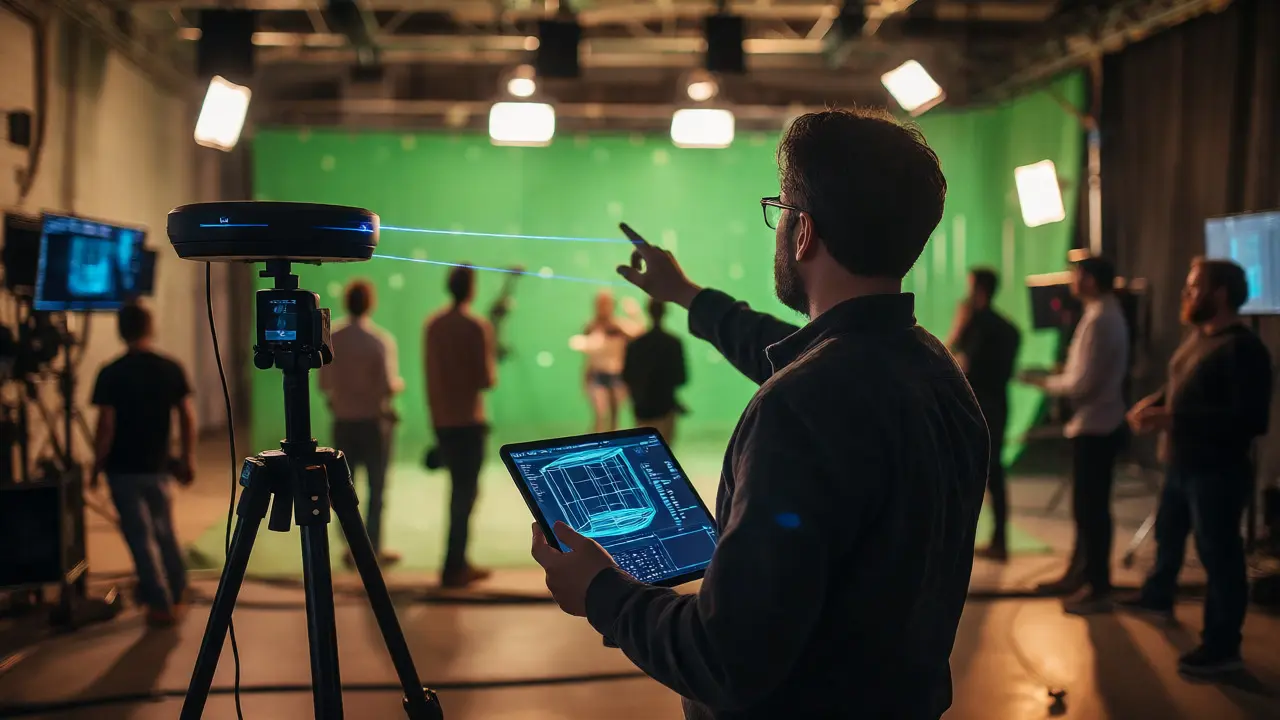
- Technical Scouting: Visiting locations to check for tracking markers, lighting conditions, and safety hazards for green screens.
Here’s a pro tip: Never let the production team lock a location without the VFX Supervisor seeing it. I once saw a production choose a warehouse with fluorescent lights that flickered at 60Hz. In post, matching those flickers in a CG environment cost thousands of dollars in manual labor. Spotting that during scouting would have been free.
On-Set Duties: Data is King
When cameras roll, the VFX Supervisor’s primary job shifts to data acquisition. You can’t fix what you didn’t record. On modern sets, this means capturing precise information about the camera lens, position, and movement. Tools like Lidar scanners and photogrammetry rigs are now standard. These devices create a 3D point cloud of the set, allowing artists to place digital objects with millimeter precision.
But it’s not just about lasers. The supervisor must monitor the lighting. If the DP changes a key light halfway through a take, the VFX Supervisor needs to note the color temperature and intensity. Why? Because if an actor is lit by a warm tungsten lamp on set, but the digital fire added in post glows with a cool blue hue, the composite will fail. The supervisor acts as the guardian of consistency.
| Data Type | Tool Used | Purpose |
|---|---|---|
| Camera Metadata | Metadata Recorders (e.g., ARRI Alexa) | Lens focal length, aperture, and frame rate for accurate projection mapping. |
| Color Reference | Color Checker Charts (e.g., X-Rite) | Ensuring digital colors match the exact hues captured on set. |
| Spatial Geometry | Lidar / Photogrammetry | Creating accurate 3D environments for virtual cameras and shadows. |
| Light Probes | HDR Spheres | Capturing the actual lighting environment for realistic reflections on CG surfaces. |
Managing the Pipeline: From Vendor to Screen
Films rarely handle all effects in-house. Studios hire external vendors-specialized shops like Industrial Light & Magic (ILM), Weta FX, or Framestore. The VFX Supervisor manages these relationships. This is where project management skills shine. You aren’t just giving feedback; you’re managing expectations, deadlines, and budgets across multiple time zones.
The workflow typically follows a strict hierarchy:
- Layout: Artists match the camera move and basic geometry.
- Animation/Simulation: Characters move, fluids flow, debris explodes.
- Look Development: Textures and shaders are applied to make materials look real.
- Lighting: Digital lights mimic the on-set setup.
- Compositing: All layers are merged into the final image.
If a vendor misses a deadline, the supervisor has to decide: do we cut the shot? Do we simplify the effect? Or do we pay overtime? These decisions happen fast. A good supervisor maintains a "green-light" system, approving each stage before moving to the next to prevent wasted effort. If the layout is wrong, don’t bother animating until it’s fixed.
Common Pitfalls and How to Avoid Them
Even experienced supervisors stumble. The most common error is underestimating the "invisible" work. Cleanup-removing rigging, wires, or unwanted crew members-is tedious and expensive. If you don’t budget enough time for it, you’ll end up with floating props or visible harnesses.
Another trap is ignoring the physics of interaction. When a digital character touches a real actor, the contact points must be perfect. If a CG hand passes through a real table edge, the illusion breaks instantly. Supervisors mitigate this by using practical interaction techniques on set, such as having stand-ins hold props or using air cannons to simulate impact force.
Also, beware of scope creep. Directors love adding ideas. "Can we add rain here?" seems simple, but rain affects wetness maps, reflections, and ground deformation. Each addition ripples through the pipeline. A skilled supervisor learns to say, "Yes, but it will cost X days and Y dollars," rather than a silent nod that leads to blowout budgets.

The Future of the Role: Real-Time Engines
The job is evolving. With the rise of LED volume stages (like those used in The Mandalorian), VFX Supervisors now work with game engines like Unreal Engine in real-time. Instead of waiting weeks for renders, directors see the digital background change instantly while filming. This shifts the supervisor’s role further upstream, requiring knowledge of game development tools alongside traditional film pipelines.
This integration demands faster decision-making. If the lighting in the virtual background doesn’t match the foreground actor, you fix it right there, not in post. The line between shooting and editing blurs. For aspiring supervisors, learning real-time rendering is no longer optional-it’s essential.
Quick Summary / Key Takeaways
- Early Involvement: VFX Supervisors must join projects during pre-production to plan budgets and technical requirements.
- Data Discipline: Capturing accurate camera metadata, color references, and 3D scans on set saves massive amounts of money in post.
- Pipeline Management: Overseeing external vendors requires strict approval gates to avoid wasting resources on flawed stages.
- Real-Time Shift: Knowledge of game engines like Unreal Engine is becoming critical due to the adoption of LED volumes.
- Communication: The core skill is translating creative vision into technical instructions for artists and vice versa.
What is the difference between a VFX Supervisor and a VFX Producer?
The VFX Supervisor focuses on the creative and technical execution-how things look and how they are built. The VFX Producer handles the business side-contracts, budgets, schedules, and hiring vendors. They work closely together, but the Supervisor answers to the Director regarding aesthetics, while the Producer answers to the Studio regarding finances.
Do VFX Supervisors need to know coding?
Not necessarily deep programming skills, but understanding scripting languages like Python is highly beneficial. It helps in automating tasks, troubleshooting pipeline issues, and communicating effectively with Technical Directors (TDs). Knowing how software works internally allows for better problem-solving when tools break.
How does a VFX Supervisor handle last-minute script changes?
Last-minute changes are costly. The supervisor assesses the impact on existing assets. If a scene changes from day to night, all lighting setups must be redone. They communicate these impacts to the producer immediately to adjust the schedule or budget. Sometimes, they suggest alternative solutions that achieve the narrative goal with less technical overhead.
What software tools are commonly used by VFX Supervisors?
Supervisors use review platforms like CineSync or ReviewStream to annotate shots. For planning, they rely on Nuke, Maya, or Houdini to understand artist workflows. Increasingly, they use Unreal Engine or Unity for previz and virtual production. Proficiency in Adobe After Effects is also common for quick temp composites.
Is the VFX Supervisor present on set every day?
Ideally, yes, especially for days with complex effects. However, on large productions, there may be multiple supervisors or on-set VFX coordinators who report back. The main supervisor might visit key days but relies on trusted deputies for routine days. Their presence is crucial whenever green screens, motion capture, or interactive elements are involved.





Comments(8)