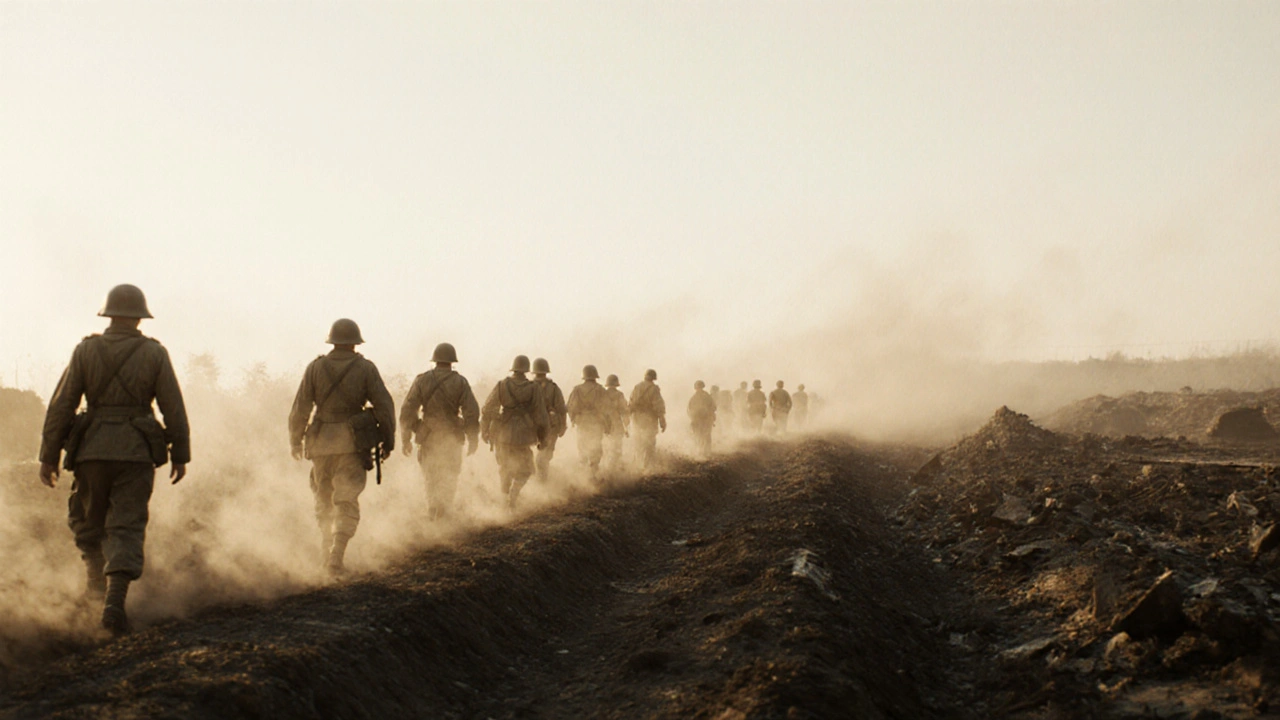
For over a century, people have argued whether movies are just entertainment or something deeper. The truth is, cinema isn’t just about telling stories or making money-it’s a full-blown art form, equal to painting, music, or literature. It doesn’t need permission from critics or institutions to be art. It already is. Every frame, every cut, every sound design choice adds up to something that moves people in ways no other medium can.
It Starts With the Camera as a Brush
Think of a painter. They choose colors, light, composition, and brushstrokes to express emotion. Now think of a filmmaker. They choose lenses, lighting, camera movement, and framing. The difference? The camera doesn’t just record-it interprets. In 1917, the one-shot illusion wasn’t a technical trick. It was a way to make the audience feel the chaos of war in real time. In Blade Runner 2049, the slow pans across endless deserts weren’t just setting-they were loneliness made visible. Directors like Tarkovsky, Wong Kar-wai, and Béla Tarr didn’t shoot scenes. They sculpted moods with light and motion.
These aren’t random choices. They’re deliberate artistic decisions. A wide-angle lens can make a room feel suffocating. A shallow depth of field can isolate a character’s grief. A handheld camera can turn a quiet moment into raw vulnerability. Cinema doesn’t just show emotion-it builds it from the ground up, frame by frame.
Editing Is the Soul of the Film
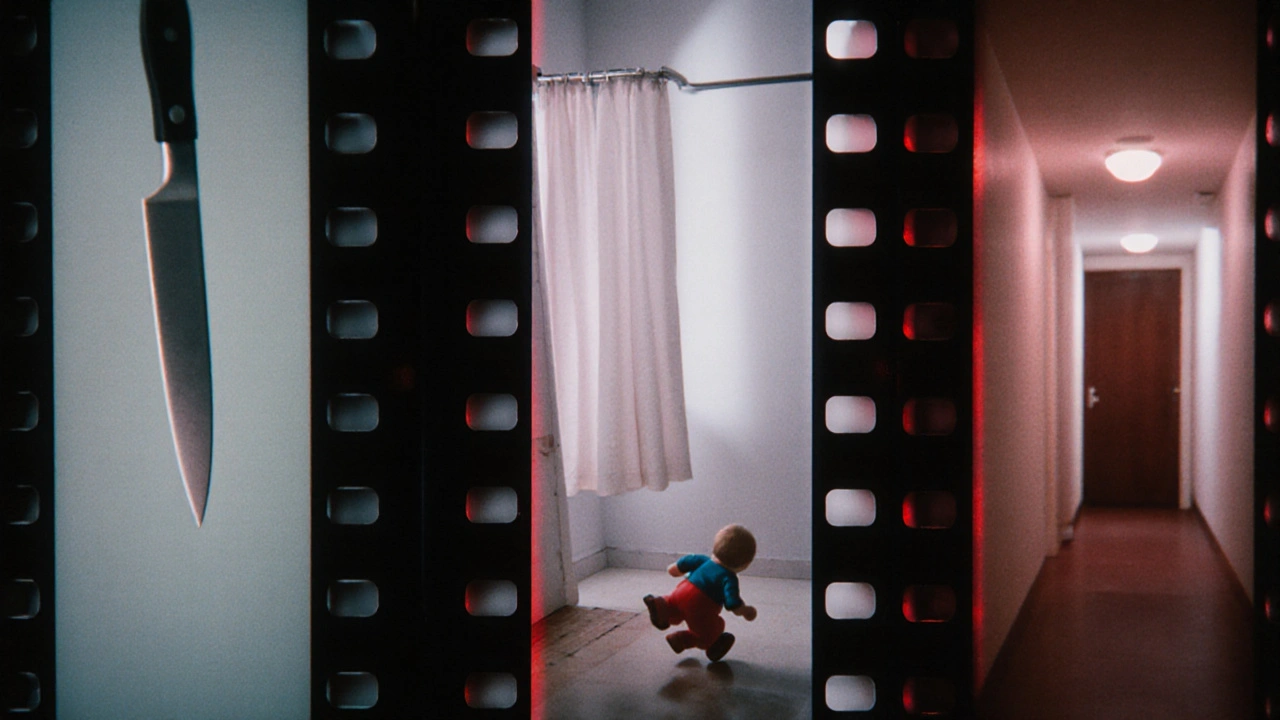
Most people think editing is just cutting out mistakes. It’s not. Editing is the heartbeat of cinema. It’s where time bends, memory fractures, and meaning is born. In Psycho, the shower scene lasts only 45 seconds-but it uses 78 different camera angles. That’s not horror. That’s musical composition. Each cut is a note. The rhythm isn’t random-it’s calculated to make your heart race.
Think of Memento. The story moves backward. That’s not a gimmick. It’s a way to force the viewer to experience confusion, just like the main character. Or Requiem for a Dream, where rapid cuts mimic addiction’s spiral. These aren’t editing tricks. They’re emotional architecture. The editor doesn’t just assemble footage. They build the viewer’s inner world.
Compare that to a novel. A writer describes a character’s breakdown over pages. A filmmaker does it in five seconds of flickering images and a heartbeat sound. One takes time. The other takes precision. Both are art. But cinema does it with motion, silence, and rhythm-things words can’t replicate.
Sound Design Is Invisible Poetry
Most viewers don’t notice sound design. That’s how good it is. A footstep on gravel. A door creaking. A distant train whistle. These aren’t background noise. They’re emotional cues. In The Revenant, the wind isn’t just weather-it’s a character. It howls when the protagonist is alone. It dies when he’s near death. In Her, the ambient hum of the city feels like loneliness made audible.
John Cage’s 4’33” proved silence can be music. Cinema proves silence can be meaning. Think of the 30-second pause in No Country for Old Men after the coin toss. No music. No dialogue. Just breathing. That’s not tension. That’s dread made physical. Sound designers don’t add effects. They carve out emotional space.
Even the score isn’t just background. Think of Bernard Herrmann’s strings in Psycho. They don’t accompany the scene-they *are* the scene. The violin shriek isn’t scary because it’s loud. It’s scary because it’s wrong. It breaks the rules of music. And that’s exactly what art does.
Performance Is the Human Canvas
Acting in film isn’t theater. It’s intimacy. A flicker of the eye. A half-smile that fades too fast. A hand that trembles before it reaches for a letter. These aren’t lines delivered. They’re moments captured. Marlon Brando’s silence in On the Waterfront says more than any monologue. Tilda Swinton’s stillness in Snowpiercer carries entire histories of loss and power.
Unlike stage acting, film acting doesn’t need to project. It needs to reveal. The camera sees everything. That’s why a performance like Isabelle Huppert’s in Elle works-it’s controlled, cold, and terrifyingly real. There’s no grand gesture. Just the quiet unraveling of a person. That’s not acting. That’s psychological truth made visible.
And when a performance connects, it stays with you. Not because it was loud. But because it was honest. That’s the mark of art: it doesn’t entertain. It changes how you see people.
History Doesn’t Ignore It-It Celebrates It
Cinema wasn’t always taken seriously. Early critics called it a sideshow. But by the 1950s, the French New Wave changed everything. Truffaut, Godard, and Rivette treated film like poetry. They broke rules not to be rebellious, but to find new ways to feel. Their films weren’t about plot. They were about mood, memory, and the passage of time.
By the 1970s, American cinema followed. Scorsese, Coppola, and Altman made films that weren’t just stories-they were portraits of a nation. Taxi Driver wasn’t about a cab driver. It was about alienation in modern America. The Godfather wasn’t about the mob. It was about power, family, and corruption as a cycle.
Today, institutions don’t debate whether cinema is art. They preserve it. The Library of Congress selects 25 films every year for the National Film Registry-not for box office numbers, but for cultural, historical, or aesthetic significance. Star Wars is there. So is Do the Right Thing. So is Metropolis. The criteria? Artistic merit. Not popularity.

It’s Not About the Budget-It’s About the Vision
You don’t need a million dollars to make art. A film like Parasite cost $11 million. But its power came from precision-not spectacle. Every shot, every color, every hallway was chosen to reflect class division. The staircase wasn’t just a set. It was a symbol. The basement wasn’t just a room. It was a metaphor.
Or take The Florida Project. Shot on a shoestring, it uses bright colors and childlike perspectives to show poverty without pity. The art isn’t in the lighting. It’s in the choice to let a child’s joy exist alongside adult despair. That’s not filmmaking. That’s human observation turned into visual poetry.
Even silent films like The General or City Lights are still studied in art schools. Why? Because Chaplin didn’t just make people laugh. He made them feel the weight of being poor, forgotten, and still trying to be dignified.
Why This Matters Now
Today, we’re drowning in content. Millions of videos. Short clips. Algorithm-driven noise. But cinema-the kind that lingers-still exists. It’s in the slow, quiet films that ask you to sit with discomfort. In the ones that don’t explain everything. In the ones that trust you to feel before you understand.
Cinema as art isn’t about being popular. It’s about being true. It’s about capturing something human that can’t be said in words. And that’s why, even in a world of TikTok and AI-generated images, people still go to theaters. Not for escape. But for recognition. To see themselves reflected in a way nothing else can.
Art doesn’t need a museum. It just needs to move you. And cinema? It’s been doing that since the first flicker of light on a screen.
Is cinema really considered art by experts?
Yes. Major institutions like the Museum of Modern Art in New York, the British Film Institute, and the Cinémathèque Française treat film as fine art. They curate retrospectives, preserve original negatives, and host academic symposiums on cinematic technique. The Library of Congress selects films for the National Film Registry based on artistic, cultural, or historical value-not popularity.
Does a movie need to win awards to be art?
No. Many films now considered masterpieces, like Eraserhead or Stalker, were ignored or panned when first released. Art isn’t validated by awards-it’s validated by time. What matters is whether the film continues to provoke thought, emotion, or new ways of seeing long after it’s made.
Can a blockbuster be art?
Absolutely. 2001: A Space Odyssey, The Dark Knight, and Avatar: The Way of Water all use massive budgets to explore deep themes-human evolution, moral ambiguity, and ecological grief. The scale doesn’t cancel out the art. It can amplify it. What matters is intent: is the film trying to make you think, or just make you click?
Why do some people still think movies are just entertainment?
Because entertainment is easier to recognize. A funny joke, a chase scene, or a romantic twist is immediate. Art often asks you to sit with discomfort, ambiguity, or silence. Many viewers aren’t trained to look for those things. But that doesn’t mean they’re not there. It just means the viewer has to be willing to look deeper.
How is film different from theater as an art form?
Theater is live. Every performance is unique. Film is fixed. That’s the key. A film can be watched a hundred times, and you’ll notice something new each time-because the director has controlled every detail: the lighting, the edit, the sound. Film doesn’t rely on the actor’s live energy. It relies on the artist’s control over time, space, and perception.


Comments(8)