It’s 2025, and you’ve watched your tenth true crime documentary this year. You know the drill: the eerie music, the slow zoom on a crime scene photo, the voiceover whispering, ‘What really happened that night?’ You’ve seen the same tropes replayed across Netflix, Hulu, and YouTube. The victim’s face. The obsessed amateur detective. The suspect with the haunted eyes. The twist that never quite lands. And now, you’re tired. Not just bored-true crime documentary fatigue is real, and it’s pushing filmmakers to change everything.
Why We’re Over It
True crime exploded after Serial in 2014, but by 2023, streaming platforms were releasing over 200 true crime docs a year. A 2024 study from the University of Southern California found that 68% of viewers felt emotionally drained after watching more than three true crime films in a month. The numbers don’t lie: audiences are checking out. Why? Because the genre stopped telling stories and started selling trauma.
Too many films treat victims like plot devices. The killer becomes the star. The real people-the family members, the neighbors, the cops who worked the case-are reduced to talking heads in dimly lit living rooms. There’s no accountability. No reflection. Just spectacle. And viewers, especially younger ones, are starting to ask: Who benefits from this?
Breaking the Formula: New Approaches
Some filmmakers are fighting back-not by making quieter films, but by making smarter ones. They’re ditching the old playbook and rebuilding true crime from the ground up.
Take The Last Witness (2024), a docu-series about a 1998 murder in rural Ohio. Instead of reenactments or dramatic voiceovers, it uses only audio recordings from the original police interviews, court transcripts, and voicemails left by the victim’s sister. No music. No reenactments. Just silence between sentences. The result? A haunting, intimate portrait of grief that doesn’t exploit the dead.
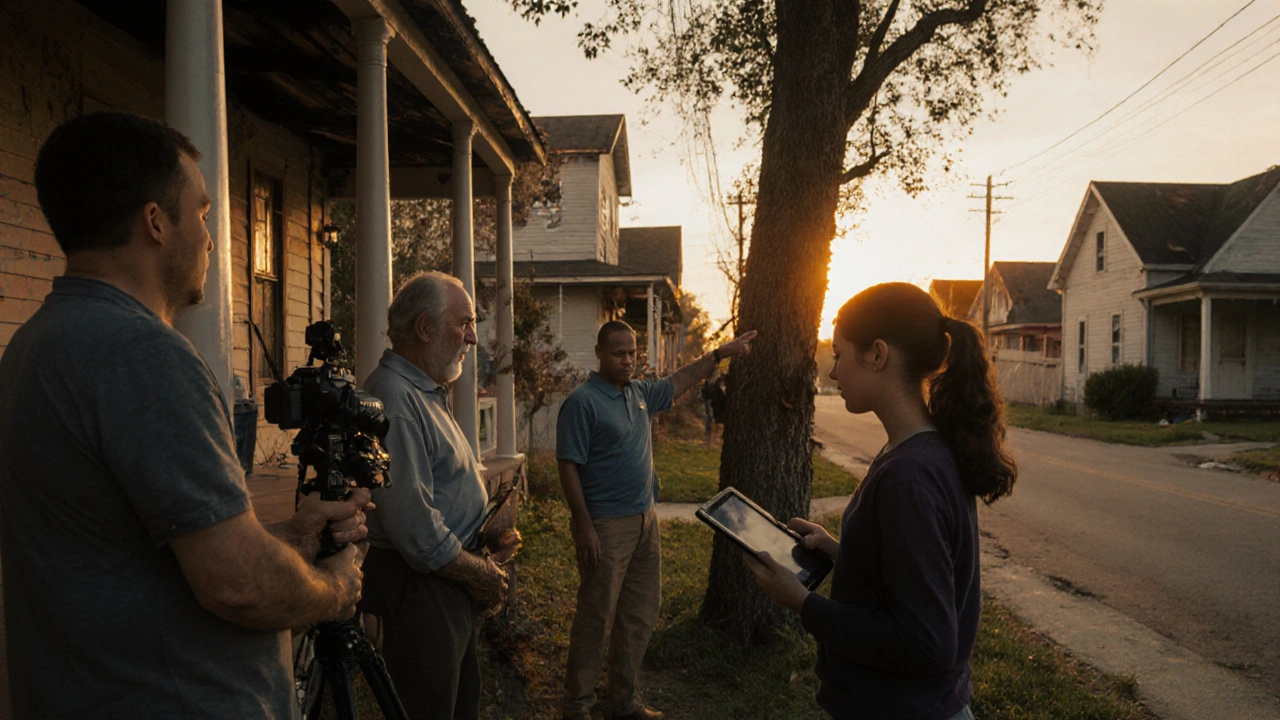
Another shift: filmmakers are handing control back to communities. Our Town, Our Truth (2023) was made entirely by residents of a small Louisiana town where a serial arsonist operated for years. Locals shot footage, interviewed neighbors, and wrote the script. The film doesn’t try to solve the case-it asks why the town stayed silent for decades. It’s not about the arsonist. It’s about the silence.
Technology as a Tool, Not a Crutch
Technology used to mean flashy reenactments and CGI crime scenes. Now, it’s being used to reveal truth, not hide it.
In Pixel Justice (2025), filmmakers analyzed over 400 hours of public CCTV footage from a 2012 missing persons case in Portland. Using AI-assisted facial recognition and time-stamp cross-referencing, they identified a vehicle that police had dismissed as irrelevant. The footage wasn’t dramatic-it was grainy, blurry, and mundane. But when layered with witness statements and weather reports, it became undeniable evidence. The film ends not with an arrest, but with a request: What else are we ignoring because it doesn’t look like a movie?
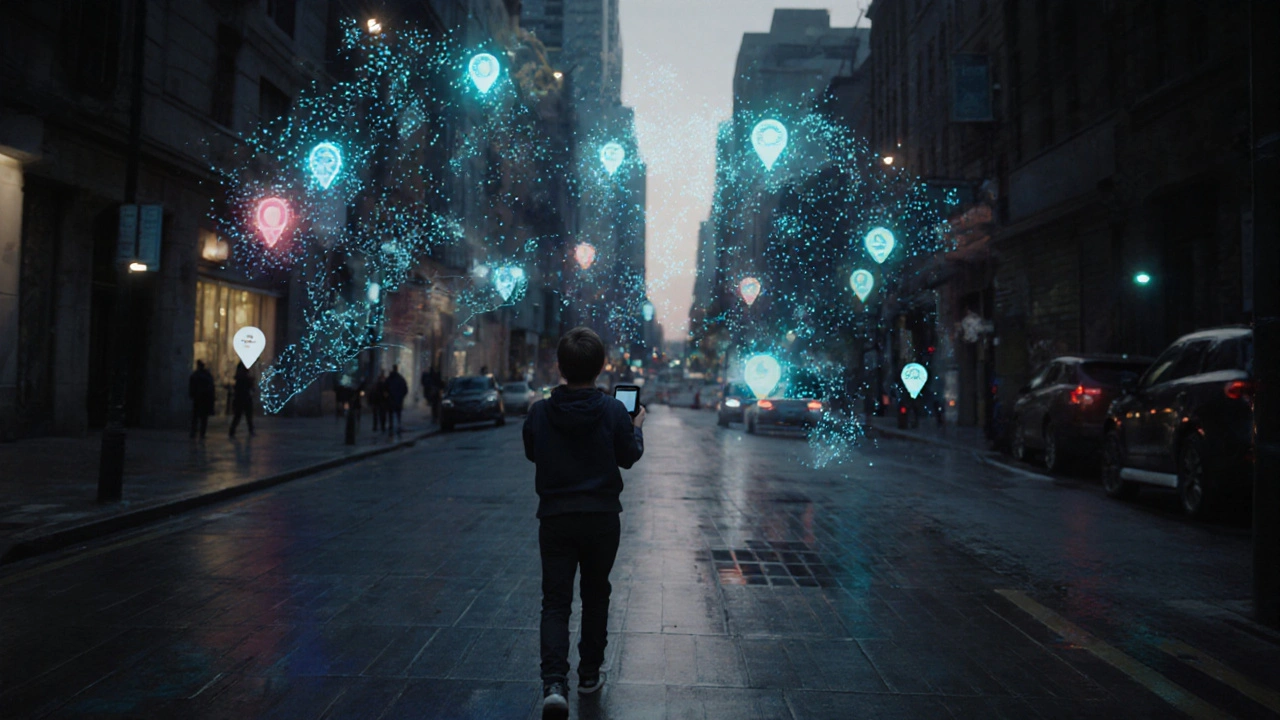
Other creators are using augmented reality apps tied to the films. Watch Shadow Lines (2024) on your phone, and the app overlays real-time data: the exact location of the crime, the current population density, the number of unsolved cases in that zip code. It turns passive watching into active awareness.
Centering the Living, Not the Dead
The biggest innovation? Stopping the obsession with killers and starting the focus on survivors.
Traditional docs treat survivors as emotional punctuation. New ones treat them as the narrative engine. After the Headlines (2025) follows three women who lost siblings to violent crime. Each episode tracks their lives five years later-not the investigation, not the trial, but how they rebuilt their identities. One became a therapist for victims’ families. Another started a nonprofit that trains teens in conflict resolution. The film doesn’t ask, Who did it? It asks, How do you keep living?
This shift isn’t just ethical-it’s effective. Viewership for films that center survivor journeys increased by 42% in 2024, according to Nielsen’s streaming analytics. People aren’t tuning out because they’re desensitized. They’re tuning out because they’ve been lied to.
The Rise of the Anti-True-Crime Doc
Some filmmakers are going further. They’re making films that aren’t true crime at all-except they are.
Crime Is a System (2024) is a 90-minute essay film that never shows a single crime scene. Instead, it traces how housing policy, school funding, and policing budgets in 12 American cities created the conditions for violence. It uses data visualizations, interviews with urban planners, and archival footage of city council meetings. There’s no killer to name. No suspect to chase. Just a system that keeps repeating.
Another example: False Confessions (2023), which doesn’t focus on a single case, but on the psychology of interrogation. It features real recordings of police questioning teenagers, paired with neuroscientists explaining how stress alters memory. The film ends with a simple question: If you were interrogated for eight hours without a lawyer, would you be sure you didn’t do it?
What’s Next?
The genre isn’t dying. It’s evolving. And the best true crime films of the next five years won’t be the ones with the most shocking twists. They’ll be the ones that make you question why you wanted to watch in the first place.
Expect more hybrid formats: docu-podcasts that blend with interactive maps. Films that use generative AI to simulate how a victim might have described their last day. Collaborative projects where viewers submit their own local unsolved cases, and filmmakers pick one to investigate each season.
The key isn’t more gore. It’s more responsibility. More context. More humanity.
True crime doesn’t need more drama. It needs more truth.
Why is there so much true crime documentary fatigue?
True crime fatigue comes from repetition and exploitation. Over 200 true crime docs were released in 2023 alone, many using the same formula: victim as prop, killer as antihero, emotional music, and a twist that rarely adds new insight. Audiences are tired of being fed trauma for entertainment without context, accountability, or respect for real people affected.
What are filmmakers doing differently now?
Filmmakers are moving away from reenactments and sensationalism. They’re using raw audio, community-driven storytelling, AI-assisted data analysis, and survivor-centered narratives. Films like The Last Witness and Our Town, Our Truth let real voices lead, while others like Crime Is a System examine root causes instead of individual crimes.
Are true crime documentaries still popular?
Yes-but only the good ones. While viewership for formulaic docs has dropped 30% since 2022, films that focus on survivors, systemic issues, or innovative storytelling have seen a 42% increase in watch time. Audiences aren’t rejecting the genre-they’re demanding better.
How can I tell if a true crime doc is ethical?
Ask: Does it center the victim’s humanity or just their death? Does it name real people affected or use anonymous talking heads? Does it explain the broader context-like poverty, policing, or mental health-or just blame one person? Ethical docs give space to survivors, avoid gratuitous imagery, and don’t profit from unresolved grief.
What’s the future of true crime documentaries?
The future is interactive, collaborative, and systemic. Expect more docs that use AR to show real-time crime data, podcasts tied to community investigations, and films made in partnership with families of victims. The goal isn’t to solve every case-it’s to change how we think about crime, justice, and who gets to tell the story.





Comments(8)