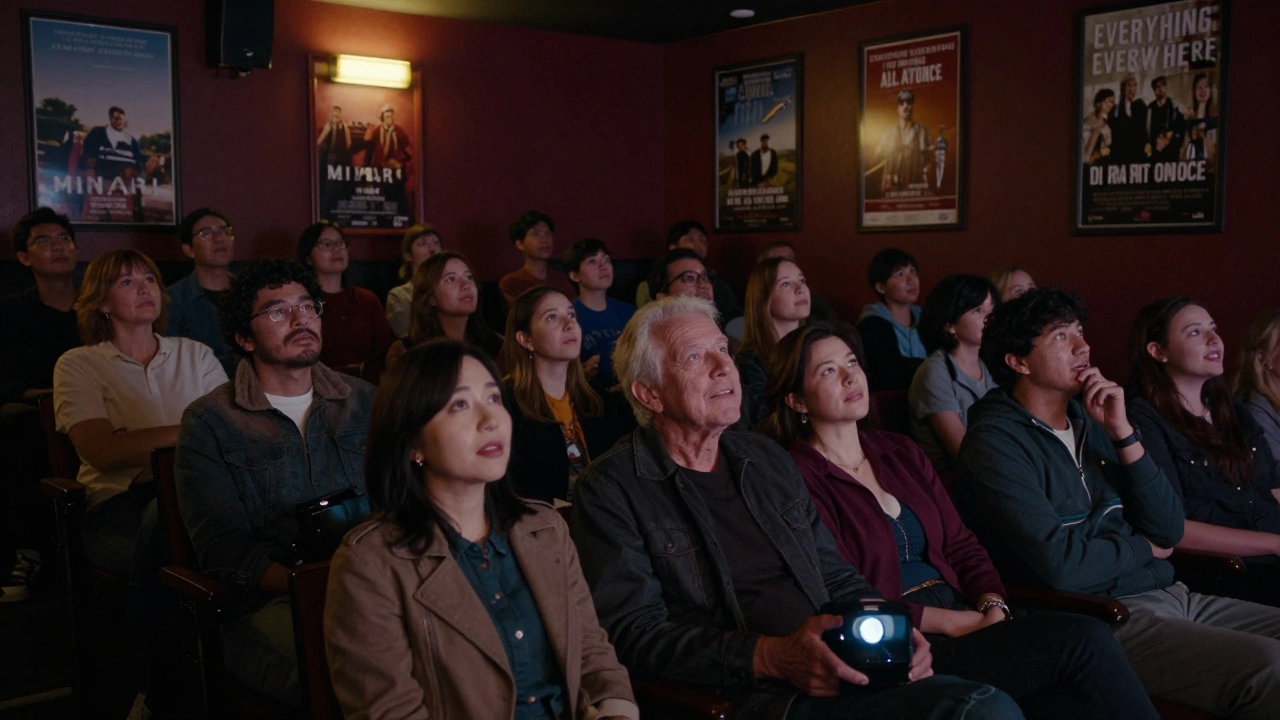
When a studio releases a blockbuster, the rollout is predictable: trailers everywhere, prime theater slots, and weeks of marketing blitz. But what happens when the film is a quiet, powerful story about a trans teen in rural Oklahoma, or a Somali immigrant family navigating life in Detroit? Those films don’t get the same treatment. And that’s not an accident-it’s a system designed to protect the status quo.
Why diverse films get sidelined
Distributors don’t wake up one morning and decide, "Let’s ignore stories from marginalized communities." It’s more subtle. They look at box office data from the last five years and see that films with predominantly Black, Latino, Asian, or LGBTQ+ casts rarely hit $50 million in domestic sales. So they assume those films won’t make money. But the data is misleading. Those numbers don’t account for films that never got a real chance.Take Minari. It made $13 million in the U.S. in 2021. That’s not a blockbuster, but it was the highest-grossing independent film of the year with a predominantly Asian cast. It won an Oscar. And yet, before its release, multiple distributors passed on it because they didn’t believe audiences would show up.
That’s the core problem: distributors treat diversity as a risk, not an opportunity. They assume audiences only want to see people who look like them. But research from the University of Southern California’s Annenberg Inclusion Initiative shows that audiences are hungry for diverse stories-when they know they exist. The issue isn’t interest. It’s access.
What distributor commitments actually mean
"Distributor commitments" sounds like corporate jargon. But in practice, it means three concrete things:- Guaranteed theatrical release in at least 500 screens
- Marketing budget equal to or greater than comparable mainstream films
- Long-term streaming and VOD placement, not buried in a catalog after two weeks
These aren’t perks. They’re survival tools. A film with a $2 million budget needs at least $1.5 million in marketing just to break even. Without it, even the best film disappears.
Some distributors are starting to change. A24 doesn’t just release diverse films-they build campaigns around them. For Everything Everywhere All At Once, they didn’t just target Asian-American communities. They partnered with TikTok creators, ran late-night TV ads, and turned the film into a cultural moment. The result? Over $140 million worldwide.
That’s not luck. That’s strategy.
How to plan a strategic release for diverse films
Releasing a diverse film isn’t about slapping on a "Representation Matters" sticker and hoping for the best. It’s about knowing your audience, where they live, how they discover content, and how to speak to them without sounding like a corporate slogan.Start with location. Don’t just release in New York and Los Angeles. Look at cities with growing cultural communities: Atlanta, Houston, Chicago, Seattle, Miami, and even smaller markets like Raleigh, NC, or Portland, OR. These cities have active film societies, cultural centers, and social media groups that will turn out for films that reflect their lives.
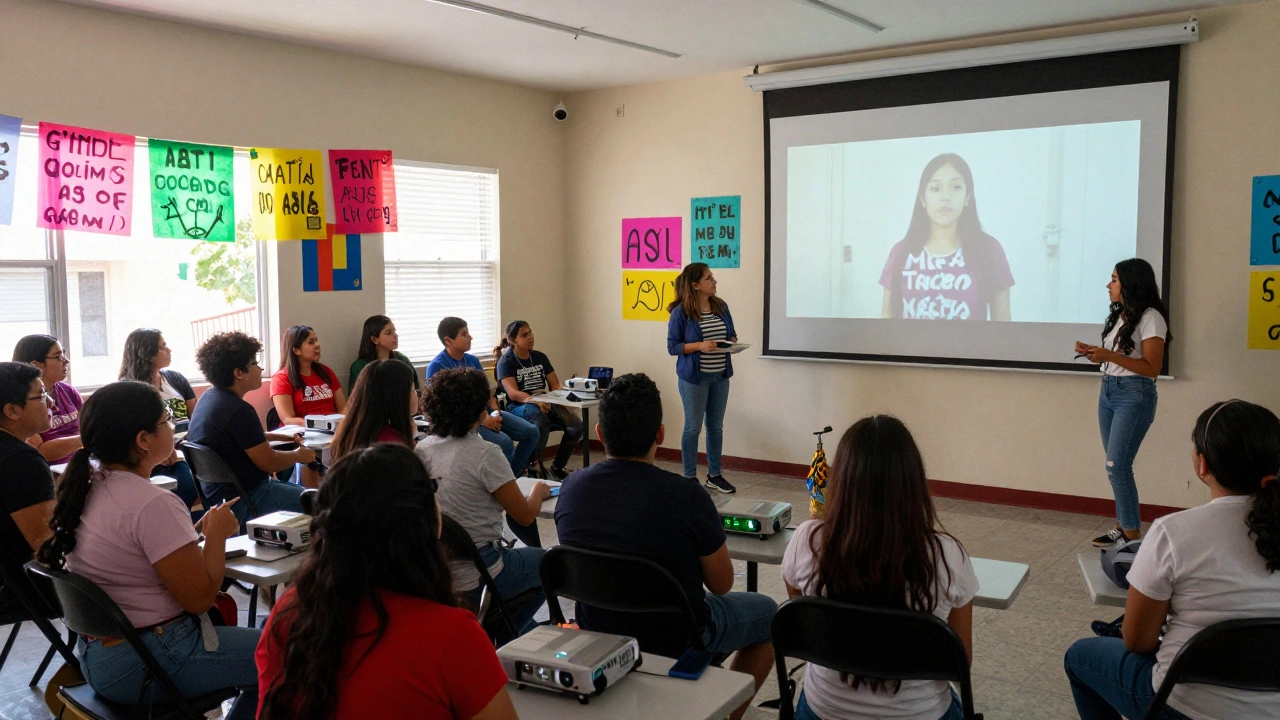
Next, partner with community organizations. If your film features a deaf protagonist, work with the National Association of the Deaf. If it’s about Muslim family life, collaborate with local mosques and Islamic cultural centers. These aren’t just PR moves-they’re distribution channels. They have email lists, newsletters, and events where your film can be screened before it even hits theaters.
And don’t forget influencers. Not the ones with millions of followers. The ones with 5,000 engaged followers who post about films in Spanish, Tagalog, or ASL. These creators have real trust. A single post from a Latino film critic in Texas can drive more ticket sales than a $50,000 Instagram ad.
Marketing that doesn’t feel performative
The worst thing you can do is market a diverse film like it’s a charity case. "Support diversity!" doesn’t work. People don’t watch movies because they feel guilty. They watch because they’re curious, moved, or excited.Focus on the story. Highlight the humor in The Farewell. The tension in Parasite. The heartbreak in Moonlight. Let the film’s quality speak for itself. Use trailers that don’t mention "diversity" at all-just show the characters living their lives.
One distributor we worked with tested two trailers for a film about a Black female mechanic in Detroit. One trailer had the tagline: "A groundbreaking story of representation." The other said: "She fixes cars. And she’s not afraid to get dirty." The second one got 3x more clicks. Why? Because it didn’t sell a message. It sold a person.
Streaming isn’t the safety net you think it is
Too many distributors think: "If the theaters don’t work, we’ll put it on Netflix." But streaming platforms aren’t eager to promote niche films. They have thousands of titles. Your film will vanish in weeks unless you fight for visibility.Netflix’s algorithm doesn’t care about your mission. It cares about what people watch. If your film doesn’t get traction in the first 14 days, it gets buried. That’s why theatrical releases-even small ones-are critical. They create buzz. They generate reviews. They give the algorithm something to work with.
For The Half of It, Netflix partnered with 120 indie theaters across the U.S. before launching it on their platform. The film became one of their most-watched originals that year. Why? Because people talked about it. Because it had a real release, not just a digital drop.
What works: Real examples from 2024 and 2025
In 2024, The Last Thing He Told Me, a film about a Latina mother searching for her missing son, opened in 312 theaters. The distributor spent $800,000 on targeted ads in Spanish-language media and partnered with immigrant rights groups. It grossed $7.2 million in its first month.In early 2025, Queer, a coming-of-age story set in 1990s Mexico City, opened in 27 theaters. The distributor didn’t buy billboards. Instead, they sent free tickets to 500 LGBTQ+ youth centers across the country. They got 12,000 tickets claimed. The film sold out every screening. It later hit #1 on Apple TV’s LGBTQ+ chart.
These aren’t flukes. They’re repeatable models.

What distributors still get wrong
Here’s what still happens too often:- Releasing a film about Indigenous communities but hiring no Indigenous marketing staff
- Using stock photos of "diverse families" in ads that look nothing like the real people in the film
- Launching a film during a major holiday weekend when all the other big movies are competing
- Expecting a film to succeed because it won a festival award-without any distribution plan
Festival buzz means nothing if the film doesn’t reach audiences. Sundance doesn’t pay your rent. Theaters do.
Building long-term trust, not one-off wins
The goal isn’t to release one diverse film and call it a day. The goal is to build a reputation. If audiences know you consistently put out meaningful stories from underrepresented voices, they’ll come back. They’ll tell their friends. They’ll buy tickets without needing a trailer.That’s what companies like ARRAY and Oscilloscope Laboratories have done. They don’t chase trends. They build relationships-with filmmakers, with communities, with audiences. They release films that others won’t touch. And over time, they’ve created a loyal fanbase.
It’s not about being woke. It’s about being smart. The audience is there. The stories are there. The only thing missing is the commitment.
How to hold distributors accountable
If you’re a filmmaker, producer, or advocate, you need to ask the hard questions before signing a deal:- What’s your minimum theater count for this release?
- What’s the marketing budget, and how much is allocated to targeted outreach?
- Will you guarantee 60+ days of streaming availability?
- Who’s on your marketing team? Do they have experience with the community this film represents?
- Can I see the campaign plan in writing?
If the answer to any of these is "We’ll figure it out," walk away. You deserve better. Your film deserves better.
Change doesn’t come from hashtags. It comes from contracts. From budgets. From real decisions made in boardrooms.
There’s no magic formula. Just one simple rule: treat diverse films like they’re worth the same investment as any other film. Not less. Not as a gesture. As a business decision.
Because they are.
Why don’t distributors release diverse films in more theaters?
Many distributors assume audiences won’t show up based on outdated box office data. But that data often reflects films that were poorly marketed or released in too few locations. Films like Minari and Everything Everywhere All At Once proved that when given a real chance, diverse stories find audiences. The issue isn’t interest-it’s access.
Can streaming platforms replace theatrical releases for diverse films?
No. Streaming platforms have thousands of titles and rarely promote niche films unless they gain early traction. A theatrical release-even in 50 theaters-creates buzz, reviews, and word-of-mouth that help the algorithm surface the film later. Without that initial push, a film disappears in the digital noise.
How do I find the right distributor for my diverse film?
Look for distributors with a track record-not just one film, but a pattern. Companies like A24, ARRAY, Oscilloscope, and Neon have consistently backed films with diverse voices. Ask them about their past campaigns, marketing budgets, and release strategies. Don’t settle for a distributor who sees your film as a token.
Is it better to self-distribute a diverse film?
Self-distribution works for some, but it requires serious resources: a marketing team, theater relationships, and a plan for digital platforms. Most filmmakers don’t have the time or budget. Partnering with a distributor who’s committed to your film’s success is usually the smarter move-if you can find one who actually follows through.
What’s the biggest mistake filmmakers make when pitching to distributors?
Focusing only on the film’s artistic merit. Distributors care about audience reach. You need to show them who will watch, where they are, and how you’ll reach them. A strong community outreach plan, targeted marketing ideas, and clear release goals make your pitch far more compelling than just saying "it’s an important story."





Comments(5)