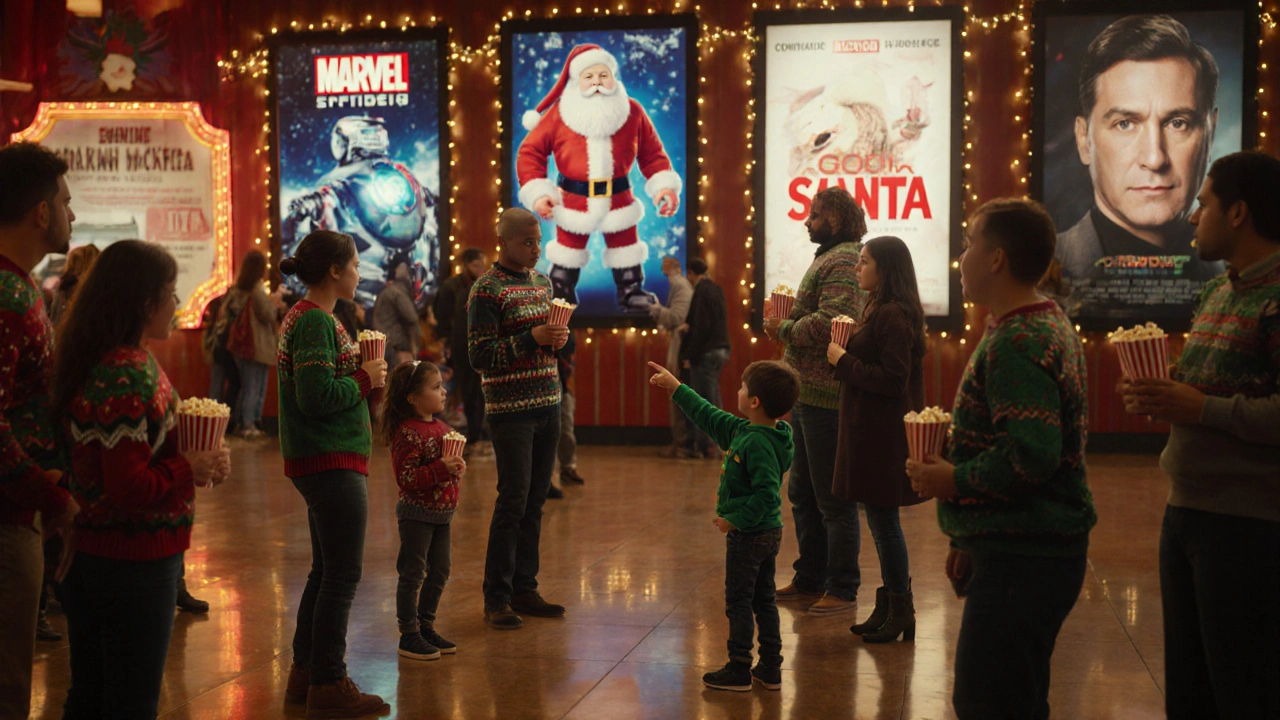
Every year, between Thanksgiving and New Year’s Day, movie theaters turn into battlegrounds. Not for war, but for dollars. Studios don’t just drop movies randomly during this time-they plan them like military operations. The goal? Fill seats, crush records, and lock in Oscar buzz before the calendar flips. This isn’t luck. It’s called holiday frame stacking, and it’s the most calculated move in Hollywood.
Why the Holiday Window Matters More Than Any Other
From late November to early January, Americans spend more time off work and school than any other stretch of the year. Families gather. Kids are out of class. People look for things to do outside the house. That’s when box office revenue spikes-sometimes by 40% compared to the rest of the year. In 2023, the five-week holiday window brought in over $2.1 billion in the U.S. alone. That’s more than the entire months of February or September combined.
But here’s the catch: not every movie can win. Studios know this. So they don’t just release one big movie. They release five, six, sometimes seven. And they stagger them like a poker hand-each one playing a different role.
The Five Roles in a Holiday Release Stack
Think of the holiday window as a layered cake. Each layer has a purpose.
- The Blockbuster Opener-This is the big gun. Usually a sequel or franchise film with built-in fans. Think Marvel, Star Wars, or The Hunger Games. It drops the week before Thanksgiving to grab early holiday shoppers and set the tone. In 2022, Black Panther: Wakanda Forever opened with $181 million in its first weekend, mostly from families and teens.
- The Family Animation-This is the safe bet. Studios know parents will take kids to the movies. So they drop a CGI animal or talking toy movie right after Thanksgiving. The Super Mario Bros. Movie made $575 million globally in 2023 because it hit theaters the week after Thanksgiving and had zero competition from other family films.
- The Prestige Drama-This one doesn’t need millions of tickets. It needs awards attention. Studios release Oscar-bait films like Oppenheimer or Maestro in early December. They’re not meant to break opening weekend records. They’re meant to dominate the conversation and stay in theaters through January.
- The Holiday Comedy-Rom-coms with snow, mistaken identities, and last-minute declarations of love. These are low-budget but high-margin. Love Actually still makes money every December. In 2024, Single All the Way hit Netflix the same week as its theatrical release, but theaters still saw 20% higher attendance on weekends because people wanted the shared experience.
- The Late-December Wildcard-This is the surprise. A genre film, indie drama, or horror flick that no one expected to do well. In 2023, The Monkey, a low-budget horror film from A24, opened in 800 theaters on December 20 and made $12 million in two weeks. It wasn’t supposed to. But it filled the gap between the big family movies and the quiet Oscar contenders.
How Studios Avoid Cannibalizing Each Other
It’s risky. If two big movies open the same weekend, they split the audience. That’s called cannibalization. Studios spend millions on market research to avoid it.
They look at:
- Demographics: Will a 12-year-old who likes animated films also want to see a gritty war movie? Probably not.
- Release timing: If a family film opens on November 22, a horror film won’t open until December 15. Too close, and parents won’t choose between them.
- Competitor history: If Transformers did well the last two years on December 25, the studio behind Spider-Man won’t risk opening on the same day.
In 2021, Disney delayed Spider-Man: No Way Home from October to December 17. Why? They knew Eternals was flopping in November. They waited for a clean window. The result? $1.1 billion in 10 days. That’s not just good-it’s textbook.

The Streaming Factor: Why Theaters Still Win
You’d think streaming killed the holiday movie rush. But it didn’t. In fact, it helped.
Why? Because people still want to go out. Streaming gives you comfort. Theaters give you ritual. On December 25, families don’t just watch a movie-they go to the mall, get hot cocoa, sit in a dark room together, and laugh at the same jokes. That’s not something you get on a tablet.
Studios now use streaming as a tool, not a replacement. They release a film in theaters first. Then, 45 days later, it lands on Disney+, Apple TV+, or Max. The theatrical run builds hype. The streaming release keeps the conversation alive.
In 2024, Wicked made $420 million globally in theaters before hitting streaming. That’s more than the entire box office of most animated films in 2020. Theaters didn’t die-they evolved.
What Happens When the Plan Fails
Not every stack works. Sometimes, a studio misreads the market.
In 2022, Universal released The Little Mermaid on May 26. It bombed. Why? They thought the live-action remake would be a summer hit. But audiences weren’t ready. The same studio released Migration on December 22, 2023. It opened with $35 million. Why? Perfect timing. No competition. Perfect audience. Same movie. Different strategy.
Another failure? Overloading the calendar. In 2018, seven major films opened in the three weeks before Christmas. Audiences got overwhelmed. The total holiday box office dropped 15% from the year before. Studios learned: more isn’t better. Better is better.
The New Year Push: Why January Still Counts
People think the holiday window ends on December 31. It doesn’t. January 1 to January 15 is still part of the strategy.
Why? Because:
- People have gift cards to spend.
- They’re still on break from work or school.
- Oscar campaigns are in full swing.
Studios save their best dramas and documentaries for January. In 2023, The Holdovers opened in limited release on November 10, then expanded wide on January 12. It made $70 million total. That’s more than many summer blockbusters. The studio didn’t rush. They let the buzz build.
Even horror films benefit. Smile opened in September. But it kept making money into February because people talked about it during the holidays. The holiday frame isn’t just November to December-it’s November to mid-January.

What’s Changing in 2025?
This year, studios are doing something new: testing hybrid releases.
Instead of waiting 45 days to stream, some are releasing films on digital platforms just 17 days after theaters. Why? To capture impulse viewers who saw the trailer but didn’t get to the theater. It’s a compromise. Theaters still get the first wave. Streaming gets the second.
Also, international timing matters more. A film that opens in the U.S. on November 27 might open in the U.K. on December 10. That gives studios a second revenue wave. In 2024, Indiana Jones and the Dial of Destiny made 60% of its total revenue from overseas markets during the holiday window.
And AI? It’s helping. Studios now use algorithms to predict which films will perform best on which dates based on weather patterns, social media buzz, and past performance of similar titles. It’s not magic. It’s math.
What You Can Expect This Year
Here’s what’s coming in the 2025 holiday window:
- November 22: A new Spider-Man spinoff (blockbuster opener)
- November 27: A Pixar-style animation about a robot Santa (family pick)
- December 6: A biopic about a legendary jazz musician (Oscar contender)
- December 13: A rom-com with a twist-set on a cruise ship during a storm (holiday comedy)
- December 25: A low-budget indie horror film from a first-time director (wildcard)
- January 10: A documentary about climate refugees (New Year push)
This isn’t random. It’s a playbook. And it’s working.
Why This Strategy Won’t Disappear
People still want to see movies together. They want to feel the buzz. They want to talk about the ending on social media the next day. Studios know that. They know the holiday window isn’t just about money-it’s about culture.
As long as families gather, kids have break, and people crave shared experiences, studios will keep stacking releases. Not because they have to. But because they can-and because they’ve proven they can make billions doing it.
Why do studios release so many movies in December?
Studios release multiple movies in December because that’s when people have the most free time. Families are off work and school, and there’s more money to spend. By spreading out releases, they avoid competing with each other and capture different audiences-kids, teens, adults, and older viewers-each with their own preferences.
Do holiday movies make more money than summer blockbusters?
Yes, sometimes. The five-week holiday window often brings in more total revenue than the entire summer season. In 2023, holiday films made over $2.1 billion in the U.S., while summer films made about $1.9 billion. The difference? Holiday audiences are more consistent and less scattered across multiple weekends.
Why do Oscar movies come out in December?
Academy voters start watching movies in November and cast ballots in January. Studios release prestige films in December so they’re fresh in voters’ minds. If a film comes out in October, it’s forgotten by January. If it comes out in December, it’s still the talk of the town when voting begins.
Can a movie still succeed if it doesn’t open during the holidays?
Absolutely. But it’s harder. Holiday releases have built-in audience demand and fewer competing films. A movie released in March or August needs to be exceptional to stand out. Most studios avoid that risk unless they have a strong brand or unique concept.
Is streaming killing the holiday movie tradition?
No. Streaming has changed how people watch, but not why they go. People still go to theaters for holidays because it’s a tradition. Theaters offer shared moments, snacks, big screens, and social energy. Streaming is a backup, not a replacement. Studios now use both-first theaters, then streaming-to maximize revenue.
Studios don’t just hope for a good holiday season. They engineer it. Every release date, every trailer drop, every poster design-it’s all part of a system built on decades of data, psychology, and box office history. The holidays aren’t just a time for movies. They’re Hollywood’s most profitable season. And they’re not going anywhere.






Comments(8)