
Imagine you’ve just finished editing your feature film. The picture is locked, the sound mix is polished, and the marketing assets are ready. Now comes the million-dollar question: do you push for a theatrical release, or do you hand the keys to a streaming platform? This decision isn't just about where people watch the movie; it determines your budget ceiling, your audience reach, and your long-term career trajectory.
The landscape has shifted dramatically since 2020. Studios that once guarded their theatrical windows like dragons guarding gold now compete with direct-to-streaming strategies. For independent filmmakers and mid-budget productions, this choice is even more critical. You aren't just choosing a venue; you're choosing an economic model. A theatrical run relies on ticket sales and physical presence, while a streaming deal offers upfront capital but caps your revenue potential. Let's break down exactly how these two paths differ and which one fits your specific project.
Understanding the Economic Models
To make a smart choice, you need to understand where the money actually comes from in each scenario. These are not just different venues; they are fundamentally different business structures.
Theatrical Distribution is a traditional release strategy where films are shown in cinemas for a limited period before moving to home video or streaming. In this model, your primary revenue stream is the box office. Typically, theaters keep 50% of ticket sales, while distributors keep the other half. If your film makes $10 million at the box office, you might see $5 million come back to the distributor, who then pays out royalties based on your contract. This path requires significant upfront investment in marketing and prints/digital copies (DCPs), but it offers uncapped upside if the film becomes a hit.
Streaming Acquisition is a licensing model where a platform purchases exclusive or non-exclusive rights to display a film digitally for a set period. Here, you usually negotiate a flat fee or a minimum guarantee. If Netflix buys your film for $2 million, that’s what you get, regardless of whether 100 people or 10 million people watch it. There are no ticket sales, no theater fees, and no regional variance in pricing. It’s a fixed income event rather than a variable performance metric.
| Feature | Theatrical Release | Streaming Release |
|---|---|---|
| Revenue Type | Variable (Box Office) | Fixed (License Fee) |
| Upfront Costs | High (Marketing, DCPs) | Low (Digital Delivery) |
| Risk Level | High | Low |
| Audience Reach | Local/Regional initially | Global immediately |
| Long-Tail Value | High (Awards, Residuals) | Moderate (Platform Library) |
Audience Reach and Visibility
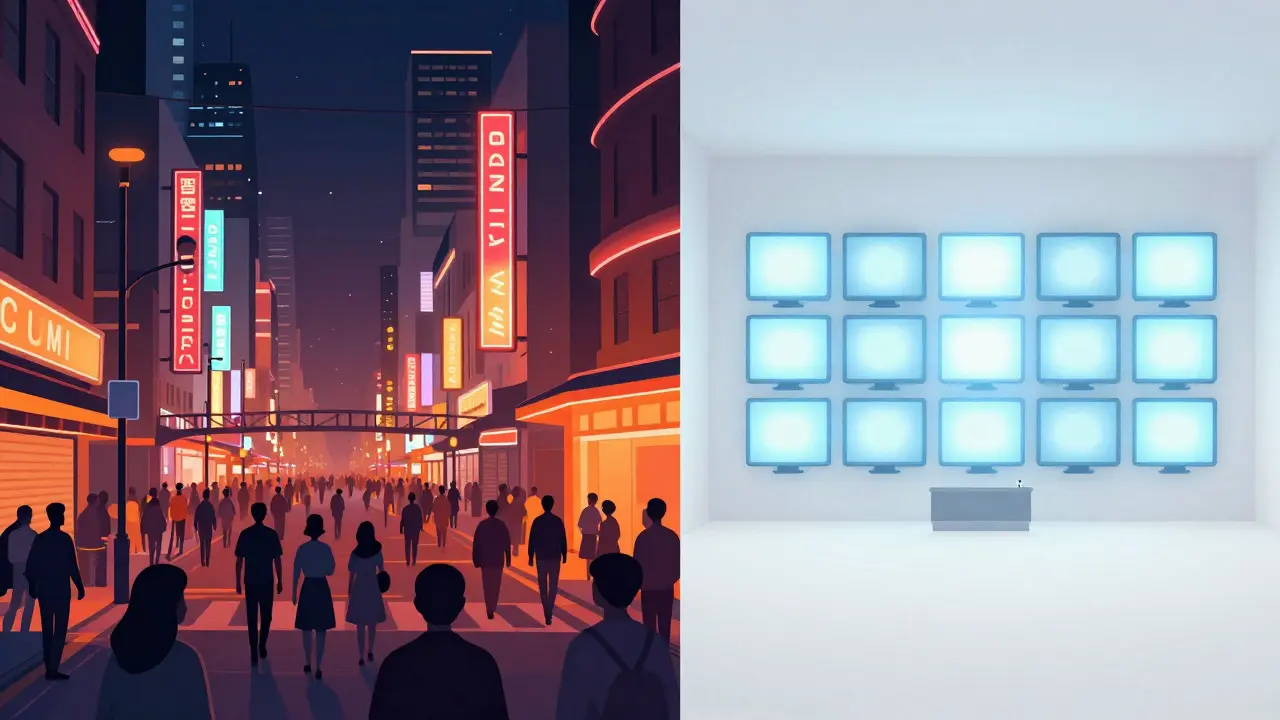
Visibility is a double-edged sword. When you release theatrically, you create an event. People dress up, buy popcorn, and discuss the film with friends afterward. This social component builds cultural momentum. However, your reach is geographically constrained. If you only open in New York and Los Angeles, viewers in Ohio or Texas can’t see it until it expands. Expansion depends on word-of-mouth and review scores, which can take weeks to build.
Streaming flips this dynamic. On day one, your film is available in over 190 countries via platforms like Netflix or Amazon Prime Video. The barrier to entry for the viewer is zero-they don’t have to travel. But because there is no shared physical space, the "event" feel disappears. Your film competes against thousands of other titles in a scrolling menu. Standing out requires strong thumbnails, compelling synopses, and algorithmic favor rather than poster campaigns.
For genre films like horror or action, theatrical release often works better because audiences crave the immersive experience. For character-driven dramas or niche documentaries, streaming provides a wider net without requiring a massive national rollout. Think about the success of *Parasite*. It had a limited theatrical run in the US, but its global streaming availability allowed it to dominate awards season. The combination was key, but the streaming leg carried the international weight.
Career Implications and Awards Eligibility
Your next project depends heavily on how this one performs. Producers and investors look at track records. A successful theatrical release proves you can sell tickets-a tangible metric. A successful streaming release proves you can generate engagement data-views, completion rates, and subscriber retention. Both are valuable, but they signal different strengths.
Awards eligibility is another major factor. Organizations like the Academy of Motion Picture Arts and Sciences (AMPAS) require a qualifying theatrical run for Best Picture consideration. This means if your goal is Oscar recognition, you generally cannot go direct-to-streaming. You need a one-week run in specific markets. However, for technical categories or indie awards, the rules are looser. If your film is aimed at festival circuits like Sundance or TIFF, a hybrid approach often works best: a limited theatrical release to qualify for awards, followed by a wide streaming launch to maximize viewership.
Consider the case of *Mank* or *The Irishman*. These were released directly on Netflix. They gained massive visibility but faced criticism for lacking a theatrical window. Yet, both won numerous awards, proving that prestige can follow streaming releases if the quality is high enough. The stigma is fading, but it hasn’t disappeared entirely.

Timing and Market Conditions
When you release matters as much as where. The summer blockbusters crowd out smaller films in theaters. If your mid-budget drama tries to compete against a Marvel movie in July, it will struggle for screen time. Conversely, the winter holiday season sees a surge in streaming subscriptions as families seek content. Releasing a family-friendly animated film in December might yield higher streaming numbers than a theatrical run in August.
Economic conditions also play a role. During inflationary periods, consumers cut discretionary spending. Movie tickets are a visible expense; streaming subscriptions are often bundled or already paid for. In tough economic times, streaming tends to outperform theatrical attendance. Keep an eye on consumer confidence indices when planning your release date.
Hybrid Strategies: The Middle Path
You don’t always have to choose one or the other. Many modern distributions use a hybrid model. This involves a limited theatrical release in key cities (like New York, LA, and Chicago) for 2-4 weeks to build buzz and qualify for awards, followed by a wide streaming release. This approach minimizes risk while maximizing exposure.
Another hybrid tactic is the "day-and-date" release, where the film hits theaters and streaming platforms simultaneously. This was rare pre-2020 but has become more common. It works well for short films or very niche genres where the theatrical audience is small but dedicated. The downside is that it can cannibalize box office revenue, making it harder to prove commercial viability to future investors.
When negotiating a hybrid deal, be clear about the exclusivity windows. If you release in theaters for three weeks, ensure the streaming partner agrees to wait that long. Ambiguity here can lead to legal disputes or diluted marketing efforts.
Decision Framework: Which Path Fits Your Film?
Use this checklist to guide your decision:
- Budget Size: Under $5 million? Streaming is often safer. Over $15 million? Theatrical is necessary to recoup costs.
- Genre: Horror, Action, Animation? Theatrical. Drama, Documentary, Comedy? Streaming or Hybrid.
- Talent Draw: Do you have a star actor with a fan base? Theatrical. No stars? Streaming.
- Awards Goal: Yes? Theatrical run required. No? Streaming is fine.
- International Appeal: High? Streaming reaches globally instantly. Low? Theatrical focuses on domestic market.
There is no single right answer. The best choice aligns with your financial goals, creative vision, and career stage. A first-time director might prefer the safety of a streaming deal to finish the film and move on. An established filmmaker might push for theatrical to cement their reputation. Know where you stand, and let that guide your negotiation.
Frequently Asked Questions
Is it harder to get funding for a streaming-first film?
Not necessarily. Investors are increasingly comfortable with streaming deals because the upfront payment reduces risk. However, they may demand lower equity stakes compared to a theatrical release, which has higher upside potential. The key is demonstrating strong interest from reputable platforms like Amazon or Apple TV+.
How long should a theatrical window be before going to streaming?
Traditionally, it was 90 days. Today, it has compressed to 30-45 days for most films. For awards qualification, you only need a one-week run in specific markets. Most hybrids use a 3-4 week theatrical window to balance buzz building with quick monetization.
Does streaming release hurt a film’s chances of winning big awards?
It can, but it’s not fatal. The main hurdle is AMPAS rules for Best Picture. Technical categories are more flexible. Films like *Roma* proved that streaming originals can win top honors. The challenge is generating the industry buzz that typically comes from a wide theatrical rollout. Strong festival premieres can compensate for this.
What is a minimum guarantee in a streaming deal?
A minimum guarantee (MG) is the fixed amount a platform promises to pay you for the rights, regardless of performance. It acts as insurance against low viewership. For example, a $1 million MG ensures you receive that amount upfront, plus any additional bonuses if the film exceeds certain view thresholds.
Can I release my film on multiple streaming platforms at once?
Yes, this is called non-exclusive distribution. It lowers the per-platform payout but increases total potential revenue and visibility. Exclusive deals pay more per platform but limit your reach. Non-exclusive is common for mid-tier films that don’t command premium exclusive fees.






Comments(7)