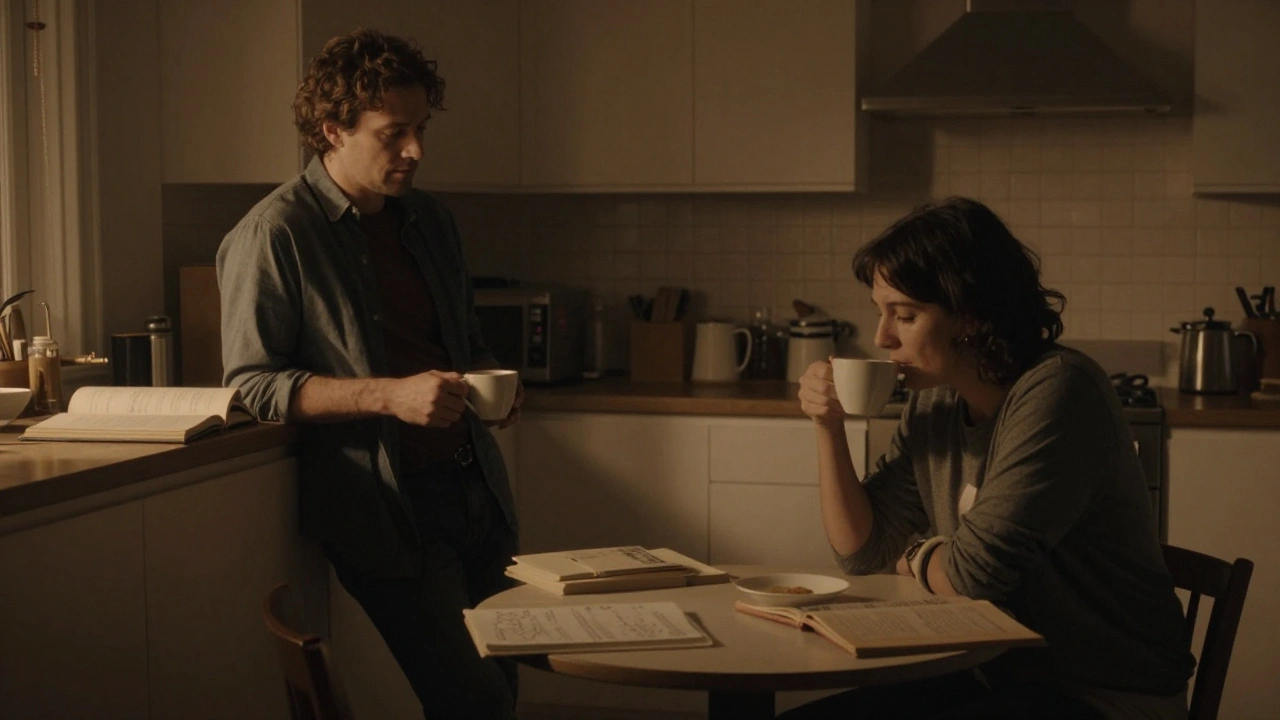
For years, LGBTQ+ stories in film have focused mostly on gay, lesbian, and bisexual characters. Trans and nonbinary identities are slowly getting more screen time. But one group remains almost invisible: asexual and aromantic people. You won’t find them in mainstream rom-coms, teen dramas, or superhero movies. When they do appear, they’re often treated as quirky side characters, tragic loners, or plot devices to make the main character ‘grow.’ That’s changing-slowly, but unmistakably.
What Does It Mean to Be Asexual or Aromantic?
Asexuality means not experiencing sexual attraction. It’s not the same as celibacy or low libido. It’s a sexual orientation. Aromanticism means not experiencing romantic attraction. Someone can be asexual but still want romance. They can be aromantic but still feel sexual desire. The two aren’t the same, and they’re not opposites of each other. People can be both-ace and aro-or just one. And there’s no single way to live it. Some aroace people want deep friendships. Others want queerplatonic relationships-close bonds that aren’t romantic or sexual but are just as meaningful.
These identities have been erased in film because storytelling has always centered romance and sex as the ultimate goals. But real life doesn’t work that way. And more filmmakers are starting to notice.
First Steps: The Early Representations
Before 2015, asexual and aromantic characters were nearly impossible to find. When they appeared, they were coded, not named. Think of Sherlock Holmes in BBC’s Sherlock-brilliant, emotionally distant, socially awkward. Fans called him aroace. The show never confirmed it. Same with Sheldon Cooper from The Big Bang Theory. He never dated. He never kissed anyone. He talked about sex like it was a math problem. But the show never labeled him. He was just ‘weird.’
That’s the problem. When characters don’t fit the norm, filmmakers often don’t name why. They let audiences assume they’re broken, cold, or incomplete. That’s not representation. That’s erasure with a smile.
Breakthroughs: Films That Got It Right
Things shifted around 2020. Independent films started putting aroace people at the center-not as sidekicks, not as jokes, but as full humans.
One standout is Blue Jay (2016), though it’s not always labeled as such. The two leads, played by Mark Duplass and Sarah Paulson, reconnect after years apart. There’s no kiss. No sex scene. No dramatic confession of love. They talk. They laugh. They cry. They sit in silence. The film doesn’t need romance to show depth. Their bond is real, intense, and completely platonic. It’s a quiet revolution.
Then came The Half of It (2020). Ellie Chu, a quiet high schooler, helps a jock write love letters to a girl he’s crushing on. But the movie doesn’t end with her getting the girl. It ends with her choosing herself. She doesn’t want to be loved romantically. She wants to be understood. The film never says she’s aromantic. But it doesn’t need to. Her journey is clear: love doesn’t have to be romantic to be real.
Even bigger was Ammonite (2020). At first glance, it looks like a lesbian period drama. But the lead character, Mary Anning, is a fossil hunter who lives alone, avoids touch, and has no interest in romantic entanglements. The film doesn’t force her into a relationship. She changes-not because she falls in love, but because she allows someone in. The subtle shift is powerful. It shows that connection doesn’t require romance.
And then there’s Everything Everywhere All At Once (2022). Waymond, played by Ke Huy Quan, is kind, patient, and emotionally open. He doesn’t chase passion. He doesn’t need grand gestures. He believes in small acts of love. His relationship with his wife isn’t built on fireworks. It’s built on presence. Many viewers recognized him as aromantic. He’s not broken. He’s not cold. He’s just different. And that difference is treated with dignity.

Why Representation Matters
When asexual and aromantic people don’t see themselves on screen, they grow up thinking something’s wrong with them. They think they’re broken because they don’t crave kissing or dating. They think they’re unlovable because they don’t fit the script. That’s not just sad-it’s dangerous.
Studies from the Asexual Visibility and Education Network (AVEN) show that aroace youth report higher rates of depression and anxiety than their peers. Why? Because they’re told their feelings aren’t valid. When a film shows a character who doesn’t want romance and still lives a full, happy life, it tells viewers: you’re not alone. You’re not wrong. You’re not missing out.
It also changes how everyone sees relationships. Not everyone needs a partner to be complete. Not every deep bond has to be romantic. Not every love story ends with a kiss.
What’s Still Missing
There’s progress. But it’s still thin. Most aroace characters are white, cisgender, and middle-class. Where are the Black asexual women? The disabled aromantic men? The nonbinary folks who don’t want romance but crave community? Where are the characters who are aroace and also funny, messy, angry, or greedy?
And still, many films use asexuality as a punchline. Think of characters who say, ‘I’m not into sex,’ and everyone laughs. Or the ‘ice queen’ who’s cold until she magically falls in love. That’s not representation. That’s caricature.
True representation means showing aroace people as they are: complex, varied, and human. Not as a lesson for straight characters. Not as a twist ending. Not as a ‘cure’ for loneliness.

What’s Coming Next
More films are in development. Chasing the Moon, a 2025 indie film, follows a 24-year-old asexual artist navigating grief, family pressure, and a close friendship that blurs the lines of romance. The director, a self-identified aroace person, insisted on no love story arc. The film ends with the protagonist choosing to live alone-and being proud of it.
Streaming platforms are taking notice. Netflix and Hulu now have dedicated LGBTQ+ curation sections that include aroace titles. YouTube creators are making short films about aroace life. TikTok has exploded with #AroaceRepresentation videos-real people sharing their stories.
It’s not perfect. But it’s growing.
Where to Start Watching
If you’re looking for films with authentic asexual and aromantic characters, here’s where to begin:
- The Half of It (2020) - A quiet, powerful story about a girl who doesn’t want romance but still loves deeply.
- Blue Jay (2016) - Two exes reconnect without ever becoming a couple. It’s tender, real, and rare.
- Ammonite (2020) - A nuanced portrait of a woman who doesn’t seek romance but still opens her heart.
- Everything Everywhere All At Once (2022) - Waymond’s quiet love is a masterclass in non-romantic connection.
- My Life with the Walter Boys (2023, Netflix) - A young girl moves to a new town and finds belonging without needing to fall in love.
These aren’t perfect. But they’re honest. And that’s the first step.
Why This Isn’t Just About Movies
When a film shows an asexual character who’s happy alone, it challenges the idea that everyone needs a partner. When an aromantic character chooses friendship over romance, it redefines what love looks like. That’s not just cinema. That’s culture.
For decades, Hollywood told us that love means sex. That happiness means coupling. That being single means you’re incomplete. Asexual and aromantic characters in film are rewriting that story. Not with speeches. Not with slogans. But with silence. With coffee shared in silence. With a hand on a shoulder that doesn’t lead to a kiss. With a character who says, ‘I’m fine the way I am.’
That’s the quiet revolution.
Are asexual and aromantic the same thing?
No. Asexuality is about not feeling sexual attraction. Aromanticism is about not feeling romantic attraction. Someone can be asexual but still want a romantic relationship. Someone can be aromantic but still feel sexual desire. Many people are both (called aroace), but many are only one. They’re separate spectrums.
Why don’t more films label characters as asexual or aromantic?
Many filmmakers avoid labels because they’re afraid of being ‘too niche’ or ‘too political.’ Others don’t understand the identities themselves. But the best stories don’t need labels. They show behavior, choices, and emotions. If a character doesn’t seek romance or sex and still has a rich life, the audience understands-even if the word isn’t said.
Can someone be asexual and still have a relationship?
Yes. Asexuality doesn’t mean a lack of relationships. Many asexual people have romantic partnerships, close friendships, or queerplatonic bonds. What changes is the focus. It’s not about sex or romance-it’s about emotional connection, shared values, companionship, and mutual respect.
Is it true that asexual people are just ‘not ready’ for sex?
No. That’s a common myth. Asexuality isn’t a phase, trauma response, or religious choice. It’s a sexual orientation. People who are asexual don’t feel sexual attraction, no matter how long they wait or who they meet. Telling them they’re ‘not ready’ invalidates their identity.
Why is representation in film so important for asexual and aromantic people?
Because seeing yourself reflected in media tells you you’re not broken. When you grow up never seeing anyone like you on screen, you learn to feel ashamed. Films that show aroace characters living full, happy lives help people feel seen, validated, and less alone. That’s not just nice-it’s life-changing.
More films are coming. More voices are speaking up. And slowly, the screen is changing-not with fanfare, but with quiet, steady truth.






Comments(6)