
For decades, the greenlight decision was a closed-door affair. If you wanted to know if a movie would happen, you needed to be in that room. But lately, the door has been kicked open. Women producers are no longer just waiting for scraps; they are writing the rules of engagement. In 2026, this shift isn't just about representation on screen-it’s about who holds the pen, who controls the budget, and who decides what stories get told. The landscape is changing from a top-down hierarchy to a more collaborative, creator-driven model, largely driven by female executives and independent producers who refuse to compromise on vision.
The impact is measurable. Films led by women producers often outperform industry averages in audience retention and critical acclaim. Why? Because they prioritize narrative integrity over box-office predictability. They ask different questions during development. Instead of "Will this sell tickets in week one?", they ask, "Does this character feel real?" This subtle but powerful shift is reshaping how scripts are evaluated, how casts are assembled, and how marketing campaigns are built.
The Shift from Gatekeepers to Architects
Historically, producers were seen as logistics managers-people who kept the schedule on track and the costs down. Today, the role has evolved into that of an architect. Creative leadership is now a core producer skill, not an optional extra. Women entering this space have accelerated this change. They tend to build teams based on trust and shared values rather than seniority alone. This creates a set where communication flows freely, reducing the friction that usually leads to costly delays.
Consider the rise of the "producer-director" hybrid. More women are taking on dual roles, ensuring their creative intent survives the editing room. This isn't about ego; it's about efficiency. When the person managing the money understands the artistic goal, decisions happen faster. There’s less back-and-forth between the director and the studio. This streamlined process saves millions in production costs and keeps the project aligned with its original purpose.
Breaking the Budget Barrier
One of the biggest myths is that diverse projects are risky investments. The data says otherwise. Independent films produced by women often operate on tighter budgets but achieve higher return on investment (ROI) due to lower overhead and targeted marketing. These producers know how to stretch a dollar without cutting corners on quality.
| Aspect | Traditional Studio Model | New Wave Female-Led Model |
|---|---|---|
| Decision Making | Committee-based, risk-averse | Creator-centric, agile |
| Budget Allocation | Heavy on VFX and star power | Invested in script and casting depth |
| Talent Selection | Based on past box office numbers | Based on chemistry and range |
| Risk Profile | High cost, high variance | Moderate cost, consistent performance |
This approach appeals to streaming platforms, which are hungry for content that retains subscribers long after the premiere. A well-crafted drama produced by a seasoned woman executive can generate months of watch time, whereas a blockbuster might spike and fade within weeks. This longevity is exactly what algorithms favor in 2026.
Building Ecosystems, Not Just Movies
Successful women producers don't work in silos. They build ecosystems. This means creating mentorship pipelines for emerging directors, negotiating better residuals for writers, and advocating for fair contracts across the board. It’s a collective effort that strengthens the entire industry.
Take the example of regional hubs. Cities like Asheville and Austin are becoming hotspots for independent production because local producers are offering incentives that big studios ignore. These producers understand the value of community. They hire locally, source equipment from nearby vendors, and create jobs that stay in the area. This grassroots support system allows for more experimental storytelling, free from the pressure of global market demands.
The Technology Factor
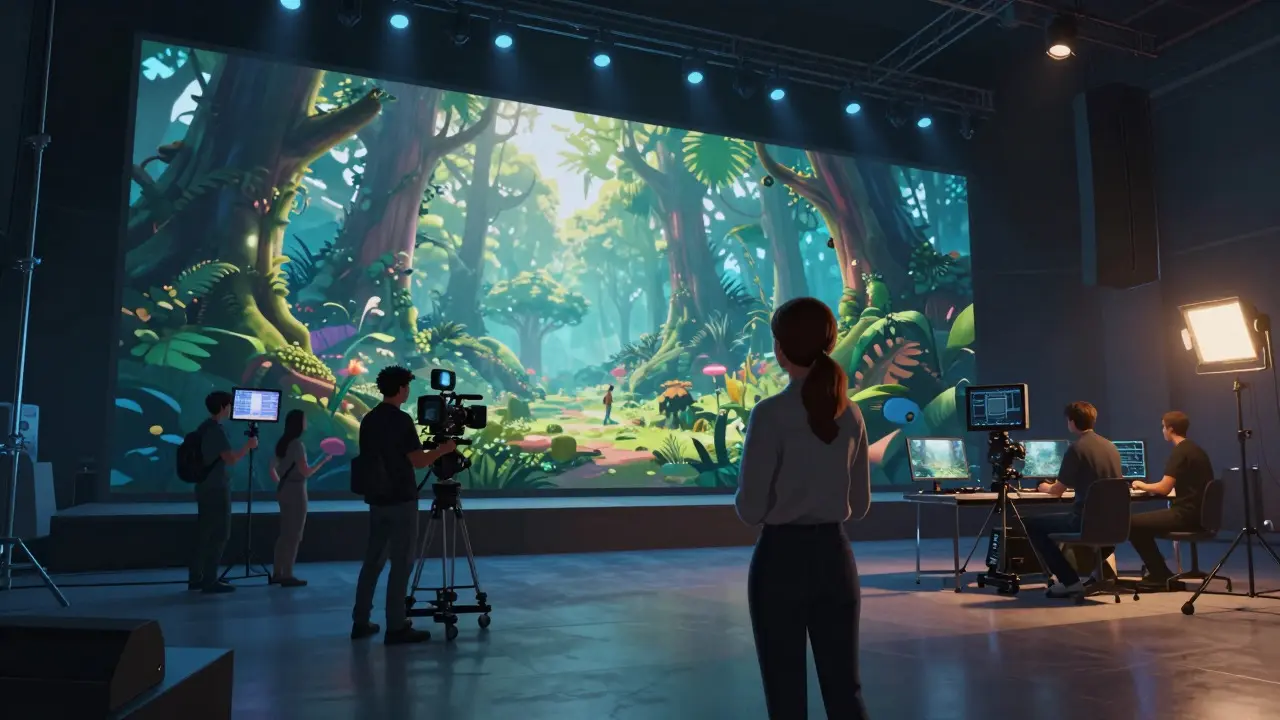
Technology has also played a crucial role in this shift. Virtual production tools have democratized high-end visual effects, allowing smaller teams to compete with major studios. Women producers have been quick to adopt these technologies, using them to solve logistical challenges creatively. For instance, shooting interior scenes in a virtual stage reduces location scouting time and weather-related delays. This flexibility is a game-changer for tight schedules.
Moreover, data analytics tools now allow producers to test audience reactions in real-time. Instead of guessing what will resonate, they can adjust marketing strategies on the fly. This precision targeting ensures that the right audience finds the film, maximizing word-of-mouth potential. It’s a smarter way to promote, relying on genuine connection rather than massive ad spend.

Challenges That Remain
Let’s be realistic: progress isn’t linear. Funding gaps still exist. Women of color face additional hurdles in securing backing for mid-budget projects. The "glass ceiling" hasn’t disappeared; it’s just become harder to see. Many female producers report having to prove their worth twice as hard as their male counterparts, especially when pitching unconventional ideas.
However, the momentum is undeniable. As more women reach C-suite positions, the pipeline widens. Mentors are stepping up, and networks are forming. The key is consistency. One successful film doesn’t fix the system, but ten consecutive hits do. We are seeing that streak now, and it’s forcing the industry to adapt or fall behind.
What This Means for Audiences
Ultimately, this shift benefits us all. You get more varied stories, deeper characters, and fresher perspectives. The homogeneity of the superhero era is giving way to a renaissance of genre blending and personal narratives. Whether you’re a fan of thrillers, comedies, or documentaries, the options are richer than ever before.
So, next time you watch a film, look at the credits. Notice the names in the producer slot. Chances are, someone with a fresh perspective helped bring that story to life. And that’s a good thing.
Do women producers only make female-led movies?
Not necessarily. While many champion stories centered on women, the best producers focus on strong characters regardless of gender. The goal is authentic storytelling, not quota-filling. Many successful female-led productions feature complex male protagonists as well.
Is it harder to get funding for independent films today?
It depends on the project. Major studios are consolidating budgets for tentpole hits, making mid-budget slots scarcer. However, streaming services and tax incentive programs have created new avenues for financing, particularly for projects with clear niche audiences.
What skills are most important for modern producers?
Financial literacy, negotiation, and emotional intelligence are top priorities. Technical knowledge of post-production and digital distribution is also increasingly vital. The ability to balance creative vision with business reality is the defining trait of a successful producer in 2026.
How does virtual production benefit independent filmmakers?
It reduces the need for physical sets and locations, cutting costs and time. It also allows for iterative changes during filming, meaning fewer reshoots later. This flexibility is crucial for small teams operating on tight margins.
Are there specific regions leading this movement?
While Hollywood remains the center, cities like London, Seoul, and various US hubs like Asheville and Austin are gaining traction. These areas offer lower production costs and supportive local communities, making them attractive for innovative, independent projects.




Comments(7)