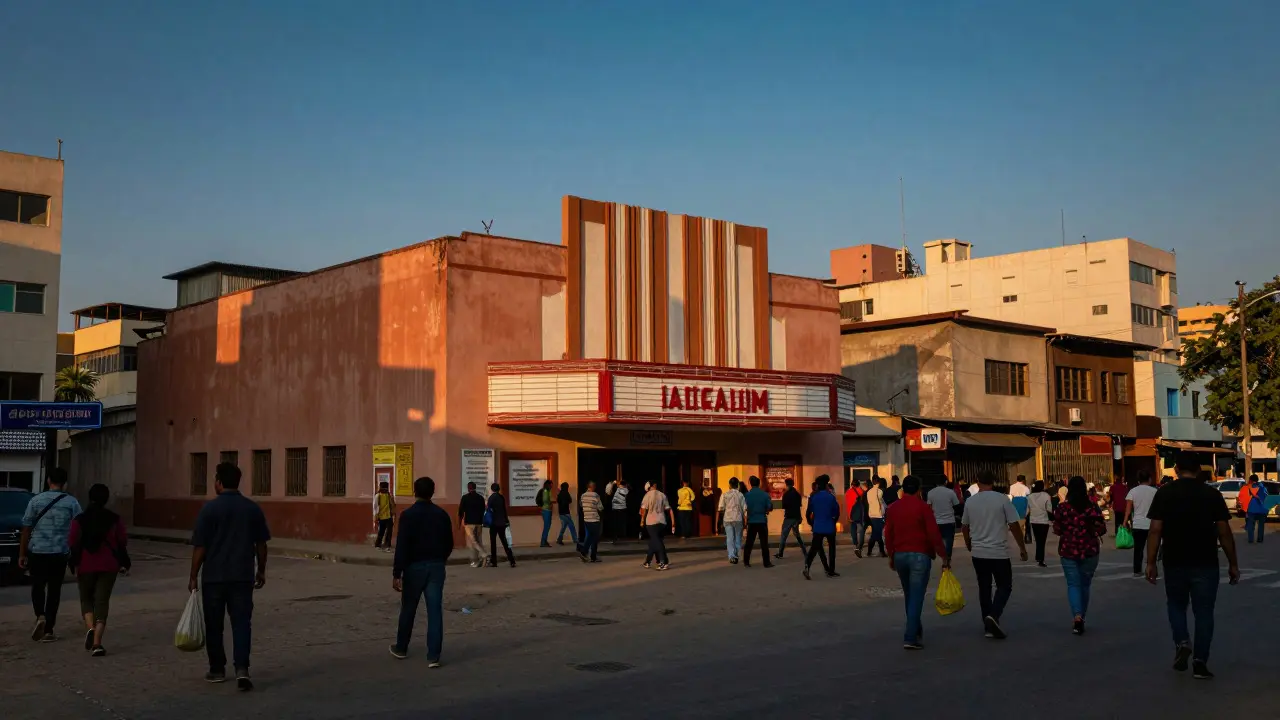
Imagine trying to buy a movie ticket in a city of five million people, only to find out there are just twelve screens available. That is the reality for millions of viewers in parts of Sub-Saharan Africa and South Asia. While North America boasts roughly one screen per 25,000 people, some developing regions struggle with a ratio closer to one per 100,000 or more. This gap defines Theatrical Access is the physical and economic ability of audiences to reach and consume films in cinema halls. It is not just about building theaters; it is about navigating a complex web of infrastructure, economics, and cultural habits that determine whether a film finds its audience on the big screen or ends up on a smartphone.
Understanding the Screen Density Gap
To grasp the scale of the problem, we need to look at the numbers. In mature markets like the United States, the average Screen Density is a metric measuring the number of cinema screens per capita in a specific region hovers around 40 screens per million people. Compare that to India, where the density is significantly lower despite having the second-largest population in the world. The disparity isn't just statistical; it's geographical. Urban centers in Lagos or Mumbai might have modern multiplexes, but step outside those city limits, and the nearest cinema could be hours away by bus or train. This uneven distribution creates a two-tier market. First, there are the "premium" urban hubs where international blockbusters compete for attention. Second, there are the vast rural and semi-urban areas where access is limited to single-screen, older venues or none at all. For distributors, this means marketing strategies cannot be one-size-fits-all. A campaign that works in New York might fail completely in Nairobi if it doesn't account for local transportation costs and viewing habits.
Infrastructure Bottlenecks Beyond the Building
Building a theater is expensive, but maintaining the ecosystem around it is often harder. Cinema Infrastructure refers to the physical facilities, power supply, and technological systems required to operate a movie theater. In many developing markets, the biggest hurdle isn't the concrete; it's the electricity. Frequent power outages can ruin a screening, leading to refunds and lost revenue. Many new multiplexes now invest in backup generators, which adds to operational costs but ensures reliability. Then there is the issue of projection technology. While digital projection is standard in Western markets, many smaller theaters in developing regions still rely on analog 35mm projectors. This creates a content delivery challenge. Distributors must ensure that films are available in formats these older machines can play, or they must wait for the slow transition to digital. This lag means that sometimes, a movie hits the big screen months after its release date in other parts of the world, reducing its commercial impact.
Economic Realities and Ticket Pricing
Even if a theater exists and has power, will people go? The answer often lies in wallet size. Ticket Pricing is the cost charged to consumers for admission to a film screening. In high-income countries, a ticket might represent a small fraction of weekly income. In lower-income markets, a $5 ticket can be a significant expense. This forces exhibitors to keep prices low, which in turn limits their profit margins and ability to upgrade equipment. To combat this, many operators use tiered pricing. Matinee shows are cheaper, while prime-time slots cost more. Some theaters offer group discounts for schools or corporate events. Another strategy is the introduction of "budget" seats or smaller auditoriums that reduce overhead costs. The goal is to make the experience accessible without breaking the bank for either the viewer or the owner. If the price point is too high, the audience shifts to home streaming or pirated copies, further eroding theatrical attendance.

The Role of Streaming and Mobile Viewing
You can't talk about theatrical access without mentioning the elephant in the room: mobile phones. In many developing markets, the smartphone is the primary screen. Mobile Streaming is the consumption of video content via internet-connected mobile devices. With data costs dropping and 4G coverage expanding, millions of people watch movies on their phones rather than going to a cinema. This isn't necessarily bad for the industry; it expands the total addressable market. However, it does change the value proposition of the theater. For a movie to justify a trip to the cinema, it needs to offer an experience you can't get at home. That means better sound, a bigger picture, and social interaction. Studios are increasingly designing films with this in mind, emphasizing visual spectacle and immersive audio. Conversely, dialogue-heavy dramas might perform better on streaming platforms. Understanding this split is crucial for marketers. They need to highlight the unique sensory experience of the theater to pull audiences away from their living rooms.
Strategies for Expanding Access
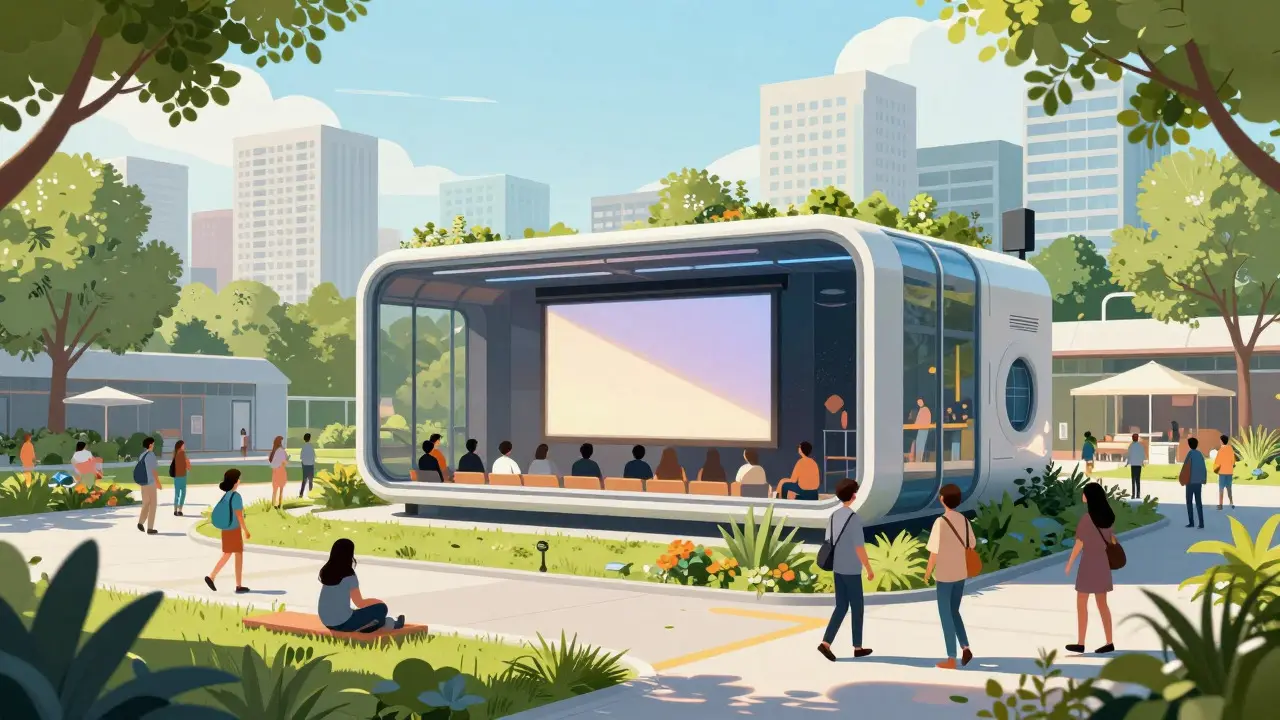
So, how do we fix the screen density problem? It requires a mix of public-private partnerships, innovative business models, and targeted investment. One effective approach is the "satellite theater" model. Instead of building massive complexes, companies install smaller, modular screening units in existing shopping malls, community centers, or even converted warehouses. These units are cheaper to build and maintain, allowing them to reach underserved towns. Another strategy is government support. Some countries offer tax incentives for building cinemas in rural areas. Others subsidize ticket prices for students or low-income groups. Education also plays a role. Film festivals and school programs can cultivate a habit of theatrical viewing from a young age. When children grow up seeing movies in theaters, they are more likely to continue the practice as adults. It’s about building a culture of cinema, not just installing screens.
| Feature | Mature Markets (e.g., US, UK) | Developing Markets (e.g., India, Nigeria) |
|---|---|---|
| Avg. Screen Density | High (~40 per million) | Low (varies widely, often <10 per million) |
| Primary Technology | Digital Projection (4K) | Mixed Digital/Analog |
| Ticket Price Sensitivity | Low | High |
| Competition | Home Theater, Premium Streaming | Mobile Streaming, Piracy |
| Growth Driver | Experience Upgrade | Basic Access Expansion |
Cultural Nuances and Local Content
Access isn't just physical; it's cultural. Audiences want to see stories that reflect their lives. In many developing markets, local language films dominate box office returns. Local Cinema refers to films produced in and for specific regional or national markets. For example, Nollywood in Nigeria and Bollywood in India are massive industries that drive theatrical attendance. International Hollywood films often struggle to compete unless they are dubbed or subtitled effectively. Exhibitors who stock a good mix of local and international titles tend to fill their seats more consistently. A theater that only shows English-language blockbusters might sit empty on weekdays, while one that offers a variety of genres and languages sees steady traffic. This diversity also helps attract different demographics, from families to young professionals, ensuring a broader base of regular attendees.
Future Outlook and Technological Shifts
Looking ahead, technology will continue to reshape theatrical access. Virtual Reality (VR) and Augmented Reality (AR) could eventually blur the lines between home and theater. However, for the next decade, the traditional cinema remains the gold standard for shared social experiences. The key for investors and policymakers is to focus on reliability and affordability. If you can guarantee that the lights won't go out and the ticket is cheap enough, people will come. The path forward involves smarter urban planning, where cinemas are integrated into mixed-use developments. It means leveraging mobile payments to reduce friction at the box office. And it means recognizing that in developing markets, the battle for attention is not just against other movies, but against the convenience of the smartphone. Winning that battle requires offering something truly special on the big screen.
What is the main barrier to theatrical access in developing markets?
The main barriers are low screen density relative to population, inconsistent power supply, and high ticket prices relative to average income. These factors limit both the availability and affordability of cinema experiences outside major urban centers.
How does mobile streaming affect cinema attendance in these regions?
Mobile streaming provides a convenient alternative, especially where theaters are scarce. It competes directly with cinema for consumer time and money. To counter this, theaters must emphasize superior audio-visual quality and the social aspect of group viewing.
Why is local content important for filling theaters?
Local content resonates culturally and linguistically with the majority of the population. It often drives higher weekend attendance and consistent weekday traffic compared to imported films, making it essential for the financial viability of theaters in diverse markets.
What role do governments play in improving screen density?
Governments can incentivize construction through tax breaks, subsidize electricity costs, or fund rural cinema projects. They can also regulate pricing to ensure affordability, creating a stable environment for private investors to enter the market.
Is digital projection mandatory in all new theaters?
While not always legally mandated, digital projection is becoming the industry standard due to lower long-term maintenance costs and compatibility with modern content delivery. Analog 35mm is phasing out globally, though some remote areas may still use it temporarily.




Comments(5)