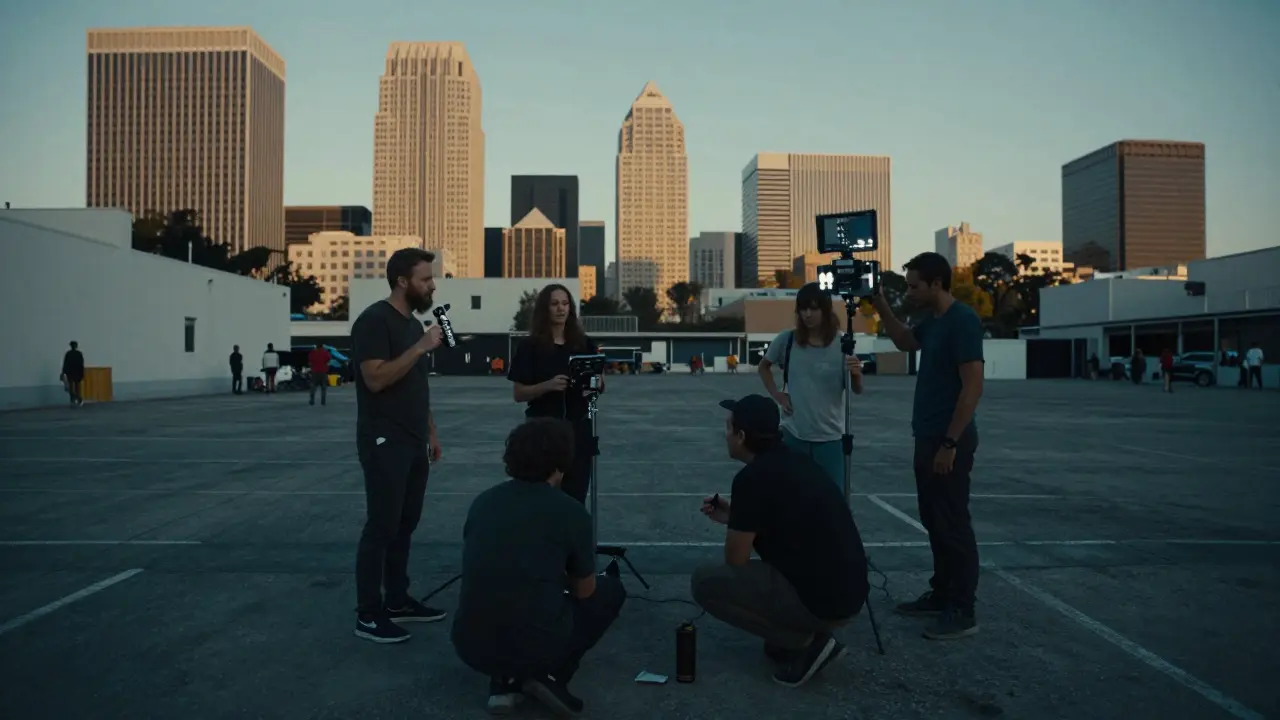
Imagine a movie that costs $5 million to make. You expect it to earn maybe $20 million if the stars align. Now imagine that same film grossing over $1 billion worldwide. It sounds like a glitch in the system, but it happens more often than Hollywood executives would like to admit. These are the box office anomalies-the small films that defied every algorithm and prediction model to become cultural phenomena.
We often assume that big budgets guarantee big returns, but history tells a different story. Sometimes, the most profitable movies aren't the ones with the biggest explosions or the most famous actors. They are the ones that connect deeply with audiences on a human level. Let’s look at how these underdogs pulled off the impossible and what we can learn from their journeys.
The Anatomy of a Breakout Hit
To understand why certain small films explode, we have to look at the mechanics behind them. A low-budget film doesn't have the luxury of wasting money on failed test screenings or expensive reshoots. Every dollar has to count. This constraint often leads to sharper writing and tighter direction. When you don't have visual effects to hide behind, the script has to carry the weight.
Consider the case of Parasite is a South Korean thriller-drama that became the first non-English language film to win the Academy Award for Best Picture. Released in 2019, it had a modest budget compared to its competitors. However, it utilized universal themes of class struggle and family dynamics that resonated across borders. The film didn't just entertain; it sparked global conversation. That conversation was free marketing worth millions.
Another key factor is timing. A film released during a lull in major blockbusters can capture attention simply by being present. Or, conversely, a film that releases against a weak competitor might steal the spotlight. Producers often time releases to coincide with award seasons or cultural moments that amplify the film's message.
Case Studies: From Niche to Global Phenomenon
Let’s break down a few specific examples that illustrate different paths to success. Each of these films started as an underdog but ended up dominating the charts.
- Jurassic Park (1993): While not "small" by today's standards, its initial budget of around $63 million was considered risky for a sci-fi film with heavy practical effects. It went on to gross nearly $900 million. The innovation in special effects created a must-see event, driving repeat viewings.
- The Blair Witch Project (1999): Made for roughly $60,000, this found-footage horror film grossed over $248 million. Its success wasn't due to high production value, but rather a pioneering internet marketing campaign that blurred the line between fiction and reality. Audiences debated whether the footage was real, creating organic buzz before the film even opened.
- Get Out (2017): Jordan Peele’s debut feature cost about $4.5 million. It made over $255 million. The film tapped into social anxieties about race relations in America, offering a fresh take on the horror genre. It proved that smart, thematic horror could be both critically acclaimed and commercially viable.
- La La Land (2016): With a budget of $30 million, it earned over $446 million. It revived the musical genre at a time when many thought it was dead. The emotional resonance of the story and the iconic soundtrack drove word-of-mouth recommendations.
Notice a pattern? None of these films relied solely on star power. They relied on concept, execution, and connection.

The Power of Word-of-Mouth and Social Media
In the past, a bad review in a major newspaper could kill a film's run. Today, the landscape is fragmented. One viral TikTok clip can save a struggling release. For small films, social media is not just a tool; it's a lifeline.
Audiences today are savvy. They know which movies are safe bets and which are risky experiments. When a small film gets positive reviews from trusted critics, it signals quality. But when everyday viewers share their reactions online, it creates a sense of community. People want to watch what everyone else is talking about. This FOMO (fear of missing out) is a powerful driver for box office performance.
Moreover, streaming platforms now play a crucial role in the lifecycle of these films. A movie that underperforms in theaters might find a second life on streaming services, where it can accumulate views and fanbase over months. This extended window allows smaller films to build momentum slowly, something that was harder to achieve in the traditional theatrical-only era.
Why Studios Take Risks (Sometimes)
You might wonder why studios greenlight these projects in the first place. The answer is simple: margin. A $50 million blockbuster needs to make $150 million just to break even after marketing costs. A $10 million indie film only needs to make $30 million to be highly profitable. The risk-reward ratio favors smaller projects, especially if they have strong creative attachments.
Studios also use small films to showcase talent. If a director or actor delivers a hit on a small budget, their value skyrockets for future, larger projects. It’s a pipeline for discovering the next big name. Think of directors like Greta Gerwig or Denis Villeneuve, who built reputations through smaller, critical darlings before tackling massive franchises.
| Film Title | Budget (USD) | Worldwide Gross (USD) | Key Success Factor |
|---|---|---|---|
| The Blair Witch Project | $60,000 | $248,838,892 | Viral Marketing / Novelty |
| Get Out | $4,500,000 | $255,433,331 | Cultural Relevance / Critical Acclaim |
| Parasite | $11,000,000 | $257,987,103 | Universal Themes / Oscar Win |
| La La Land | $30,000,000 | $446,042,518 | Nostalgia / Emotional Resonance |

Lessons for Creators and Fans
For filmmakers, the lesson is clear: focus on the story. Special effects age quickly, but a great script remains timeless. Find a unique angle on familiar topics. Connect with your audience emotionally. And don't underestimate the power of a good tagline or a well-timed trailer.
For fans, these stories remind us that cinema is still a democratic art form. You don't need a billion-dollar budget to tell a story that moves millions. The best movies often come from places you least expect. So, next time a small film opens in theaters, give it a chance. It might just be the one that changes everything.
Frequently Asked Questions
What is the highest-grossing low-budget film of all time?
While definitions of "low-budget" vary, The Blair Witch Project holds the record for the highest return on investment, earning over 4,000% its budget. In absolute terms, films like Parasite and Get Out are among the top performers relative to their production costs.
How does marketing affect a small film's box office success?
Marketing is often the deciding factor for small films. Since they lack the inherent recognition of big-name franchises, they rely heavily on targeted digital campaigns, influencer partnerships, and generating organic buzz through social media. A clever marketing campaign can turn an unknown title into a must-see event.
Do small films usually go straight to streaming?
Not necessarily. Many small films still receive limited theatrical releases to qualify for awards and build prestige. However, the gap between theatrical and streaming windows has shrunk significantly. Some films may open in select theaters and move to streaming within weeks, depending on their performance and distribution deals.
What role do awards play in boosting box office numbers?
Awards nominations and wins can provide a significant boost, particularly in the final weeks of a film's run. An Oscar nomination, for example, can extend a film's theatrical life by several weeks, attracting viewers who missed it initially or those motivated by the prestige associated with the award.
Can a sequel to a small successful film maintain the same success?
It depends. If the original succeeded due to novelty or a specific cultural moment, the sequel may struggle. However, if the franchise establishes a loyal fanbase and consistent quality, sequels can perform well. Examples include the Blair Witch universe attempts and various horror franchises that sustain interest through recurring characters and styles.





Comments(8)