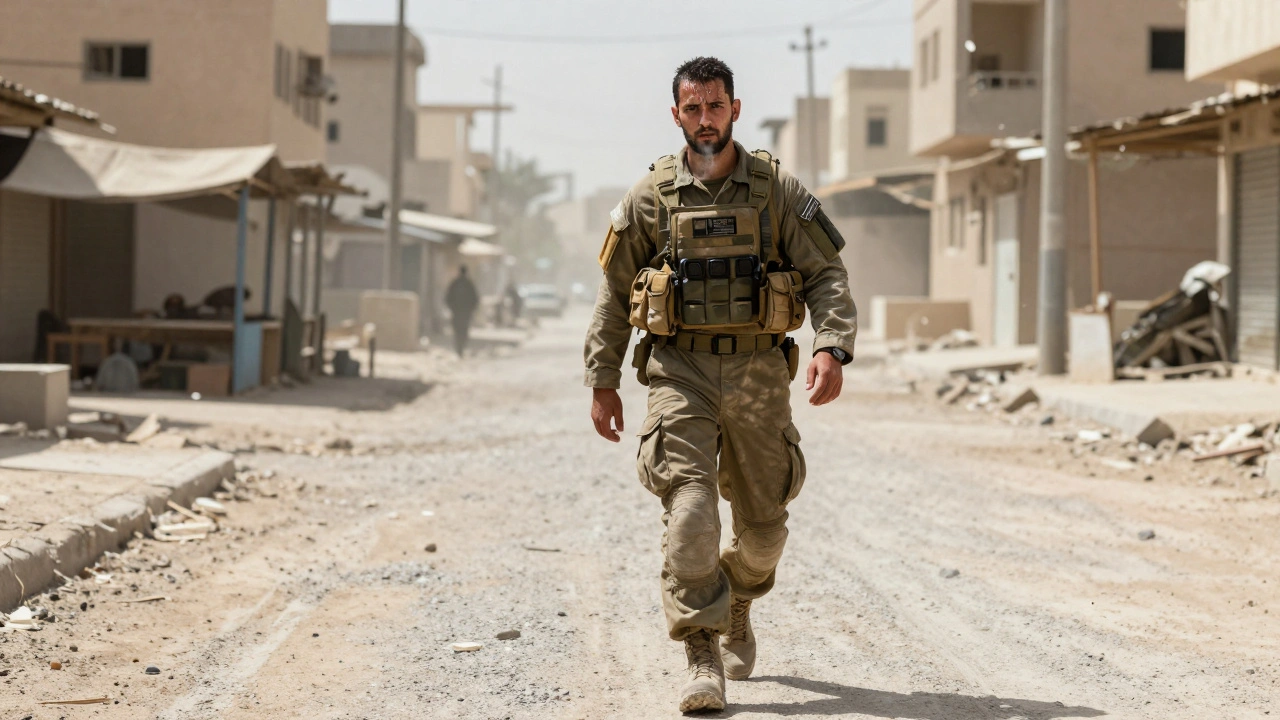
War films used to be about heroes and flags. Now they’re about mud, silence, and what happens when the shooting stops.
Think back to the war movies of the 1980s and 90s. Soldiers charged across fields with perfect aim. Explosions lit up the sky in slow motion. The music swelled just as the hero made the final stand. These films didn’t just tell stories-they sold an idea: war as clean, noble, and cinematic. But something shifted in the 2000s. Movies like Black Hawk Down a 2001 war film directed by Ridley Scott, depicting the 1993 Battle of Mogadishu with intense realism and minimal glorification and Letters from Iwo Jima a 2006 film directed by Clint Eastwood, telling the Battle of Iwo Jima from the Japanese perspective with stark, grounded storytelling changed the game. Audiences started craving truth over triumph. The question isn’t just whether a war film is good anymore-it’s whether it feels real.
Realism isn’t just about blood and grit-it’s about psychology.
Realistic war films don’t need giant explosions to feel intense. They need silence. The kind of silence after a mortar round hits too close, when your ears are ringing and your body won’t move. They need soldiers who don’t shout orders-they whisper. They need men who cry after killing someone, not because they’re weak, but because they finally let themselves feel it.
The Hurt Locker a 2008 film directed by Kathryn Bigelow, following a U.S. Army bomb disposal team in Iraq with obsessive attention to procedure, tension, and emotional isolation didn’t have a single big battle scene. It had 90 minutes of a man walking slowly down a street, sweat dripping, heart pounding, knowing one wrong step means death. That’s realism. It’s not about how many enemies you kill. It’s about how much of yourself you lose trying to survive.
Modern realism in war films also means getting the details right. The weight of gear. The way a rifle jams in the desert sand. The smell of burnt plastic and cordite. The way soldiers talk-no grand speeches, just slang, jokes, and curses. Generation War a 2013 German TV miniseries following five young friends conscripted into Nazi Germany’s war effort, noted for its unflinching portrayal of moral decay and survival didn’t just show soldiers fighting. It showed them stealing food, lying to their families, and slowly becoming monsters without realizing it.
Spectacle isn’t bad-it’s just different.
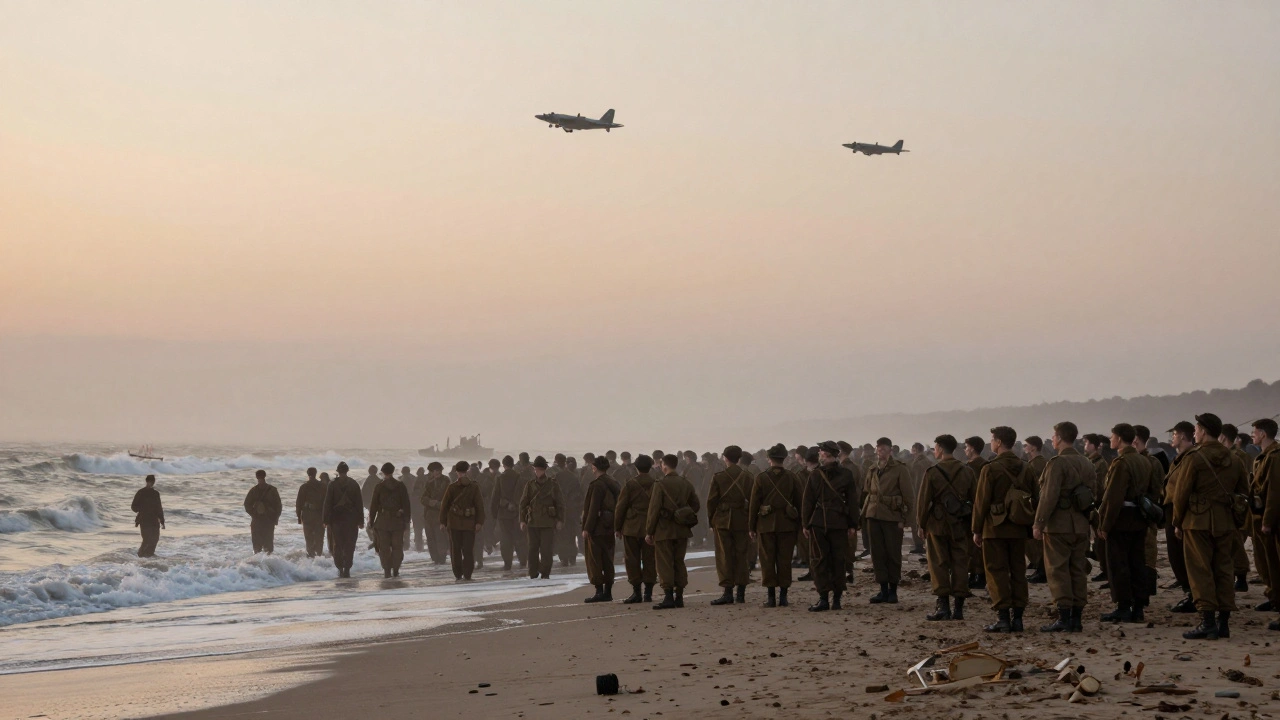
Not every war film needs to be a documentary. Some are meant to move you with scale, not subtlety. Dunkirk a 2017 film directed by Christopher Nolan, depicting the evacuation of Allied soldiers from Dunkirk during WWII using non-linear storytelling and immersive sound design didn’t show soldiers talking about their feelings. It showed thousands of men trapped on a beach, planes screaming overhead, boats arriving from nowhere. The spectacle wasn’t just visual-it was emotional. You felt the panic without anyone saying a word.
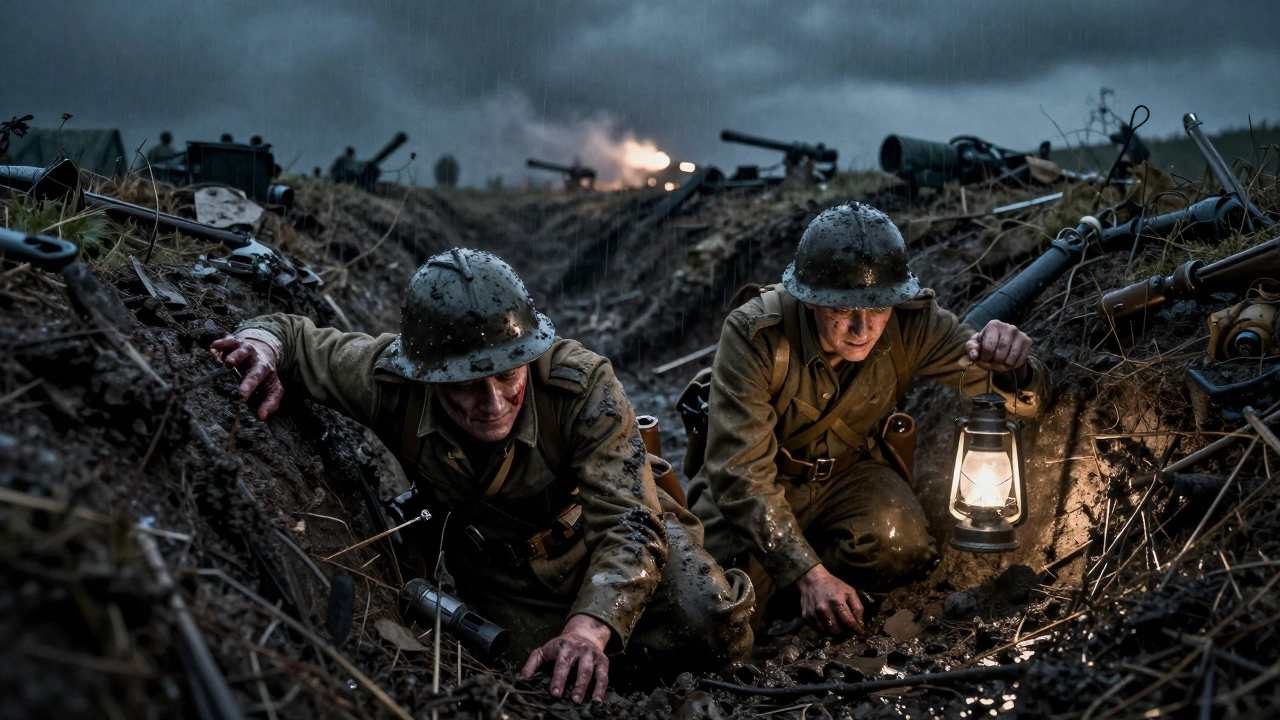
These films use sound, camera movement, and editing to make you feel what it’s like to be in the middle of chaos. 1917 a 2019 film directed by Sam Mendes, shot to appear as one continuous take, following two British soldiers on a mission across No Man’s Land during WWI tricked you into thinking you were walking beside the soldiers, step by step, through mud, corpses, and gunfire. It wasn’t realistic in the sense of dialogue or behavior-it was realistic in how it made you experience time and fear.
Spectacle doesn’t mean fake. It means amplified. It means taking the truth of war and turning up the volume. Fury a 2014 film directed by David Ayer, portraying a U.S. tank crew in Nazi Germany with brutal close-quarters combat and gritty character dynamics didn’t try to hide that its characters were exaggerated. The tank commander was a hardened veteran with a dark sense of humor. The rookie was terrified. The gunner was a quiet killer. These weren’t real people-they were archetypes, pushed to extremes to show how war breaks people.
Why does this divide matter?
Because war isn’t just history. It’s memory. And how we tell these stories shapes how we remember them.
Realism reminds us that soldiers aren’t heroes because they’re brave. They’re heroes because they kept going when everything inside them wanted to quit. Spectacle reminds us that war is massive, overwhelming, and impossible to fully understand. One shows you the individual. The other shows you the machine.
When a film like American Sniper a 2014 film directed by Clint Eastwood, based on the life of Navy SEAL Chris Kyle, focusing on his sniper missions in Iraq and the psychological toll of combat becomes a cultural phenomenon, it’s not just because of the acting. It’s because it gave a voice to a group of people the public rarely hears from. And when The Pacific a 2010 HBO miniseries chronicling the Pacific Theater of WWII through the eyes of U.S. Marines, noted for its brutal authenticity and emotional depth aired, veterans wrote letters saying they finally saw their war on screen-not as a hero’s journey, but as a nightmare they survived.
The line between realism and spectacle is blurring.
Some of the best modern war films mix both. Letters from Iwo Jima a 2006 film directed by Clint Eastwood, telling the Battle of Iwo Jima from the Japanese perspective with stark, grounded storytelling didn’t have CGI explosions, but it still felt epic. Why? Because it showed the human cost on both sides. Fury a 2014 film directed by David Ayer, portraying a U.S. tank crew in Nazi Germany with brutal close-quarters combat and gritty character dynamics had huge battle scenes, but the quiet moments-when the tank crew sits in silence after a firefight-were more haunting than any explosion.
Even Oppenheimer a 2023 film directed by Christopher Nolan, depicting the life of physicist J. Robert Oppenheimer and the development of the atomic bomb, blending psychological drama with historical realism, though not a traditional war film, showed how war isn’t just fought on battlefields. It’s made in labs, in boardrooms, in the minds of men who never saw a single bullet fired.
The best war films today don’t ask you to cheer for victory. They ask you to sit with the weight of what it cost. Whether it’s the quiet trembling of a soldier after a mission, or the deafening roar of a thousand planes overhead, both realism and spectacle serve the same goal: to make you feel the truth, not just watch it.
What do audiences really want?
It’s not about picking sides. It’s about knowing what you’re watching.
If you want to understand what it’s like to carry a rifle for 12 hours straight, to sleep in the dirt, to wonder if the next step will be your last-watch The Hurt Locker a 2008 film directed by Kathryn Bigelow, following a U.S. Army bomb disposal team in Iraq with obsessive attention to procedure, tension, and emotional isolation or The Pacific a 2010 HBO miniseries chronicling the Pacific Theater of WWII through the eyes of U.S. Marines, noted for its brutal authenticity and emotional depth.
If you want to feel the crushing scale of war, the chaos of a beach under fire, the terror of being surrounded-watch Dunkirk a 2017 film directed by Christopher Nolan, depicting the evacuation of Allied soldiers from Dunkirk during WWII using non-linear storytelling and immersive sound design or 1917 a 2019 film directed by Sam Mendes, shot to appear as one continuous take, following two British soldiers on a mission across No Man’s Land during WWI.
And if you want to see both-the quiet pain and the roaring fire-watch Letters from Iwo Jima a 2006 film directed by Clint Eastwood, telling the Battle of Iwo Jima from the Japanese perspective with stark, grounded storytelling and Fury a 2014 film directed by David Ayer, portraying a U.S. tank crew in Nazi Germany with brutal close-quarters combat and gritty character dynamics back to back. You’ll see the full picture.
War films aren’t just entertainment-they’re mirrors.
Every time a new war movie comes out, people say, "Is this realistic?" But the real question is: "What are we trying to remember?"
Realism reminds us that war breaks people. Spectacle reminds us that war changes nations. Both are true. Both matter. The best films don’t choose one over the other. They hold both in their hands and let you decide what you can bear to see.
Are modern war films more realistic than older ones?
Yes, in many ways. Films from the 1980s and 90s often glorified war with clear heroes, simple morals, and dramatic music. Modern films like Black Hawk Down and The Hurt Locker focus on confusion, fear, and psychological toll. They avoid clean victories and show soldiers as broken, not heroic. This shift reflects changing public attitudes and better access to real battlefield accounts.
Why do some war films use long takes and minimal dialogue?
Long takes and silence are tools to create immersion. Films like 1917 use a single continuous shot to make viewers feel like they’re walking beside the soldiers, experiencing every step, every sound, every moment of dread. Minimal dialogue keeps the focus on action and emotion, not exposition. It mimics how real soldiers experience combat-through instinct, not speeches.
Do war films that focus on spectacle disrespect veterans?
Not necessarily. Spectacle isn’t about disrespect-it’s about scale. Films like Dunkirk or Fury don’t mock veterans; they try to convey the overwhelming nature of war. Many veterans say these films capture the chaos they felt, even if the characters are dramatized. The problem comes when spectacle ignores the emotional cost and turns war into pure action.
What’s the most realistic war film ever made?
Many veterans and historians point to The Hurt Locker as one of the most realistic. It got the procedures right-the way bomb techs suit up, how they check for wires, how they react to pressure. The tension isn’t from big explosions, but from the smallest details: a shaky hand, a delayed breath, a moment of hesitation. It doesn’t try to be heroic. It just shows what it’s like to do an impossible job.
Why do some war films show enemy soldiers as human?
Because war isn’t black and white. Films like Letters from Iwo Jima show Japanese soldiers as fathers, sons, and scared men-not monsters. This challenges the old idea that the enemy is less human. It forces viewers to ask: "What would I do in their shoes?" It’s not about sympathy for the enemy-it’s about understanding that war turns everyone into victims.



Comments(6)