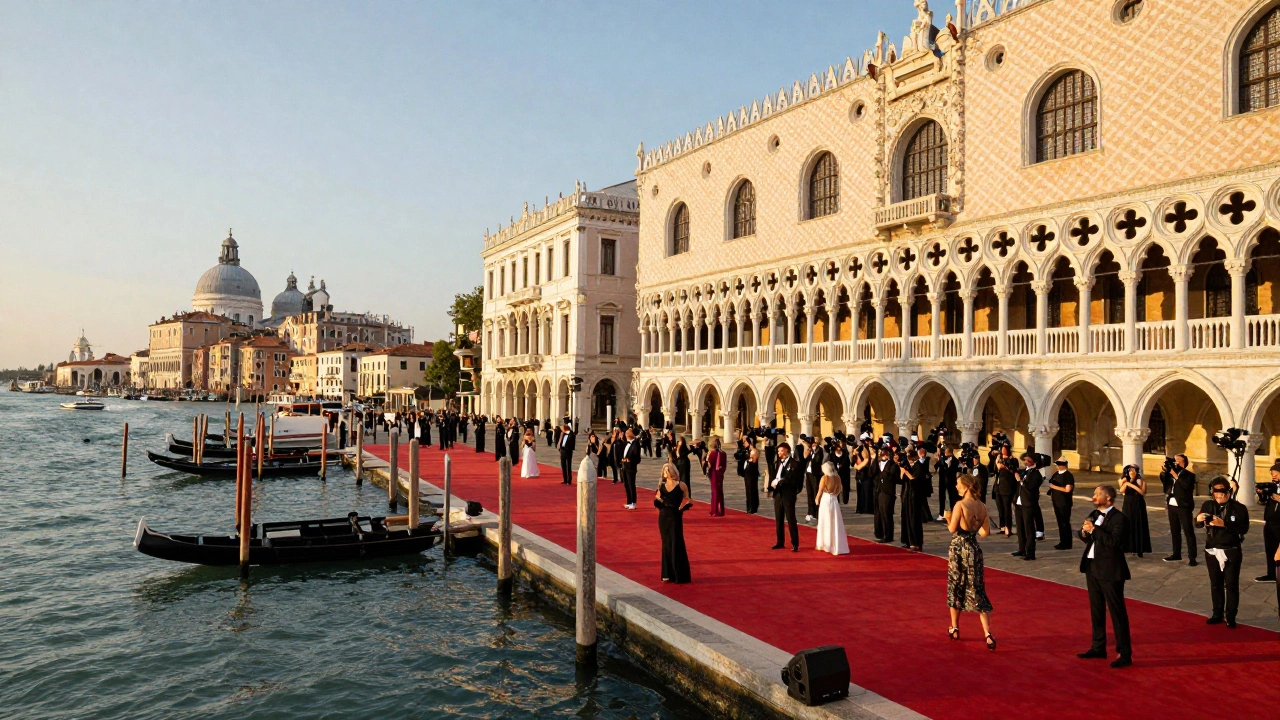
Key Takeaways for Cinephiles
- The Golden Lion acts as a critical seal of approval that triggers global press coverage.
- Venice creates a "prestige bubble" that makes a film feel inevitable for the Oscars.
- The shift toward streaming platforms has changed how Venice premieres are timed.
- Not every winner translates to an Oscar, but almost every Oscar frontrunner stops at Venice.
The Weight of the Golden Lion
Winning the Golden Lion is the highest honor awarded at the Venice Film Festival, given to the best film in the main competition. But the value of this award isn't just in the gold plating. It's about the psychological shift it creates in the industry. When a movie wins, it suddenly moves from being a "strong contender" to the "one to beat." Think about how a film like *Roma* or *Nomadland* entered the conversation. They didn't just appear; they were crowned. This victory provides a narrative that Oscar voters-many of whom are members of the Academy of Motion Picture Arts and Sciences-rely on. These voters aren't always keeping up with every indie release, so they look for a shorthand. A win at Venice is the ultimate shorthand for "this is high art."How the "Venice Momentum" Actually Works
It isn't magic; it's a calculated marketing machine. The moment a film wins the Golden Lion, the studio pivots. They stop talking about the movie's plot and start talking about its legacy. This creates a feedback loop. The critical acclaim from Venice leads to a high score on Rotten Tomatoes or Metacritic, which then attracts more viewers, which in turn fuels more press. This momentum is a survival tool for smaller films. A massive studio movie can buy its way into the public consciousness through millions in advertising. An indie film, however, needs the prestige of a festival to get noticed. Without that initial spark from the Lido, a three-hour slow-burn drama about grief in rural Italy might never find an audience in the U.S. midwest. Venice gives these films a legitimate identity as "masterpieces" before they even hit a single commercial screen.
The Shift in Strategy: Streaming and Timing
For decades, the rule was simple: premiere at a festival, wait a few months, then release in theaters. But the entry of Netflix and Apple TV+ has shaken things up. These companies realized that the "festival-to-awards" pipeline is the only way to make streaming movies feel like "cinema" rather than just "content." Now, we see a strategic clustering. Studios are timing their Venice premieres to coincide with the start of the awards season cycle. By debuting in late August, a film stays fresh in the minds of critics for exactly the right amount of time to peak during the January-March voting window. It's a delicate balance. If you premiere too early, people forget you. If you premiere too late, you're just another name in a crowded field.| Feature | Venice Film Festival | Cannes Film Festival | Toronto Film Festival (TIFF) |
|---|---|---|---|
| Primary Goal | Awards Positioning | Artistic Prestige / Market | Audience Testing / Market |
| Timing | Late August (Pre-Awards) | May (Mid-Year) | September (Peak-Awards) |
| Key Award | Golden Lion | Palme d'Or | People's Choice Award |
| Oscar Correlation | Very High | Moderate | High |
The Gap Between Critical Art and Oscar Bait
Here is the catch: the Golden Lion doesn't always equal an Oscar. There is a frequent tension between what the Venice jury (usually a small group of international filmmakers) loves and what the Academy loves. Venice often rewards daring, experimental, or politically abrasive cinema. The Academy, while evolving, still has a penchant for narratives that feel "complete" and emotionally resonant in a traditional way. When a film wins the Golden Lion but fails to get Academy Awards nominations, it's usually because the film was "too challenging." A movie might be a technical marvel that pushes the boundaries of the medium, which the Venice jury adores, but it lacks the warmth or accessibility required to sweep a vote of 10,000 industry professionals. This gap is where the "critics' darling" vs. "crowd pleaser" divide happens.
The Role of the International Jury
Unlike the Oscars, where thousands vote, the Venice winner is decided by a tiny jury. This means a single person's taste can swing the entire trajectory of a film's year. If the jury president is a director known for minimalism, the Golden Lion likely goes to a minimalist film. This concentration of power is actually what makes the win so valuable. It's not a democratic consensus; it's a curated endorsement. When a jury of world-class artists says, "This is the best film of the year," it carries a level of authority that a general audience poll can't match. It gives the film a sense of intellectual superiority that becomes a key part of its marketing campaign during the winter months.Beyond the Big Prize: The Side Effect of the Lido
It's not just about the Golden Lion. The entire ecosystem of the festival contributes to the awards season. The press conferences, the red carpets, and the intense scrutiny of every frame of film create a concentrated burst of energy. For an actor, a strong Venice debut is a way to signal a "comeback" or a "career peak." If the buzz is loud enough, a performance can become a lock for a nomination before the movie is even released in the rest of the world. The festival acts as a filter, stripping away the noise and leaving only the films that have the legs to survive a grueling six-month campaign.Does every Golden Lion winner win an Oscar?
No. While the Golden Lion provides massive momentum, the tastes of the Venice jury are often more avant-garde than those of the Academy. Some winners are too experimental or bleak for the broader voting body of the Oscars, meaning they might win critical acclaim but miss out on the big gold statue.
Why is Venice preferred over Cannes for Oscar hopefuls?
Timing is everything. Cannes happens in May, which is too early for the Oscar cycle. By the time the voting starts in winter, the buzz from a May premiere has often faded. Venice happens in August, placing the film perfectly in the window to stay relevant through the fall and winter.
How do streaming services use Venice?
Platforms like Netflix use Venice to validate their films as "cinema." By premiering in a prestigious theatrical setting and competing for the Golden Lion, they strip away the "made for TV" stigma and position their projects as serious artistic achievements worthy of Academy Awards consideration.
What is the "People's Choice" alternative?
The Toronto International Film Festival (TIFF) offers the People's Choice Award. While the Golden Lion represents expert/curator approval, TIFF represents audience appeal. Many films aim for both: the critical prestige of Venice and the populist approval of Toronto to ensure a balanced Oscar campaign.
Can a film win the Golden Lion without a theatrical release?
Yes, but it's rare. The festival typically requires a cinematic experience. Even streaming films usually have a theatrical premiere at the festival to qualify for the competition, as the "big screen" experience is central to the jury's evaluation process.







Comments(9)