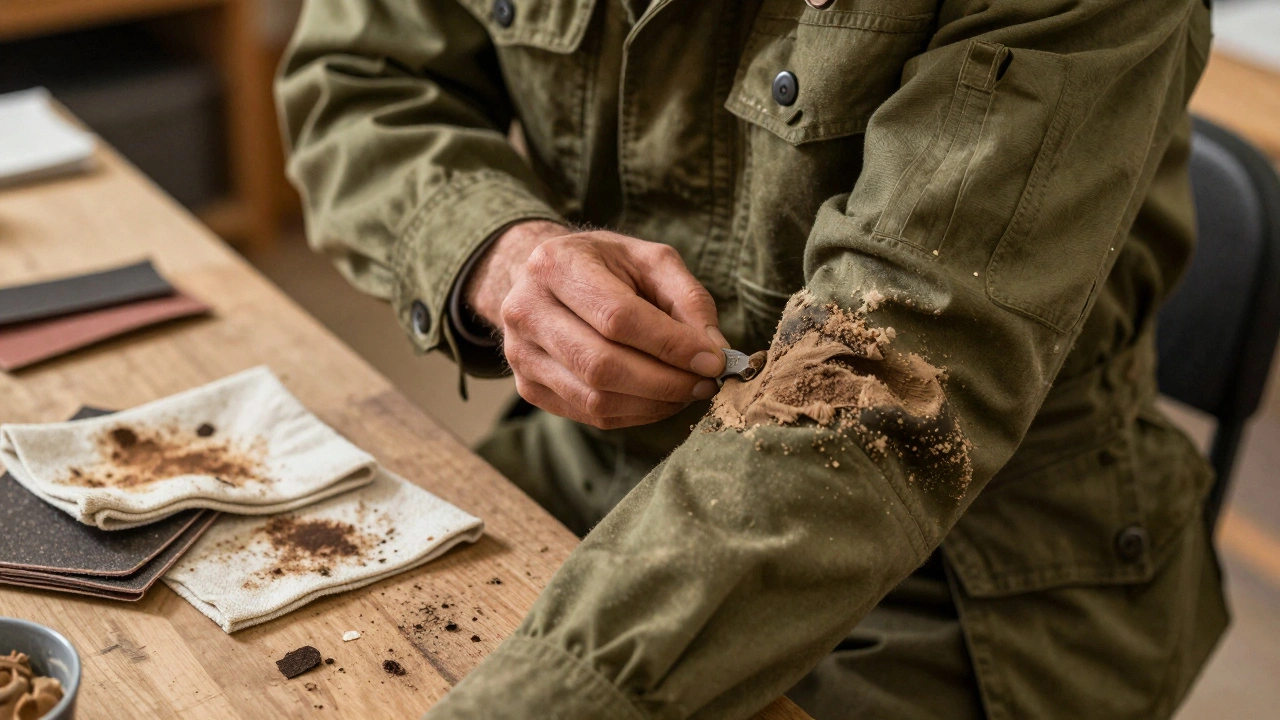
Ever notice how a hero’s jacket in a war movie looks worn from months of mud, sweat, and gunfire - even though the actor wore it for two weeks? Or how a villain’s suit in a 1920s gangster flick has frayed cuffs and cigarette burns that feel authentic? That’s not luck. That’s costume aging and distressing - a hidden art in film production that makes stories feel real before a single line of dialogue is spoken.
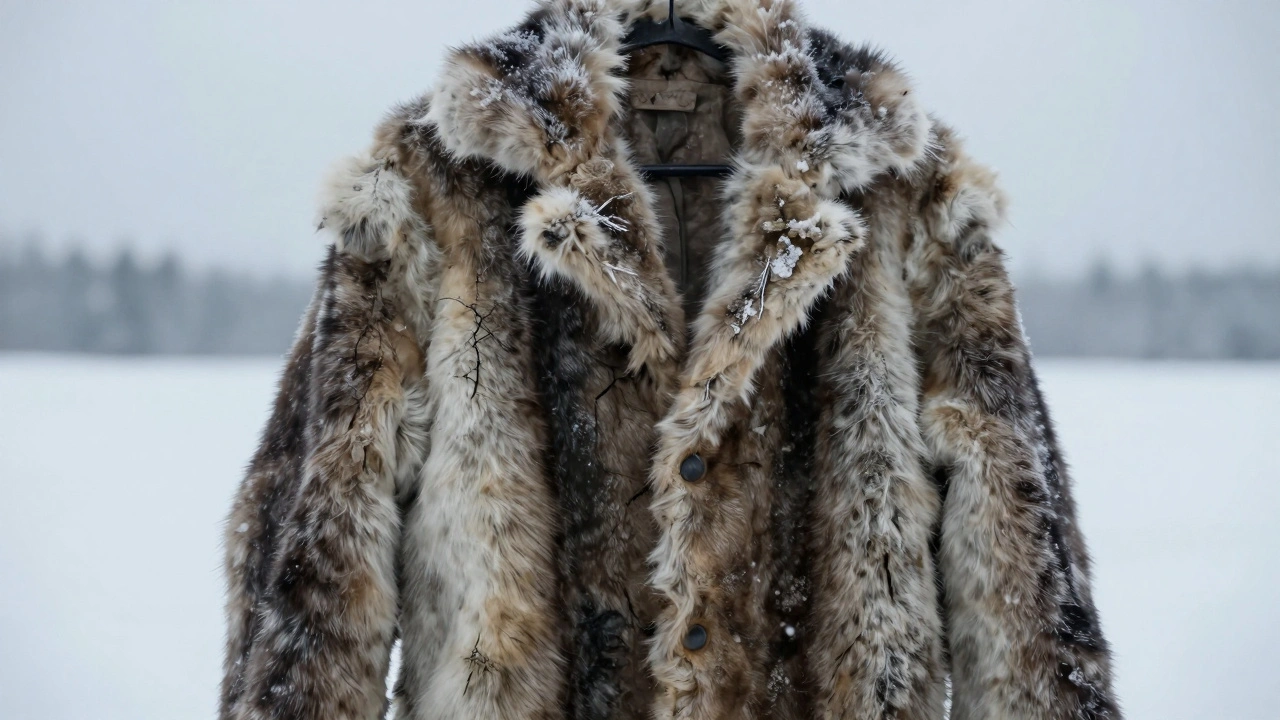
Costumes aren’t just clothes on actors. They’re time machines. A single tear, a stain, a faded seam can tell a viewer that this character has lived, fought, lost, and survived. In 1917, soldiers’ uniforms were soaked in mud, dried, soaked again, and scrubbed with sandpaper to replicate weeks of trench warfare. In The Revenant, Leonardo DiCaprio’s fur coat was deliberately left outside for days in sub-zero temperatures to freeze and crack, then hand-rubbed with dirt and animal fat. These aren’t special effects. They’re tactile storytelling.
Why Realism Beats Newness
New costumes look fake on camera. Always. Even the most expensive, perfectly tailored outfits fall flat if they’re too clean. Why? Because real life doesn’t come with a fresh-from-the-store smell. People sweat. They get caught in rain. They scrape against fences. They sit on dirty floors. Films that ignore this lose credibility - even if the audience can’t explain why.
Studies in visual perception show that viewers subconsciously judge a character’s history based on fabric condition. A 2022 study from the University of Southern California’s School of Cinematic Arts found that audiences rated characters with aged costumes as 47% more believable than those in pristine attire - even when the script and performance were identical.
Think about Mad Max: Fury Road. Every outfit in that wasteland looks like it was cobbled together from scrap metal, duct tape, and decades of dust. The costumes weren’t bought. They were built. And aged. And re-aged. That’s why the world feels lived-in. That’s why you believe Max is a ghost haunting the desert.
The Tools of the Trade
Costume designers don’t use paintbrushes or glue guns. They use sandpaper, coffee, bleach, dirt, and sometimes a blowtorch. Here’s what actually happens behind the scenes:
- Sandpaper and wire brushes - Used to create frayed hems, worn elbows, and sun-bleached patches. Different grits simulate different levels of wear. 80-grit for heavy abuse; 220-grit for subtle fading.
- Tea and coffee stains - Natural tannins mimic dirt, sweat, and oil buildup. A weak brew applied with a sponge creates believable grime without looking like a spill.
- Acetone and bleach - Strip color from fabric to simulate sun exposure. Bleach is used sparingly - too much turns fabric brittle. Acetone is better for controlled fading on synthetics.
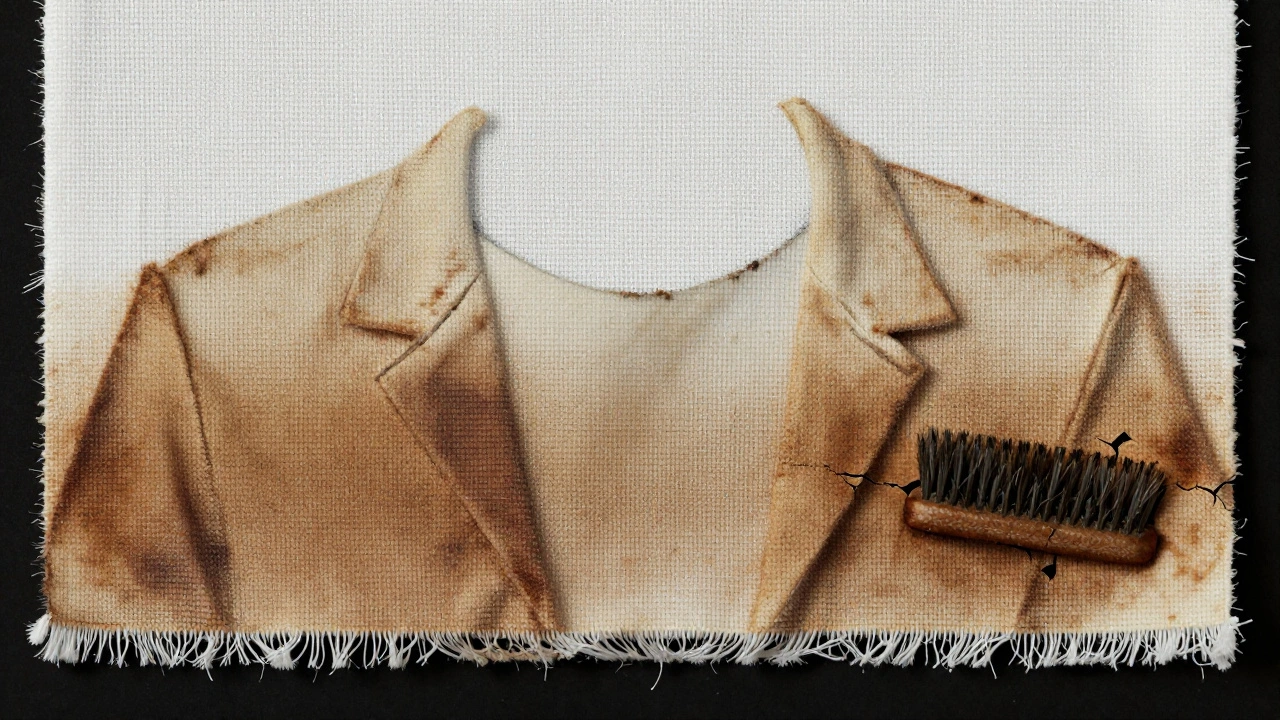
- Hand-dyed dirt - Real dirt from location shoots is mixed with glue and water to create a paste that sticks to fabric. It’s applied in layers, then cracked with a toothbrush to simulate dried mud.
- Heat tools - Hair dryers and heat guns melt synthetic fibers to create burns, shrinkage, and warped seams. A cigarette burn on a wool coat? That’s a 400°F iron pressed for three seconds.
One of the most underrated tools? A washing machine. Not for cleaning - for breaking. Costumes are washed with rocks, gravel, or even old shoes to simulate wear from movement. A single jacket might go through 15 wash cycles before filming starts.
Age by Story, Not by Time
Not all costumes need to look old. Some need to look worn. There’s a difference.
A soldier who’s been on the front lines for three months? His boots are cracked, his socks are patched, his belt buckle is loose. But his shirt? Still clean at the collar. Why? Because he’s too exhausted to wash it - but he’ll scrub his neck if he has water.
A wealthy woman in 1930s New York? Her fur coat is pristine, but the inside lining is frayed. That’s where she yanked it on in a rush. The gloves? One finger is missing - she lost it during a fight. These details aren’t random. They’re character notes.
Costume teams work with directors and writers to map out a character’s journey. Where did they sleep? What did they touch? Did they run from danger? Did they sit in a puddle for hours? Each answer dictates a stain, a tear, a missing button.
Color Fading: The Science of Time
Color doesn’t fade evenly. Sunlight bleaches the top of a hat, but the brim stays darker. Armpits yellow from sweat. Knees turn gray from friction. A red coat in a desert? The shoulders fade to pink, the hem turns brown with dust.
Costume designers use pigment analysis to match fading patterns. They’ll take fabric swatches from real garments from the era and scan them under UV light to see how dyes degrade. A 1940s denim jacket doesn’t fade the same way as a 2020s one - synthetic dyes behave differently.
In The Last of Us, the character Joel’s jacket was dyed with a mix of natural indigo and iron oxide. Then it was exposed to UV lamps for 72 hours to simulate three years of sun exposure. The result? A jacket that looks like it survived the apocalypse - not one that was bought at a thrift store.
Layering and Re-aging
Real wear happens in layers. You don’t just get one stain. You get sweat, then rain, then dust, then more sweat. Costume teams build this in stages.
Step 1: Start with the base fabric. Wash it. Dry it. Stretch it. Let it relax.
Step 2: Apply the first layer of distress - maybe light sanding on the elbows.
Step 3: Add stains - coffee for oil, dirt paste for grime.
Step 4: Let it sit for 24 hours. Then repeat.
Step 5: Add final details - a ripped seam here, a missing button there.
On Game of Thrones, Jon Snow’s cloak went through this process 11 times over three seasons. Each season, the costume team added new layers: ash from the Wall, blood from battles, snow melt, and later, the smell of wildling campfires. By season 8, the cloak had a history you could almost smell.
Common Mistakes and How to Avoid Them
Even pros mess up. Here’s what not to do:
- Overdoing it - A costume that looks like it was dragged through a gravel pit for a week looks fake. Real wear is selective. Focus on high-friction zones: knees, cuffs, collar, pockets.
- Using the wrong materials - Modern polyester doesn’t age like cotton. If you’re doing a 19th-century scene, use 100% natural fibers. Synthetic fabrics don’t fade - they melt.
- Ignoring context - A farmer in Kansas doesn’t look like a sailor in Maine. Dirt in the Midwest is clay-heavy. Coastal dirt is sandy and salty. Use real soil from the filming location.
- Forgetting movement - A character who rides a horse every day? The inner thigh of their pants will be worn thin. A violinist? The shoulder strap will show stress lines. Think about how the body moves.
One of the most common errors? Making costumes look dirty instead of worn. Dirty is messy. Worn is lived-in. A character who’s poor doesn’t have a dirty shirt - they have a shirt that’s been washed 50 times, patched with thread from a neighbor, and dried on a line for years.
The Hidden Cost of Realism
Distressing costumes isn’t cheap. A single outfit can take 40-80 hours to age properly. On Oppenheimer, the team aged over 200 costumes for the Manhattan Project scenes. Each scientist’s lab coat was individually treated to reflect their personality - the meticulous one had precise stains from chemicals; the absent-minded one had coffee rings and pencil marks.
It’s not just labor. It’s material. Fabric is destroyed in the process. A $500 wool coat might be reduced to $50 in value after distressing. That’s why studios budget for 3-4 copies of every major costume. One for filming. One for close-ups. One for stunt doubles. One for backup.
And yet, when done right, audiences never notice. They just feel it. That’s the magic. The best costume aging doesn’t scream - it whispers. And that whisper makes the whole story believable.
Can you age costumes without damaging the original fabric?
No - true aging requires physical alteration. Sanding, staining, and chemical treatments change the fabric’s structure. That’s why costume departments make multiple copies. You can simulate wear with digital effects, but on-camera, real texture beats CGI every time. Even a slight texture mismatch breaks immersion.
Do modern films still use traditional distressing methods?
Yes - and they’re using them more than ever. While CGI can add dirt or tears, audiences are tired of fake-looking effects. Shows like The Last of Us and House of the Dragon rely on physical distressing because it holds up under 4K close-ups. Digital tools are used for touch-ups, not replacements.
How do costume teams decide how old a costume should look?
It’s based on the character’s backstory, environment, and story arc. A miner who’s been underground for six months will have dust embedded in seams. A runaway teenager might have a jacket with 12 different patches from different towns. The script, director, and costume designer map out every detail - down to how many times the character washed their clothes.
Is there a difference between aging costumes for historical films vs. sci-fi?
Yes. Historical films follow real wear patterns - you can research 1800s cotton fading or 1940s military uniform decay. Sci-fi and fantasy require invented logic. In Dune, the Fremen robes were aged to look like they’d been worn in sandstorms for decades - using crushed desert rock and saltwater spray. The aging had to feel plausible within the world’s rules, not real-world history.
Can you age costumes after filming starts?
Sometimes - but it’s risky. Once a costume is on camera, even a small change can break continuity. If a character gets wet in a scene, the costume team might mist it with water and let it dry to simulate sweat, but major distressing is done before filming. That’s why costumes are aged in stages - each version matches the story’s timeline.





Comments(5)