The Era of Live Accompaniment
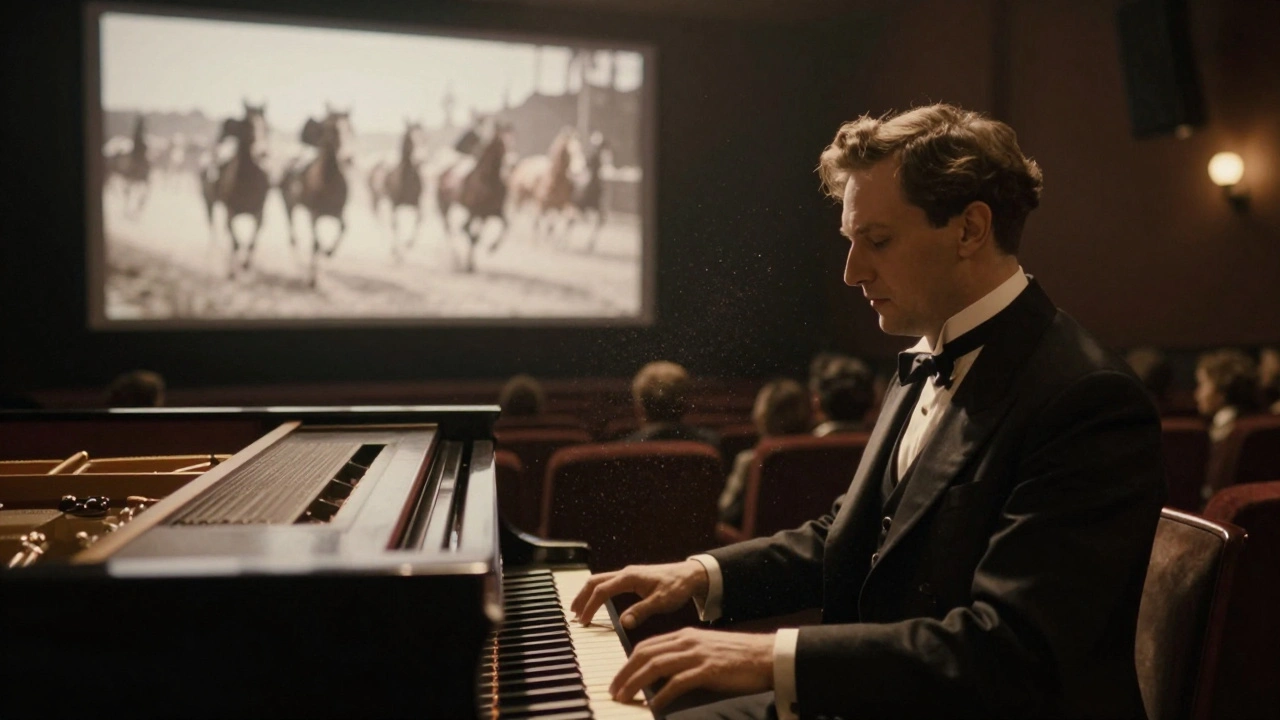
In the early days, Silent Film is a period of cinema from the late 1890s to the late 1920s where motion pictures lacked a synchronized recorded soundtrack. Since there was no way to "bake" music into the film strip, every single screening was a live performance. Depending on the budget of the theater, you might have had a solo pianist, a small ensemble, or a full 60-piece orchestra in grand movie palaces.
These musicians didn't always have a precise score. Instead, they used "cue sheets"-basically lists of suggestions like "Dramatic Tension" or "Cheerful Village Scene." The pianist would then improvise based on these moods. This meant that a movie in New York might feel completely different from the same movie playing in London, simply because the musicians had different tastes. The music acted as a bridge, translating the visual mime of actors into emotional reality for the audience.
The Transition to Synchronized Sound
Everything changed in 1927 with the release of The Jazz Singer. This wasn't just a movie; it was a technological earthquake. It introduced the world to Synchronized Sound, which allowed the audio to be physically locked to the film. Suddenly, musicians in the pit were out of a job, and the power shifted to the recording studio.
This shift created a new challenge: how do you handle the music so it doesn't overpower the voices? This led to the birth of the modern Film Score, where composers began writing music that lived "underneath" the dialogue. This is why we have the concept of "underscoring." The music stopped being a live performance and became a carefully crafted part of the film's architecture, designed by the composer to hit specific emotional beats every single time the movie played.
| Feature | Silent Era | Golden Age (Analog) | Digital Era |
|---|---|---|---|
| Delivery Method | Live Performance | Optical/Magnetic Tape | Digital Files (WAV/AIFF) |
| Consistency | Varied by theater | Identical every screening | Dynamic/Adaptive |
| Primary Instrument | Piano / Organ | Full Symphony Orchestra | Hybrid (Orchestra + Synth) |
| Composer Role | Cue-sheet provider | Detailed orchestrator | Sound Designer / Producer |
The Golden Age and the Orchestral Standard
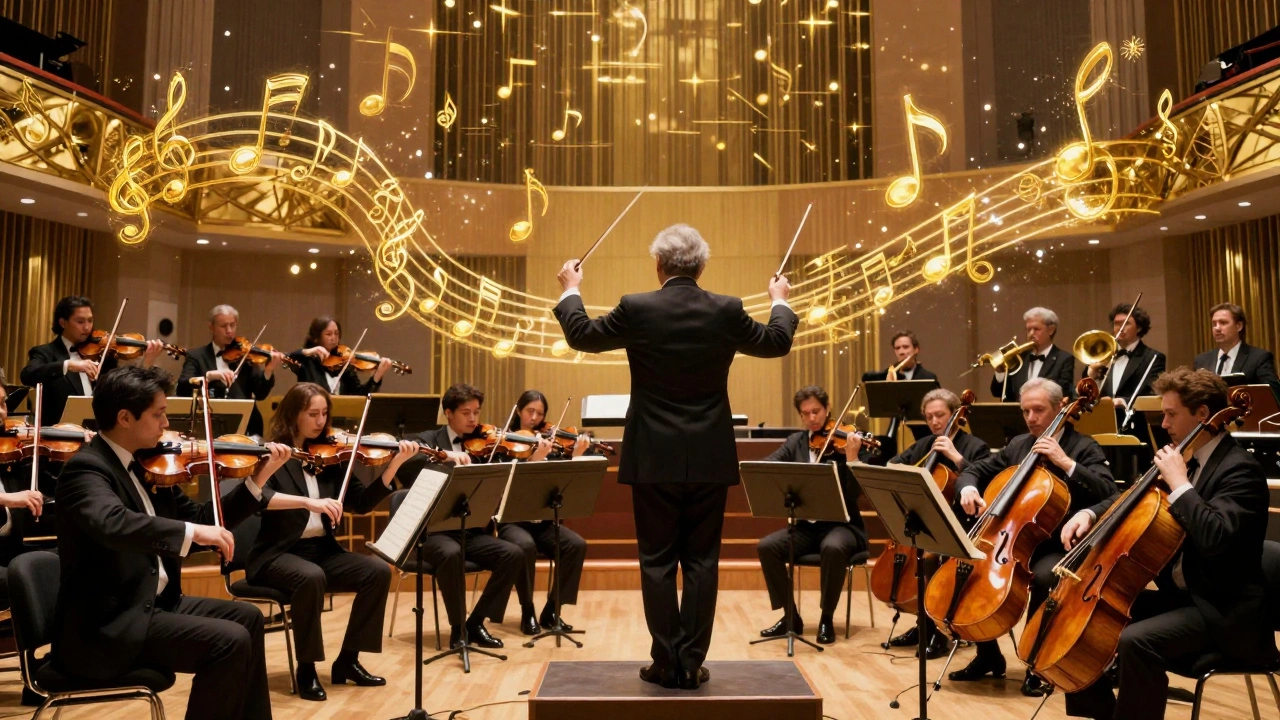
From the 1930s to the 1950s, Hollywood entered its "Golden Age." This era was dominated by the influence of European classical traditions. Composers like Max Steiner and Erich Wolfgang Korngold brought the grandeur of Wagner and Strauss to the big screen. They pioneered the Leitmotif, which is a recurring musical phrase associated with a specific character, place, or idea.
Think about how a specific melody plays whenever a hero appears; that's a leitmotif in action. During this time, the Film Music History was defined by "mickey-mousing," a technique where the music mimics every physical action on screen. If a character tripped and fell, the flute might do a rapid descending scale. While it sounds cartoonish today, it was the height of sophistication back then, ensuring that the music and image were perfectly entwined.
The Electronic Revolution and the Synthesizer
By the 1960s and 70s, people grew tired of the same old orchestral swells. Enter the Synthesizer. Early experiments with electronic sounds allowed filmmakers to create atmospheres that an orchestra simply couldn't touch. When you hear the eerie, pulsing tones of a sci-fi movie from this era, you're hearing the influence of early electronic music.
This era shifted the focus from melody to "texture." Composers started using Ambient Music to build dread or wonder. Instead of a violin playing a sad song, a composer might use a low-frequency drone to make the audience feel an instinctive sense of anxiety. This period bridged the gap between traditional songwriting and modern sound design, proving that silence and noise could be just as powerful as a symphony.
The Digital Age and the Hybrid Sound
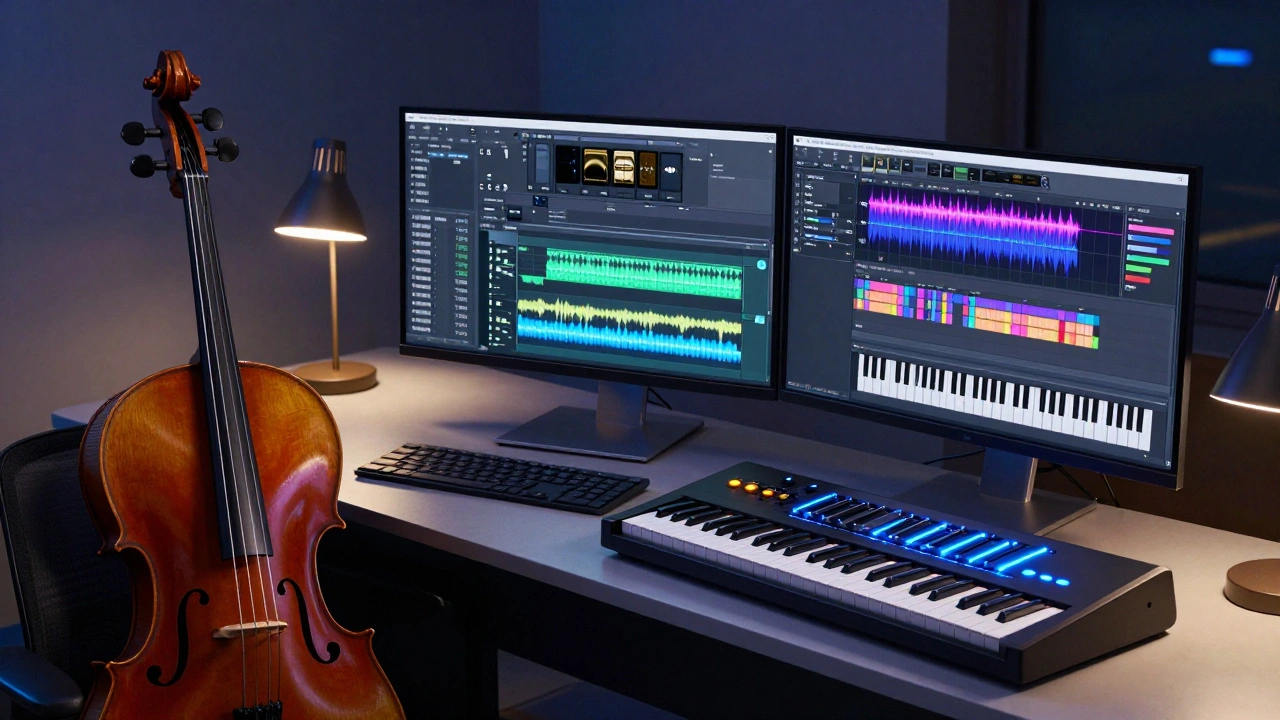
Today, we live in the era of the Digital Audio Workstation, or DAW. Software like Logic Pro, Ableton Live, and Pro Tools has completely democratized film scoring. A composer no longer needs a 50-piece orchestra in a rented hall to create a massive sound. They can use high-end Sample Libraries-digital recordings of every single instrument imaginable-and arrange them on a screen.
This has led to the "Hybrid Score," which blends live orchestral elements with synthesized electronic sounds. For example, a modern action movie might have a real cello section for emotional weight, but a distorted digital bass synth to provide a visceral, chest-thumping impact during a fight scene. The boundary between "music" and "sound effects" has almost vanished. When you hear a loud metallic screech in a thriller, is it a musical chord or a sound effect? Often, it's both.
The Future: AI and Adaptive Scores
We are now seeing the rise of AI-generated music and adaptive scoring. In interactive media and some experimental films, the music can change in real-time based on the viewer's reaction or the pace of the edit. We are moving away from a static piece of music toward a living, breathing sonic environment. The question is no longer just "what melody should play?" but "how should the sound evolve in this second?"
Despite all the tech, the core goal remains the same as it was for that pianist in 1910: to make us feel something that the image alone cannot convey. Whether it's a digital pulse or a violin solo, the music is the invisible hand that guides our emotions through the story.
Did silent films actually have no music?
No. While they didn't have recorded soundtracks synced to the film, they almost always had live music provided by a pianist, organist, or orchestra in the theater to enhance the mood and cover the noise of the projector.
What is a leitmotif in film music?
A leitmotif is a short, recurring musical phrase associated with a specific character, object, or emotion. A famous example is the menacing theme that plays whenever a specific villain appears on screen.
How has digital software changed film scoring?
Digital Audio Workstations (DAWs) allow composers to record, edit, and mix music with extreme precision. The use of sample libraries also means composers can create complex orchestral sounds without needing to hire and record a full orchestra for every demo.
What is "mickey-mousing"?
Mickey-mousing is a technique where the music exactly mimics the action on screen. If a character climbs a ladder, the music might ascend in pitch step-by-step to match the movement.
What is a hybrid score?
A hybrid score combines traditional acoustic instruments (like strings and brass) with electronic elements (like synthesizers and digital processing) to create a modern, layered sound.


Comments(5)