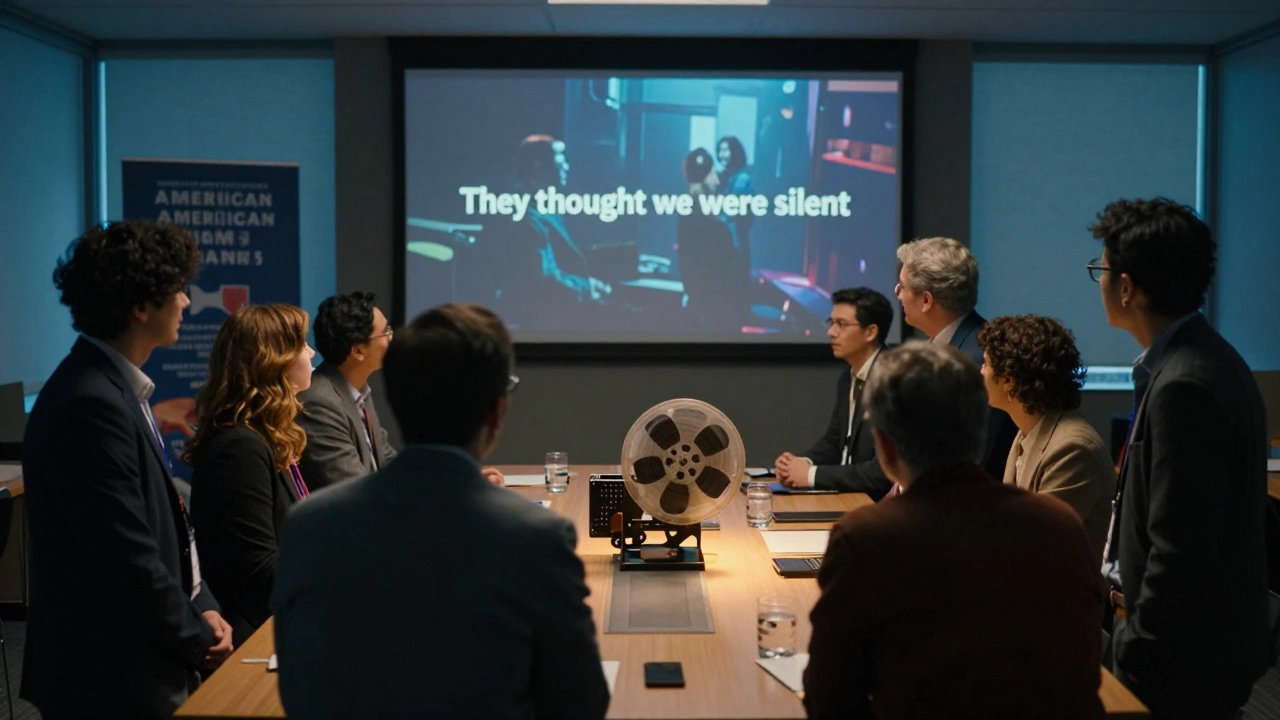
When Jupiter is a politically charged thriller produced as a multinational co-production, it doesn’t just need a good script-it needs a sales plan built for the real world of international film markets. The film’s journey from script to sale at the American Film Market (AFM) in 2025 wasn’t luck. It was strategy. And it worked.
Why Jupiter Wasn’t Just Another Political Thriller
Most political thrillers rely on one country’s political tensions. Jupiter flipped that. It was set in a fictional Eastern European nation, but its story-corruption, media manipulation, and a whistleblower caught between NATO and Russian-backed oligarchs-was designed to resonate across borders. The script didn’t push American values. It didn’t even center American characters. Instead, it gave audiences in Germany, France, South Korea, and Brazil something they recognized: distrust in institutions, fear of surveillance, and the quiet courage of ordinary people.
The producers didn’t start with a U.S. distributor. They started with AFM buyers. They knew the market had changed. Streaming platforms were no longer just buying finished films-they were investing in co-productions years in advance. Jupiter’s team locked in pre-sales with seven territories before shooting even began. That’s rare. Most films wait until post-production to even approach buyers.
The AFM Strategy: Selling Before the Camera Rolled
The American Film Market isn’t a festival. It’s a trade floor. Buyers come with budgets, regional licenses, and distribution pipelines. To stand out, Jupiter’s team did three things differently.
- They built a territory-by-territory pitch deck. Instead of one generic trailer, they created 12 tailored versions. The French version highlighted the film’s parallels with Macron-era scandals. The German version leaned into its surveillance themes, tying it to Stasi archives. The Brazilian version focused on the whistleblower’s journey through a media landscape dominated by family-owned conglomerates.
- They partnered with local production companies in each territory. Not just for tax credits. For credibility. A German co-producer meant German broadcasters would take the film seriously. A South Korean partner meant the film could bypass the usual foreign film quota restrictions. These weren’t just financial partners-they were cultural translators.
- They showed unfinished footage with a clear narrative arc. Buyers don’t want rough cuts. They want to see the emotional payoff. Jupiter’s team edited a 12-minute reel that opened with the whistleblower’s arrest and ended with the final broadcast that changed public opinion. No dialogue. Just music, tension, and a single line: “They thought we were silent.”
The result? Pre-sales covered 87% of the budget before filming wrapped. That’s unheard of for a non-English language film with no A-list stars.

How Co-Production Changed the Game
Jupiter wasn’t just a film. It was a legal and financial structure. It was registered as a co-production under the European Convention on Cinematographic Co-Production and the Asia-Pacific Co-Production Agreement. That meant it qualified for subsidies in seven countries, from Poland to Australia.
Each partner brought something:
- Poland provided studio space and crew from their state-funded film institute.
- Canada contributed visual effects talent through tax incentive programs.
- Japan handled digital distribution rights across Southeast Asia, leveraging their existing streaming partnerships.
- Sweden funded the original score, giving the film a haunting, minimalist sound that became its signature.
This wasn’t just about money. It was about access. A Polish co-producer opened doors to Eastern European broadcasters. A Canadian partner helped the film clear customs faster during international shoots. A Japanese distributor ensured the film wasn’t buried in the flood of Hollywood releases.
Why AFM Buyers Said Yes
AFM buyers don’t fall for pretty trailers. They look for three things:
- Market fit-Does this film fit into their existing slate?
- Profit potential-Can they sell it again on VOD, cable, or airline entertainment?
- Legal clarity-Are there no ownership disputes? Are rights clean?
Jupiter checked every box. The script was written in English but filmed in six languages, with subtitles handled by a single global vendor. All rights were cleared through a centralized legal team based in Luxembourg. The film’s final cut was locked before AFM, so buyers knew exactly what they were getting.
One buyer from Mexico told the team: “I’ve seen 300 political thrillers in five years. Yours is the first that made me think my audience would talk about it at dinner.”

The Real Win: Beyond the Box Office
Jupiter didn’t just sell. It sparked a ripple effect.
After AFM, three broadcasters commissioned their own co-productions using Jupiter’s model. A film school in Budapest started a course on “International Co-Production Pitching.” Netflix picked up the streaming rights-not just for North America, but for 42 countries simultaneously, something they rarely do without a major star attached.
And here’s the quiet truth: Jupiter didn’t win because it was perfect. It won because its team understood that global film sales aren’t about language. They’re about trust. Trust that the story matters everywhere. Trust that the legal structure won’t collapse. Trust that the people behind the film actually know how to deliver.
What Other Producers Can Learn
If you’re making a film with international ambitions, here’s what actually works:
- Don’t wait for a finished film to start pitching. Start with a 10-minute reel and a clear territory map.
- Partner with local producers early. They’re not just funders-they’re gatekeepers.
- Use co-production treaties. They’re not just for tax breaks. They’re for access.
- Don’t assume your story is too niche. If it’s about power, secrecy, or truth, it’s universal.
- Make sure your rights are clean before you even shoot. One legal hiccup can kill a sale.
Jupiter didn’t have a big budget. It didn’t have Oscar bait. It had clarity. And that’s what AFM buyers buy.
What is AFM, and why is it important for international film sales?
AFM stands for the American Film Market, held annually in Santa Monica. It’s the largest global marketplace for buying and selling film rights. Unlike festivals like Cannes or Sundance, AFM is focused entirely on commerce. Buyers from over 70 countries attend, including major studios, streaming platforms, and independent distributors. For non-Hollywood films, AFM is often the only chance to secure international distribution deals. A film that sells well at AFM can secure funding, guarantee global release, and even influence future production deals.
How do co-productions help a film get distributed internationally?
Co-productions combine resources from multiple countries, which unlocks funding, tax incentives, and distribution networks. Each partner country often has its own broadcast channels, streaming services, or cinema chains that are more likely to take a film they helped produce. Co-productions also help films qualify for local content quotas, meaning they can air on national TV without competing against imported Hollywood titles. Legally, co-productions are recognized under international treaties like the European Convention on Cinematographic Co-Production, which simplifies rights management across borders.
Can a non-English film succeed at AFM without big-name actors?
Absolutely. In 2025, over 60% of the top-selling films at AFM had no internationally known actors. What matters is the strength of the story, the clarity of the rights, and how well the pitch matches the buyer’s market. A film like Jupiter succeeded because its political themes were universal, its legal structure was airtight, and its sales reel showed emotional payoff-even without dialogue. Buyers care more about whether the film fits their audience than whether it stars someone they recognize.
What are the biggest mistakes filmmakers make when targeting international buyers?
The biggest mistake is treating every market the same. You can’t pitch a film about Eastern European corruption to a Brazilian buyer the same way you do to a German one. Another common error is waiting too long to approach buyers-many deals are locked in 18 months before production. Also, unclear rights ownership is a dealbreaker. If there’s any ambiguity about who owns distribution rights in a territory, buyers walk away. Finally, assuming your film needs English dialogue or American actors to sell internationally is outdated. Global audiences are hungry for authentic, culturally specific stories.
How did Jupiter handle language barriers in its international sales?
Jupiter was filmed in six languages, but the script was written in English first, then adapted culturally for each region. Subtitles were handled by a single global vendor to ensure consistency. For sales pitches, the team used English-language trailers with localized subtitles, and they provided tailored 12-minute reels for each territory that emphasized cultural touchpoints relevant to that market. Buyers received dubs in their native language for internal review, but the core sales materials were always anchored in the original English script for legal clarity. This approach kept the film’s identity intact while making it accessible.






Comments(5)