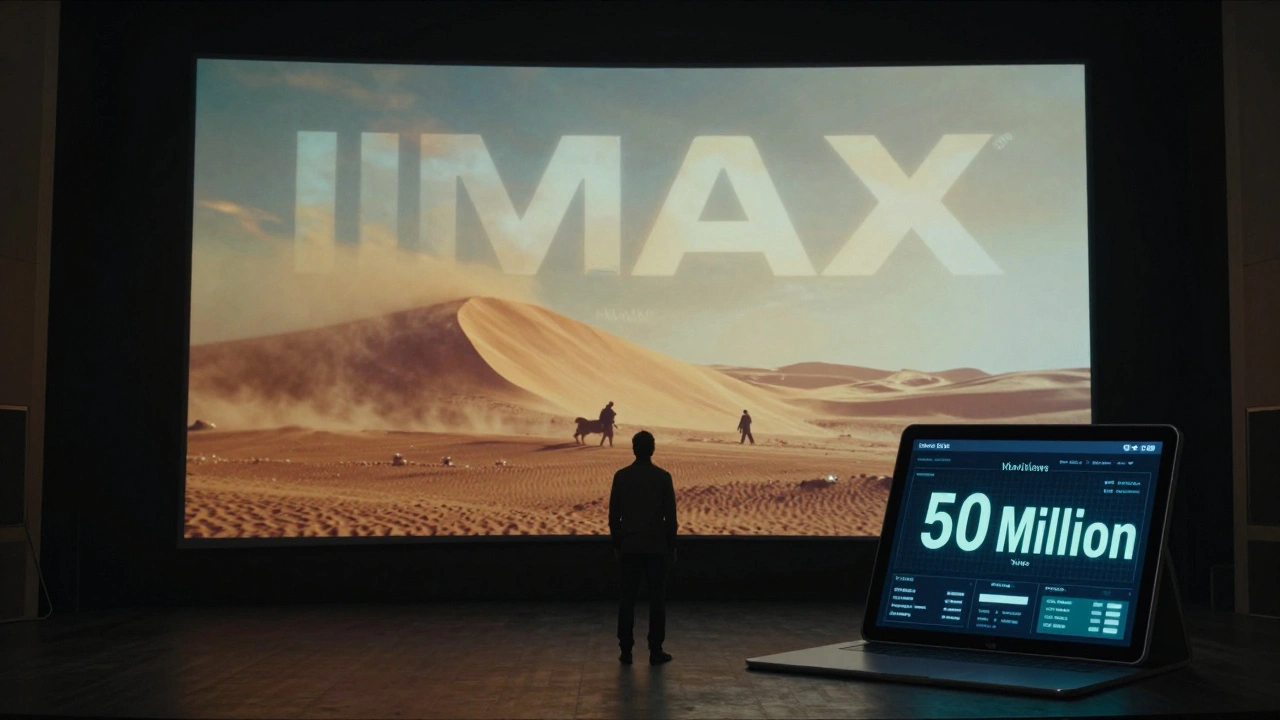
It used to be that if you were a director with a big vision, you had one path: get your movie into theaters. That meant battles with studios, tight budgets, rigid release schedules, and the pressure of opening weekend box office numbers. Now? You can make a film that reaches 50 million homes in 48 hours - no multiplex required. The shift isn’t just happening. It’s complete.
Directors Aren’t Leaving Theaters - They’re Redefining Them
When Christopher Nolan released Oppenheimer in theaters in 2023, it earned over $950 million. But just months later, Denis Villeneuve dropped Dune: Part Two in theaters, and then quietly released an extended cut on Max. Both films made money. But the difference? Villeneuve didn’t have to fight for a 90-day exclusive window. He got creative control, a guaranteed global audience, and a second life for his film on streaming.
That’s the new reality. Directors aren’t abandoning theaters. They’re choosing where their work gets the most impact. For some, that’s still IMAX. For others, it’s a quiet Sunday night on a 65-inch TV with surround sound. Streaming isn’t the enemy of cinema - it’s the expansion of it.
The Money Doesn’t Lie
In 2022, Netflix spent $17 billion on original content. Amazon spent $12 billion. Apple and Disney+ weren’t far behind. That’s more than the entire North American box office that year. Studios like Warner Bros. and Universal now treat streaming as their primary revenue engine, not a side project.
Directors know this. A $100 million film on Netflix doesn’t need to earn $300 million at the box office to be a win. It just needs to keep subscribers. That changes everything. A director can make a slow-burn drama, a foreign-language epic, or a three-hour biopic - and still get funded. No test screenings. No focus groups. No pressure to add a third-act car chase.
Take The Power of the Dog. Jane Campion made it for Netflix. It won four Oscars. It didn’t open in 4,000 theaters. It opened in 127. But within two weeks, over 20 million households watched it. That’s a global audience bigger than any Hollywood release in 2021.
Control Over Creative Freedom
One of the biggest reasons directors are switching? Control.
Traditional studios demand edits. They want shorter runtimes. They push for more action, more stars, more product placement. Streaming platforms? They want prestige. They want awards. They want buzz. And they’re willing to pay for it.
Roma, directed by Alfonso Cuarón, was made for Netflix with a $15 million budget. No studio would have greenlit it as a black-and-white, Spanish-language film with no A-list actors. But Netflix didn’t care. They knew it would win Oscars - and it did. Three. And it became one of the most talked-about films of the decade.
Same with Marriage Story. Noah Baumbach wanted to make a quiet, emotionally raw divorce story. Studios said no. Netflix said yes. The film got six Oscar nominations. It didn’t need a big opening weekend. It needed to be seen. And it was - by millions.
Global Reach Without the Gatekeepers
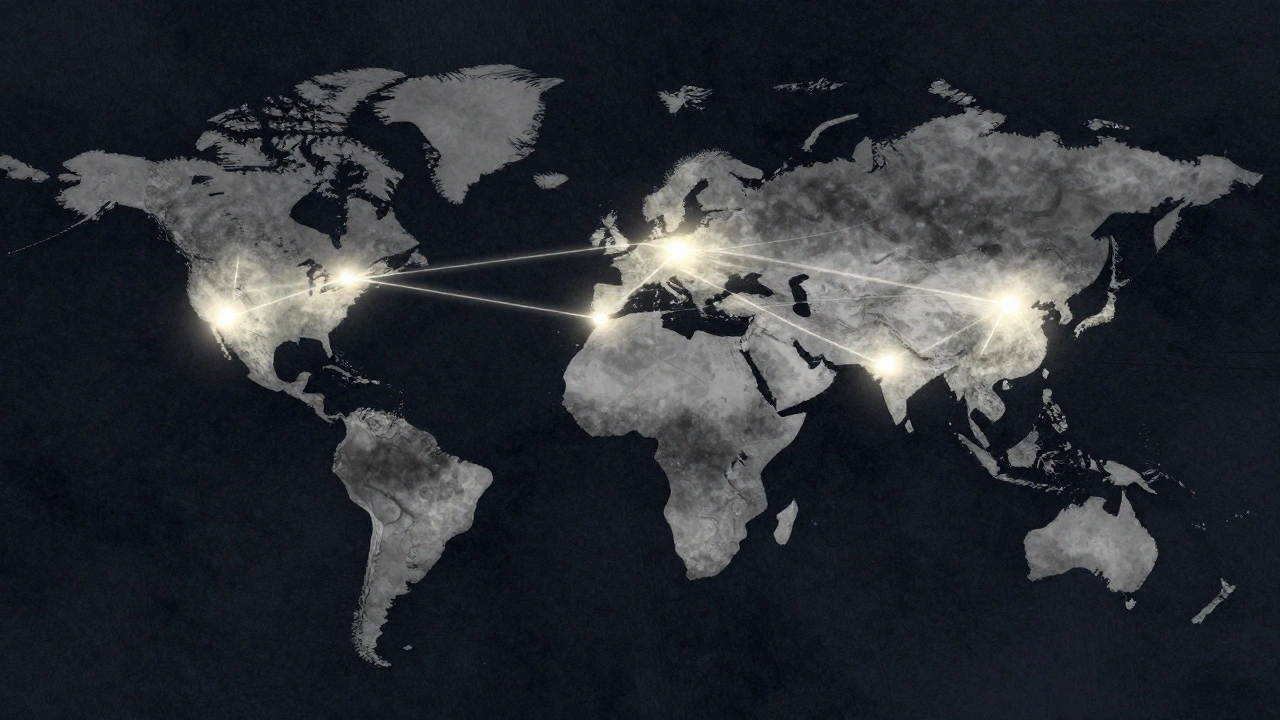
Before streaming, if you were a director from South Korea, Nigeria, or Mexico, your chances of breaking into the global market were slim. You needed a distributor. A festival win. A lucky break. Now? You shoot your film. Upload it. And within days, it’s on screens in Tokyo, Toronto, and Tallinn.
Parasite didn’t need a U.S. distributor to become a global phenomenon. It was already on Apple TV+ when it won Best Picture. The film’s director, Bong Joon-ho, didn’t have to negotiate with 12 different regional buyers. Netflix and Apple handled it all.
Same with The Wailing from South Korea. It was a cult hit on Netflix. No theater run. No marketing budget. Just word-of-mouth across continents. Directors now don’t need Hollywood approval to reach the world.
Release Flexibility - No More Box Office Pressure
Remember when a film’s fate was decided in its first three days? If it didn’t make $20 million opening weekend, it was dead. Streaming changed that.
Now, directors can release a film quietly. Let it build. Let critics write about it. Let audiences discover it over weeks. Minari came out on premium VOD and in limited theaters in early 2021. It didn’t break $1 million until month two. But by then, it had five Oscar nominations. It won one. And it became a cultural touchstone.
That kind of slow burn is impossible in theaters. But on streaming? It’s normal. Directors no longer have to sacrifice their vision for a weekend number.
More Stories, More Voices
Streaming platforms don’t just want blockbusters. They want variety. They want documentaries. They want animated shorts. They want miniseries that feel like films. They want stories from cultures rarely seen on American screens.
That’s why directors like Ava DuVernay, Lee Chang-dong, and Céline Sciamma are making their most personal work for streaming. DuVernay’s When They See Us was a four-part miniseries - not a movie. But it had the emotional weight of a three-hour epic. It won Emmys. It changed how people talked about the justice system.
Streaming isn’t just a new channel. It’s a new kind of storytelling. Directors aren’t compromising. They’re expanding.
The Future Isn’t Either/Or - It’s Both
Some people still say streaming is killing cinema. But the data says otherwise. In 2024, global box office hit $32 billion - the highest since 2019. At the same time, Netflix reported 240 million subscribers. Amazon Prime Video added 18 million in six months.
Directors aren’t choosing between theaters and streaming. They’re choosing what works for the story. A big action movie? Maybe theaters. A character-driven drama? Streaming. A historical piece with no stars? Streaming. A horror film with a twist ending? Both.
The old rules are gone. The new ones? Simple: make something powerful. Make it honest. And let the audience find it - wherever they are.
Are directors giving up on theaters completely?
No. Many directors still choose theaters for big-scale films - especially action, sci-fi, and epic dramas. Christopher Nolan, Denis Villeneuve, and Greta Gerwig all released major films in theaters in 2024. But they now have the option to release extended cuts or bonus content on streaming afterward. Theaters aren’t dead - they’re one part of a larger ecosystem.
Do streaming films get awards recognition?
Absolutely. In 2023, 12 of the 15 Best Picture Oscar nominees were distributed by streaming services or hybrid models. Everything Everywhere All at Once won seven Oscars - and was a Netflix release. The Academy doesn’t care where you watch it. They care if it’s great. Streaming platforms now spend millions on Oscar campaigns, just like studios.
Can indie directors still break through on streaming?
Yes - more than ever. Platforms like Hulu, MUBI, and Apple TV+ actively scout film festivals for new voices. In 2023, 68% of Sundance award winners got distribution deals with streaming services. No studio gatekeepers. No middlemen. Just a submission and a chance. Directors like Emerald Fennell and Chloé Zhao started with indie films that found audiences on streaming.
Why do streaming services pay so much for films?
They’re not just buying movies - they’re buying subscribers. A single acclaimed film can bring in tens of thousands of new users. A film like The Father or Minari makes people sign up for Apple TV+ or Hulu just to watch it. That’s worth $20 million - even if the film only makes $5 million in direct revenue. It’s customer acquisition, not just content.
Is the quality of streaming films lower than theatrical releases?
No. In fact, many streaming films have higher production values than mid-budget theatrical releases. Netflix’s The Midnight Sky had a $100 million budget. Amazon’s The Marvels (2023) was a $200 million production. Directors now have access to the same crews, equipment, and VFX teams as Hollywood studios - often with more creative freedom. The difference isn’t quality. It’s distribution.
What This Means for the Next Generation of Filmmakers
If you’re a film student today, your path isn’t just “get into film school → get an agent → get a studio deal.” It’s “make a short → enter Sundance → get picked up by Apple → build a following → make your first feature.”
There’s no single ladder anymore. There are dozens of entry points. And the people who win aren’t always the ones with the biggest connections. They’re the ones with the boldest stories.
The old system favored those who could navigate studio politics. The new system favors those who can tell truth in a way that moves people. And that’s a win for everyone who loves movies.




Comments(6)