You know that feeling when you watch a movie on your phone or laptop, and the black bars at the top and bottom feel like wasted space? Or maybe you’ve seen those rare films that fill the entire screen, making you feel like you’re inside the frame. That visual experience isn’t an accident; it’s the result of over a century of technical battles, artistic choices, and corporate marketing wars. Aspect ratio is simply the proportional relationship between the width and height of an image, expressed as two numbers separated by a colon (e.g., 16:9). But in cinema, this number dictates everything from how a director frames a shot to how much money a theater spends on new screens.
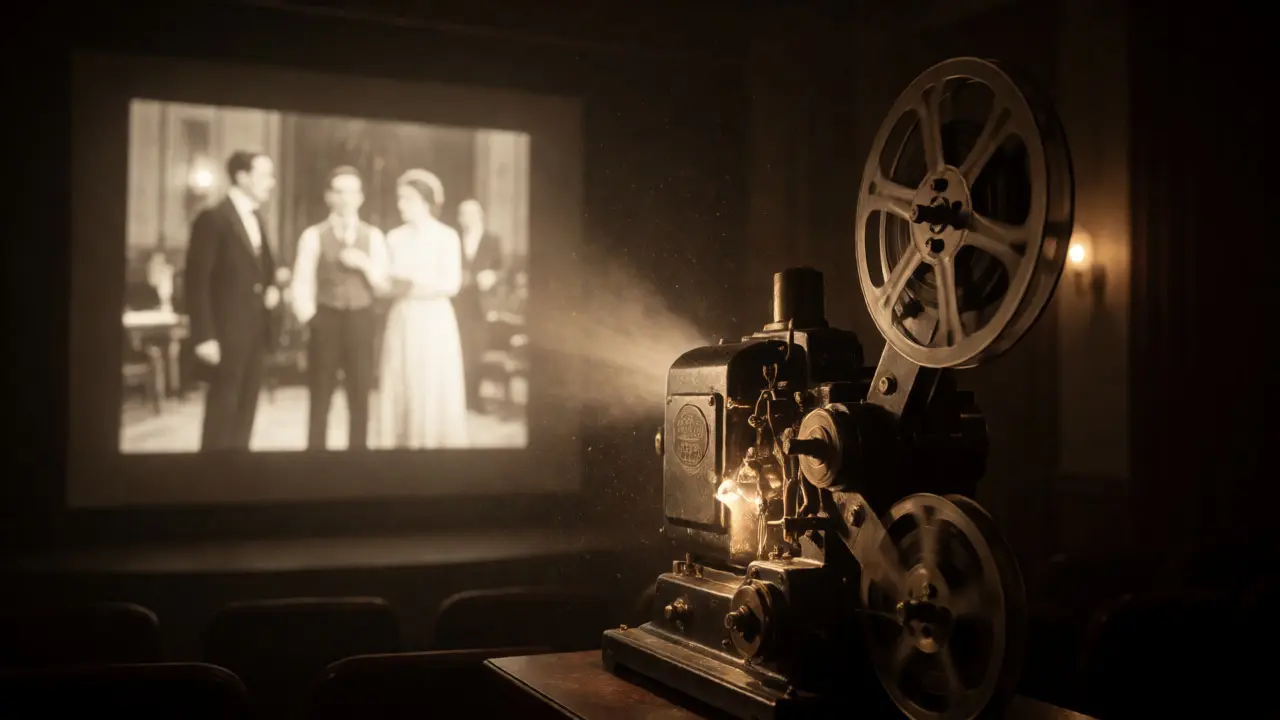
The story starts in the silent era, where movies were essentially square. The standard was 4:3, also known as 1.37:1 after sound was added and the optical track took up some width. This wasn’t because filmmakers loved squares; it was because early cameras and projectors used 35mm film stock with four perforations per frame. If you wanted to show something wide, you had to physically cut the film or use multiple projectors side-by-side, which was expensive and prone to synchronization errors. For decades, if you went to the movies, you saw a boxy image. It worked for dialogue-heavy scenes, but it struggled with epic landscapes or massive crowds.
The Widescreen Wars of the 1950s
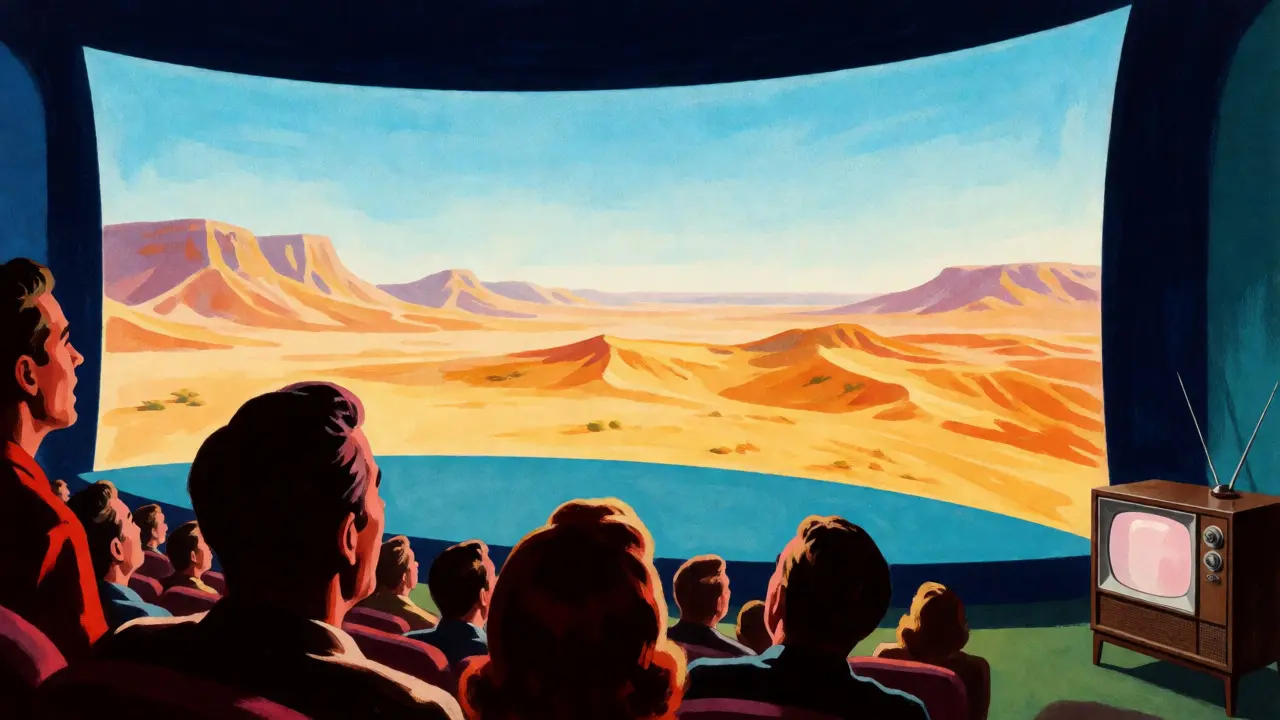
By the early 1950s, television was eating Hollywood’s lunch. People could get free entertainment in their living rooms, so studios needed a reason to drag families back to theaters. They found it in size. CinemaScope was introduced in 1953, offering a massive 2.55:1 aspect ratio. It used anamorphic lenses to squeeze a wide image onto standard 35mm film, then unsqueeze it during projection. Suddenly, the screen stretched horizontally, creating a panoramic view that TV couldn’t match.
This sparked a format war. Studios rushed to create their own proprietary widescreen systems. Fox had CinemaScope, Paramount had VistaVision (which used horizontal 35mm film for higher resolution), and Warner Bros. pushed Cinerama, which actually stitched together three separate film strips to create a curved, immersive 146-degree field of view. These weren’t just aesthetic choices; they were survival tactics. The industry realized that bigger was better, but "bigger" came in many shapes and sizes.
| Format Name | Aspect Ratio | Introduced | Primary Use Case |
|---|---|---|---|
| Academy Standard | 1.37:1 | 1932 | Standard sound-era dramas |
| CinemaScope | 2.55:1 (later 2.35:1) | 1953 | Epic spectacles and musicals |
| Panavision | 2.39:1 | 1954 | High-end color productions |
| IMAX | 1.43:1 / 1.90:1 | 1970 | Immersive documentary and blockbusters |
| Digital Standard | 1.85:1 / 2.39:1 | 1990s-Present | Modern theatrical releases |
The Technical Shift: From Anamorphic to Digital
While CinemaScope grabbed headlines, Panavision eventually became the industry standard for widescreen. By refining the anamorphic process, Panavision achieved a cleaner 2.39:1 ratio without the heavy distortion at the edges that plagued early CinemaScope lenses. This became the default for most action movies and comedies. If you’re watching a Marvel film today, you’re likely seeing a mix of 2.39:1 and sometimes taller ratios for specific scenes, thanks to digital cameras.
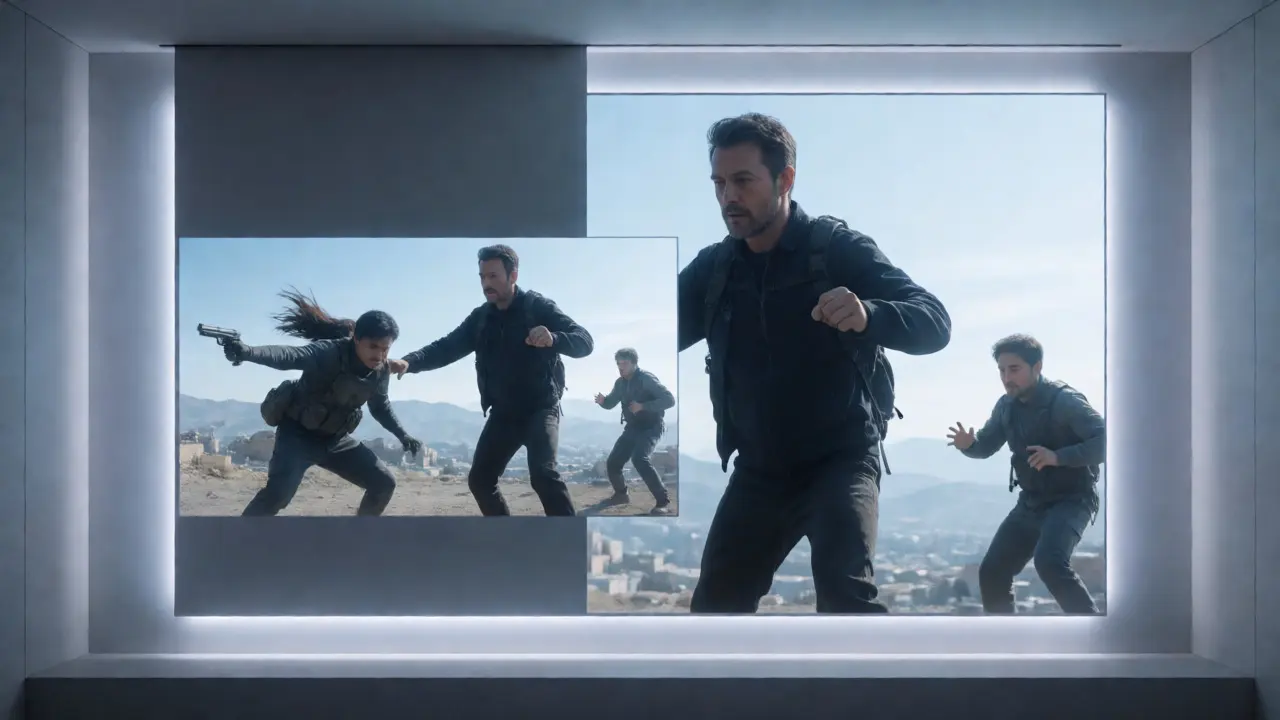
The shift to digital projection in the 2000s changed the game again. Unlike film, which has physical limitations based on sprocket holes and lens mechanics, digital sensors can be manufactured in various sizes. This allowed for more flexibility. Directors began experimenting with switching aspect ratios within a single film. Christopher Nolan’s Inception and Interstellar are prime examples. He uses IMAX cameras for key sequences, resulting in a taller 1.43:1 or 1.90:1 image that expands vertically on compatible screens, while other scenes remain in the wider 2.39:1 format. This technique guides the viewer’s attention, signaling that a moment is particularly grand or intimate.
Why Your Home Viewing Experience Is Different
Here’s the frustrating part: what you see in the theater often doesn’t translate perfectly to home. Most modern TVs have a fixed 16:9 (1.78:1) aspect ratio. When you watch a 2.39:1 movie on your TV, you get black bars. When you watch a 1.37:1 classic, you get even bigger bars. Some streaming services try to fix this with "pan and scan," cropping the sides of the widescreen image to fit the TV. But this ruins the director’s composition. You might miss a character standing on the left edge of the frame who was crucial to the scene.
Projector enthusiasts have an advantage here. If you have a high-quality projector and a motorized screen, you can adjust the screen mask to match the movie’s native aspect ratio. Watching Lawrence of Arabia in its original 2.76:1 Ultra Panavision 70 format on a properly masked screen is a transcendent experience. The sheer width forces you to move your head slightly to take in the desert vistas, mimicking the physical engagement of a theater seat.
The Future: Variable Aspect Ratios and AI Upscaling
We are entering an era where aspect ratios are becoming dynamic tools rather than static constraints. With the rise of LED wall technology in virtual production, like the Volume used in The Mandalorian, filmmakers can change the background environment in real-time. This opens up possibilities for variable aspect ratios that respond to the narrative beat. Imagine a horror movie where the screen slowly narrows as the protagonist feels trapped, or widens when they escape into open space.
AI is also playing a role. New algorithms can analyze a low-resolution 4:3 film and intelligently expand the sides to fill a widescreen display, generating plausible background details that weren’t there before. While purists argue this alters the original art, it makes older content more accessible to younger audiences accustomed to full-screen viewing. However, no algorithm can yet replicate the tactile, chemical beauty of 70mm IMAX film, which remains the gold standard for visual fidelity.
So, next time you sit down to watch a movie, pay attention to the shape of the image. It’s not just empty space; it’s a historical artifact, a technical compromise, and an artistic choice all rolled into one. Whether it’s the claustrophobic intimacy of 1.37:1 or the expansive grandeur of 2.39:1, the aspect ratio is doing half the storytelling before an actor even speaks a line.
Why do old movies look square?
Early cinema used 35mm film with a 4:3 (1.33:1) frame size. After sound was added in the late 1920s, the optical audio track reduced the visible area to 1.37:1, known as the Academy Ratio. This remained the standard until widescreen formats emerged in the 1950s to compete with television.
What is the difference between 2.35:1 and 2.39:1?
They are nearly identical. 2.35:1 was the original CinemaScope standard. In 1970, SMPTE standards adjusted the masking slightly to account for lens changes, resulting in 2.39:1. Practically, most people refer to both as "scope" or widescreen, and the visual difference is negligible to the average viewer.
Do directors choose aspect ratios for artistic reasons?
Absolutely. A narrower ratio like 1.37:1 creates intimacy and focuses on faces, while a wider ratio like 2.39:1 emphasizes landscape and isolation. Directors like Wes Anderson use 1.37:1 for symmetry and nostalgia, while Quentin Tarantino often uses 2.35:1 for tension and style.
Is IMAX always a different aspect ratio?
Not always, but frequently. Traditional IMAX film is 1.43:1, which is nearly square but much larger than standard film. Digital IMAX is typically 1.90:1. Many blockbuster films shoot key sequences in IMAX and release them in a mixed format, expanding the image vertically only on IMAX screens.
Why do some movies have black bars on my TV?
Most TVs are 16:9 (1.78:1). If a movie was filmed in a wider format like 2.39:1, black bars appear at the top and bottom to preserve the original image without cropping. Conversely, older 1.37:1 films will have bars on the sides. Cropping the image to remove bars often cuts out important visual information.



Comments(9)