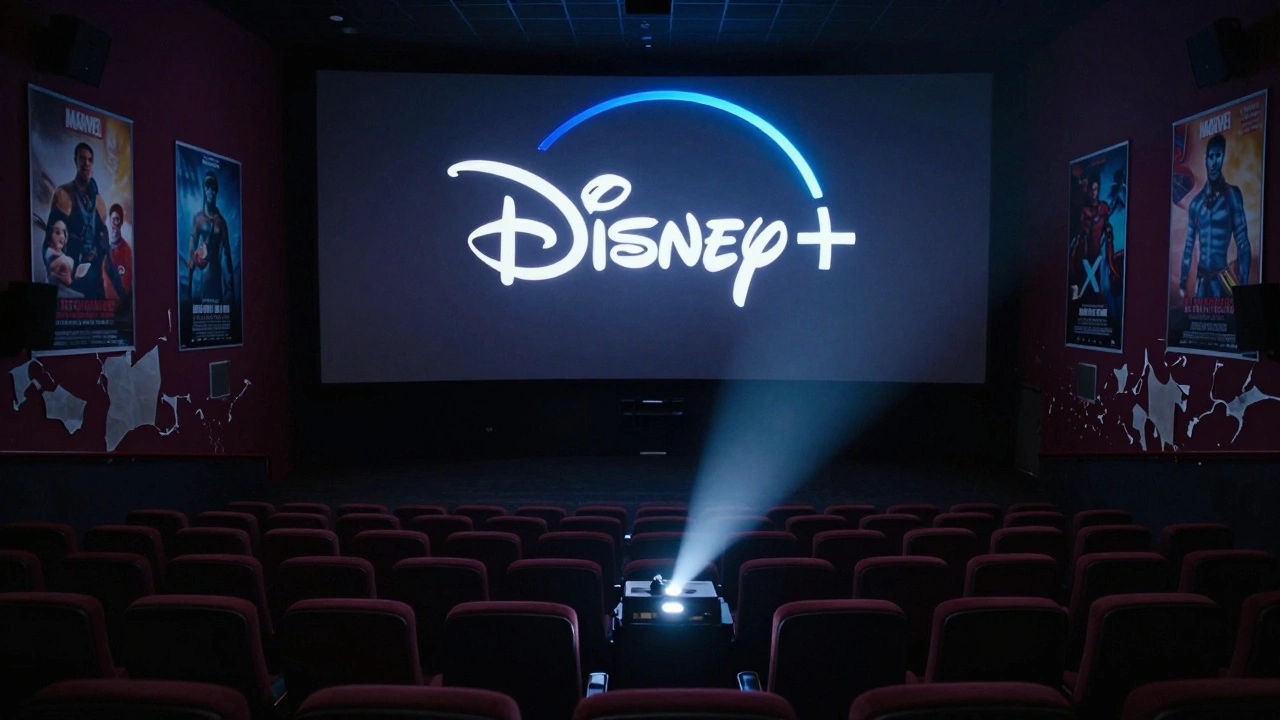
Big studios aren’t just making more movies-they’re buying each other. Over the last five years, Disney bought 21st Century Fox, Warner Bros. Discovery merged two giants, and Amazon swallowed MGM. These aren’t random moves. They’re survival tactics in a world where streaming changed everything. The result? Fewer studios, fewer independent films, and a cinema experience that’s starting to feel the same everywhere.
Why Studios Are Buying Each Other
It’s not about making better movies. It’s about controlling the pipeline. Before streaming, studios made films, sold them to theaters, and made money from ticket sales and DVD rentals. Now, theaters are a small piece of the pie. The real money is in subscription services-Disney+, Max, Prime Video. But to fill those services, you need content. Lots of it.
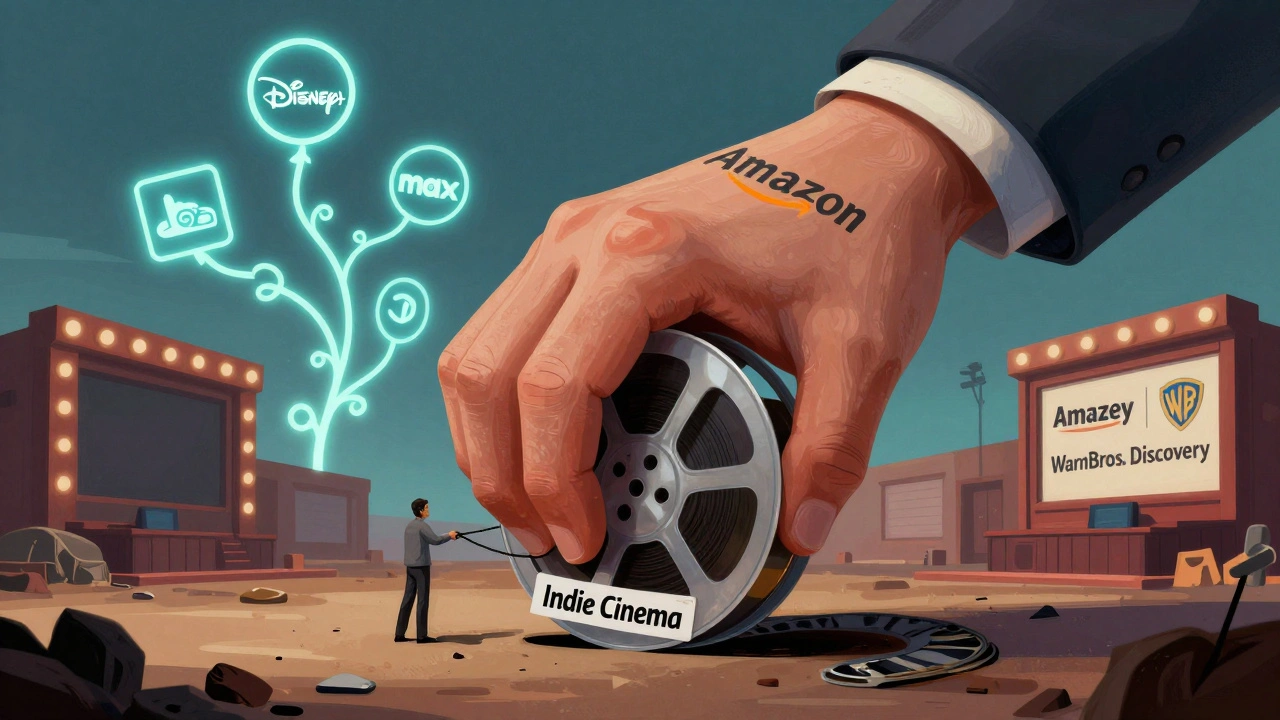
So instead of licensing movies from others, the big players started buying the studios that make them. Disney didn’t just want Star Wars. They wanted the whole library: Avatar, X-Men, The Simpsons. Amazon didn’t just want James Bond. They wanted the entire MGM catalog-12,000 films and 17,000 TV shows. That’s not just content. That’s leverage.
When you own the content, you control the distribution. You don’t have to pay other platforms to show your movies. You don’t have to share revenue. You keep it all. And when you own enough content, you can push people to subscribe. That’s the endgame.
The Impact on Movie Theaters
Movie theaters used to be the main stage. Now, they’re more like a preview. In 2020, studios started releasing films on streaming the same day as theaters. That was called day-and-date. It didn’t kill theaters-but it changed how people think about them.
By 2024, only 12% of major studio releases opened exclusively in theaters. The rest launched on streaming or had a 17-day window before theaters got them. That’s a huge shift from 2015, when nearly every film had a 90-day theatrical run.
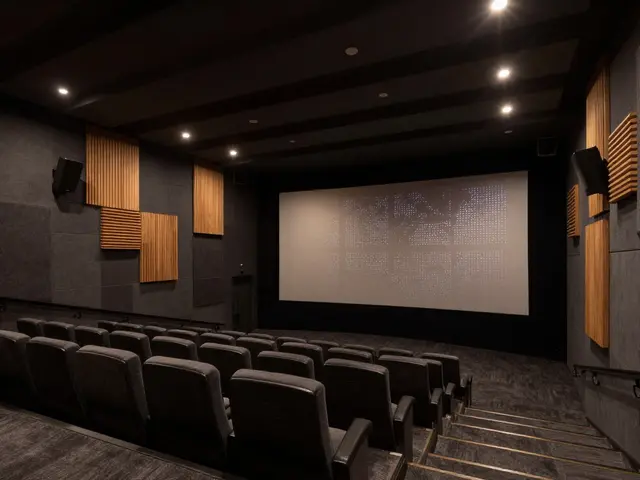
Smaller theaters are closing. In 2023, over 300 independent cinemas shut down across the U.S. Chain theaters like AMC and Regal are surviving-but only because they’ve turned into entertainment complexes. You don’t just watch a movie anymore. You eat a $16 burger, play a VR game, and buy a $12 popcorn. Theaters are no longer about cinema. They’re about spending.
What Happens to Independent Films
Independent films used to be the heartbeat of cinema. Directors like Greta Gerwig, Barry Jenkins, and Chloé Zhao got their start outside the studio system. Now, those paths are narrowing.
Why? Because studios aren’t funding risky, small films anymore. They’re betting on franchises. Marvel, DC, Fast & Furious, Jurassic World. These are safe. They have built-in audiences. They can be turned into merch, games, and spin-offs.
Independent films now rely on film festivals-Sundance, TIFF, Cannes-to get noticed. But even those are changing. In 2023, 40% of Sundance selections were backed by major studios or their subsidiaries. That’s not independent. That’s branded content with a different label.
When Netflix bought the rights to a film like Marriage Story, it looked like a win. But it wasn’t. The film never opened in theaters. It didn’t get a traditional release. It just appeared on a screen. The artist’s voice got buried in a platform’s algorithm.
What’s Being Lost
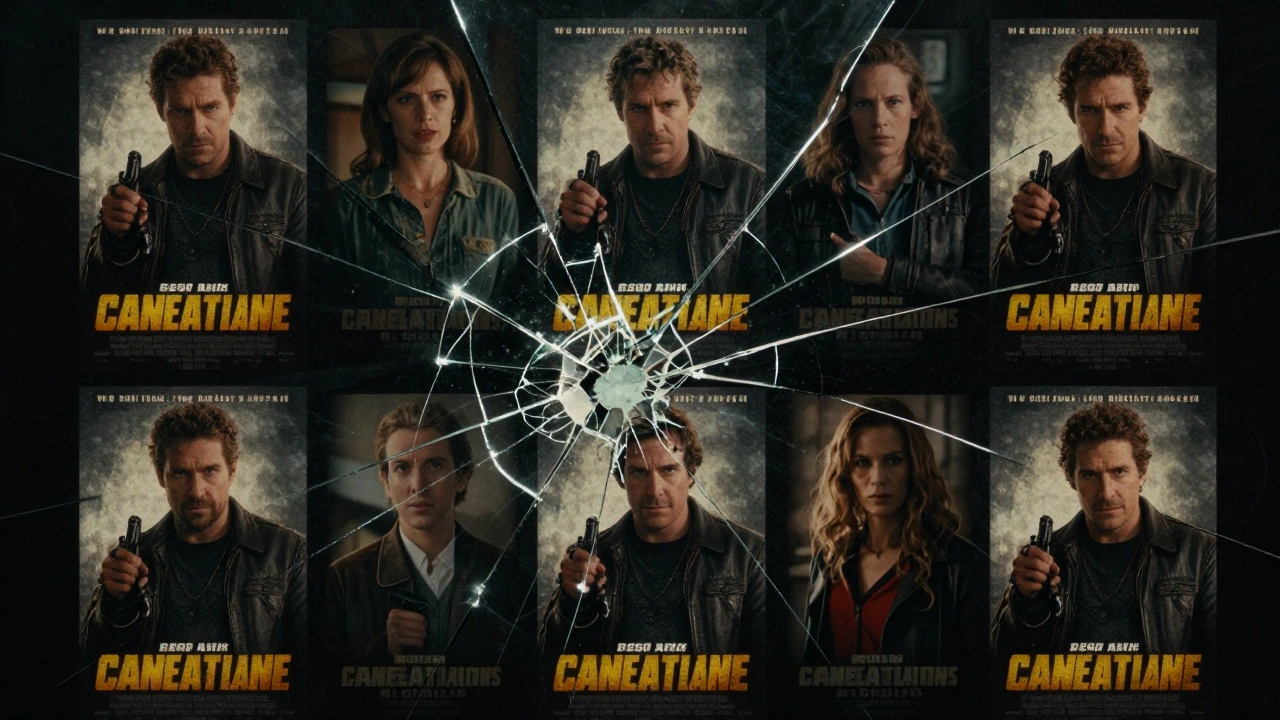
Cinema used to be a place for surprise. You walked in not knowing what you’d see. You might get a quiet drama, a foreign film, a documentary about bees. Now, the lineup is predictable. The same five franchises dominate the top 10 box office charts. The same actors appear in everything. The same visual style-bright, fast, loud-shows up in every blockbuster.
There’s less room for tone. Less room for silence. Less room for films that ask questions instead of giving answers.
Think about it: When was the last time you saw a film that didn’t have a post-credits scene? Or a film that didn’t set up a sequel? Studios aren’t just making movies. They’re building content pipelines. Each film is a product. A data point. A way to keep you subscribed.
Who’s Winning? Who’s Losing?
The winners? The conglomerates. Disney, Warner Bros. Discovery, Amazon, NBCUniversal, and Apple. They have the money, the data, and the global reach. They can spend $200 million on a movie and still turn a profit because they own the platform it lands on.
The losers? The filmmakers. The theaters. The audiences who want something different.
Directors now have to pitch their ideas as “franchise-adjacent.” A quiet character study? Maybe it’s a spin-off of a superhero. A historical drama? Maybe it’s based on a book that’s already a Netflix series. Original ideas are getting squeezed out.
And audiences? They’re stuck in a loop. You want something new? You get a reboot. You want something bold? You get a prequel. You want something real? You go to YouTube or TikTok.
The Future of Moviegoing
Movie theaters won’t disappear. But they’ll become more like theme park rides than cultural spaces. Premium formats-IMAX, 4DX, Dolby Cinema-are growing. People will still go for spectacle. For the big moments. For the sound that shakes your chest.
But the everyday experience? The casual Tuesday night movie? That’s fading. Why go out when you can watch a new film at home with your kids, your dog, and your pajamas?
The studios know this. That’s why they’re doubling down on streaming. They’re investing in AI to generate trailers. They’re using data to pick actors who already have millions of followers. They’re avoiding anything that can’t be measured.
Cinema isn’t dead. But it’s changing. And not in a way that serves art. It’s serving profit.
What Can Be Done?
There are still pockets of resistance. Film funds in Canada, Germany, and South Korea still support original stories. Some theaters in Austin, Portland, and Chicago still screen foreign and indie films every week. Streaming services like MUBI and Criterion Channel still curate films with care.
But real change needs action. If you want cinema to stay alive:
- Go to theaters that show non-franchise films. Support them with your ticket.
- Subscribe to services that prioritize art over algorithms-MUBI, Kanopy, Criterion.
- Ask your local theater to book indie films. Demand matters.
- Don’t just watch the top 10. Look beyond.
It’s not about hating big studios. It’s about remembering that cinema was never meant to be a product. It was meant to be a conversation.



Comments(6)