The Role of Temporary Music in the Edit
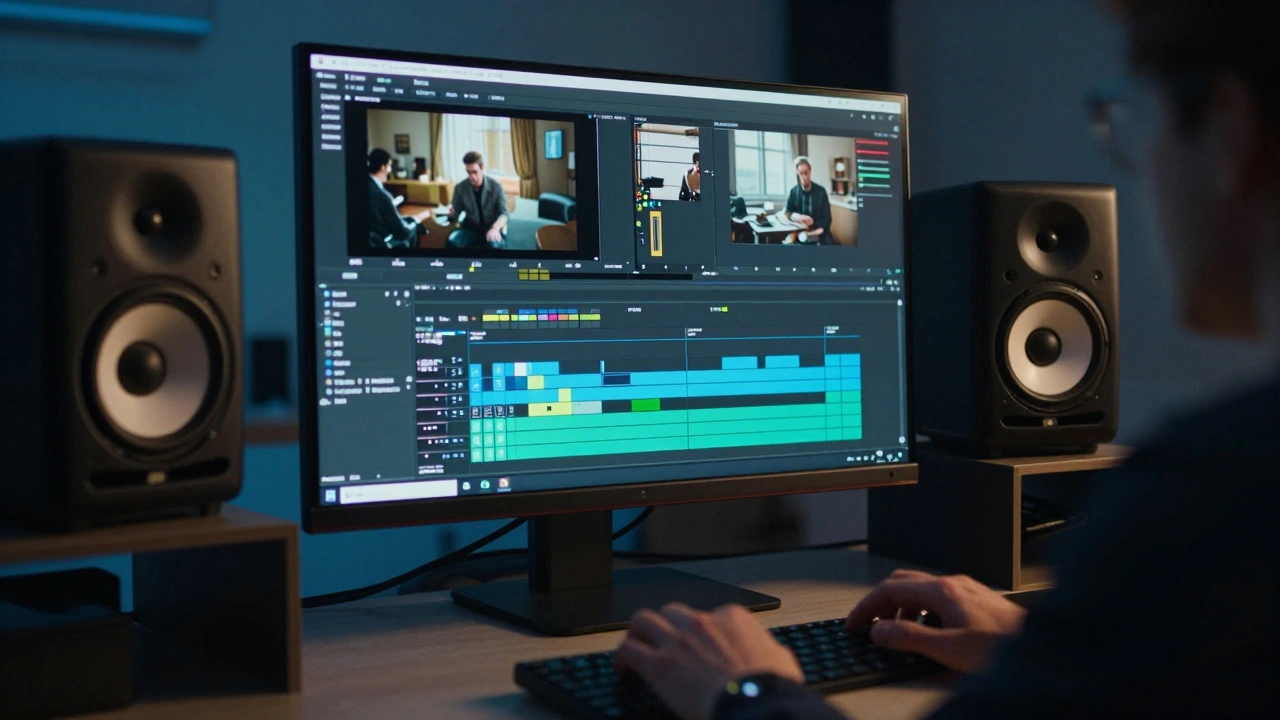
Before we talk about the risks, let's be clear: temp score is the process of placing existing music-from other movies, albums, or libraries-into a film's rough cut to simulate the final score. It's not meant to be the final product, but rather a blueprint. For an editor, a temp track is a tool to test the rhythm of a scene. If a scene feels too long without music, the temp track reveals where the energy dips. It helps the director visualize the emotional arc of the movie before they spend thousands of dollars on a live orchestra.
In a professional workflow, the Editor works closely with the director to find music that matches the intended vibe. This might involve browsing Production Music Libraries like Audio Network or APM, or simply raiding the director's favorite Spotify playlists. The goal is to establish a "sonic palette." Does the scene need a minimalist piano? A wall of brass? Or perhaps a distorted electronic synth? By using temp music, the team can communicate these needs to the composer without having to describe them in vague adjectives like "epic" or "emotional."
The Psychological Trap: Understanding Temp Love
Here is where things get messy. After listening to a specific piece of music for hundreds of hours during the editing process, the director's brain starts to fuse that music with the images. This phenomenon is known in the industry as "Temp Love." The music is no longer just a placeholder; it becomes the identity of the scene. When the actual Composer submits their first draft, the director doesn't compare it to the silence of the raw footage-they compare it to the multi-million dollar production of the temp track.
This creates a massive dependency. If the temp track was a piece by John Williams, the composer is now fighting against a master. The director might say, "I love the new score, but can you make it sound more like the temp?" This is a creative death sentence. It tells the composer to stop innovating and start imitating. When a composer is asked to mimic a temp track, the result is usually a pale imitation that lacks the organic connection to the film's unique visual language.
Operational Dependencies and Technical Risks
Beyond the psychological toll, there are hard technical dependencies to consider. Temp scores often dictate the pacing of the edit. If an editor cuts a scene specifically to the beat of a temp track, they are effectively letting the music direct the film rather than the performance of the actors. If the final score has a different tempo or a different rhythmic structure, the edit might suddenly feel "off." You'll find yourself in a situation where you have to re-cut the scene to fit the new music, which can lead to hours of wasted work.
| Feature | Temp Score (Placeholder) | Original Score (Final) |
|---|---|---|
| Purpose | Vibe-checking and pacing | Emotional storytelling and branding |
| Source | Existing commercial tracks | Custom compositions |
| Risk | "Temp Love" and imitation | Potential misalignment with edit |
| Cost | Low (License or Free) | High (Composer + Musicians) |
Another risk is the "Licensing Mirage." Sometimes a director falls in love with a popular song as a temp. They imagine the movie ending with that specific track. However, the Music Supervisor then informs them that the licensing cost for that one song is $50,000-more than the entire music budget. Now the production is in a crisis. They've edited the climax of the movie to a song they can't afford, and they have to find a replacement that provides the exact same emotional payoff without the same price tag.
How to Use Temp Tracks Without Getting Stuck
You don't have to avoid temp music entirely-that's nearly impossible in modern cinema. Instead, you need a strategy to prevent dependency. One of the best methods is to use "generic" temp tracks. Instead of using a famous piece from a blockbuster movie, use basic atmospheric pads or simple rhythmic pulses from a library. If the music is too specific or too "perfect," you're inviting Temp Love. If the music is just a general mood-setter, it's easier to strip away later.
Another pro tip is the "Silence Test." Periodically, the director and editor should watch the scene in total silence. This strips away the emotional crutch of the music and forces them to ask: "Is this scene working based on the acting and the cinematography alone?" If the scene only works because of the music, the scene is fundamentally broken. Fixing a scene in the edit is much cheaper than trying to "save" a boring scene with a great score.
Finally, establish a clear communication channel with the composer early on. Instead of handing over a cut filled with temp tracks and saying "make it like this," provide a "Temp Map." This is a document that describes the *intent* of the temp music. For example: "At 02:15, the temp music creates a feeling of claustrophobia using a repetitive high-frequency string note." This gives the composer the emotional goal without forcing them into a specific melodic box.
The Composer's Perspective: Fighting the Shadow
For a composer, arriving at a project where the director is obsessed with a temp score is like being asked to paint a portrait while someone holds a photo of a different person in front of your face. It kills the instinct. The best scores happen when the music grows out of the film's specific DNA, not from a curated list of references. When a composer is forced to follow a temp, they often stop listening to the film and start listening to the reference track.
To break this cycle, some composers suggest "stripping the temp" entirely for a few days. They ask the director to watch a sequence without any music at all before they write a single note. This resets the ear and allows the composer to find the "hidden" rhythm of the scene. Often, the result is a piece of music that is more effective than the temp because it's precisely tailored to the frame, not a pre-existing song that happened to fit roughly.
Managing the Music Workflow in Post-Production
To keep the project on track, the workflow should move from broad to specific. Start with atmospheric temp tracks to set the mood. Once the edit is locked, transition to a Composer's Sketch-a rough, piano-based version of the themes. This replaces the polished temp tracks with something that is still evolving. By the time the full orchestral recording happens, the transition from temp to final is a gradual shift rather than a jarring replacement.
Remember that music is the final layer of the storytelling process. If you let the music drive the edit too early, you're building a house on a foundation of someone else's art. Use temp scores as a compass to show you the direction, but never let them be the map that dictates every step of the journey.
What exactly is a temp score?
A temp score is temporary music placed in a film's rough cut by the editor. It's used to establish the mood, pacing, and emotional tone of a scene before the actual composer writes the original score. It acts as a placeholder to help the director and editor visualize the final product.
Why is "Temp Love" considered a problem?
Temp Love happens when a director becomes so attached to the temporary music that they demand the final score sound exactly like it. This limits the composer's creativity and often results in a score that feels like a copy rather than an original piece of art tailored to the film.
Can temp scores affect the actual editing of the film?
Yes. If an editor cuts the scene to the specific beats and rhythms of a temp track, the edit becomes dependent on that music. If the final score has a different tempo, the visual cuts may feel awkward or mistimed, potentially requiring the scene to be re-edited.
How can I avoid becoming too dependent on temp music?
Use generic or atmospheric tracks instead of famous movie scores. Additionally, perform "silence tests" where you watch the scenes without any music to ensure the storytelling is strong enough on its own. Focus on communicating the "intent" of the music rather than the specific sound to your composer.
What is the role of a Music Supervisor in this process?
The Music Supervisor manages the legal and financial side of music. They ensure that any temp tracks used are either cleared for use or replaced by original music to avoid copyright infringement and budget overruns, especially when a director wants to keep a commercial song as the final score.